 Blaine Siding
 Building Decks on the Semiahmoo Peninsula: A Different Job Than Inland
Semiahmoo sits right up against Semiahmoo Bay and Drayton Harbor, which means homes and vacation properties here take a different kind of weather than a deck built a few miles inland in Blaine or elsewhere in Whatcom County. Salt-laden air off the water, steady wind exposure, driving rain off the Strait, and a long wet moss season all work on exposed wood and hardware in ways that inland decks simply don't experience at the same rate. A deck built to a generic spec sheet might look fine the first year or two. Out here, the difference shows up in loose railings, rusted fastener heads bleeding through the boards, and slick, moss-covered surfaces well before a properly specified deck would show any of that.
We build custom decks for homes in this area regularly, and we design every one around the conditions it will actually sit in, not a one-size-fits-all build.
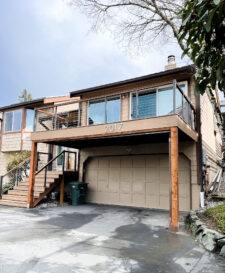
What Salt Air and Coastal Wind Actually Do to a Deck
Corrosion is the silent failure
Salt air accelerates corrosion on any metal that isn't rated for it. Standard galvanized fasteners, joist hangers, and structural screws can start breaking down years ahead of schedule in a waterfront exposure like Semiahmoo. The failure is usually invisible until it isn't — a hanger nail rusts through inside a joist connection, or a deck screw loses its grip and a board starts to lift. By the time you see rust staining on the surface of the decking, the fastener underneath has usually been corroding for a while.
Wind loads on railings and open structures
Elevated decks and railings facing open water or exposed to the peninsula's prevailing wind need to be engineered for real lateral and uplift forces, not just built to minimum code as an afterthought. Loose or under-built railing posts are one of the most common problems we find on older decks in this kind of exposure.
Moisture cycling
Driving rain followed by wind-drying, over and over through the wet season, puts wood decking through a harsher expansion-and-contraction cycle than a sheltered inland deck sees. That cycling is what opens up checking and cracking in lower-grade lumber over time.
What a Correctly Built Deck Needs in This Environment
- Stainless steel or coated marine-grade fasteners throughout — not just on the visible decking, but in every joist hanger, structural screw, and bolt.
- Proper ledger board flashing where the deck attaches to the house, so wind-driven rain can't work its way behind the siding and into the wall assembly.
- Footings sized and set for local soil conditions, with attention to drainage so standing water isn't sitting against a post base through the wet months.
- Railing posts through-bolted to framing, not just screwed to a rim board, so they can take real wind load without working loose.
- Gapped decking installation that allows airflow and drainage, which also helps slow moss and algae buildup on the walking surface.
None of this is exotic. It's just correct construction for a coastal exposure, done consistently instead of skipped to save time or material cost.
Choosing Decking Material for a Salt Air Exposure
Every decking material handles this environment a little differently. There's no single "best" answer — it depends on your budget, how much upkeep you want to do, and how the deck will be used.
| Material | How It Handles Salt Air & Moss | Maintenance |
|---|---|---|
| Cedar | Naturally rot-resistant, but surface grays and can go slick with algae in shaded, damp spots without upkeep | Needs periodic cleaning and sealing to hold color and slip resistance |
| Pressure-treated fir/pine | Treatment protects against rot, but fasteners and hardware still need to be corrosion-rated | Regular sealing; checking and splintering more likely over time |
| Composite decking | Doesn't absorb moisture or rot; resists staining better, though algae can still grow on the surface film in shaded areas | Periodic washing; no sealing or staining required |
| PVC/capped polymer | Most resistant to moisture-driven issues; performs well in direct salt exposure | Lowest upkeep; occasional cleaning |
For decks with heavy shade from mature trees or the house itself — common on lots around Semiahmoo — composite or capped polymer decking earns its higher upfront cost back in the years of moss scrubbing and re-sealing it saves you.
Railings and Guards for Open Water Views
A lot of the appeal of a Semiahmoo deck is the view, which usually means homeowners want open, unobstructed railings rather than solid privacy panels. That's very achievable, but it changes the engineering conversation. Cable rail and glass panel systems look great and preserve sightlines, but they need to be specified and installed correctly for wind exposure — cable tension has to be maintained, and glass panel hardware needs to be rated for the loads it will actually see in an open, windy setting. We'll walk through the tradeoffs between cable, glass, and traditional wood or composite baluster railings based on your specific site and how exposed it is.
Guard height and code basics
Guard rail height requirements kick in once a deck surface reaches a certain height above grade, and Whatcom County follows the state building code on this. We handle the calculations for your specific deck height and layout as part of design, so you're not guessing at what's required.
Moss, Algae, and Long-Term Deck Care Here
Whatcom County's wet season runs long, and shaded or north-facing decks around Semiahmoo can stay damp for weeks at a stretch. That's exactly the environment moss and algae need to take hold. A few design choices make a real difference in how much of a fight this becomes down the road:
- Gapped board spacing that lets water drain through instead of pooling on the surface
- Framing and layout that avoid trapping standing water under low-clearance areas
- Material selection suited to how much shade the deck actually gets
- A realistic annual cleaning routine, since even the best materials benefit from a wash-down before the wet season sets in
We'll talk through your site's actual sun and shade pattern during the estimate, because a deck on the water side of a home often has completely different exposure than one tucked against tree cover on the same lot.
Our Process for a Semiahmoo Deck Project
1. On-site visit and design conversation
We walk the site with you, talk through how you'll use the space, and assess sun exposure, wind exposure, existing structure (if this is a rebuild), and soil conditions.
2. Design and material selection
We put together a design and material plan suited to the site — decking, railing system, and layout — along with a straightforward cost breakdown so there are no surprises.
3. Permitting
Depending on the deck's height, size, and proximity to the shoreline, permitting through Whatcom County may be required. We handle that process as part of the project rather than leaving it on you to figure out.
4. Build
Footings, framing, ledger flashing, decking, and railing installation, built to the corrosion-resistant standards this environment calls for — not the minimum a code inspector requires.
5. Final walkthrough
We go over the finished deck with you, including basic care guidance specific to the materials you chose.
What Drives the Cost of a Custom Deck Here
| Factor | Why It Matters in Semiahmoo |
|---|---|
| Decking material | Composite and PVC cost more upfront than wood but reduce long-term maintenance in a wet, salty climate |
| Fastener and hardware grade | Marine-grade stainless costs more than standard galvanized but is essentially required for durability here |
| Railing system | Cable and glass systems for open views cost more than standard baluster railing due to hardware and installation precision |
| Height and footing work | Sloped or elevated lots near the water may need deeper or additional footings |
| Permitting requirements | Shoreline proximity and deck height can trigger permit review, adding time and a modest cost to the project |
We give you real numbers during the estimate rather than a rough guess — every lot and design here is different enough that broad averages aren't very useful.
Checklist: What to Ask Before Hiring a Deck Contractor in This Area
- Do they specify stainless or coated marine-grade fasteners for coastal exposure, or standard galvanized?
- Do they flash the ledger board connection properly, or just bolt it to the siding?
- Can they explain how they'll handle guard rail height and load requirements for your specific deck?
- Do they have experience with Whatcom County permitting for decks near the shoreline?
- Will they talk you through material tradeoffs honestly, including upkeep, rather than just upselling the most expensive option?
- Are they licensed and insured to work in Washington, and can they show it?
Why a Crew That Already Works Semiahmoo Matters
A contractor who's built decks elsewhere in the region but hasn't worked this specific stretch of coastline can miss things that aren't obvious until the deck has been sitting through a few wet seasons — how much wind a particular exposure actually sees, which lots hold moisture longer than they look like they would, where salt air corrosion shows up first. We work in Blaine and the surrounding Whatcom County waterfront regularly, and that means the fastener grade, flashing detail, and material choices on your deck aren't guesses — they're based on what actually holds up here.
If you're planning a new deck or replacing one that's showing its age, we're happy to come take a look and talk through what makes sense for your property. The estimate is free, there's no pressure, and you'll walk away with a clear picture of your options — just use the form below to get started.