 Blaine Siding
 Semiahmoo's Marine Climate Is Hard on a House Exterior
Homes along the Semiahmoo waterfront and the surrounding shoreline neighborhoods sit right where the marine environment meets the building envelope. That location is beautiful, but it's also demanding. Salt spray carries off Semiahmoo Bay and Drayton Harbor and settles on siding, trim, and fasteners. Storms push rain in sideways off the Strait of Georgia rather than straight down, which means water gets driven into gaps and seams that would stay dry in a more sheltered inland setting. And the same mild, damp Whatcom County winters that keep lawns green all year also keep north-facing and shaded wall sections wet long enough for moss and algae to take hold.
None of that is a reason to avoid siding your home well — it's a reason to be precise about what you put on it and how it's installed. That's the whole point of this page: what Semiahmoo's climate actually does to a siding system, and what a correct James Hardie installation looks like in response.
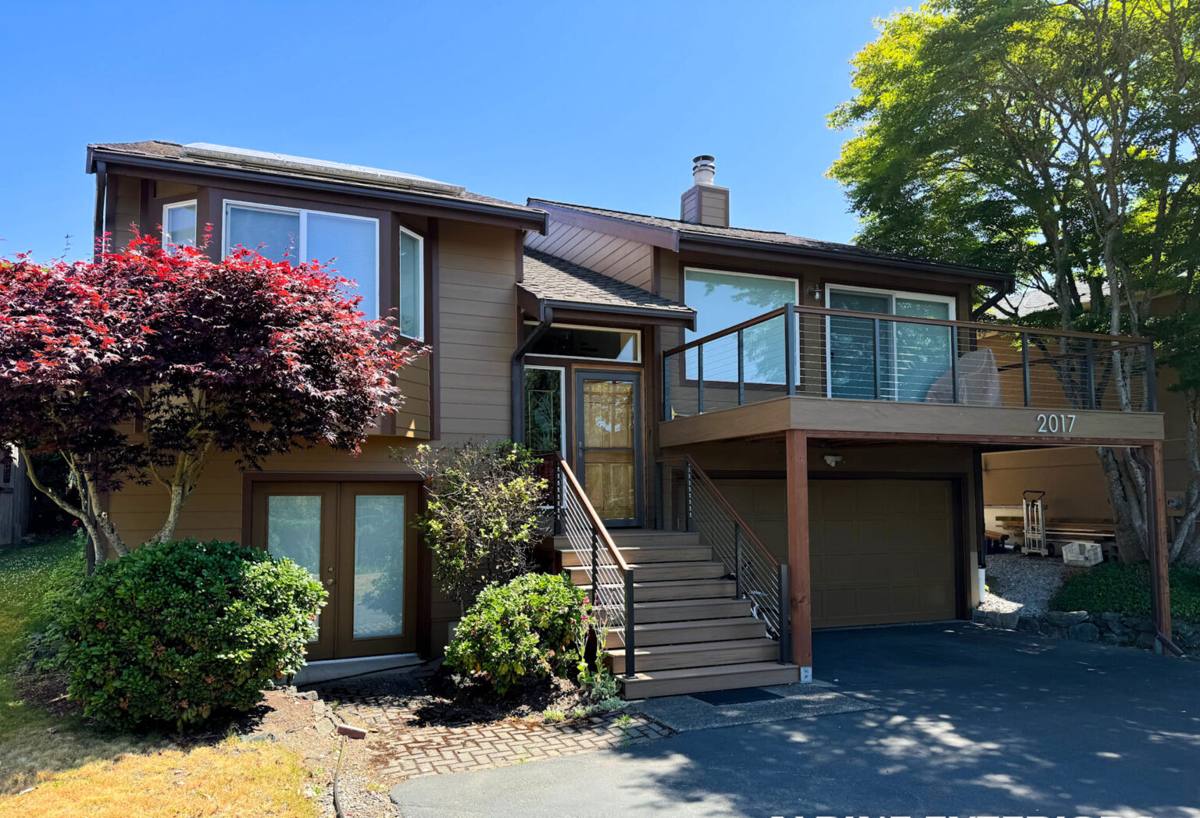
Why We Only Install James Hardie in This Environment
We install James Hardie fiber cement siding exclusively — not vinyl, not LP SmartSide, not primed wood, not cedar. That's a deliberate standard, and in a salt-air, high-rainfall environment like Semiahmoo, the reasoning is straightforward.
Fiber Cement Doesn't Rot
Wood-based siding products depend on paint film and sealant staying intact to keep moisture out; once that film fails at a seam or cut edge, the substrate underneath can start absorbing water and softening. Fiber cement is cement, sand, and cellulose fiber — it doesn't rot, and it doesn't provide a food source for the moss and algae that thrive in Semiahmoo's damp, shaded conditions the way wood-based siding can.
Built for This Specific Climate
James Hardie engineers its siding in climate-specific formulations. The HZ5 line is formulated for colder, wetter regions like the Pacific Northwest, with moisture and freeze-thaw performance tuned for exactly the conditions Blaine sees. That's a different product than what gets shipped to a dry inland climate, and it matters here.
A Factory Finish That Holds Up to Salt Air
ColorPlus finish is baked on at the factory under controlled conditions, not brushed or sprayed on-site. In a coastal environment, field-applied paint tends to fail faster — salt film, UV, and constant moisture cycling break down a site-applied coat sooner than a factory-cured one. A ColorPlus finish resists fading and chipping significantly longer, which means fewer repaint cycles over the life of the siding.
Non-Combustible
James Hardie siding is non-combustible. That's not a Semiahmoo-specific climate issue, but it's part of why we standardized on Hardie across every home we side, and it can factor into insurance considerations as well.
What a Correct Installation Involves
The siding product is only half the equation. Fiber cement siding installed against manufacturer spec — no water-resistive barrier, wrong flashing details, wrong clearances — can still let water into the wall assembly, and in a driving-rain environment those mistakes show up faster than they would somewhere drier. A correct Semiahmoo installation includes:
- A continuous water-resistive barrier (WRB) installed behind the siding, lapped correctly at every seam
- Properly integrated flashing at every window, door, roofline, and deck ledger — the details that stop wind-driven rain from working its way behind the cladding
- Correct clearance from grade, roof surfaces, and decks per James Hardie's installation requirements, so splash-back and standing moisture don't sit against the bottom edge of the siding
- Fasteners and fastening patterns appropriate for coastal corrosion exposure
- Factory or approved touch-up sealing on any field-cut edges, so cut ends aren't left absorbing moisture
- Caulking only where James Hardie specifies it — sealing every joint sounds thorough, but over-caulking can trap moisture behind the siding instead of letting it drain and dry
These are the details that separate a siding job that performs for decades from one that starts showing problems in a few wet winters. In a location like Semiahmoo, where the wall assembly is under more constant moisture load than most, skipping any of them costs more than it saves.
Our Process, Start to Finish
1. Site-Specific Assessment
Every property along the Semiahmoo shoreline has a different exposure — some walls take direct salt spray and driving rain, others are more sheltered by trees or neighboring structures. We walk the home and identify which sides need the most attention before we ever price the job.
2. Tear-Off and Sheathing Check
Once the old siding is off, we inspect the sheathing underneath. Any section that's soft, delaminated, or water-damaged gets replaced before anything new goes on — installing new siding over compromised sheathing just hides a problem instead of fixing it.
3. Water-Resistive Barrier and Flashing
This is the layer that actually keeps a Semiahmoo home dry, more than the siding itself. We install and lap the WRB correctly and detail flashing at every penetration before the first piece of Hardie board goes up.
4. Installation to James Hardie Spec
Fastening, clearances, joint treatment, and finish work are all done to James Hardie's published installation requirements — not shortcuts, because shortcuts are what void warranties and let water in.
5. Trim, Touch-Up, and Walkthrough
We finish trim details, touch up any field-cut edges, clean the site, and walk the finished job with the homeowner before wrapping up. Warranty registration is handled as part of the job, not left for the homeowner to track down later.
Choosing the Right Hardie Product Lines for Semiahmoo
James Hardie makes several siding profiles, and the right mix depends on the home's style and exposure. Most Semiahmoo projects use a combination rather than a single product.
| Product | Best Use | Why It Fits Here |
|---|---|---|
| HardiePlank Lap Siding (HZ5) | Primary wall siding on most homes | Traditional horizontal look, formulated for cold/wet Pacific Northwest conditions |
| HardieShingle | Accent gables, dormers, coastal-style homes | Cedar-shake appearance without the moisture and moss vulnerability of real cedar shingle |
| HardiePanel | Board-and-batten or modern vertical-siding designs | Clean lines for contemporary waterfront homes; performs the same as lap siding for moisture resistance |
| HardieTrim | Corner boards, window and door trim, fascia | Matches the fiber cement performance of the field siding so trim doesn't become the weak point |
What Drives the Cost of a Siding Job Here
Every home is different, so we don't quote a project without seeing it, but these are the factors that typically move the price on a Semiahmoo job:
| Factor | Why It Matters |
|---|---|
| Home size and wall area | More square footage means more material and labor |
| Condition of existing sheathing | Water-damaged sheathing found during tear-off needs repair or replacement before siding goes on |
| Trim and architectural complexity | Multiple gables, dormers, and window trim details take more labor than a simple rectangular wall |
| Product mix chosen | Combining lap siding with shingle or panel accents costs more than a single profile throughout |
| Site access | Waterfront lots with limited staging space or steep grades can affect labor time |
Living With Hardie Siding in a Salt-Air, Moss-Prone Area
One advantage of fiber cement here is how little upkeep it actually needs compared to wood-based alternatives. That said, a few habits keep a Semiahmoo installation performing at its best:
- Rinse siding periodically to clear accumulated salt film, especially on walls facing the water
- Use a soft wash for moss and algae on shaded or north-facing walls rather than high-pressure washing, which can damage the finish over time
- Check caulking at windows, doors, and trim joints once a year and have any gaps resealed before the wet season sets in
- Touch up paint only where a cut edge or impact has exposed raw material — the ColorPlus finish itself shouldn't need repainting on the same schedule as field-painted siding
Why Local Semiahmoo Experience Matters
A siding crew that's worked this specific stretch of Whatcom County coastline knows which walls take the worst of the driving rain, how much salt exposure to plan for on a waterfront lot versus one set back from the water, and what building permit process applies through the City of Blaine or unincorporated Whatcom County. That local knowledge shows up in the details — flashing choices, fastener selection, where extra attention goes during installation — not just in the finished look of the siding.
If you're considering James Hardie siding for a home in Semiahmoo, we'd be glad to take a look and walk you through what your specific property needs. Fill out the form below for a free, no-pressure estimate.