 Blaine Siding
 Siding Replacement Built for Custer's Climate
Custer sits inland from Semiahmoo Bay and Drayton Harbor, but that doesn't mean the marine air stops at the water's edge. Whatcom County's weather moves through the Salish Sea corridor, and homes in Custer still take on salt-laden moisture carried by wind, long stretches of driving rain through the fall and winter, and the kind of persistent damp shade that keeps moss growing on roofs and siding for months at a time. Add in the mature tree cover common on rural Custer properties, and you get siding that's rarely allowed to fully dry out between weather events.
That combination is hard on the wrong siding material. Wood swells, checks, and eventually rots where water sits against it. Vinyl can warp and doesn't hold up well against the moss and algae that thrive in shaded, damp conditions. Even siding that looks fine from the road can be failing underneath if the water-resistive barrier, flashing, and drainage plane weren't installed correctly the first time. A siding replacement done right for Custer isn't just about appearance — it's about giving the house a system that manages moisture instead of trapping it.
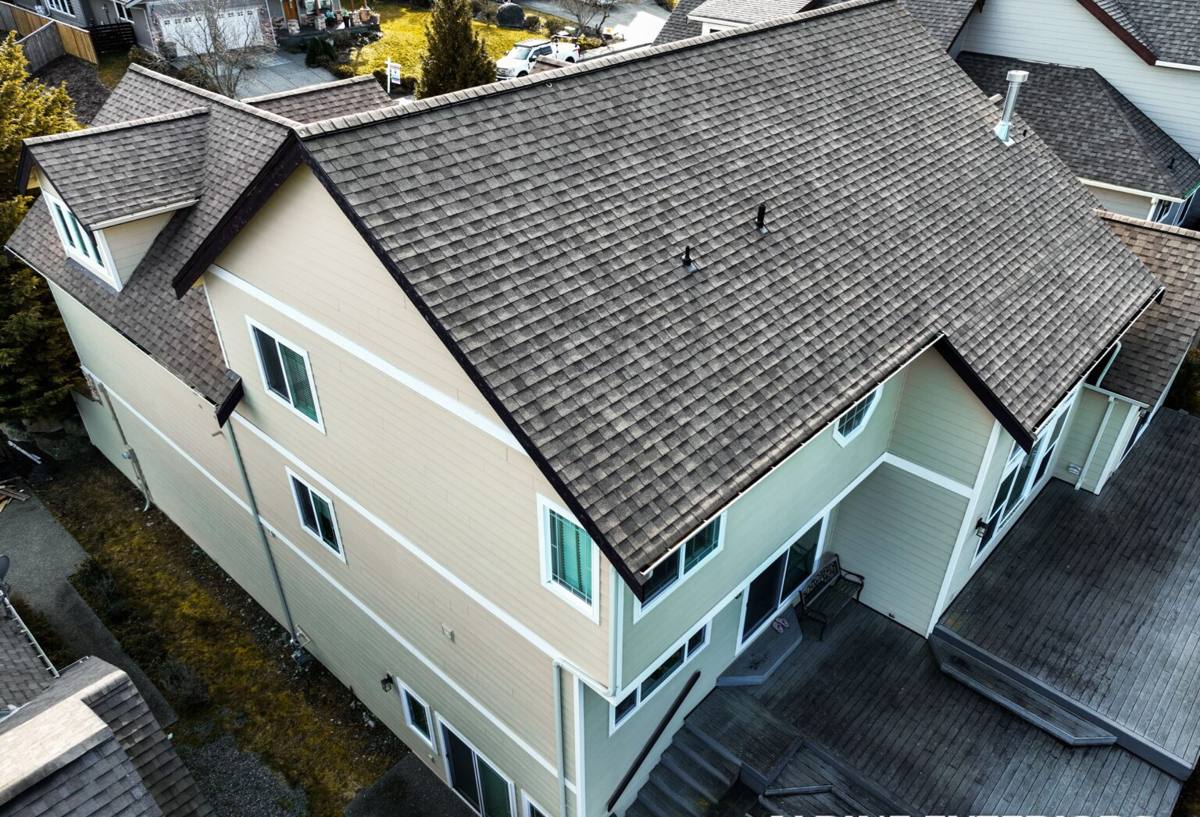
Signs Your Custer Home's Siding Is Due for Replacement
Most siding failures don't happen overnight. They show up as small warning signs first, and homeowners often wait longer than they should because the problems look cosmetic. In our experience working homes throughout Blaine and the surrounding Whatcom County communities, these are the signs worth acting on:
- Soft or spongy spots when you press on the siding, especially near the bottom courses or under windows
- Paint that's peeling, bubbling, or needing repainting more often than every few years
- Persistent moss or dark streaking that comes back within weeks of cleaning
- Visible gaps, warping, or panels that have pulled away from the wall
- Rising energy bills that suggest the wall assembly is no longer keeping conditioned air where it belongs
- Interior signs like musty smells, staining, or soft drywall near exterior walls
Any one of these on its own might just need a repair. Several together, especially on a home more than 20-25 years old, usually means the siding and the moisture barrier behind it have reached the end of their useful life.
Why "It Still Looks Fine" Can Be Misleading
Siding is a system, not just a surface. The visible material is the last line of defense — behind it should be a properly lapped water-resistive barrier, correctly flashed windows and doors, and a drainage gap that lets any moisture that gets in find its way back out. On older Custer homes, especially those that have had one or more repaint jobs over the years, it's common to find that the barrier behind the siding was never installed to current standards, or has degraded even though the face material still looks presentable.
What a Correct Siding Replacement Actually Involves
A siding replacement is more than swapping old boards for new ones. Done properly, it's a full rebuild of the exterior wall's moisture management system, from the sheathing out. Here's what that means in practice:
Tear-Off and Inspection
We remove the existing siding down to the sheathing and inspect for rot, soft spots, and any hidden damage — this is often the first real look anyone gets at what's been happening behind the old material. Any compromised sheathing gets addressed before anything new goes back up.
Water-Resistive Barrier
A new weather-resistant barrier is installed and properly lapped, shingle-style, so water is directed downward and outward rather than into the wall. This step matters more in a climate like ours, where the siding will be wet more often than it's dry.
Flashing at Every Penetration
Windows, doors, vents, and any other wall penetration get flashed correctly so water can't work its way in at the seams — historically the most common failure point on homes we've replaced siding on in this area.
Correct Fastening and Clearances
James Hardie siding has specific fastening patterns and clearance requirements — from grade, from roof lines, from decks and patios — that are engineered to keep the material performing as designed. Skipping these details is one of the most common ways a siding job fails early, regardless of the material used.
Trim, Caulking, and Finish Details
The finish work — trim boards, corner details, caulking at the right joints (and not at joints designed to move) — is what separates a siding job that looks good for a season from one that looks good for decades.
Why We Install Only James Hardie Fiber Cement
We made a decision as a company to install James Hardie fiber cement siding exclusively. We don't install vinyl, LP SmartSide, Cemplank, Allura, primed spruce, or cedar. That's not a marketing angle — it's because Hardie's fiber cement is non-combustible, engineered specifically for wet Pacific Northwest climates through its HZ5 product line, and backed by a factory-applied ColorPlus finish that resists the fading and chalking that repaint-dependent sidings eventually need. For a property exposed to the salt air and extended damp seasons that Custer and greater Whatcom County see, those aren't small advantages — they're the difference between a 10-15 year repaint cycle and siding that holds its finish for decades with a transferable warranty behind it.
We're happy to talk through the trade-offs of other materials honestly if you're weighing options. But when it's our name on the install, we only put up a product we're confident will hold up to this climate long-term.
Comparing Siding Options for a Damp, Salt-Air Climate
| Material | Moisture Performance | Maintenance | Typical Lifespan |
|---|---|---|---|
| James Hardie Fiber Cement | Excellent — engineered for wet climates, resists moisture-driven damage | Occasional wash; factory finish reduces repainting | 30+ years with proper install |
| Cedar / Primed Wood | Fair — absorbs moisture, prone to rot without vigilant upkeep | Regular repainting/staining and moisture monitoring | 10-20 years, highly upkeep-dependent |
| Vinyl | Fair — sheds water but seams and edges are vulnerable; can warp | Low, but prone to visible moss/algae staining | 15-25 years, degrades with UV and impact |
| LP SmartSide / Engineered Wood | Good if sealed edges hold; vulnerable at cuts and joints | Moderate; edge sealing needs monitoring | 20-30 years, install-sensitive |
Choosing the Right Hardie Product for a Custer Home
James Hardie makes several product lines, and the right choice depends on the style of the home and how exposed it is to weather. HardiePlank lap siding is the most common choice for traditional home profiles and gives that classic horizontal-board look. HardiePanel works well for board-and-batten or more modern vertical styles. For homes with heavier tree cover and shade — common on Custer's larger, wooded lots — color and texture choice also matters, since darker shaded surfaces show moss growth faster than sun-exposed ones. We'll walk through the ColorPlus palette and profile options based on your home's exposure, not just what looks good in a brochure.
Our Siding Replacement Process
- On-site assessment — we look at your current siding, the condition of the sheathing where visible, sun/shade exposure, and any problem areas you've noticed
- Written scope and estimate — a clear breakdown of what's being replaced, the Hardie products specified, and the timeline
- Tear-off and sheathing repair — old siding comes off, damaged sheathing gets replaced before anything new is installed
- Barrier and flashing installation — the moisture management system goes in first, correctly lapped and sealed
- Hardie siding installation — installed to manufacturer fastening and clearance specs, not shortcuts
- Trim, caulking, and final walkthrough — finish details completed and reviewed with you before we call it done
What Siding Replacement Typically Costs
Every home is different, and we don't quote firm numbers without seeing the property, but a few factors consistently drive cost on Custer jobs:
| Factor | Why It Matters |
|---|---|
| Home size and wall complexity | More corners, dormers, and cutouts mean more labor and material waste |
| Sheathing condition | Rot discovered during tear-off adds repair scope before new siding can go up |
| Siding profile and color | Custom colors and certain HardiePanel textures cost more than standard lap profiles |
| Access and site conditions | Steep grades, dense landscaping, or limited equipment access affect labor time |
| Trim and detail work | Homes with extensive trim, fascia, or soffit work add to the scope |
We'll always give you the real number after seeing the house — broad national averages you find online rarely reflect what a specific Custer property actually needs.
Checklist: What to Ask Before Hiring a Siding Contractor
- Are they licensed and insured to work in Washington, and can they show proof?
- Do they install to the manufacturer's written fastening and flashing specifications, not just "how we've always done it"?
- Will they inspect and repair sheathing before installing new siding, not just cover over problems?
- Do they have experience with homes in this specific climate — salt air, sustained rain, moss exposure?
- Is the warranty clearly explained, including what's covered by the manufacturer versus the installer?
- Will you get a written, itemized scope before work begins?
Why a Crew That Already Works in Custer Matters
Siding installed to spec on paper can still fail if the crew doesn't understand how a specific climate behaves. A crew that regularly works Blaine, Custer, and the rest of Whatcom County has already seen how moss builds up on shaded north-facing walls, how driving rain off Boundary Bay finds its way into poorly flashed corners, and which details actually matter versus which ones are just good in theory. That local pattern recognition shows up in the decisions made on-site — where extra flashing goes, how clearances are handled near grade, which corners get extra attention. It's the difference between a crew following a manual and a crew that knows why the manual says what it does.
If your Custer home's siding is showing its age or you're just planning ahead, we're glad to take a look and give you a straightforward, no-pressure assessment. Fill out the form below for a free estimate.