 Blaine Siding
 Roof Replacement in Sumas, Washington
Sumas sits right up against the Canadian border in Whatcom County, and the weather here doesn't do a roof any favors. Long, wet winters, weeks of low cloud cover that never quite dries a roof out, and moss that gets a running start every fall are the normal course of business for homes in this part of the county. When a roof in Sumas needs replacing, it's usually not one dramatic failure — it's the slow accumulation of moisture damage that finally catches up with a roof that's been holding on for a few years too long.
This page is about roof replacement specifically for Sumas homes, not a general overview of roofing. If you're trying to figure out whether your roof needs replacing, what that job actually involves, and why local experience matters more than a low bid, this is written for you.
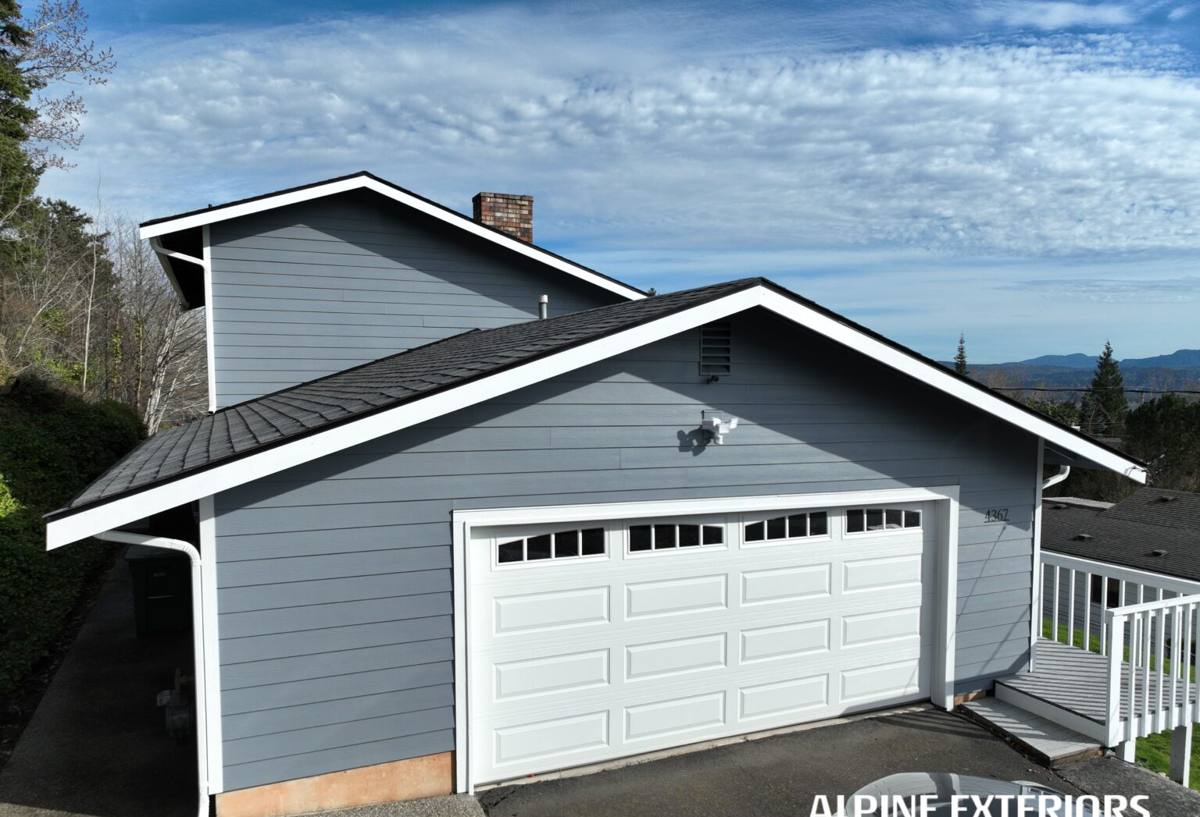
Why Sumas Roofs Wear Differently
Whatcom County's climate is defined by persistent moisture more than by any single extreme event. Driving rain, wind-driven in off frontal systems that roll through the Pacific Northwest, doesn't just fall straight down — it gets pushed sideways under shingle tabs, around flashing laps, and into any gap that a roofer left a little too loose. Over a normal roof lifespan, that adds up.
The moss factor
Moss season here runs long. Shaded roof slopes, north-facing sections, and anywhere debris collects in a valley or against a chimney will hold moisture and grow moss for a good chunk of the year. Moss isn't just cosmetic — it lifts shingle edges, holds water against the roof deck, and accelerates granule loss. A roof that looks "old" in Sumas is very often a roof that's been fighting moss longer than it should have.
Salt air and material choice
Whatcom County's proximity to Puget Sound and the Strait of Georgia means salt-laden air is part of the regional exposure profile, even for homes that aren't right on the water. Salt air accelerates corrosion on unprotected metal — flashing, fasteners, and drip edge are the parts of a roof most affected. It's one more reason we spec corrosion-resistant materials as standard rather than an upgrade.
None of this means Sumas homes need anything exotic. It means the ordinary stuff — flashing, underlayment, ventilation, fastener quality — has to be done correctly, because this climate finds every shortcut eventually.
Signs a Sumas Roof Needs Replacing, Not Patching
- Granules collecting in gutters or at downspout outlets, especially after a hard rain
- Moss growth that comes back within a season or two of cleaning
- Shingles that look cupped, curled, or have lost their flat profile
- Soft spots or noticeable give when walking the roof
- Daylight visible through the attic roof deck, or water stains on attic sheathing
- Flashing around chimneys, skylights, or roof-to-wall transitions that's rusted, lifted, or was never properly stepped in
- Interior ceiling stains that show up or worsen after wind-driven rain
- A roof approaching or past the upper end of its material's expected service life
One or two of these might mean a repair is enough. Several at once, or a roof that's already had multiple past repairs, usually means replacement is the more honest recommendation — and a more honest use of your money.
What a Correct Roof Replacement Actually Involves
A roof replacement is more than stripping old shingles and laying new ones. In a climate like this, the components underneath the shingles do as much work as the shingles themselves.
Tear-off and deck inspection
Full tear-off lets us see the roof deck directly — the only reliable way to catch soft, rotted, or delaminated sheathing before it's covered back up. Skipping this step (or roofing over an existing layer) hides problems that will resurface as leaks within a few years.
Underlayment
Given how much driving rain and moss-related moisture this area sees, underlayment isn't a place to cut corners. Ice-and-water shield at eaves, valleys, and penetrations, with synthetic underlayment across the rest of the deck, gives the roof a real second line of defense if wind-driven rain gets past the shingle surface.
Flashing
Chimneys, skylights, sidewalls, and any roof-to-wall transition need step flashing and counter-flashing done correctly — not caulked-over shortcuts. This is the single most common source of roof leaks we find on Sumas homes, and it's almost always a flashing detail that was rushed or skipped on a prior job.
Ventilation
Balanced intake and exhaust ventilation keeps the attic dry and temperature-regulated, which matters for both moisture control and shingle life. Poor ventilation traps humidity against the underside of the deck — exactly the kind of slow damage that's hard to spot until it's advanced.
Material selection
Whatever roofing material a homeowner chooses, it needs to be rated for sustained wet exposure and installed with fasteners and flashing that won't corrode prematurely in salt-influenced air. We'll walk through the honest trade-offs of each option rather than push whatever has the best margin.
Comparing Common Roofing Options for This Climate
| Material | Moss/Moisture Resistance | Typical Lifespan | Considerations for Sumas |
|---|---|---|---|
| Architectural asphalt shingle | Good, with algae-resistant granules | 25–30 years | Most common choice; needs proper ventilation and flashing to hit its rated life here |
| 3-tab asphalt shingle | Fair | 15–20 years | Lower upfront cost, but shorter service life under sustained moisture exposure |
| Metal roofing | Excellent — sheds moss and water well | 40–50+ years | Higher upfront cost; corrosion-resistant fasteners and coatings are essential near salt air |
| Synthetic/composite shingle | Very good | 30–50 years | Good moisture and impact resistance; verify local warranty support |
There's no single "correct" material for every Sumas home — budget, roof pitch, and how long you plan to stay in the house all factor in. We'll give you a straight answer on what fits your situation rather than a one-size-fits-all recommendation.
Our Roof Replacement Process
The same process applies to every roof replacement we do in Sumas:
- On-site assessment — we inspect the current roof from the ground and, where safe, on the roof itself, including attic access if available, to understand the actual condition rather than guessing from curb appeal
- Written scope and estimate — a clear breakdown of materials, labor, and what's included, with no vague allowances
- Tear-off and deck repair — full removal of old roofing, with any damaged decking replaced and documented before it's covered
- Underlayment and flashing installation — done to manufacturer and code specification, not shortcut for speed
- New roofing installation — installed per manufacturer spec to keep warranty coverage intact
- Final walkthrough — we go over the finished roof with you before calling the job done
Why Local Experience Matters for Sumas Roofs
A crew that already works in and around Sumas knows what this climate does to a roof over time, not just what a spec sheet says it should do. That means recognizing which flashing details tend to fail first in this area, knowing which north-facing slopes need extra moss prevention, and not being surprised by how much driving rain a roof here actually has to shed in a given winter.
It also means being reachable if something comes up after the job — a follow-up question, a warranty item, a storm that tests the new roof sooner than expected. Whatcom County weather isn't gentle on new work, and a contractor who's still local next year is worth more than a slightly lower bid from someone who isn't.
What Roof Replacement Typically Costs
Costs vary based on roof size, pitch, number of layers being removed, deck condition, and material choice, so we won't quote a number without seeing the roof. In general, expect asphalt shingle replacement to sit at the lower end of the cost range, with metal and synthetic materials costing more upfront but requiring less maintenance and lasting considerably longer. Deck repairs, if the tear-off reveals rot or delamination, are typically priced separately since the extent isn't known until the old roofing is off.
We'll give you a written estimate that spells out what's included, so you're not comparing an incomplete quote against a complete one.
Get a Free, No-Pressure Estimate
If your Sumas roof is showing its age, or you just want an honest read on how much life it has left, we're happy to take a look. There's no pressure and no obligation — just a straight assessment from a crew that knows what this climate does to roofs. Fill out the form below to schedule a free estimate.