 Blaine Siding
 Birch Bay's Siding Problem Isn't Like Most of Whatcom County
Birch Bay sits right on the water, and that changes what siding has to survive. Homes a few miles inland in Blaine deal with plenty of rain, but they don't get the steady dose of salt-laden air coming off the bay, and they usually get more sun exposure to dry things out between storms. Birch Bay homes get wind-driven rain off open water, salt spray that settles on exterior walls, and long stretches of shade and dampness on the north and west sides of a house where moss and algae take hold and never fully let go. If you're replacing siding on a Birch Bay home, the material and the installation both need to be chosen for that specific combination, not for generic Pacific Northwest weather.
This page is about one job: replacing siding on a home in Birch Bay. Not a general overview of siding, not a different neighborhood's climate — this one.
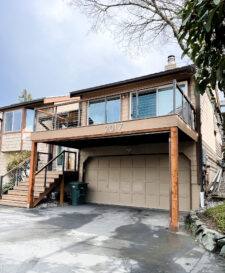
What Salt Air, Driving Rain, and Moss Season Actually Do to Siding
Salt Air
Airborne salt is corrosive and hygroscopic — it pulls moisture out of the air and holds it against whatever it lands on. On wood-based siding products, that means the surface stays damp longer than it would a mile or two inland, which accelerates paint failure, swelling, and rot at seams and butt joints. On fasteners and trim accessories, salt exposure speeds up corrosion unless the hardware is rated for it.
Driving Rain
Birch Bay's exposure to wind off the water means rain doesn't just fall straight down — it gets pushed sideways into walls, lap joints, and anywhere there's a gap in the water-resistive barrier or flashing. Siding that relies on paint film alone to keep water out, rather than a system of correctly lapped water-resistive barrier, flashing, and drainage behind the cladding, is going to lose that fight eventually. This is as much an installation issue as a material issue.
Moss and Algae
Shaded, damp exterior walls — common on the north and west elevations of Birch Bay homes near mature trees or close to the water — grow moss and algae readily. Beyond the cosmetic issue, moss holds moisture against the siding surface for extended periods, which is hard on any product that isn't dimensionally stable and resistant to moisture absorption at its core.
Signs a Birch Bay Home Needs Siding Replacement, Not Just Repair
- Soft or spongy spots when you press on the siding, especially near the bottom courses and around window and door trim
- Paint that keeps failing within a couple of years no matter how often it's redone
- Visible warping, cupping, or buckling on wood or engineered wood panels
- Persistent moss or algae staining that comes back within months of cleaning
- Gaps opening up at seams, corners, or where siding meets trim
- Rising energy bills that track with cold spots or drafts along exterior walls
- Visible rot at the bottom edge of siding boards, particularly on north- and west-facing walls
One or two of these can sometimes be addressed with spot repair. Several at once, especially combined with the home's age, usually means the underlying material and water management system have reached the end of their useful life and a full replacement is the more honest recommendation.
What a Correct Siding Replacement Actually Involves
Siding replacement is not just swapping old boards for new ones. Done right, especially on a home exposed to the conditions Birch Bay sees, it's a full rebuild of the wall's water management system:
- Tear-off and inspection. Removing the old siding and checking the sheathing underneath for rot, soft spots, or prior water damage that needs to be repaired before anything new goes up.
- Water-resistive barrier. A correctly lapped, sealed weather barrier goes over the sheathing — this is the layer that actually stops bulk water, not the siding itself.
- Flashing. Windows, doors, and any penetration through the wall get flashed so water is directed out and down, never trapped behind the cladding.
- Drainage plane. On a house taking direct salt air and driving rain, a ventilated gap behind the siding lets any moisture that does get in dry out instead of sitting against the wall.
- Siding installation. Boards installed to the manufacturer's fastening pattern, clearances, and gapping specs — not just "close enough."
- Trim and caulking. Correct sealant at the right joints only — over-caulking traps moisture just as badly as under-caulking lets it in.
Skip or rush any one of these steps and the new siding will start failing years before it should, regardless of how good the product itself is.
Why We Install Only James Hardie Fiber Cement
We don't install vinyl, LP SmartSide, primed spruce, cedar, or other fiber cement brands. That's not a marketing line — it's a standard we hold to on every job, including in Birch Bay, because of what this specific location does to siding over time.
| Concern in Birch Bay | Why It Matters Here | How James Hardie Addresses It |
|---|---|---|
| Salt air and moisture | Wood-based products absorb moisture and swell, warp, or rot faster in salt-laden, damp air | Fiber cement core doesn't absorb moisture the way wood or wood-composite products do |
| Driving rain | Wind-driven water finds weak seams and joints | HZ5 product line is engineered for wet, harsh climates, and installs into the same water-managed system described above |
| Moss and algae | Shaded, damp walls stay wet longer, feeding growth | Dense fiber cement resists the softening and surface breakdown that lets organic growth take hold |
| Fire exposure | Homes near dry brush or with wood-heat neighbors | Non-combustible material, unlike wood-based or vinyl siding |
| Long-term finish | Repainting a whole house every few years is expensive | ColorPlus factory finish is baked on and warranted, reducing repaint cycles |
We're not saying every other product is unusable everywhere — LP SmartSide, cedar, and vinyl all have situations where they perform reasonably. We're saying that for the climate this company builds in, and for the standard we want to stand behind on every install, James Hardie is the one material we've found holds up consistently without asking homeowners to accept a shorter lifespan or a higher maintenance burden as the cost of doing business.
Our Process, Start to Finish
1. On-Site Assessment
We walk the exterior with you, check for existing damage, note problem areas (shaded walls, low-lying sections, anywhere moss keeps coming back), and talk through what's realistic for the home.
2. Written Estimate
You get a clear scope of work and pricing before anything is scheduled — no surprise change orders for work that should have been identified up front.
3. Tear-Off and Repair
Old siding comes off, sheathing gets inspected, and any rot or damage found underneath is repaired and documented before new material goes up.
4. Water Management Install
Weather barrier, flashing, and drainage plane go in first — this is the part of the job that determines whether the house stays dry for the next 30 years, not just the next five.
5. James Hardie Installation
Siding, trim, and accessories go on to manufacturer spec, with fastening and clearances that keep the warranty valid.
6. Final Walkthrough
We walk the finished job with you, point out what was done, and answer questions about care and what to expect going forward.
What Drives the Cost of a Birch Bay Siding Replacement
| Factor | Why It Affects Price |
|---|---|
| Home size and wall complexity | More square footage, more corners, dormers, and trim details all add labor |
| Condition of existing sheathing | Hidden rot found during tear-off adds repair work before new siding can go up |
| Siding profile and accessories chosen | Lap width, trim style, and color selections vary in material cost |
| Access and site conditions | Waterfront lots, tight setbacks, or difficult staging areas can affect labor time |
| Scope of water management work | A full weather barrier and flashing rebuild costs more up front than a corner-cutting reside, and saves money over the life of the siding |
We don't publish flat prices because every one of these varies house to house — the estimate walk is where we get you real numbers, not a guess.
Why It Matters That We Already Work in Birch Bay
A crew that's worked Whatcom County's waterfront homes knows to expect moss on the north wall before they even walk around the house, knows which wall assemblies tend to hide moisture damage in a Birch Bay build, and doesn't have to relearn how salt air changes fastener and flashing choices on every single job. That familiarity shows up in fewer surprises during tear-off, a more accurate estimate the first time, and a finished installation that's actually built for the conditions the home will face — not a generic install that happens to be located near the water.
Before You Hire Anyone for a Siding Replacement in Birch Bay
- Ask what's included in the water-resistive barrier and flashing work, not just the visible siding
- Ask how they handle rot or damage discovered once old siding comes off
- Ask which siding products they install and why — and whether they install more than one brand or system
- Ask about the manufacturer's warranty and what voids it
- Get the scope of work in writing before tear-off starts, not after
If you're weighing a siding replacement for a home in Birch Bay, we're glad to come take a look and give you a straight, no-pressure estimate — including what we'd expect to find once the old siding comes off. Use the form below to get started.