 Blaine Siding
 Windows Built for Life Near the Peace Arch
Homes near the Peace Arch in Blaine sit about as close to the water and the weather as you can get in Whatcom County. That stretch of coastline off Semiahmoo Bay and Drayton Harbor takes a steady diet of salt-laden air, wind-driven rain, and a moss season that can run half the year. Windows here don't fail the way they do further inland. They fail at the seams, the sills, and the fasteners — the places where salt air and standing moisture get a foothold that a drier climate would never give them.
We install windows in this part of Blaine regularly enough to know which failure patterns show up first and which products and details actually hold up. This page covers what that means for a Peace Arch-area home specifically, not siding or roofing in general — just windows, done right, for this stretch of coastline.
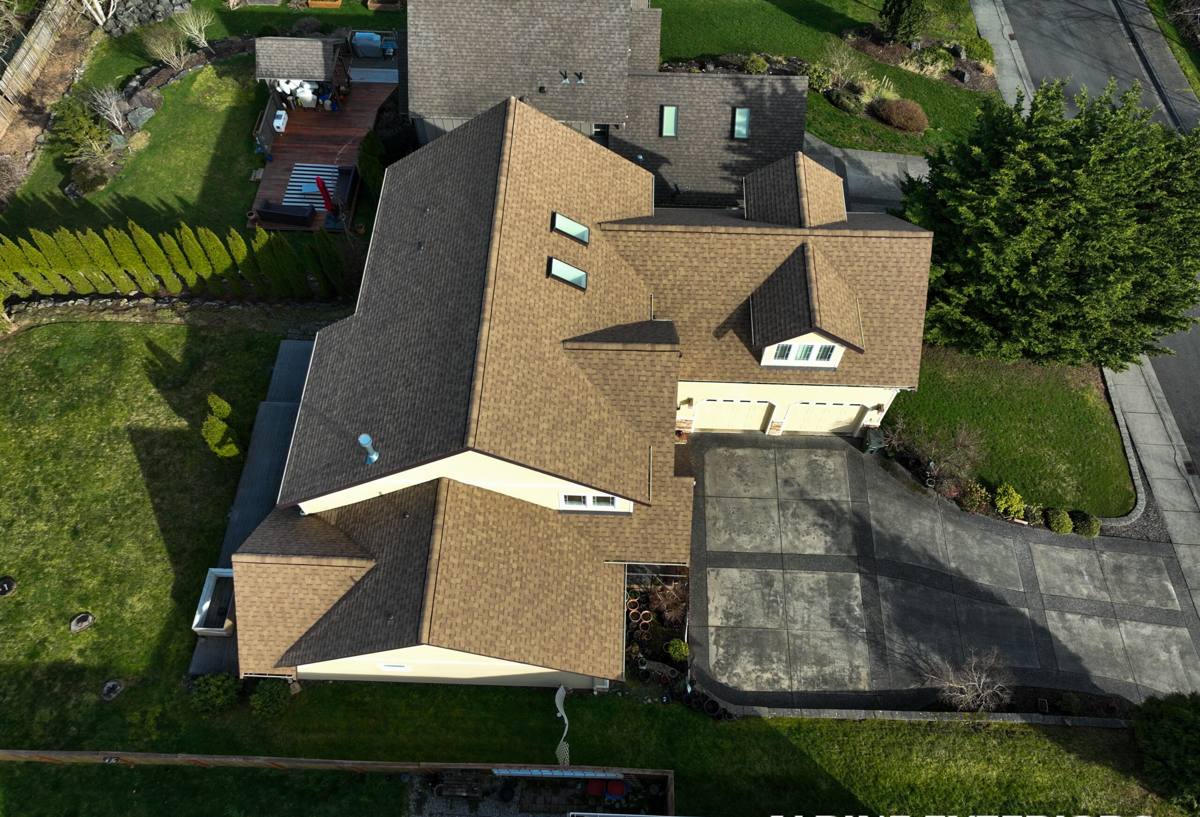
What the Peace Arch Microclimate Does to a Window
Every part of Blaine deals with Pacific Northwest rain, but proximity to open water changes the equation. Homes closer to Semiahmoo Bay and Drayton Harbor catch salt spray carried on the wind, especially during winter storms and southwest blows. That salt content matters more than most homeowners realize:
- Corrosion accelerates on hardware. Cheap or unrated fasteners, hinges, and cranks pit and seize years faster near the water than they would a few miles inland.
- Aluminum-clad and bare aluminum frames are more exposure-sensitive. Without the right finish and detailing, oxidation and pitting show up early in a marine environment.
- Driving rain finds gaps that vertical rain never would. Wind off the water pushes water sideways and upward under sills and around trim, which is why flashing sequence matters more here than in a sheltered yard.
- Moss and algae hold moisture against the building envelope for months at a time. A window opening that isn't properly flashed and sealed stays damp longer, which invites rot in the surrounding framing even if the window itself is fine.
None of this means Peace Arch homes need exotic products. It means ordinary decisions — flashing order, sealant choice, hardware grade, drainage at the sill — carry more consequence here than they would in a drier, more sheltered part of the county.
Signs a Peace Arch Home's Windows Are Due
Because failures here tend to start at seams and fasteners rather than glass, the early warning signs are easy to miss if you're not looking for them.
- Sticking or hard-to-turn cranks and locks, especially on windows facing the water or prevailing wind
- Visible pitting, chalking, or white corrosion residue on aluminum or hardware
- Soft or discolored trim and sill material below or around the window
- Persistent moss or dark streaking on the wall directly above or beside a window opening
- Fogging between panes on double- or triple-glazed units (a sign the seal has failed)
- A draft you can feel at the frame edge even with the window fully latched
Any one of these on its own isn't an emergency. Several together, especially on the water-facing side of the house, usually means the flashing or seal has already let moisture into the wall assembly and it's worth having it looked at before a full replacement is even on the table.
What a Correct Installation Actually Involves
Window replacement gets sold as a product decision — which brand, which glass package — but in a marine climate like this one, the installation detailing matters as much as the window itself. A well-built window installed carelessly will leak in this environment. A modest window installed correctly will outlast it.
The sequence that matters
- Remove and inspect. Old trim and the window come out carefully so we can see the condition of the rough opening, sheathing, and framing underneath before anything new goes in.
- Address what's underneath. Any soft wood, failed old flashing, or moisture staining gets dealt with now. Installing a new window over a compromised opening just hides the problem behind new trim.
- Flash in the correct order. Sill pan first, sides next, top last — shingle-style, so water is always directed outward and down, never trapped behind a layer above it. This order is non-negotiable in a driving-rain, salt-air environment.
- Set the window plumb, level, and square. A window that's slightly racked stresses the seals and hardware from day one, which shows up as premature wear in exactly the corrosion-prone parts described above.
- Seal and insulate the gap correctly. Low-expansion foam or backer rod and sealant around the frame — not stuffed with excess material that traps moisture against the wood.
- Finish with weather-appropriate trim and caulk joints rated for exterior, coastal exposure, not general-purpose caulk that will chalk and crack within a season or two.
Every one of those steps takes longer to do correctly than to skip. That's the actual difference between an installation that holds up near the water and one that needs revisiting in five years.
Choosing a Window for This Location
We don't push one brand or frame material as the only right answer — the right choice depends on the home's exposure, budget, and how the existing openings are built. What we do steer Peace Arch-area homeowners toward is a frame material and hardware grade that's honest about the environment they're in.
| Frame Material | How It Handles This Climate | Trade-Offs to Know |
|---|---|---|
| Vinyl | Won't corrode from salt air; low maintenance | Lower-end vinyl can warp under strong sun/heat cycling; quality varies a lot by manufacturer |
| Fiberglass | Very stable in temperature swings and coastal moisture; holds paint well | Higher upfront cost than vinyl |
| Wood (clad exterior) | Classic look, good insulator | Exposed wood surfaces need real maintenance discipline in salt air and moss season; cladding quality matters more here than inland |
| Bare aluminum | Strong and slim sightlines | Most exposure-sensitive option near open water without a marine-grade finish; we're selective about where we recommend it this close to the bay |
Hardware grade deserves the same attention as frame material. We spec corrosion-resistant fasteners and hardware for anything within reach of salt spray — it costs a bit more up front and it's the difference between locks that work smoothly in year eight versus locks that seize in year three.
Glass and energy performance
Double-pane, low-E glass is the practical standard for this area and handles both the marine humidity and the county's winter heating loads well. Triple-pane is worth discussing for west- and south-facing openings that take the brunt of wind-driven rain and temperature swings, but it's a cost-and-benefit conversation, not a default — we'll walk through whether it makes sense for your specific openings rather than upselling it across the board.
Why Local Experience Near the Peace Arch Matters
A crew that mostly works drier, more sheltered parts of Whatcom County can install a technically fine window and still get the flashing sequence or sealant choice wrong for this specific stretch of coastline — because the consequences of those shortcuts don't show up for a year or two. Working this neighborhood regularly means we've already seen which details hold up through a real Peace Arch winter and which ones come back as callbacks.
That shows up in small, practical ways: knowing to check the rough opening for prior moisture damage before assuming the frame itself is the problem, using sealants and fasteners rated for the salt exposure rather than whatever's standard elsewhere, and timing exterior work around the wetter stretches of the moss season so sealants and finishes cure properly instead of failing early.
Maintenance That Actually Extends the Life of a Peace Arch Installation
Even a correctly installed window benefits from a little seasonal attention in this environment:
- Rinse salt residue off exterior frames and hardware a couple times a year, especially after winter storms
- Keep gutters and downspouts clear so runoff isn't sheeting down across window heads
- Check and refresh exterior caulk joints every few years — they're a wear item here, not a one-time install detail
- Clear moss or debris that accumulates on sills or in window wells before it holds moisture against the frame
- Operate locks and cranks periodically through the off-season so hardware doesn't seize from disuse plus salt exposure
None of this is heavy work, but skipping it is exactly how a well-installed window ends up needing early attention in a location like this.
What to Expect From Our Process
We keep the process straightforward: an on-site look at your current windows and openings, a plain-English explanation of what we find (including whether repair is a reasonable option instead of full replacement), and a written estimate that spells out frame material, glass package, and installation scope so there's no guessing about what's included. We work around weather windows sensibly — driving rain and open wall cavities don't mix, so scheduling accounts for that rather than rushing a job into a bad forecast.
If you're noticing drafts, sticking hardware, or moisture signs on windows near the Peace Arch area, we're happy to take a look and give you a straight assessment — no pressure, no upsell script, just what your home actually needs. Reach out for a free estimate using the form below.