 Blaine Siding
 Roof Repair for Everson Homes in Whatcom County's Toughest Climate
Everson sits inland from the salt water of Boundary Bay, but it doesn't escape what that proximity does to a roof. Between the marine air that drifts in off the Strait of Georgia, the driving rain that Whatcom County sees for months at a stretch, and a moss season that can run from October through May, roofs here work harder than roofs almost anywhere else in the state. A roof that would last two or three decades in a dry climate can develop real problems in half that time out here if it isn't maintained and repaired correctly.
This page is specifically about roof repair for homes in and around Everson and the greater Blaine service area — not a full tear-off, not a sales pitch for replacement you don't need. Most roofs that are otherwise sound can be repaired properly and get another decade or more of service. The trick is knowing which repairs actually solve the problem and which ones just cover it up.
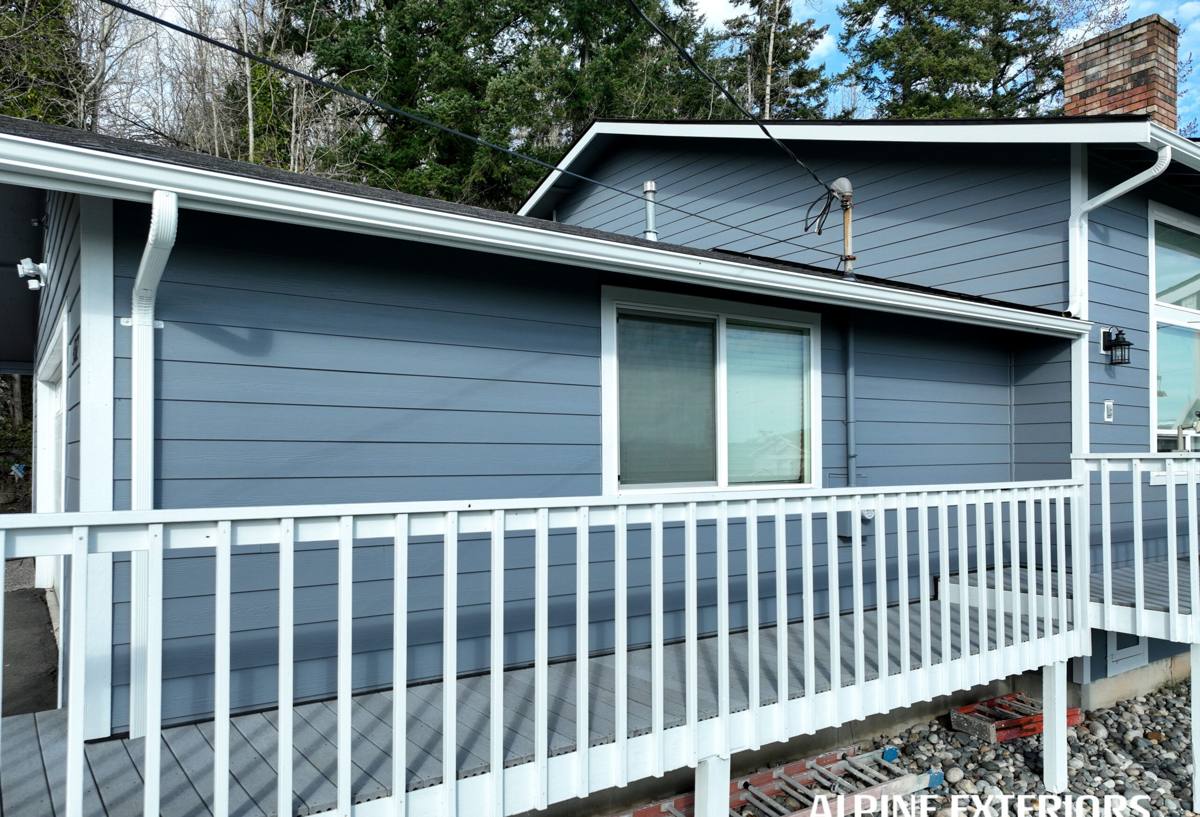
Why Local Climate Drives Everything About a Roof Repair Here
Salt Air and Metal Fatigue
Everson is far enough from the water that most homeowners don't think of salt air as a factor, but airborne salt still travels with the prevailing weather patterns off the Strait of Georgia and Boundary Bay, especially during winter storms. Over years, that salt accelerates corrosion on exposed metal — flashing, nails, gutter hardware, and vent stacks. A repair that ignores corroded metal components and only patches the visible shingle damage tends to fail again within a season or two.
Driving Rain and Wind-Driven Water
Whatcom County storms don't just drop rain straight down. Wind off the water pushes rain sideways, which forces water up under shingle edges, into vent flashing, and behind siding-to-roof transitions that would never leak in a calmer climate. Any repair that doesn't account for wind-driven rain — using standard nail patterns and standard flashing laps meant for vertical rainfall — is a repair that's likely to leak again in the next big blow.
A Long, Wet Moss Season
Moss needs shade, moisture, and organic debris to take hold, and Everson's tree cover combined with our long wet season gives it exactly that. Moss isn't just cosmetic. It holds moisture directly against the roofing material, works its way under shingle tabs as it grows, and lifts edges enough for water to get underneath. By the time moss is visible from the ground, it's often already done damage that isn't visible from the ground.
Signs an Everson Roof Needs Repair, Not Just a Look
- Dark streaking or green-black growth concentrated on north-facing or shaded slopes
- Granules collecting in gutters or at downspout outlets, a sign shingles are losing their protective surface
- Soft spots, sagging, or a spongy feel underfoot in the attic decking
- Water stains on interior ceilings, especially near chimneys, skylights, or where roof planes meet
- Curling, cracked, or missing shingles, particularly after a windstorm
- Rust streaks below metal flashing or vent stacks
- Daylight visible through the roof deck from inside the attic
- Ice or heavy moss buildup that doesn't clear even after a stretch of dry weather
Any one of these on its own doesn't necessarily mean a full replacement is coming. But it does mean the roof needs a real inspection before another wet season sets in, not a guess from the ground.
What an Honest Roof Repair Actually Involves
A lot of roof "repairs" are really just a bundle of shingles nailed over a problem without anyone figuring out what caused it. That approach might buy a season, but out here it usually doesn't hold. A repair done right starts with diagnosis, not patching.
Finding the Actual Source
Water rarely stains the ceiling directly below where it entered the roof — it travels along rafters, sheathing, and insulation before it shows up as a spot on drywall. A correct repair traces the path back to the entry point, which is often flashing around a chimney, vent, or roof valley rather than the shingle field itself.
Flashing First
Flashing failure is the single most common cause of roof leaks in this region, more than worn shingles. Step flashing along walls, valley flashing, and vent boot flashing all take direct hits from wind-driven rain. If the flashing is corroded, improperly lapped, or was never sealed correctly to begin with, replacing shingles around it without addressing the flashing itself just delays the next leak.
Matching Materials, Not Just Colors
Shingle repairs that don't match the existing product's profile, weight, and granule type stand out visually and can also create a slightly uneven water path across the roof plane. We match not just for appearance but for how the new material sheds water alongside the old.
Underlayment Condition
On older roofs, especially anything approaching or past 15–20 years, the underlayment beneath the shingles has often degraded even where the shingles themselves still look serviceable. A proper repair checks underlayment condition in the affected area rather than assuming it's fine because the shingles are.
Repair vs. Replacement: How We Help You Decide
| Factor | Leans Toward Repair | Leans Toward Replacement |
|---|---|---|
| Roof age | Under 15 years, asphalt shingle | 20+ years, multiple prior repairs |
| Damage extent | Isolated to one slope, valley, or flashing point | Widespread granule loss, curling across most of the roof |
| Deck condition | Solid, no soft spots found | Soft, delaminated, or rotted decking in multiple areas |
| Moss/algae situation | Surface growth, treatable with cleaning and localized repair | Moss has been established for years with visible shingle lifting |
| Leak history | First occurrence, clear single cause | Recurring leaks in different spots each season |
Most of the calls we get in Everson turn out to be legitimate repairs. We'd rather tell you honestly that a repair will hold than sell a replacement a roof doesn't need yet — and we'll also tell you plainly when a roof has reached the point where repair is just delaying an inevitable, more expensive failure.
Our Roof Repair Process
- Ground and roof-level inspection. We look at the whole roof, not just the spot you called about, since Whatcom County weather tends to stress every roof the same way.
- Attic check when accessible. Interior signs of moisture often tell us more than what's visible from outside.
- Written explanation of what we found. You'll know what's causing the problem before we touch anything, including whether it's a repair or a replacement conversation.
- Repair scoped to the actual cause. Flashing, decking, underlayment, and shingle work addressed together rather than shingles patched over an unresolved leak source.
- Moss and debris cleared from the work area and surrounding roof planes so the repair isn't undermined by the same growth that likely contributed to the damage.
- Final walk-through so you can see what was done and why.
Materials: What We Use and Why
For most Everson repairs, we match the existing roofing material rather than introducing a different product, since mixing incompatible materials on one roof plane can create its own water-management issues. When homeowners ask about upgrading during a repair, here's how we think about the common options:
Asphalt Composition Shingle
Still the most common roofing material in this area, and for good reason — it's cost-effective, widely available in matching profiles for repairs, and performs well when properly flashed and ventilated. Our standard is to use products rated for the wind exposure this area actually sees, not the minimum-grade option.
Metal Roofing Components
Metal flashing and metal roofing sections hold up well against driving rain when properly installed, but they're also where salt-air corrosion shows up first if lower-grade fasteners or flashing are used. We use corrosion-resistant fasteners and flashing on repair work for exactly this reason, even when it costs a little more upfront.
Underlayment Upgrades
On repairs where we're already opening up a section of roof, we often recommend upgrading to a synthetic or self-adhered underlayment in that area, since it handles wind-driven moisture better than older felt products. It's a reasonable add during a repair rather than something we'd push as a standalone job.
What to Ask Before Hiring Anyone for Roof Repair
- Will you inspect the whole roof or just the spot I'm calling about?
- Are you licensed and insured to do roofing work in Washington State?
- Will you show me what caused the leak before you start the repair?
- Do you match existing shingle profile and weight, not just color?
- What's your plan for moss or algae already growing near the repair area?
- Will the flashing be inspected and replaced if it's corroded or improperly installed?
- Do you offer a written scope of work before starting?
- What's your timeline given current weather, and how do you protect the home if rain moves in mid-repair?
Why It Matters That We Already Work in Everson
Roof problems in this part of Whatcom County follow patterns that are different from what you'd see in a drier climate, or even in parts of Washington east of the mountains. A crew that regularly works Everson and the surrounding Blaine area already knows which roof orientations tend to hold moss longest, which flashing details fail first under our wind-driven rain, and how long a given repair should realistically be expected to last given the exposure. That local pattern recognition shortens the diagnosis and helps avoid repairs that look fine in July but fail in the first real November storm.
We're also simply closer, which matters when a leak needs attention before the next storm system rolls through rather than weeks later.
Keeping a Repaired Roof in Good Shape
A repair is only as good as the maintenance that follows it. For Everson homes, that generally means keeping gutters clear so water isn't backing up under shingle edges, trimming back tree limbs that shade sections of roof and encourage moss, and scheduling a periodic moss treatment rather than waiting until growth is heavy enough to see from the street. None of this is complicated, but it's the difference between a repair that holds for a decade and one that needs revisiting in two years.
If you're dealing with a leak, visible moss, storm damage, or just want an honest opinion on the condition of your roof, we're happy to take a look and give you a straight answer about what it needs. Reach out for a free, no-pressure estimate using the form below.