 Blaine Siding
 Deck Replacement Built for the Peace Arch Area's Climate
Homes near the Peace Arch area of Blaine sit close to the water and close to the border, which means decks here deal with a specific combination of conditions: salt-laden air off the bay, long stretches of driving rain through fall and winter, and a moss season that can run six months or longer in shaded, north-facing yards. A deck built or repaired without accounting for that combination tends to fail early — not because the material was bad, but because the details underneath weren't matched to what this stretch of Whatcom County actually throws at a structure year-round.
We replace decks for homeowners in this area on a regular basis, and the failures we see are consistent: soft ledger boards, corroded fasteners, framing that never had a chance to dry out between storms, and surface boards that looked fine for a few years before moss and moisture worked their way in underneath. A correct deck replacement addresses all of that, not just the visible top layer.
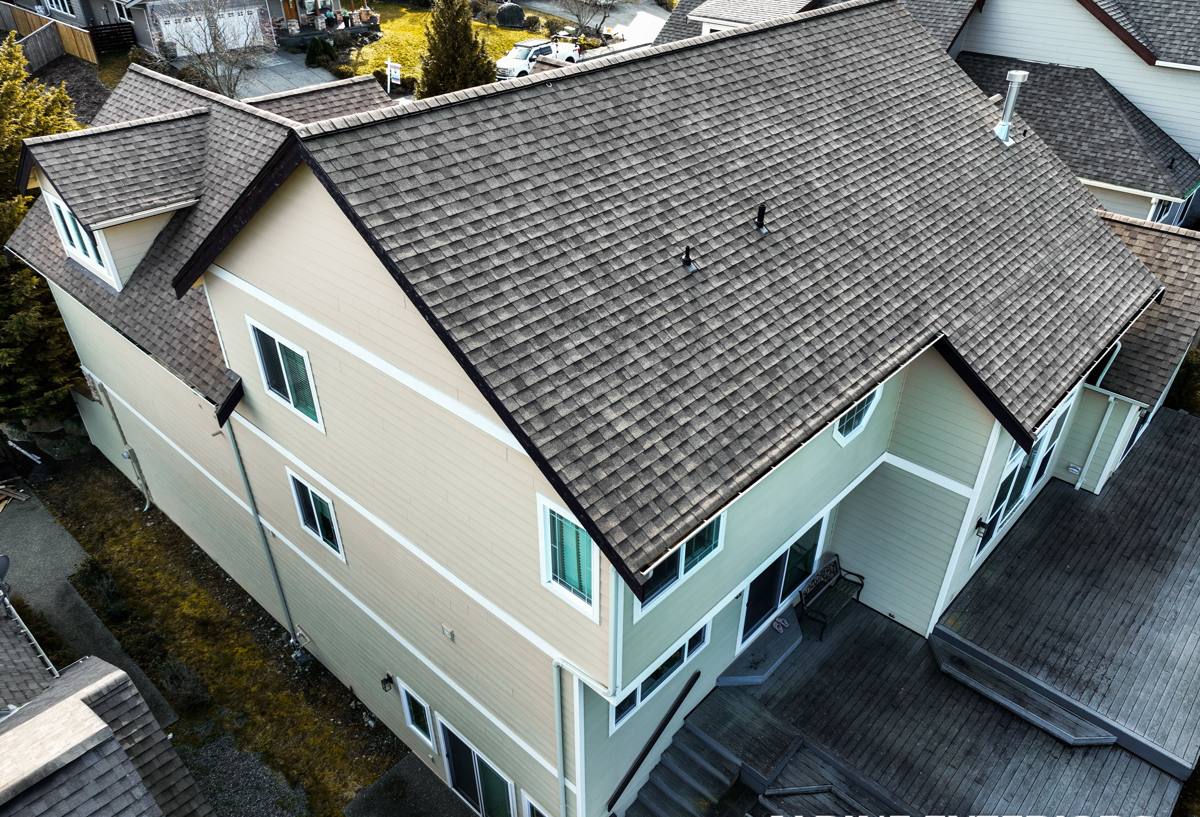
Why Decks Fail Faster Here Than in Drier Climates
Salt Air and Metal Fasteners
Proximity to Semiahmoo Bay and the surrounding waterways means airborne salt reaches decks even when they're not right on the shoreline. Standard fasteners and hardware corrode faster under that exposure, and once a nail or screw starts to rust, it weakens the connection long before the wood around it shows obvious damage. This is one of the most common hidden causes of a deck that feels "spongy" or loose despite looking okay on top.
Driving Rain and Water Intrusion
Rain in this part of Washington rarely falls straight down — wind off the water pushes it sideways into ledger connections, board gaps, and any spot where flashing was skipped or done poorly. Over time, water finds its way into framing and won't dry out fully between storms, especially on decks with limited sun exposure or heavy tree cover.
Moss, Algae, and a Long Damp Season
Shaded decks and north-facing exposures in this area can stay damp for months at a stretch, which is exactly what moss and algae need to take hold. Beyond making a deck surface slick and unsafe, moss traps moisture against the board surface, accelerating rot in wood decking and staining even low-maintenance materials if it's never cleaned off.
Signs a Deck Needs Replacement, Not Just Repair
Not every deck problem calls for a full tear-off. But there's a point where patching individual boards or re-sinking a few screws stops being a real fix and starts being a way to delay the inevitable. Some signs point clearly toward replacement:
- Soft, spongy, or bouncy sections in the decking surface, especially near the house
- Visible rot or soft wood at the ledger board where the deck attaches to the house
- Rust streaks running down from fasteners or joist hangers
- Posts or footings that have shifted, settled, or show cracking
- Persistent moss or algae that returns within weeks of cleaning
- A structure built before current code requirements for ledger attachment and guardrails
If more than one or two of these apply, replacement is usually the more honest recommendation — repeated spot repairs on a structurally tired deck end up costing more over a few years than doing the job right once.
What a Correct Deck Replacement Actually Involves
Ledger Board and Flashing First
The ledger — the board that bolts the deck to the house — is the single most important connection on the entire structure, and it's the one most often done wrong on older decks in wet climates. A proper replacement means removing the old ledger, inspecting the rim joist and sheathing behind it for hidden rot, and installing new flashing that directs water away from the house rather than trapping it against the framing. Skipping this step is the most common reason decks in this area fail again within a few years of a "replacement."
Framing and Footings Sized for Wet Ground
Framing lumber needs to be properly rated for ground contact where it's close to grade, and footings need to sit below frost depth and on stable, well-drained soil — not just poured into whatever the old footings left behind. Where drainage around the yard is poor, we look at grading and footing placement together rather than just replicating the original layout.
Fasteners and Hardware Matched to the Exposure
Given the salt air common to this area, we use corrosion-resistant structural screws and connectors rather than standard-grade hardware. It costs a little more upfront and makes a real difference in how long the connections hold up before anything works loose.
Decking Material Selection
The visible boards get the most attention from homeowners, but they're the last decision in a properly sequenced replacement, not the first. Material choice should follow from how much sun and shade the deck gets, how much upkeep the homeowner actually wants to do, and budget.
Comparing Decking Materials for This Climate
| Material | Moss/Moisture Resistance | Maintenance | Typical Lifespan |
|---|---|---|---|
| Pressure-treated wood | Moderate — needs sealing and regular cleaning | Annual cleaning and re-staining/sealing | 10–15 years in this climate with upkeep |
| Cedar | Good natural resistance, but surface still needs care | Periodic cleaning, oil or sealant every 1–2 years | 15–20 years with consistent maintenance |
| Capped composite | Strong — resists moisture absorption at the surface | Occasional washing to remove moss and pollen film | 25–30 years |
| PVC decking | Very strong — fully synthetic, no wood fiber to hold moisture | Low — occasional washing | 25–30+ years |
Wood remains a reasonable choice for homeowners who want a traditional look and are willing to keep up with sealing and cleaning. For decks in shaded or exposed spots where moss and rain are a constant fight, composite and PVC products generally hold up with far less ongoing effort, since there's no wood fiber at the surface for moisture to soak into. We install a range of reputable composite and PVC product lines and can walk through the tradeoffs in color retention, warranty terms, and surface feel during an estimate.
Our Deck Replacement Process
- On-site evaluation. We inspect the existing deck, ledger connection, framing, and footings to determine what's actually failing and why.
- Honest scope and estimate. We explain what needs full replacement versus what could reasonably be reused, and provide a written estimate before any work starts.
- Permitting. Where a permit is required, we handle the application and inspection scheduling as part of the job.
- Demolition and disposal. Old decking, framing, and hardware are removed and hauled off — we don't leave debris for the homeowner to deal with.
- Structural rebuild. New ledger, flashing, framing, and footings are installed to current code, sized for local soil and moisture conditions.
- Decking installation. Boards, fasteners, and any railing or stair components are installed per the manufacturer's specifications for the chosen material.
- Final walkthrough. We review the finished deck with the homeowner and cover basic maintenance expectations for the material installed.
Permits and Local Requirements
Deck replacement in Blaine and unincorporated Whatcom County generally requires a building permit once the structure exceeds a certain size or height above grade, and current code has specific requirements for ledger attachment, guardrail height, and stair geometry that older decks often don't meet. We handle the permit process as part of the job rather than leaving it to the homeowner to sort out, and we build to current code even on straightforward replacements — it's the difference between a deck that passes inspection cleanly and one that creates problems at resale.
Keeping a New Deck Ahead of Moss Season
A properly built deck with the right material still benefits from some seasonal attention in this climate, particularly through the wetter months when moss and algae growth is at its peak.
- Sweep leaves and debris off the deck regularly through fall — trapped organic matter holds moisture and feeds moss growth
- Wash the deck surface at least once or twice a year with a deck-safe cleaner to remove moss and algae film before it takes hold
- Check that gaps between boards stay clear so water can drain rather than pool
- Inspect the ledger area and any flashing once a year for signs of water staining or wear
- For wood decks, reapply sealant or stain on the manufacturer's recommended schedule — don't wait until the surface looks visibly worn
- Keep gutters and downspouts near the deck clear so roof runoff isn't draining directly onto the structure
Why Local Experience Matters for This Job
A deck replacement built to a generic spec sheet, without accounting for salt exposure, driving rain, and a long damp season, tends to show problems within a few years — usually right at the ledger, the fasteners, or wherever moss has been left to sit. A crew that already works in the Peace Arch area and elsewhere around Blaine knows which details matter here specifically: the flashing details that actually keep water out, the hardware grade worth paying for, and which materials hold up without turning into a maintenance chore. That local pattern recognition is what separates a deck that lasts one code cycle from one that lasts decades.
If your deck is showing soft spots, rust, persistent moss, or is simply old enough that a full replacement makes more sense than another round of patching, we're happy to take a look and give you a straightforward, no-pressure estimate — just fill out the form below.