 Blaine Siding
 Metal Roofing Built for Nooksack's Climate
Nooksack sits in the same wet, marine-influenced weather system that shapes all of Whatcom County — long stretches of driving rain from fall through spring, damp air moving in off the Salish Sea, and enough shade and moisture in the cooler months to grow moss on almost any roof that isn't actively shedding water and light. A roof out here isn't judged on how it looks in July. It's judged on how it handles February.
Metal roofing has become a popular answer for homeowners in this area because, installed correctly, it does three things asphalt shingles struggle with: it sheds heavy rain fast instead of letting it sit in valleys and behind debris, it gives moss far less to hold onto compared to a rough shingle surface, and it holds up to decades of freeze-thaw cycling and wind-driven rain without the granule loss and edge lifting that eventually catches up with composition roofs in this climate.
That said, "metal roof" isn't one product. Panel type, underlayment, fastener choice, and flashing detail all matter more here than they would in a dry climate, because every gap or shortcut becomes a place for water to find its way in during the wet months.
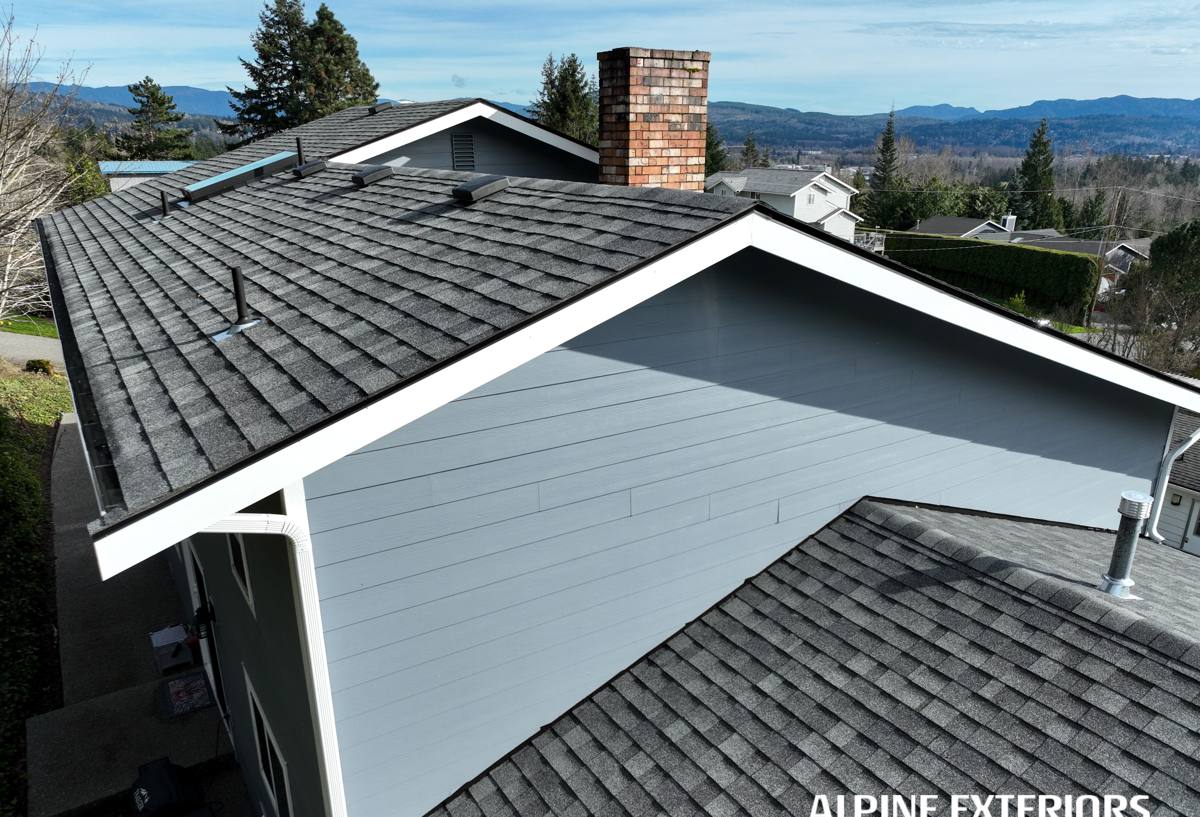
What Nooksack Homes Actually Need From a Metal Roof
Water Management First
Whatcom County's rainfall isn't just heavy, it's sustained — days of steady, wind-driven rain rather than short bursts. That means valleys, eave lines, and any roof-to-wall transition need real attention to detail, not just a panel screwed down and caulked. A metal roof's biggest advantage is water shedding, but that advantage disappears fast if flashing and underlayment aren't done right underneath it.
Moss and Organic Growth Resistance
Moss doesn't grow because a roof is "old." It grows because moisture sits somewhere long enough for spores to take hold — usually on rough surfaces, in shaded north-facing sections, or wherever debris collects. Metal's smooth, hard surface and steep shedding profile make it inhospitable to moss compared to shingles, but any roof with tree cover, low slope sections, or valleys that collect needles will still need periodic attention.
Standing Up to Salt-Influenced Air
Being close to the water in this part of Washington means fasteners, flashing, and panel coatings all deal with a bit more corrosive exposure than roofs further inland. This is one of the most overlooked details in metal roofing — the panel itself might be rated for decades, but if the fasteners or trim pieces aren't matched to the same environment, they become the weak point long before the roof field does.
Panel Types We Install
Not every metal roofing product is the right fit for every home or budget. Here's how the common options compare for a Nooksack-area home:
| Panel Type | Typical Use | Strengths | Trade-offs |
|---|---|---|---|
| Standing Seam | Most residential roofs, especially steeper pitches | Concealed fasteners, excellent water shedding, clean look, long service life | Higher upfront cost than exposed-fastener panels |
| Exposed-Fastener Panel | Outbuildings, garages, budget-conscious re-roofs | Lower material and labor cost, faster install | Fasteners can loosen over time and need re-torquing; more penetration points |
| Stone-Coated Steel | Homes wanting a shake or tile look with metal performance | Textured appearance, good impact resistance | More seams and overlaps than standing seam; detailing at valleys matters more |
For most homes in this area we lean toward standing seam because concealed fasteners remove the most common long-term failure point in a wet climate — fastener backout and the small leaks that follow. Exposed-fastener panels aren't wrong, they're just a different trade-off, and we'll walk through that honestly rather than upselling a system your roof doesn't need.
What a Correct Installation Actually Involves
The panels get the attention, but most metal roof failures we're called to inspect trace back to what's underneath or around them, not the panel itself.
- Ice-and-water shield or a full synthetic underlayment at eaves, valleys, and penetrations — not just felt paper
- Proper deck condition check before install; metal shows every irregularity in the roof deck beneath it
- Corrosion-compatible fasteners and flashing matched to the panel material, not mixed metals that react with each other
- Closed or vented ridge detail appropriate to the home's attic ventilation needs
- Valley and roof-to-wall flashing sized for high water volume, not minimum code
- Correct panel overlap and seam direction relative to prevailing wind and rain
Skip any one of these and the roof can still look fine for a year or two. In this climate, the problems tend to show up in the second or third wet season, once water has had enough repeated cycles to find the gap.
How Our Process Works
1. On-Site Assessment
We look at the existing roof, the deck condition, ventilation, tree cover, and drainage paths specific to your property before recommending a panel type or system. A house tucked under fir trees needs a different moss and debris strategy than one in an open, wind-exposed spot.
2. Straightforward Scope and Options
You get a plain explanation of panel choices, what's driving the price difference, and what we'd choose for our own home in the same spot — not a pressure pitch toward the most expensive system.
3. Tear-Off and Deck Prep
Old roofing comes off, the deck gets inspected for soft spots or rot (common where past leaks went unnoticed), and any damaged sheathing is replaced before anything new goes down.
4. Underlayment and Flashing
This is where the water-management work actually happens — eaves, valleys, and penetrations get sealed and flashed before a single panel is fastened.
5. Panel Installation
Panels are run, seamed, and fastened to spec, with attention to consistent alignment and correctly sized overlaps given this area's wind-driven rain.
6. Final Walkthrough
We walk the roof and the ground-level sightlines with you, cover basic maintenance expectations, and make sure you know what a properly finished job looks like on your own home.
What Drives the Cost
Metal roofing costs more upfront than asphalt shingles, but the comparison isn't apples to apples once you factor in lifespan and the maintenance a shingle roof needs in this climate. Here's what actually moves the price on a given job:
| Factor | Why It Matters |
|---|---|
| Panel type and gauge | Standing seam and heavier-gauge steel cost more than exposed-fastener, lighter panels |
| Roof complexity | Multiple valleys, dormers, and roof-to-wall transitions add flashing labor |
| Deck condition | Rotted or soft sheathing discovered during tear-off adds repair cost |
| Roof pitch and access | Steeper or harder-to-access roofs take longer and require more safety setup |
| Ventilation upgrades | Bringing older attic ventilation up to spec adds scope but pays off in roof longevity |
We'll never quote a number without seeing the roof first — too many of these factors only show up once we're actually up there.
Living With a Metal Roof in a Wet, Mossy Climate
Metal roofing is genuinely low-maintenance compared to shingles, but "low-maintenance" doesn't mean "no maintenance." A few habits keep a metal roof performing the way it should for its full service life:
- Clear needles, leaves, and debris out of valleys and gutters at least twice a year, more often under heavy tree cover
- Have gutters and downspouts checked for proper flow — a metal roof shedding water fast means the gutters need to keep up
- Watch shaded, north-facing sections for early moss or algae growth and address it before it spreads
- Have fasteners on exposed-fastener systems checked periodically, since they can loosen over years of thermal cycling
- After major windstorms, a quick visual check for lifted trim or flashing is worth the five minutes
Why It Matters That We Already Work in Nooksack
Roofing details that work in a dry climate don't automatically translate to Whatcom County's rainfall totals, and roofing details that work in a heavy-rain climate elsewhere don't automatically account for this area's moss pressure or its proximity to salt-influenced air near the coast. Crews that split time across very different climates tend to default to generic specs rather than what a specific property in Nooksack actually needs.
Working consistently in and around Blaine and the surrounding Whatcom County communities means we're not guessing at how a given roof design will perform through a wet winter here — we've seen how these details hold up locally, season after season, and we build to that standard rather than a national minimum.
Get a Straight Answer About Your Roof
If you're weighing metal roofing for a home in Nooksack, we're glad to come take a look, answer questions honestly, and put together a clear, no-pressure estimate based on your actual roof — not a generic quote. Use the form below to get started.