 Blaine Siding
 Deck Building in Lynden: Built for This Corner of Whatcom County
Lynden sits a little inland from Blaine's shoreline, so the deck problems here look slightly different than what we see on saltwater lots. You get less direct salt spray, but you get the same long, wet Whatcom County winters, the same driving rain that comes in sideways off the Strait, and the same moss season that stretches from October through April in a wet year. A deck built without those conditions in mind will show it within a few seasons — soft spots near the house, black streaking on the boards, moss creeping up from the shaded side, and fasteners that start to weep rust before the wood itself has a problem.
We build decks for homes throughout the Blaine and Lynden area, and the design choices that hold up here aren't exotic. They're mostly about getting drainage, flashing, and material selection right the first time, so the deck is still solid and level a decade from now instead of becoming a maintenance project every spring.
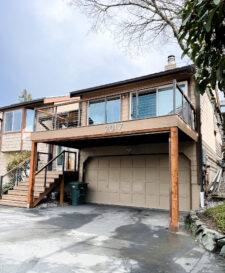
What a Lynden Deck Actually Has to Deal With
Three things drive almost every deck problem we see in this area:
- Standing moisture. Whatcom County gets a steady run of low-intensity rain for months at a time, not just occasional downpours. Wood and composite decking both need to shed and dry between rain events, not sit damp.
- Shade and tree cover. Lynden properties often have more mature trees and less direct wind exposure than open coastal lots, which sounds nice but means decks dry out slower and moss and algae get a real foothold, especially on the north or east side of the house.
- Freeze-thaw swings. It doesn't get brutally cold here, but Whatcom County does see enough freeze-thaw cycling each winter to work at any joint, fastener, or ledger connection that wasn't detailed correctly.
None of this is unusual for the Pacific Northwest, but it does mean a deck built to a generic national spec — with minimum flashing, undersized footings for our clay-heavy soils, or decking rated for a drier climate — tends to underperform here.
Where Deck Failures Actually Start
The Ledger Board Connection
Almost every deck failure we get called out to inspect traces back to the ledger board — the framing member that bolts the deck to the house. If that connection isn't flashed correctly, water works its way behind the siding and into the house's rim joist. This is slow, hidden damage; homeowners usually don't know it's happening until there's visible rot or a soft spot years later. Correct ledger flashing (metal flashing, proper fastener spacing, and a gap or flashing tape between the ledger and the wall) is the single most important detail on any deck attached to a house in this climate.
Footings and Post Bases
Whatcom County's clay-heavy soils hold water and shift more than sandy or well-drained soils. Footings need to be sized and set below frost depth, and post bases need to hold the post up off the concrete so it's never sitting in a puddle after a rain. We see a lot of older decks where the post was set directly into or on top of wet concrete — that's a slow rot problem that eventually shows up as a wobble.
Joist Spacing and Blocking
Tighter joist spacing costs a little more in lumber but makes a real difference in how a deck feels underfoot and how it handles moisture-driven wood movement over time, especially with composite decking, which has its own span rules that differ from wood.
Decking Material Options for This Climate
There's no single "right" decking material for every Lynden home — it depends on budget, how much shade the deck gets, and how much upkeep you actually want to do. Here's how the common options compare for this climate specifically:
| Material | Moisture Performance Here | Maintenance | Typical Lifespan |
|---|---|---|---|
| Pressure-treated wood | Good if sealed regularly; absorbs and releases moisture with the seasons | Annual cleaning, re-sealing every 1-2 years | 15-20 years |
| Cedar | Naturally rot-resistant but still needs upkeep in constant damp/shade | Cleaning, occasional oil or stain | 15-20 years |
| Composite decking | Excellent — doesn't absorb water like wood, resists moss staining | Periodic washing to keep surface clear of algae film | 25-30+ years |
| PVC/capped polymer decking | Best moisture performance of the group; fully sealed surface | Lowest — occasional rinse | 25-30+ years |
In shaded, damp yards — which describes a lot of Lynden lots with mature trees — composite or capped polymer decking earns its higher upfront cost back in reduced maintenance. On sunnier, more open lots, a well-maintained wood deck is a perfectly reasonable choice and costs less to build. We'll walk you through the honest trade-offs for your specific yard rather than push one product line.
Fasteners, Flashing, and the Details That Don't Show
The parts of a deck that fail first are almost never the parts people look at. A correct build in this climate includes:
- Stainless steel or coated deck screws rated for ground contact and treated lumber — mismatched fasteners are one of the most common causes of early rust staining and loosening.
- Ledger flashing installed as a system (flashing, house wrap integration, gap or tape), not just a bead of caulk.
- Joist tape or cap flashing on top of every joist to keep the fastener holes from becoming a wicking point for water into the wood.
- Proper gapping between deck boards so water and debris don't sit and trap moisture against the joists.
- Post bases that hold posts off standing water, with concrete sloped away from the post.
None of these add meaningful cost to a project, but skipping any one of them is exactly how a deck that looks fine on day one starts showing rot or rust by year three or four.
Our Process for a Lynden Deck Project
1. On-Site Assessment
We look at your yard's actual exposure — sun, shade, drainage, existing grade — and talk through how you'll use the deck. A deck for entertaining needs a different layout than a small deck off a kitchen door.
2. Design and Material Selection
We lay out size, framing approach, and decking material options with real numbers attached, so you're comparing actual costs and trade-offs instead of guessing.
3. Permitting
Most new decks and many deck replacements in Whatcom County require a building permit, particularly if the deck is attached to the house or above a certain height. We handle the permit process as part of the job so you're not stuck navigating county requirements yourself.
4. Construction
Footings, framing, ledger flashing, and decking installed in sequence, with each stage built to hold up through our wet season rather than just pass a quick inspection.
5. Final Walkthrough
We walk the finished deck with you, cover basic care for whatever material you chose, and make sure you know what a normal maintenance year looks like.
Deck Maintenance in a Wet, Mossy Climate
Regardless of material, a little seasonal attention goes a long way in Whatcom County. A simple annual routine:
- Clear leaves, needles, and debris from between boards before fall rains set in — trapped debris is where moss and rot both get started.
- Rinse or lightly scrub shaded areas where moss and algae build up fastest, typically the north or east side of the deck.
- Check the ledger flashing and any caulked joints once a year for gaps or cracking.
- For wood decking, plan on cleaning and re-sealing every 1-2 years; composite and PVC decking mainly just need periodic washing.
- Keep planters and rugs from sitting in one spot for months at a time — anything that blocks airflow and traps moisture speeds up staining and, eventually, rot.
Why a Crew That Already Works This Area Matters
A deck built to a generic spec sheet from a warmer, drier region will underperform here — not because the materials are bad, but because the details that matter in a marine climate (ledger flashing, footing depth for our soils, material choice for shaded yards) get treated as optional. A crew that already builds decks around Blaine and Lynden isn't guessing at how much rain exposure your framing needs to handle or whether your soil needs a deeper footing — we've already dealt with these specific conditions on other projects nearby, and we build accordingly from the first footing.
We also know the practical side: which inspectors are checking for what, what Whatcom County's permit process actually requires for a given deck size and height, and how long materials realistically take to arrive out here. That local familiarity keeps a project moving instead of stalling on avoidable surprises.
What This Costs
Deck pricing depends heavily on size, framing complexity (multiple levels, stairs, railing style), and decking material. As a rough starting point for planning purposes, a straightforward single-level deck typically costs less overall in pressure-treated wood, moves up with cedar, and costs more upfront with composite or PVC decking — though the latter two usually cost less over the deck's lifetime once you factor in maintenance and replacement cycles. We'll give you real numbers based on your specific design rather than a generic estimate, since layout and material choice both move the price more than almost anything else.
If you're planning a new deck or need to replace one that's showing its age, we're happy to come take a look and talk through what makes sense for your yard and budget. The estimate is free, there's no pressure, and you'll get straight answers about what your specific site needs — just fill out the form below to get started.