 Blaine Siding
 Asphalt Shingle Roofing Built for Grandview's Conditions
Grandview sits within Blaine, out toward the water and open to the same weather pattern that shapes exterior work across this stretch of Whatcom County: salt-laden air, wind-driven rain coming off the water, and a moss season that can run most of the year on shaded roof slopes. Asphalt shingle roofing is one of the most common roof types on homes here, and for good reason — it's a proven, cost-effective system when it's installed and detailed correctly for this specific climate. The trouble is that "correctly for this climate" is doing a lot of work in that sentence. A shingle roof installed the same way you'd install one in a dry inland town will not perform the same way in Grandview, and the difference shows up as granule loss, moss colonization, and leaks around flashing years before it should.
This page is about that one job — asphalt shingle roofing, in Grandview specifically — not a general rundown of roofing options. If you own a home in this part of Blaine and you're weighing a repair, a partial re-roof, or a full replacement, this is what actually matters for your roof and your money.
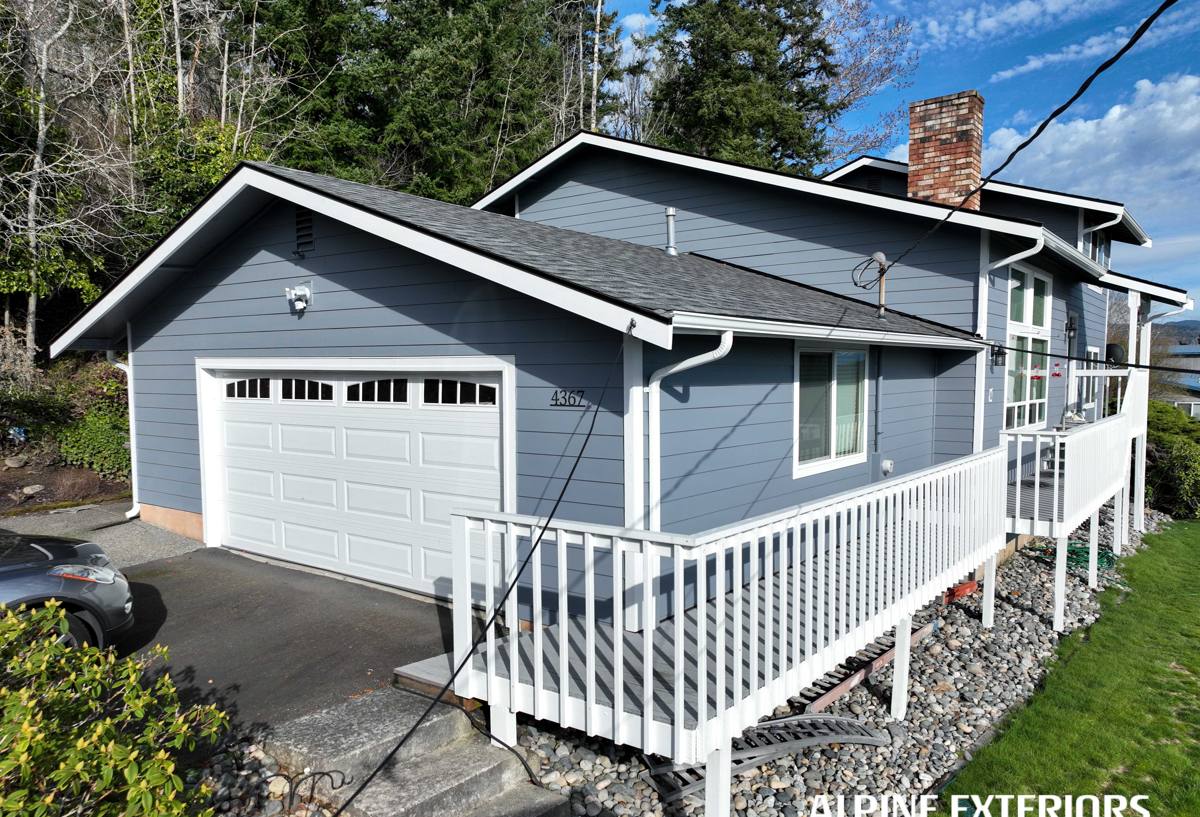
What Grandview's Climate Does to a Shingle Roof
Salt Air and Fastener Corrosion
Homes anywhere near Blaine's waterfront, Grandview included, take a steady dose of salt in the air even on lots without a direct water view. Salt accelerates corrosion on exposed metal — nail heads, drip edge, step flashing, valley metal, and vent boots with any bare metal component. A shingle roof is only as good as the metal detailing tied into it, so using standard-grade fasteners and flashing in a salt-air zone shortens the roof's real service life even if the shingles themselves are rated for decades.
Driving Rain and Wind-Blown Water
Storms coming off the water don't just fall straight down. Wind pushes rain sideways and upward under shingle tabs, into valleys, and around any penetration — vent pipes, chimneys, skylights — where the underlayment and flashing have to do the real work of keeping water out. A roof that would perform fine in a calm, dry climate can leak in Grandview simply because the wind load on rain is heavier and more frequent here.
A Long Moss and Moisture Season
Mild, damp conditions for much of the year mean moss and algae growth get a long runway, especially on north-facing slopes or roof sections shaded by trees. Moss holds moisture against the shingle surface, works its way under tabs as it grows, and lifts granules loose over time. Once moss takes hold, it accelerates wear faster than sun and rain alone would, and it's one of the most common reasons we see otherwise mid-life shingle roofs failing early in this area.
What a Correct Asphalt Shingle Install Actually Involves
A shingle roof is a system, not just a layer of shingles nailed to the deck. In a climate like Grandview's, every layer underneath the shingles matters as much as the shingles themselves.
- Deck inspection and repair — any soft, delaminated, or water-damaged sheathing gets replaced before anything new goes down, since shingles fastened to a compromised deck won't hold or seal properly.
- Ice and water shield at vulnerable points — eaves, valleys, and roof-to-wall transitions get a self-adhering waterproof membrane, not just standard felt, because these are the spots wind-driven rain finds first.
- Synthetic underlayment across the field — a full moisture barrier under the shingles that holds up through the length of the install and adds a second line of defense against wind-driven water.
- Corrosion-resistant fasteners and flashing — hardware rated for coastal and salt-air exposure, not the minimum-grade materials some install crews default to inland.
- Proper flashing at every penetration — step flashing at walls and chimneys, correctly lapped valley metal, and new boots at every vent pipe rather than reusing old ones.
- Balanced attic ventilation — intake at the eaves and exhaust at the ridge, sized to the roof, so trapped moisture and heat don't shorten the shingles' life from underneath.
- Manufacturer-specified nailing pattern — correct nail count and placement per shingle, which affects both wind rating and warranty validity.
Shingle Roofing Options at a Glance
Not every asphalt shingle product is built the same, and the right choice for Grandview depends on budget, roof exposure, and how long you plan to own the home. Here's an honest comparison of the common tiers.
| Shingle Type | Typical Lifespan | Best Fit | Trade-Offs in This Climate |
|---|---|---|---|
| 3-Tab Shingles | 15-20 years | Budget-conscious re-roofs, rental properties | Lower wind rating and less algae resistance; moss and salt exposure shorten real-world life faster than the rated number suggests |
| Architectural (Dimensional) | 25-30 years | Most owner-occupied homes in Grandview | Heavier, better wind resistance, and available with algae-resistant granules — the practical standard choice for this area |
| Premium/Designer Shingles | 30-50 years | Homes prioritizing longevity and appearance | Higher upfront cost; the extended warranty and durability pay off if you're staying in the home long term |
For most Grandview homes, an architectural shingle with algae-resistant (copper-infused) granules is the sensible middle ground — it costs more than 3-tab up front but resists moss growth meaningfully better, which matters given how long this area's damp season runs.
Repair, Partial Re-Roof, or Full Replacement
Not every problem on a shingle roof means starting over. The right call depends on the roof's age, how widespread the damage is, and what's happening underneath the shingles.
When Repair Makes Sense
Localized damage — a section of missing or wind-lifted shingles, a failed vent boot, or an isolated flashing leak — can often be repaired without touching the rest of the roof, provided the shingles are still within their useful life and the deck underneath is sound.
When a Full Replacement Is the Honest Answer
Widespread granule loss, moss coverage across multiple slopes, curling or cracking shingles, or repeated leaks in different spots usually mean the roof has reached the end of its service life. In a climate like Grandview's, patching a roof that's already failing broadly tends to cost more over a few years than a proper replacement would have cost up front, since you end up paying for repeated repair visits on a system that's still degrading underneath.
What We Check Before Recommending Either
- Age of the current roof and shingle manufacturer, if known
- Extent and pattern of granule loss
- Condition of the decking, checked wherever access allows
- Moss and algae coverage, and whether it's isolated or spread across the roof
- Condition of flashing at valleys, walls, and penetrations
- Attic ventilation and any signs of trapped moisture
Our Process for a Grandview Roofing Project
We keep the process straightforward and don't skip steps, because skipped steps are exactly what causes early failures in a climate this demanding.
- On-site inspection — we look at the roof itself, the attic where accessible, and the specific exposure of your lot (tree cover, wind direction, proximity to water).
- Written estimate — a clear scope of work and material specification, so you know exactly what's being installed and why.
- Material delivery and site protection — landscaping, gutters, and the ground around the house get protected before work starts.
- Tear-off and deck inspection — old roofing comes off down to the deck, and any damaged sheathing is identified and replaced.
- Underlayment, flashing, and shingle installation — installed per manufacturer specification, with the coastal-grade detailing this area calls for.
- Ventilation check — intake and exhaust ventilation confirmed or corrected as part of the job, not left for later.
- Final walkthrough and cleanup — magnetic sweep for nails, full site cleanup, and a walkthrough so you can see the finished work before we consider the job done.
What Affects Your Cost
| Factor | Why It Matters |
|---|---|
| Roof size and pitch | Steeper roofs take longer and require more safety setup, affecting labor cost |
| Number of layers to remove | Tear-off of multiple existing layers adds disposal and labor time |
| Deck condition | Rotted or delaminated sheathing found during tear-off adds material and labor |
| Shingle tier chosen | 3-tab, architectural, and premium products carry different material costs |
| Flashing and penetration count | More valleys, chimneys, and vents mean more detail work |
| Ventilation upgrades | Adding or correcting intake/exhaust ventilation is sometimes needed on older homes |
Why It Matters That We Already Work in Grandview
A roofing crew that mostly works dry, inland jobs will default to standard-grade fasteners, standard underlayment, and a nailing pattern that meets code minimums rather than what this specific coastline actually demands. We work this part of Blaine regularly, which means we've seen firsthand how a shingle roof ages here versus further inland — where moss takes hold first, which flashing details tend to fail under sideways rain, and which shingle products genuinely hold their granules through a Whatcom County winter. That local pattern recognition is the difference between a roof that looks right on installation day and one that's still performing correctly five, ten, and twenty years in.
We treat roofing as one part of a connected exterior system, alongside siding, windows, and decks, because water problems rarely stay confined to one trade. A roof that's leaking at a wall flashing junction is often a siding and roofing problem at the same time, and a crew that only thinks about the shingles can miss that.
Signs Your Grandview Roof Needs Attention
- Granules collecting in gutters or at the base of downspouts
- Shingles that look curled, cupped, or cracked from the ground
- Moss visible on any slope, especially shaded or north-facing sections
- Daylight visible through the roof deck from inside the attic
- Water stains on interior ceilings, especially near walls, chimneys, or skylights
- Shingles missing after a windstorm, even just a few
- A roof original to the home and approaching 20-25 years old
Catching these early, before they turn into deck damage or interior water intrusion, is almost always cheaper than waiting.
If you're noticing any of these signs on a Grandview home, or you're simply due for an honest assessment of where your roof stands, we're glad to take a look. Reach out for a free, no-pressure estimate using the form below — we'll walk the roof, tell you straight what we see, and give you a clear scope and price before any work begins.