 Blaine Siding
 Why Decks in Ferndale Wear Out Faster Than Homeowners Expect
Ferndale sits in a stretch of Whatcom County where the weather doesn't do a deck any favors. You've got salt-laden air rolling in off the water, long stretches of driving rain in the fall and winter, and a moss season that can run half the year in shaded yards. None of that is dramatic on its own, but stacked together, year after year, it's exactly the combination that breaks decks down from the inside before the surface ever looks that bad.
A lot of homeowners assume a deck's problems are cosmetic — faded boards, a little algae, some gray weathering. Often the real damage is underneath: ledger boards holding moisture against the house, joists that never fully dry between rain events, and fasteners corroding quietly where you can't see them. By the time a board feels soft underfoot, the structure has usually been compromised for a while.
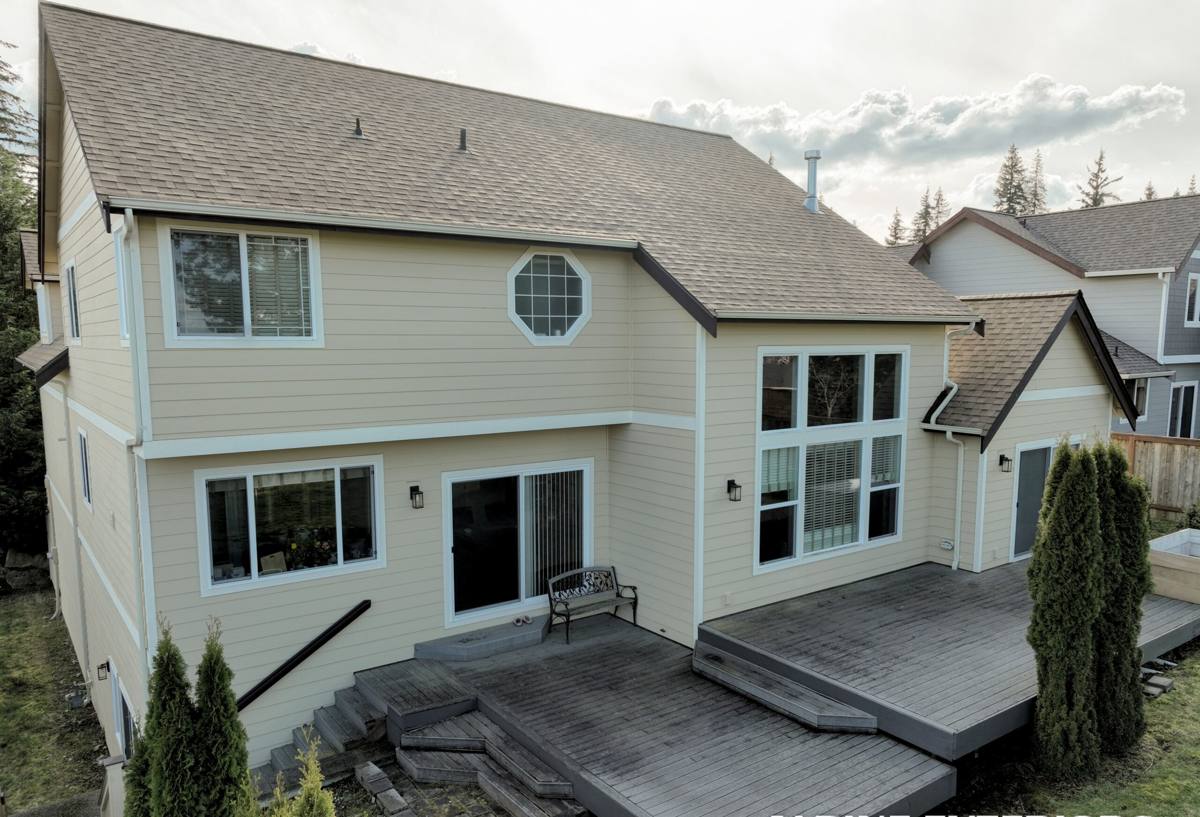
Repair or Replace? Reading the Real Signs
Not every tired-looking deck needs a full teardown. But there's a point where patching individual boards is just delaying an inevitable, more expensive rebuild. Here's how we help homeowners tell the difference.
Signs a repair might still make sense
- A handful of boards are cupped, splintering, or stained, but the framing underneath is solid and dry
- The deck is relatively young and the damage is isolated to sun- or splash-exposed areas
- Railings and stairs are structurally sound, just cosmetically worn
Signs you're looking at a replacement
- Soft, spongy, or spring-loaded feeling when you walk across sections of decking
- Visible rot or dark staining at the ledger board where the deck meets the house
- Fasteners that are rusted, popped, or have left dark streaking down the boards
- Persistent moss or algae growth that comes back within weeks of cleaning
- Posts or footings that have shifted, cracked, or show signs of ground movement
If more than one of those second-list items applies, replacement is usually the more honest recommendation — repairing around a compromised structure just moves the failure point somewhere else.
What a Correct Deck Replacement Actually Involves
A deck replacement is more than swapping old boards for new ones. Done right, it's a chance to fix the structural weak points that caused the original deck to fail in the first place — which matters a lot in a climate that doesn't give wood or fasteners much of a break.
The parts that actually matter
The ledger board connection to the house is the single most important detail on most decks, and it's the one most likely to be done wrong on older or lower-budget builds. Proper flashing at that connection keeps water from tracking behind the siding and into the house framing — a slow leak here can cause damage well beyond the deck itself. Footings need to be sized and set below frost depth and on stable soil, not just poured to whatever depth was convenient. Joist spacing and hardware — hangers, structural screws, corrosion-resistant fasteners — need to match the load and the local exposure, not just building-code minimums on paper.
We also pay close attention to airflow underneath the deck. In a climate with this much rain and shade, a deck that can't dry out between storms is a deck that's growing mold and rotting joists no matter what decking material sits on top.
Choosing Materials for Salt Air, Rain, and Moss
There's no single "best" decking material — every option is a trade-off between upfront cost, maintenance, and how it holds up to this specific climate. Here's how the common choices compare for a Whatcom County property.
| Material | Upfront Cost | Moisture & Moss Resistance | Maintenance |
|---|---|---|---|
| Pressure-treated wood | Lowest | Fair — needs sealing to perform well | Annual cleaning and re-sealing recommended |
| Cedar | Moderate | Good natural resistance, but still absorbs moisture over time | Periodic staining or sealing |
| Composite decking | Higher | Very good — doesn't rot, resists moss better than wood | Occasional washing, no sealing needed |
| PVC/capped polymer | Highest | Excellent — fully moisture-sealed surface | Lowest — mostly rinsing |
Wood decking isn't a bad choice — plenty of homeowners prefer the look and cost, and it can last a long time with consistent upkeep. The trade-off is honest: it needs more attention in a climate this wet. Composite and PVC products cost more up front but shift the burden away from annual maintenance, which is worth factoring in if you know you won't be out there sealing boards every spring.
Whatever decking you choose, the framing underneath should be treated for ground contact and rated for the moisture load it'll actually see here — that part matters more than which brand of decking sits on top.
Our Deck Replacement Process
We keep the process straightforward, because a deck replacement is disruptive enough to a household without adding confusion on top of it.
- On-site assessment — we look at the existing deck, the ledger connection, framing condition, and drainage around the footings before recommending anything.
- Honest scope and estimate — you get a clear picture of what's structural (non-negotiable) versus what's a material or design choice.
- Removal and disposal — the old deck comes down, including checking framing and posts that may be hidden behind the surface boards.
- Structural rebuild — footings, posts, joists, ledger flashing, and hardware are addressed to current standards, not just to match what was there.
- Decking, railing, and finish work — installed to the manufacturer's specifications, which matters for both performance and warranty coverage.
- Final walkthrough — we go over the finished deck with you, including what maintenance (if any) your material choice needs going forward.
What Drives the Cost of a Deck Replacement
Every deck is different, so we won't quote a number without seeing the site — but these are the main factors that move the price up or down.
| Factor | Why It Matters |
|---|---|
| Deck size and height | Larger decks and multi-level or elevated decks need more framing, footings, and code-required railing or stair work |
| Decking material | Wood, composite, and PVC span a wide cost range and affect long-term maintenance costs too |
| Structural condition found underneath | Hidden rot at the ledger, posts, or footings can add scope once the old decking comes off |
| Access to the site | Backyard grade, fencing, and equipment access affect labor time for removal and rebuild |
| Railing and stair complexity | Custom railing, multiple stair runs, or lighting add both material and labor |
| Permit and inspection requirements | Structural decks typically require permitting, which factors into project timeline and cost |
Permits and Code Considerations for Ferndale Properties
Deck replacements that involve structural work — new footings, ledger reattachment, or elevated framing — generally require a building permit and inspection. This isn't paperwork for its own sake: it's what confirms the footings, structural connections, and railing meet current code, which matters both for safety and for resale down the road. Whatcom County properties, including those in and around Ferndale, fall under the jurisdiction's permitting process, and we handle that coordination as part of the job rather than leaving it on the homeowner to figure out.
Skipping permitting on a structural deck rebuild is a real risk — beyond the safety concerns, an unpermitted deck can complicate a home sale or insurance claim later. We build to be inspected, not just to look finished.
Why a Crew That Already Works Ferndale Makes a Difference
A deck replacement isn't a generic product — it's a structure that has to perform specifically in the ground, drainage, and weather conditions of the property it's built on. A crew that already works this part of Whatcom County has a working knowledge of things that don't show up in a spec sheet: how footings behave in local soil, how much shade and moisture a typical Ferndale lot deals with, and what level of moss and algae growth is normal versus a sign of a bigger drainage problem.
There's also a practical side to it. Being local means we're not driving in from out of the area for a warranty check or a follow-up question, and we're building a reputation in this specific community — not a one-time transaction. That tends to show up in the small decisions on a job: where flashing gets extra attention, how footings get sized, whether the crew flags a drainage issue on the property instead of just building around it.
Keeping Your New Deck Performing in This Climate
Whatever material you choose, a little seasonal attention goes a long way in a climate with this much rain and shade.
- Sweep debris and standing leaves off the deck surface regularly, especially in fall
- Rinse or gently scrub areas prone to moss and algae before growth gets established
- Check that gaps between boards stay clear so water can drain instead of pooling
- Inspect railings and stair connections annually for looseness or corrosion
- Reseal wood decking on the schedule recommended for the product — don't wait until it looks dry and gray
- Keep gutters and downspouts near the deck clear so runoff isn't draining directly onto or under it
A deck built correctly for this climate, and maintained on a reasonable schedule, should give you decades of use rather than another premature replacement in ten years.
If your deck is showing any of the warning signs above, or you're just ready to stop patching a structure that's past its useful life, we're happy to take a look. We offer free, no-pressure estimates for Ferndale homeowners — walk us through what's bothering you about the current deck, and we'll give you an honest read on whether it's a repair or a replacement, with a clear scope either way.