 Blaine Siding
 Deck Repair Built for Custer's Weather, Not a Generic Climate
Custer sits close enough to the water and to open farmland that decks here take a different kind of beating than decks twenty miles inland. Salt-laden air off the Strait works its way into fasteners and connectors year-round. Driving rain off winter storms drives moisture sideways under railings and through end-grain that homeowners rarely think to check. And the long, damp moss season that runs from fall through spring keeps deck boards wet for weeks at a stretch, even when it isn't actively raining. None of this means a deck in Custer is doomed to fail early. It means the repair work has to account for those specific stresses instead of treating every deck like it's sitting in a dry climate.
We've done deck work throughout the Blaine and greater Whatcom County area long enough to know which failure patterns show up here again and again. That's the lens we bring to every Custer job: not "what's wrong with this deck" in the abstract, but "what does this deck need to survive another decade of this specific weather."
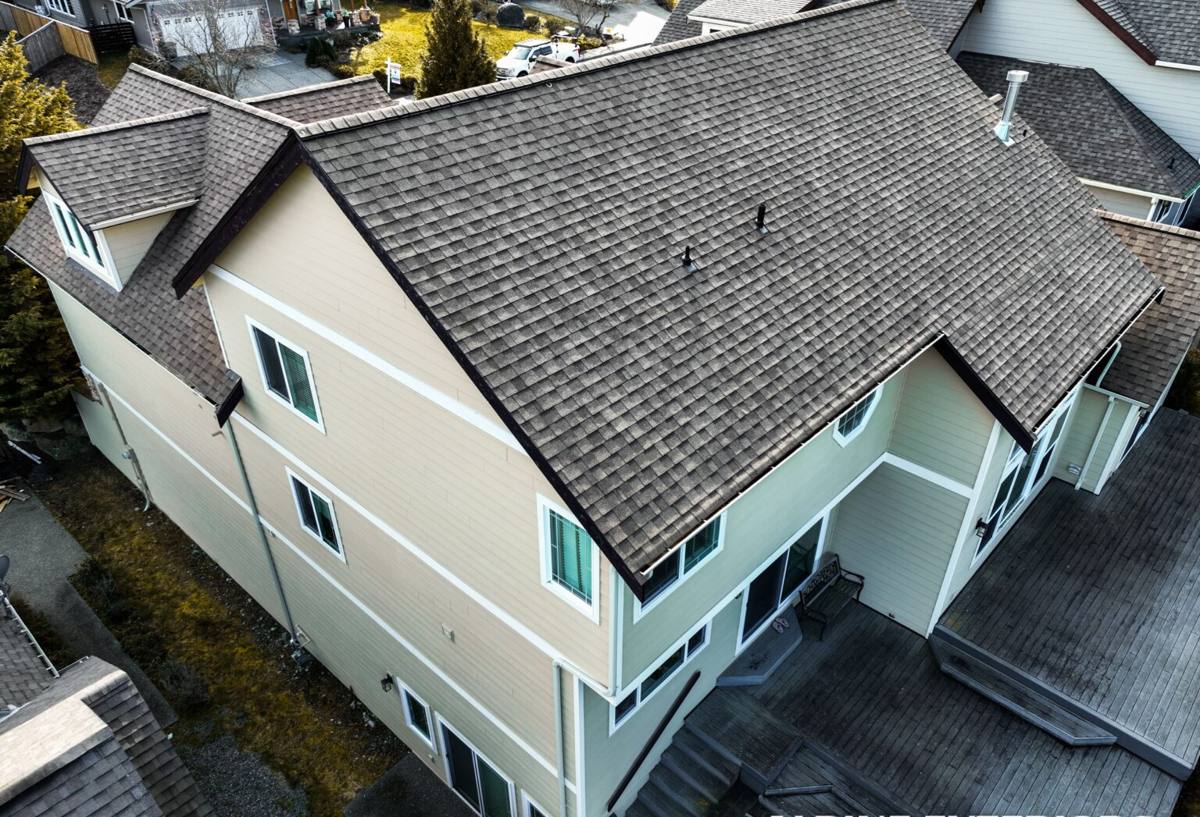
How Custer's Climate Actually Damages a Deck
Salt Air and Fastener Corrosion
Even a few miles from the water, airborne salt accelerates corrosion in nails, screws, and metal hardware. Once a fastener starts rusting, it swells slightly, which enlarges the hole it sits in and lets more moisture reach the wood around it. This is often invisible from the top of the deck. You don't see it until a board is loose, a railing post has play in it, or rust streaks start bleeding through the finish.
Driving Rain and Hidden Moisture Paths
Wind-driven rain doesn't fall straight down. It gets pushed sideways under rail caps, into the gap between fascia boards and framing, and into any joint that isn't properly flashed or sealed. Water that gets in this way doesn't dry out quickly, because it's sitting in a shaded, poorly ventilated pocket. That's exactly the environment that breeds rot.
Moss, Algae, and Trapped Moisture
A long moss season means more than just a slippery, unattractive deck surface. Moss and algae hold moisture directly against the wood or composite surface for extended periods, which softens wood fibers over time and can void warranties on some composite products if left unaddressed. Moss growth between boards also traps debris that blocks proper drainage, which compounds the problem.
Signs Your Custer Deck Needs Repair, Not Just Cleaning
- Boards that feel spongy, springy, or soft underfoot, especially near the house or in shaded corners
- Railing posts or balusters with noticeable wobble or play
- Rust streaks running down from screw heads or metal connectors
- Gaps opening up between decking boards or where boards meet the house
- Persistent dark staining or moss regrowth within weeks of cleaning
- Stairs that feel less solid than they used to, or treads that flex
- Visible daylight or gaps in the ledger board connection where the deck meets the house
- A musty smell coming from underneath the deck, particularly after rain
Any one of these on its own might be minor. Several together usually mean moisture has been working on the structure for a while, and a cosmetic fix like pressure washing or re-staining won't address the underlying cause.
What a Correct Deck Repair Actually Involves
A repair that's built to hold up in this climate starts with figuring out where moisture is getting in, not just where damage is visible. Rot often travels along the grain, so a soft spot on the surface can mean a much larger area of compromised wood underneath or beside it. We probe suspect areas, check the ledger board connection carefully since that's a common failure point on older decks, and inspect the framing and support posts, not just the decking surface.
Structural Repairs
This includes replacing rotted joists, sistering damaged framing members, re-securing or rebuilding a compromised ledger connection, and replacing corroded fasteners and structural hardware with corrosion-resistant alternatives suited to a marine-influenced climate. Structural issues get fixed first and fully, because a deck's surface is only as sound as what's holding it up.
Surface and Railing Repairs
Individual board replacement, railing and baluster repair or replacement, stair tread repair, and re-fastening loose boards fall into this category. Where boards are failing due to age and moisture exposure rather than a one-time defect, we'll tell you honestly whether targeted replacement makes sense or whether the deck is close enough to end-of-life that a broader resurfacing conversation is worth having.
Moisture Management
Correcting drainage, adding or repairing flashing at the ledger and around posts, and improving airflow underneath the deck where possible all reduce how much moisture the structure has to deal with going forward. This is the part of a repair that's easy to skip and is usually why the same problem comes back in a few years if it's skipped.
Repair vs. Replacement: How We Think About It
| Factor | Leans Toward Repair | Leans Toward Replacement |
|---|---|---|
| Extent of rot | Isolated to a few boards or one area | Widespread across framing and decking |
| Ledger board condition | Sound, properly flashed | Compromised or improperly attached |
| Deck age | Under 15-20 years, well-built originally | Older, at or past typical service life |
| Support posts and footings | Solid, no movement or heaving | Settling, rotted, or undersized |
| Overall cost of repair vs. replacement | Repair is clearly the smaller expense | Repairs would approach cost of rebuild |
We'll always give you a straight answer on which side of this table your deck falls on. A deck with isolated damage and a sound structure underneath doesn't need to be torn out. One with a failing ledger board and rotted support posts usually isn't worth patching piecemeal, because you'd be spending real money to extend the life of a structure that has bigger problems waiting behind the visible ones.
Our Process for Custer Deck Repairs
- On-site assessment. We walk the full deck, check framing and connections from underneath where accessible, and probe any soft or suspect areas.
- Honest scope and estimate. You get a clear picture of what's actually wrong, what needs to be fixed structurally versus cosmetically, and a written estimate before any work starts.
- Repair work. Structural issues are addressed first, followed by surface, railing, and stair repairs, using fasteners and materials suited to the salt air and moisture load this area sees.
- Moisture correction. Where drainage or flashing issues contributed to the damage, we address those so the repair actually lasts instead of failing again in a few seasons.
- Final walkthrough. We go over the completed work with you and flag any maintenance items worth keeping an eye on going forward.
Maintenance That Actually Helps in This Climate
Deck repair lasts longer when it's paired with the right upkeep habits for this area. Clearing debris from between boards regularly prevents the trapped moisture that feeds moss and rot. Keeping gutters and downspouts clear and directed away from the deck reduces the volume of water landing on and around it during heavy rain. Resealing or restaining wood decking on a regular schedule, rather than waiting until it's visibly worn, keeps the wood's moisture barrier intact through the wet months. And an annual look underneath the deck, checking the ledger connection and support posts, catches small problems while they're still small.
Why It Matters to Hire a Crew That Already Works in Custer
A contractor who mostly works in drier inland climates may not think to check for the specific failure points that show up on decks exposed to salt air and long stretches of wet weather. We work throughout Blaine and Whatcom County, and the patterns we see on Custer decks, corroded fasteners well before wood failure, moisture trapped under rail caps, moss holding water against boards for weeks, inform how we inspect and repair every deck we touch here. That's not a marketing point, it's just what happens when you do this work in this specific climate repeatedly. It means we're less likely to miss something and more likely to fix the actual cause rather than just the symptom you called about.
Get an Honest Look at Your Deck
If your deck is showing any of the signs above, or you just want a straightforward opinion on its condition before another wet season sets in, we're happy to take a look. Reach out for a free, no-pressure estimate using the form below, and we'll give you a clear, honest read on what your deck actually needs.