 Blaine Siding
 Storm Damage Roofing in Cherry Point: What Makes This Stretch of Whatcom County Different
Cherry Point sits out on open water exposure north of Blaine, and that exposure shapes everything about how a roof ages here. Homes and outbuildings in this area take wind off the Strait of Georgia with very little to break it up, and that wind almost always arrives with rain riding sideways into it. Add in salt air drifting off the water and a moss season that can run eight or nine months out of the year in Whatcom County's damp climate, and you've got a roof environment that's genuinely tougher than what a lot of manufacturers design their standard product lines around.
None of that means a roof out here is doomed to fail early. It means storm damage repair has to account for conditions a roofer working twenty miles inland doesn't think about as often — corrosion-resistant fasteners, flashing details that handle wind-driven rain instead of just vertical rain, and an honest read on how much moss and organic buildup has already compromised the roof before the storm ever hit.
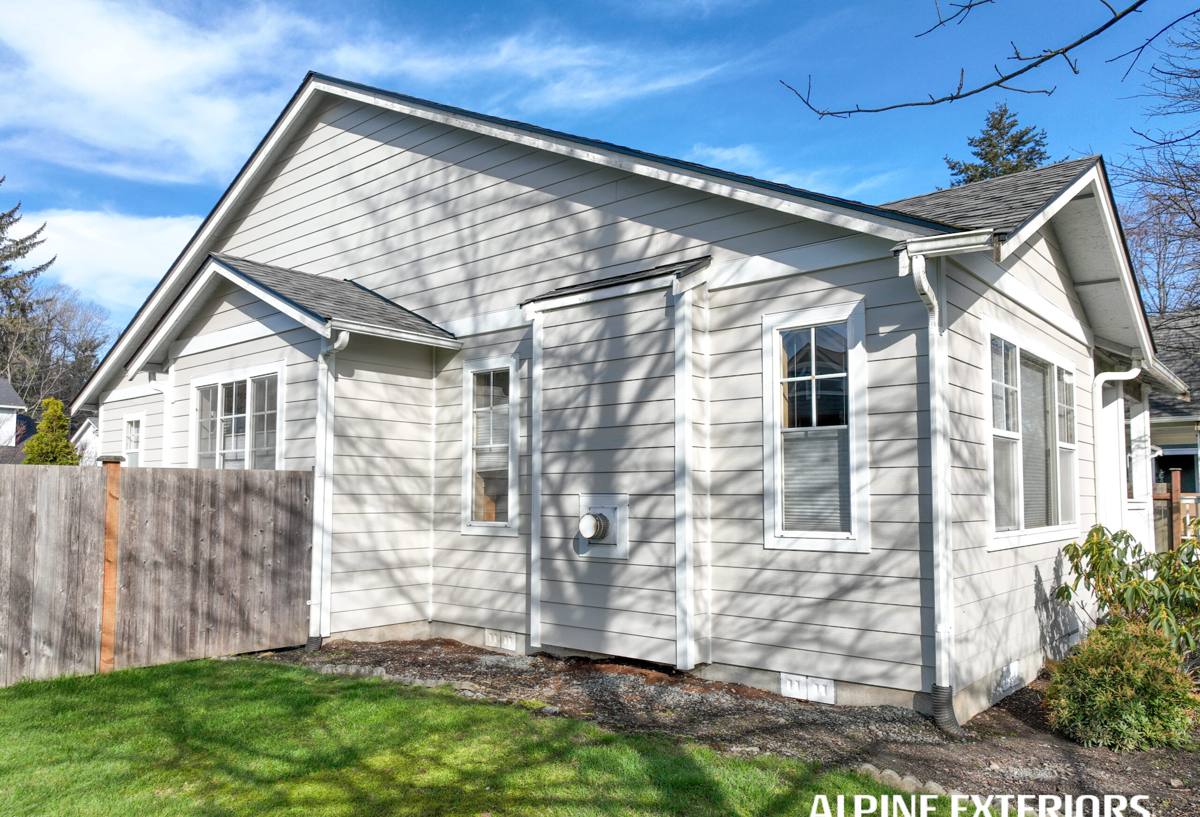
What Actually Counts as Storm Damage
Homeowners often assume storm damage means missing shingles you can spot from the driveway. That's part of it, but a lot of the damage that matters most is harder to see from the ground. After a windstorm or a heavy rain event, we're typically looking for:
- Shingles or panels lifted, cracked, or torn loose at the edges and ridge, where wind uplift concentrates first
- Flashing pulled away or bent at chimneys, vent pipes, skylights, and roof-to-wall transitions
- Granule loss on asphalt shingles from wind-driven rain and debris impact, which shows up as bare, shiny patches
- Gutter and downspout damage that redirects water back under the roof edge instead of away from the house
- Fascia and soffit damage where wind gets underneath and pries at the roof's edge
- Water staining or soft spots on interior ceilings and attic decking, which usually means the leak started before you noticed it outside
Moss plays a role here too. A roof with heavy moss growth going into a storm holds moisture longer, adds weight, and gives wind something to grab onto at the edges of shingles. A lot of what looks like sudden storm damage is really storm damage on top of moss damage that had been building for a season or two already.
Why Waiting Costs More Than the Repair Itself
A damaged roof rarely fails all at once. It fails a little at a time — a lifted shingle lets water under the underlayment, that water finds a nail hole or a seam, and over a few weeks of Whatcom County drizzle it works its way into the decking. By the time you see a ceiling stain, the leak has usually been active for a while.
The cost difference between catching storm damage early and catching it late is real. A same-day tarp and a targeted shingle or flashing repair is a small job. Rotted decking, damaged insulation, and interior drywall repair from a slow leak that ran all winter is a much bigger one. If you've had a recent windstorm come through Cherry Point and you're not sure whether your roof took damage, a quick inspection is worth far more than the time it takes.
Signs You Shouldn't Ignore
- Granules collecting in gutters or at the base of downspouts after a storm
- Daylight visible through the roof deck from inside the attic
- A musty smell in an upstairs room or closet that wasn't there before
- Shingles that look "wavy" or uneven along a slope, which can mean the deck underneath has taken on moisture
- Flashing that's visibly bent, gapped, or missing sealant around penetrations
What a Correct Storm Damage Repair Actually Involves
A proper repair starts with a full inspection, not just a patch over the obvious spot. Wind damage tends to spread beyond the shingle you can see missing from the ground — we check the surrounding field of shingles for lifted tabs, cracked seals, and loosened nails that will fail in the next storm if they're left alone.
Matching Materials, Not Just Covering the Hole
Replacement shingles or panels need to match the existing roof in profile, weight, and as close to color as the product line allows. Mismatched patches aren't just a cosmetic issue — a repair that doesn't tie into the surrounding material correctly can actually create a new water path instead of closing one.
Flashing Gets Priority
On a coastal, wind-exposed property like Cherry Point, flashing failure is one of the most common causes of repeat leaks. We re-flash rather than just re-caulk whenever the metal itself has been bent, corroded, or pulled loose — caulk over damaged flashing is a short-term fix that tends to fail again within a season or two of driving rain.
Decking Assessment
If water made it past the shingles, the decking underneath needs to be checked for soft spots, delamination, or rot before new roofing goes back on. Covering damaged decking with new shingles just hides the problem and shortens the life of the repair.
Our Process for Storm Damage Calls in Cherry Point
- Initial assessment: We look at the roof from the ground and, where it's safe to do so, on the roof itself, plus a check of the attic for moisture intrusion.
- Temporary protection: If there's active leaking or exposed decking, we get it covered right away so the damage doesn't get worse while repair materials are sourced.
- Written scope and estimate: You get a clear explanation of what's damaged, what needs to be repaired versus what's still sound, and what it will cost — no pressure to upsell a full replacement if a targeted repair will genuinely hold.
- Repair work: Matched materials, correct flashing details, and fasteners suited to a coastal, high-wind environment.
- Final check: We confirm the repair area, check adjacent flashing and seams, and clear debris from gutters so water is actually draining the way it should.
Repair or Replace? What Actually Drives That Decision
Not every storm-damaged roof needs to come off. The right call depends on the roof's age, how widespread the damage is, and what condition the rest of the roofing system is in.
| Factor | Leans Toward Repair | Leans Toward Replacement |
|---|---|---|
| Roof age | Under 10-12 years, rest of roof in good shape | Near or past expected service life for the material |
| Extent of damage | Isolated to one slope or a small area | Scattered across multiple slopes or the whole roof |
| Decking condition | Sound, dry, no soft spots | Rot or delamination found in more than a small section |
| Moss/organic buildup | Light, manageable with cleaning and treatment | Heavy, long-term buildup already degrading the shingle mat |
| Prior repair history | First significant repair needed | Multiple past patches, recurring leaks in different spots |
We'll give you a straight answer either way. A roof that can be reasonably repaired doesn't need to be replaced, and we're not going to tell you otherwise.
Insurance and Documentation
Storm damage repairs are often covered under homeowner's insurance, and having clear documentation matters for that process. We take photos of the damage as we find it and can provide a written scope of work that lines up with what an adjuster will want to see. We're not a public adjuster and don't handle the claim itself, but we make sure the roofing side of your documentation is thorough and accurate.
Why a Crew That Already Works Cherry Point Matters
Roofing in a coastal, high-wind pocket of Whatcom County isn't identical to roofing twenty minutes inland. A crew that regularly works Cherry Point and the surrounding Blaine area already knows which flashing details tend to fail first in this wind pattern, how fast moss comes back in this rainfall and shade combination, and what fastener and underlayment choices hold up against salt air over the long run. That familiarity shows up in fewer callbacks and repairs that actually last through the next storm season, not just the next inspection.
Keeping a Cherry Point Roof Ahead of the Next Storm
Storm damage repair is most effective when it's paired with basic upkeep between storms. A little regular attention goes a long way toward reducing how much damage any given windstorm can do.
- Clear gutters and downspouts at least twice a year, more often under trees
- Have moss growth treated or removed before it builds up into thick mats
- Check attic ventilation — poor airflow speeds up moisture problems and moss growth alike
- Walk the roofline visually after any significant windstorm, and check the attic if you can safely access it
- Get a professional inspection every couple of years even if nothing looks obviously wrong
If a recent storm has left you with missing shingles, a leak, or you're just not sure whether your roof took damage, we're happy to take a look and give you a straightforward, no-pressure estimate. Use the form below to get in touch and we'll get back to you.