 Blaine Siding
 Why Decks Near California Creek Wear Out Faster
If you own a home near California Creek, you already know your deck doesn't age the way a deck does twenty miles inland. Blaine sits right at the edge of the Salish Sea, and homes near the creek corridor get a steady dose of salt-laden air off the water on top of everything else Whatcom County weather throws at a wood or composite structure. Salt air accelerates corrosion in metal fasteners and connectors long before the boards themselves look bad, which is exactly why so many decks in this area fail from the inside out.
Add in driving, wind-blown rain that gets pushed sideways under railings and against ledger boards, plus a moss season that can run from October well into April, and you have a climate that punishes any deck built to a generic, one-size-fits-all standard. A deck built for a dry inland suburb and a deck built correctly for California Creek are not the same project, even if they look identical from the yard.
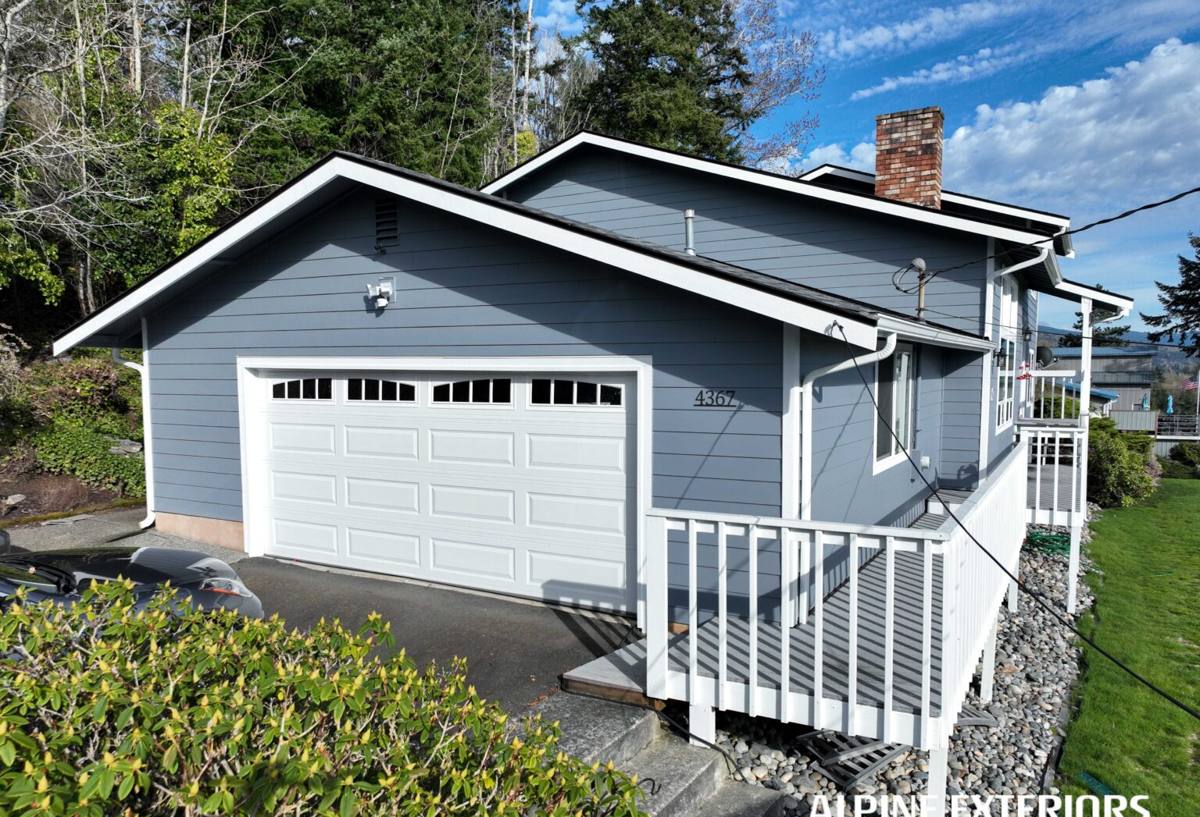
Signs Your Deck Has Reached the End of Its Life
Not every tired-looking deck needs full replacement, but in this climate certain signs mean repair is just delaying the inevitable and spending money that won't carry forward.
- Soft, spongy, or springy decking boards, especially near the house or in shaded corners where moss holds moisture
- Rust streaking or bleeding around screws, joist hangers, or bolts
- A ledger board that shows dark staining, swelling, or gaps where it meets the house
- Posts that feel loose or have visible checking (splitting) at the base
- Persistent moss or algae growth that comes back within weeks of cleaning
- Railings that flex noticeably when leaned on
- Any framing member you can probe with a screwdriver and have it sink in easily
One or two of these on their own might be a repair. Several together, especially involving the framing or ledger connection, usually mean the structure has been compromised and replacement is the honest recommendation.
Repair or Replace? How We Make the Call
We don't default to "replace" just because it's the bigger job. If the framing is sound, the ledger connection is dry and solid, and the damage is limited to surface boards or railings, a targeted repair can be the right, lower-cost answer. What changes our recommendation is anything touching structural framing, the ledger-to-house connection, or footings, because those are the components that determine whether the deck is actually safe to stand on. In a climate that drives moisture into every seam and gap, we'd rather tell you plainly that a repair won't hold than sell you a patch job that fails again in two winters.
What a Correct Deck Replacement Actually Involves
Structural framing
Joists, beams, and posts need to be sized and spaced for your specific deck's dimensions and load, not just matched to what was there before. If the original deck was under-built, replacement is the chance to correct that rather than repeat it.
Ledger board and flashing
The ledger board — where the deck attaches to the house — is the single most common failure point we see in this region, because it's the spot where wind-driven rain most often finds its way behind the siding. Proper flashing, correctly lapped with the house's water-resistive barrier and sealed at every fastener, is not optional here. This is where most poorly built decks in wet coastal climates eventually rot from the inside without any visible warning until the damage is severe.
Fasteners and hardware
Given the salt air off the water near California Creek, we treat fastener and hardware selection as a climate decision, not an afterthought. Hot-dip galvanized or stainless connectors, and coated deck screws rated for ground contact and coastal exposure, cost more up front and save you a full round of hardware failure a few years down the line.
Footings
Footings need to be sized to local frost depth and soil conditions and set below grade correctly. Undersized or shallow footings are a quiet cause of the sway and settling homeowners often blame on the decking material instead.
Choosing a Decking Material for This Climate
There's no universally "best" decking material — there's the right material for your budget, your maintenance appetite, and how much shade and moisture your particular spot near the creek gets. Here's how the common options actually compare in a wet, salt-exposed, moss-prone environment like this one.
| Material | Moisture & Moss Behavior | Maintenance | Typical Lifespan |
|---|---|---|---|
| Pressure-treated wood | Absorbs moisture readily; needs sealing to resist moss and staining | Annual cleaning and re-sealing recommended | 10–15 years with upkeep |
| Cedar | Naturally rot-resistant but still needs finish protection in constant damp shade | Periodic cleaning and re-staining | 15–20 years with upkeep |
| Capped composite | Resists moisture absorption well; can still host surface moss/algae if never cleaned | Occasional washing, no sealing or staining | 25–30 years |
| PVC decking | Doesn't absorb moisture at all; least hospitable surface for moss | Occasional washing | 25–30+ years |
Wood costs less to install but carries a real ongoing maintenance burden in a climate where moss season runs half the year — skip a season of sealing and you're often looking at accelerated wear. Capped composite and PVC cost more up front but largely remove that maintenance cycle, which matters if your deck sits in a shaded, moisture-holding spot near mature trees or the creek corridor. We'll walk you through what a specific product line's warranty actually covers rather than just quoting a brand name, since warranty structure and installation requirements vary more than most homeowners expect.
Our Deck Replacement Process
- On-site evaluation. We inspect the existing structure, probe the framing and ledger connection, and identify what's driving the failure — not just what's visible from the top.
- Honest scope and estimate. You get a clear breakdown of what's being replaced, what materials are recommended and why, and a straightforward price — no vague allowances.
- Demolition and disposal. Full removal of the old deck, including hardware, with the site left clean and ready to build.
- Framing and flashing. New joists, beams, posts, footings as needed, and ledger flashing done to shed water away from the house rather than trap it.
- Decking and railing installation. Installed per manufacturer spacing and fastening specs, which matters most for composite and PVC products that expand and contract with temperature.
- Final walkthrough. We go over the finished deck with you, including what maintenance (if any) your chosen material needs going forward.
What Deck Replacement Costs Depend On
Every deck is different, so instead of a flat price, here's what actually moves the number up or down:
- Total square footage and number of levels
- Decking material chosen (pressure-treated through PVC span a wide range)
- Railing type — wood, metal baluster, cable, or glass panel
- Condition of existing footings and whether they can be reused or need replacing
- Height off the ground and whether stairs are involved
- Site access for equipment and material delivery
- Any structural correction needed beyond a like-for-like rebuild
We'd rather walk your specific deck and give you real numbers than quote a price range that doesn't mean much once we see the site.
Why Hire a Crew That Already Works California Creek
A contractor who mostly builds decks in dry, inland parts of Whatcom County can still do competent framing — but they may not default to coastal-grade fasteners, aggressive ledger flashing, or material choices that account for a moss season this long. Working regularly in and around Blaine means we've already seen how decks in this specific microclimate fail, and we build to head that off from the start rather than learning it on your project. That local pattern recognition — knowing which corner of a deck near the water tends to hold moisture, which framing details actually matter here — is the difference between a deck that needs attention again in five years and one that doesn't.
Keeping Your New Deck Ahead of the Moss and Salt
Whatever material you choose, a little seasonal attention goes a long way in this climate:
- Sweep leaves and debris off the deck surface regularly through fall, especially between boards
- Rinse salt residue and grime off railings and hardware a few times a year
- Keep gutters and downspouts clear so runoff isn't dumping extra water onto or near the deck
- For wood decks, plan on cleaning and re-sealing on the schedule your product calls for — don't wait until it looks bad
- Check the ledger area annually for any staining or gaps that could signal water intrusion
- Trim back vegetation that's shading the deck and keeping it damp longer than it needs to be
If your deck is showing its age or you're planning ahead before the next wet season sets in, we're happy to take a look and give you a straightforward, no-pressure estimate — just fill out the form below.