 Blaine Siding
 Decks in California Creek Take a Different Kind of Beating
California Creek sits close enough to the saltwater around Blaine that homes here deal with a combination of stressors most inland decks never see. Salt-laden air off the water accelerates corrosion on fasteners and hardware. Driving rain, pushed in sideways by wind off the Strait, finds its way into every joint, seam, and end grain that isn't properly sealed. And the long, damp moss season that settles over Whatcom County for much of the fall through spring keeps deck surfaces wet far longer than a sunnier climate would allow. None of this means a deck here is doomed — it means a deck here needs to be built and repaired with those specific conditions in mind, not treated like it's in Spokane or Sacramento.
We've done deck repair work for homeowners throughout the California Creek area long enough to know which failures show up first, which shortcuts don't hold up, and which repairs are worth doing right versus which situations call for a straight replacement. This page is about that one job — deck repair — for this one part of Blaine.
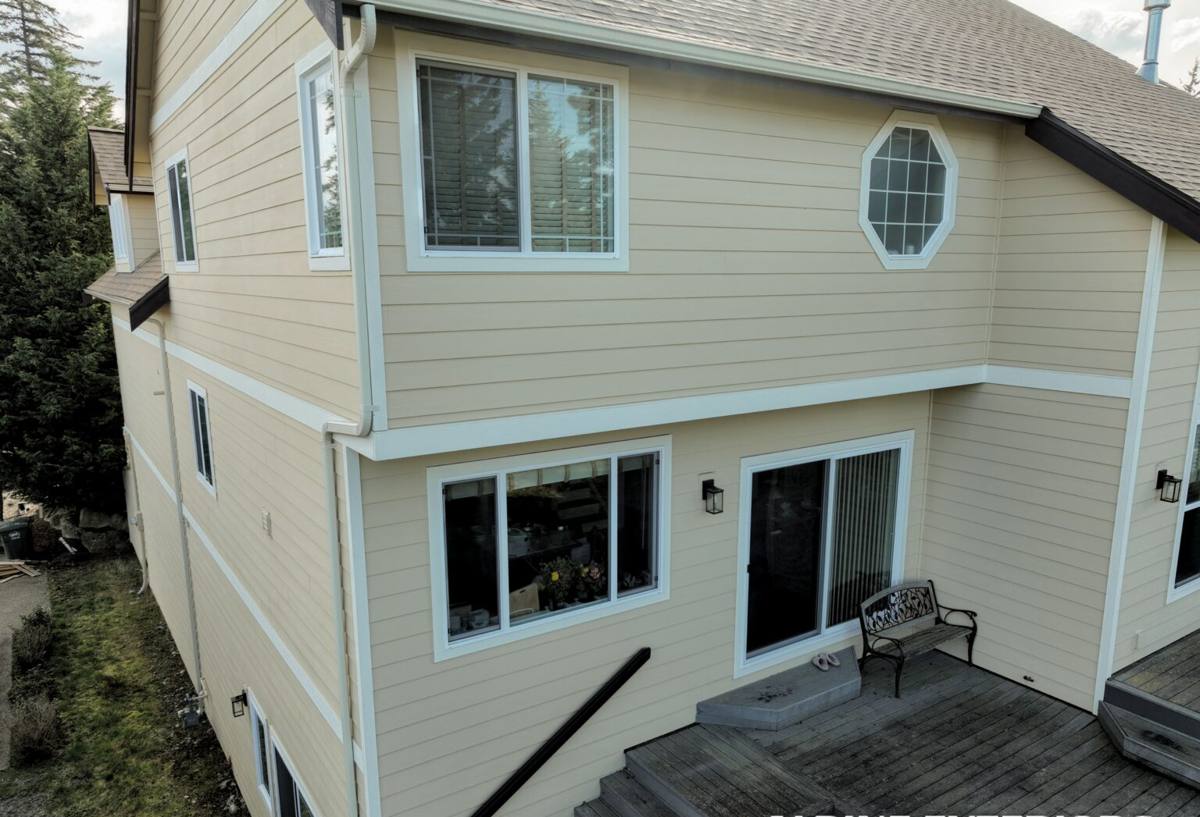
What the Local Climate Actually Does to a Deck
Salt Air and Metal Fatigue
Salt in the air oxidizes exposed metal faster than plain moisture alone. Nails, screws, joist hangers, and post bases that aren't rated for coastal exposure will show rust streaks and pitting years before an inland deck's hardware would. Once fasteners weaken, the structural connections they hold — ledger to house, joist to beam, post to footing — weaken with them, even if the wood around them still looks fine.
Driving Rain and Trapped Moisture
Wind-driven rain doesn't just fall on a deck, it gets pushed under railings, into ledger board gaps, and behind fascia. Wood that stays wet for days at a time — instead of drying out between storms — is what leads to rot, not rain itself. The joints and connection points where two pieces of material meet are almost always where a repair crew finds the worst damage, because that's where water sits longest.
Moss, Algae, and a Long Wet Season
A deck surface that stays shaded and damp for months at a stretch grows moss and algae readily. Beyond looking bad, that growth holds moisture against the wood or composite surface and makes boards slicker and more dangerous to walk on, especially on stairs. Moss on a deck is a maintenance issue; moss that's been left long enough to work into checked or split wood grain becomes a repair issue.
Signs a California Creek Deck Needs Repair
Some of these you can check yourself before calling anyone out. Others need a trained eye, because the surface can look fine while the structure underneath is not.
Structural warning signs
- Noticeable bounce, sway, or give when walking across the deck or up the stairs
- Soft or spongy spots underfoot, especially near the house or around posts
- Rust stains bleeding from screw heads, joist hangers, or bolts
- Gaps opening up where the ledger board meets the house
- Railings or posts that wiggle more than a firm push should allow
- Visible daylight or separation at butt joints between boards
Surface and cosmetic signs
- Graying, cupping, or splintering decking boards
- Persistent moss or black algae staining that pressure washing doesn't fully remove
- Peeling or flaking stain and sealant
- Cracked or checked wood along fastener lines
Structural signs mean call sooner rather than later. Surface signs on their own are often fixable with cleaning, board replacement, and refinishing, but they're also the early warning that worse problems are coming if the deck's protective finish has failed.
Repair or Replace: How We Make That Call
Nobody wants to pay for a repair that just delays a full rebuild by a year. We inspect the deck's framing, ledger connection, posts, footings, and decking surface separately, because each of those can be in a completely different condition. A deck can have solid framing under badly worn decking boards, or the reverse — decent-looking boards over a ledger connection that's been quietly rotting. The table below is a general guide, not a diagnosis; the actual call depends on what we find once we're under the deck and pulling a few boards.
| Condition Found | Usually Repairable | Usually Needs Replacement |
|---|---|---|
| Ledger board / house connection | Minor gaps, flashing not sealing properly | Rot in the rim joist or ledger itself, no flashing at all |
| Framing (joists, beams) | Isolated rot or damage to one or two members | Widespread rot, undersized or failing beams, no proper post bases |
| Posts and footings | Post base rust, minor settling | Footings below frost depth issues, posts set directly in soil or concrete |
| Decking surface | A handful of cupped or split boards | Most boards graying, splitting, or cupping throughout |
| Railings | Loose balusters, worn caps | Railings that no longer meet code height or spacing, rotted posts |
Older decks built before current code updates sometimes have ledger connections, guard rail spacing, or footing depths that no longer meet Whatcom County requirements. When a repair touches those elements, we bring them up to current code rather than patching around a known problem.
What a Correct Repair Actually Involves
Inspection first, quote second
We start underneath the deck, not on top of it. That means checking the ledger flashing, looking at every post base, probing framing members with an awl for soft spots, and checking how water has been draining — or not draining — around the structure. A quote based only on what's visible from the surface is a quote that can change once work starts.
Fixing the cause, not just the symptom
If a board is rotting because water is pooling against it, replacing the board without fixing the drainage or flashing just buys a year or two before the same spot fails again. Correct repair means addressing why the damage happened — improving flashing at the ledger, correcting a slope, adding proper ventilation underneath, or upgrading to fasteners and hardware rated for coastal exposure.
Matching materials properly
Replacement boards, framing lumber, and hardware need to match the load rating and treatment level of what's already there, not just the visual appearance. Mixing incompatible metals (for example, standard steel fasteners against certain treated lumber chemicals) accelerates corrosion, which matters even more this close to the water.
Sealing and finishing
A repair isn't finished until the wood is protected. In this climate that usually means a quality penetrating sealant or stain rated for UV and moisture exposure, applied to all sides of any new boards including cut ends, which is the part of a board most likely to soak up water and rot first.
Wood, Composite, and What We Recommend Repairing With
When a repair calls for new decking boards, homeowners often ask whether to match existing wood or switch a section to composite. Both have a place, and the honest answer depends on the rest of the deck and the budget.
| Factor | Wood (cedar / treated lumber) | Composite |
|---|---|---|
| Upfront cost | Lower | Higher |
| Maintenance | Needs re-staining/sealing every 2-3 years in this climate | Occasional cleaning, no staining |
| Moss/algae resistance | Requires more upkeep to prevent buildup | Generally easier to keep clean, though not immune |
| Matching existing deck | Easiest match if original deck is wood | Only practical if replacing full sections or whole deck |
| Long-term cost | Lower material cost, higher labor cost over time | Higher material cost, lower upkeep cost over time |
For a partial repair, we usually recommend matching the existing material so the deck looks and performs consistently. For a deck that's due for a larger overhaul, switching to composite in high-exposure areas — stair treads, the sections that get the most rain and shade — is worth discussing, since those are the spots that take the worst of the moss and moisture in a California Creek yard.
Our Process Working in the California Creek Area
We already do repair work throughout this part of Blaine, which matters more than it might seem. Lots here often back up to sloped, wooded, or waterside terrain, which affects how a deck drains and how much shade and moisture it sits in year-round. We show up knowing what that means for a deck's framing and finish, instead of treating every job like it's the first coastal Whatcom County property we've seen.
- Walkthrough and inspection — we look at the deck from above and below, check moisture levels in suspect boards, and identify the actual cause of any damage.
- Written scope and estimate — a clear explanation of what needs to be repaired, what it would take to replace instead, and an honest recommendation, not just the more expensive option.
- Repair work — matched materials, corrected drainage or flashing where needed, and hardware suited to salt-air exposure.
- Sealing and finish — new and existing wood protected consistently so the repair doesn't stand out or fail early.
- Walkthrough with you — before we consider the job done, we go over what was fixed and what to keep an eye on going forward.
Keeping a California Creek Deck in Good Shape Between Repairs
Most of what shortens a deck's life here happens slowly, between one season and the next. A little regular upkeep goes a long way toward avoiding repeat repairs.
- Sweep leaves and debris off the deck regularly, especially in fall — trapped organic matter holds moisture and feeds moss growth
- Rinse off salt residue periodically if the deck is in a spot exposed to sea spray or wind off the water
- Check and clear gaps between boards so water can drain instead of pooling
- Reseal or restain on the schedule appropriate to the finish — don't wait until it's visibly peeling
- Look underneath the deck once or twice a year for early rust, soft spots, or standing water
- Keep gutters and downspouts near the deck clear so runoff isn't dumping directly onto or under it
- Address small issues — a loose board, a rusting screw head — before winter's driving rain and the moss season make them worse
Why Hire a Crew That Already Works This Area
Deck repair done by someone unfamiliar with coastal Whatcom County conditions tends to miss the same things: fasteners not rated for salt exposure, flashing details that don't account for wind-driven rain, and finishes chosen for looks rather than how long they'll actually hold up here. We work on homes throughout Blaine and the California Creek area regularly enough to know what fails first in this climate and to build repairs that account for it from the start, instead of learning it the hard way on your deck.
Get an Honest Look at Your Deck
If your deck has soft spots, rust stains, stubborn moss, or just doesn't feel as solid as it used to, it's worth having someone look before the next stretch of driving rain makes it worse. We offer free, no-pressure estimates for deck repair in California Creek and throughout the Blaine area — use the form below to get one scheduled.