 Blaine Siding
 Siding Installation Built for the Birch Point Shoreline
Homes in the Birch Point area sit close enough to the water that the siding on them is doing more work than siding on a typical inland house. Salt-laden air moves off the Strait, wind-driven rain hits walls at an angle instead of falling straight down, and the shaded, damp stretches of Whatcom County winters give moss and algae months to establish themselves on anything that stays wet. A siding installation here isn't just a cosmetic upgrade — it's the first line of defense against a climate that never really lets a house dry out for long.
That combination is harder on a wall assembly than most homeowners realize. Salt air accelerates corrosion on exposed metal fasteners and trim. Driving rain finds gaps at butt joints, corners, and penetrations that would stay dry in a calmer climate. And moss doesn't just look bad — it holds moisture against the siding surface and, on the wrong material, works into seams and joints over time. Getting the installation right the first time matters more here than almost anywhere else in the county.
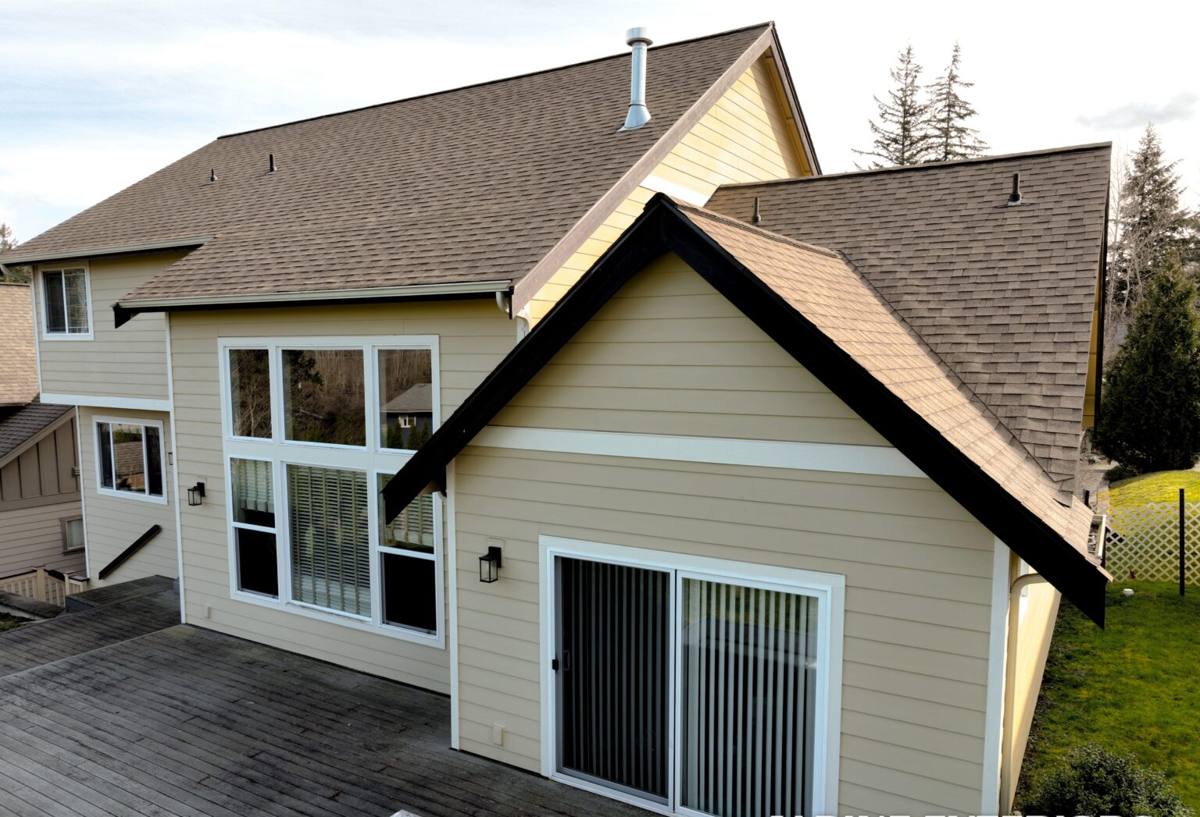
What Birch Point Homes Actually Need From Their Siding
Moisture Management, Not Just a Weather-Resistant Surface
A lot of siding failures near the water aren't failures of the siding material itself — they're failures of what's behind it. A correctly installed system starts with a continuous weather-resistant barrier, properly lapped so water always sheds downward and outward, never into the wall cavity. Every window, door, and penetration needs flashing that directs water back out, not just caulk covering a gap. On a Birch Point home, we treat this layer as non-negotiable, because driving rain will find any shortcut taken here.
Salt-Tolerant Fasteners and Hardware
Standard fasteners can corrode faster in salt-air exposure, which leads to staining, streaking, and eventually loose boards. Coastal-appropriate fastening — corrosion-resistant nails or screws, correct fastener spacing, and proper penetration depth — is a detail that's easy to skip and expensive to fix later once staining or board movement shows up.
Airflow and Drying Capacity
Siding that can't dry out between rain events stays wet longer, and wet siding is what moss and mildew need to take hold. Proper clearance at the bottom of the wall, ventilated rainscreen gaps where appropriate, and correct caulking (only where caulking should be used — not as a substitute for flashing) all give the wall a chance to dry before the next storm rolls in.
Why We Install Only James Hardie Fiber Cement Here
We standardized on James Hardie fiber cement siding for every home we work on, and in a coastal, high-moisture area like Birch Point, that decision carries even more weight. Fiber cement doesn't rot, it doesn't feed mold or fungus the way wood-based products can, and it's non-combustible — a real consideration anywhere in the Pacific Northwest given wildfire season. Hardie's HZ5 product line is specifically engineered for wet, freeze-prone climates, which matches Whatcom County's winters better than a generic siding formulation.
The factory-applied ColorPlus finish also matters more here than it would in a drier climate. Field-applied paint on a coastal home has to fight salt exposure and near-constant moisture from day one, and it typically shows wear years before a factory finish does. ColorPlus is baked on under controlled conditions and backed by its own finish warranty, which means the color and surface are holding up against the same weather that's aging everything else on the exterior.
None of this means fiber cement is maintenance-free — no siding is. But it removes several of the failure points that show up first on coastal homes: swelling, rot at seams, and paint that peels early because it never had a chance to fully dry between rain events.
How Siding Compares in a Salt-Air, High-Moss Climate
| Material | Moisture Behavior | Salt Air / Moss Exposure | Typical Maintenance |
|---|---|---|---|
| Vinyl | Doesn't rot, but can warp or crack in temperature swings; seams are a moisture entry risk | Can chalk and discolor faster near salt air; moss grows on the surface like any material that stays damp | Periodic washing; limited repair options if damaged |
| Cedar / untreated wood | Absorbs moisture readily; prone to rot and swelling without diligent upkeep | Vulnerable to moss and fungal growth in shaded, damp conditions | Frequent re-staining or painting; highest long-term upkeep |
| Engineered wood (e.g., LP SmartSide) | Wood-strand core is more moisture-sensitive than fiber cement; edges need diligent sealing | Can be at higher risk if moisture reaches the substrate over time | Careful joint and edge maintenance is important |
| James Hardie fiber cement | Cement composition doesn't absorb moisture the way wood-based products do; HZ5 engineered for wet climates | Non-combustible, resists moisture-driven degradation; still needs periodic cleaning where moss accumulates | Occasional washing; factory finish reduces repaint cycles |
No siding material is immune to a coastal climate — moss will grow on any surface that stays damp and shaded long enough, and every material benefits from occasional cleaning. The difference is what happens underneath the surface over the following ten, twenty, and thirty years, and that's where fiber cement's moisture behavior sets it apart.
Our Installation Process for Birch Point Homes
- On-site assessment — we look at wall orientation relative to prevailing wind and rain, existing moisture damage, and any trouble spots around windows, decks, or roof-to-wall transitions.
- Tear-off and substrate check — old siding comes off and we inspect sheathing for hidden rot or moisture damage before anything new goes up. Problems found here get addressed, not covered over.
- Weather-resistant barrier installation — a continuous, properly lapped barrier goes on before any siding, with flashing integrated at every penetration and transition.
- Hardie board and trim installation — installed to James Hardie's fastening and clearance specifications, using corrosion-resistant hardware appropriate for a salt-air environment.
- Detail work — corners, joints, and penetrations get sealed and flashed correctly, not just caulked over as a shortcut.
- Final walkthrough — we check clearances, fastening, and finish quality before calling the job done.
Installation Mistakes That Show Up First in Coastal Conditions
A lot of siding problems near the water don't appear right away — they show up two, five, or ten years later, once moisture has had time to work its way in. These are the details that matter most to get right the first time:
- Missing or improperly lapped flashing at windows, doors, and roof-to-wall intersections
- Caulk used to seal gaps that should have been flashed instead
- Siding installed with insufficient clearance from grade, decks, or roof lines, trapping moisture
- Standard fasteners used in a salt-air zone, leading to early corrosion and staining
- Butt joints and seams not backed or sealed correctly, giving driving rain a direct path inward
- No ventilation or drying path built into the wall assembly, keeping the siding damp longer after every storm
Any one of these can turn into a costly repair well before the siding itself has reached the end of its service life.
Why a Crew That Already Works Birch Point Makes a Difference
Installing siding correctly requires understanding the wall assembly and following the manufacturer's specifications — that part doesn't change from house to house. But a crew that regularly works this stretch of Whatcom County coastline has already seen how wind-driven rain behaves on water-facing walls, which corners take the worst weathering, and where moss tends to establish first on a shaded elevation. That familiarity shows up in the details: where extra attention goes during flashing, which fastener choices hold up best, and what to check for during the tear-off phase on a home that's already weathered a few coastal winters.
It also means fewer surprises for the homeowner. We're not guessing at how Blaine's climate treats a wall assembly — we're applying what we've already seen work on homes with the same exposure.
After Installation: What Keeps Birch Point Siding Performing
Correct installation does most of the work, but a little seasonal attention keeps it performing over the long run. Keep gutters clear so water isn't overflowing directly onto siding below. Trim back vegetation that's shading and holding moisture against a wall. Rinse off accumulated moss, algae, or salt residue periodically, especially on shaded, water-facing elevations. None of this is heavy maintenance — it's the kind of upkeep that lets a well-installed fiber cement system reach its full lifespan instead of fighting an uphill battle against moisture from day one.
If you're planning a siding project for a home in the Birch Point area, we're happy to take a look and walk you through what your home specifically needs. Reach out for a free, no-pressure estimate — there's a form right below to get started.