 Blaine Siding
 Deck Repair Built for Birch Point's Waterfront Climate
Birch Point sits close enough to the water that every deck out here is fighting a different battle than one fifteen miles inland. Salt-laden air corrodes hardware faster than most homeowners expect, driving rain off the Strait finds its way into joints and end grain that never fully dry out, and a long, damp Whatcom County moss season coats horizontal surfaces before anyone notices the wood underneath is losing its grip. We've repaired enough decks in this immediate area to know the failure patterns aren't hypothetical — they're predictable, and they're preventable if you catch them early.
This page is about one job, done right, in one place: deck repair for homes in and around Birch Point. Not a full teardown-and-rebuild sales pitch, not a generic "we fix decks" page copied across every town we work in. If your deck is sound structurally but showing its age, or if you're not sure whether what you're looking at is cosmetic or serious, this is what an honest assessment and a correct repair actually look like.
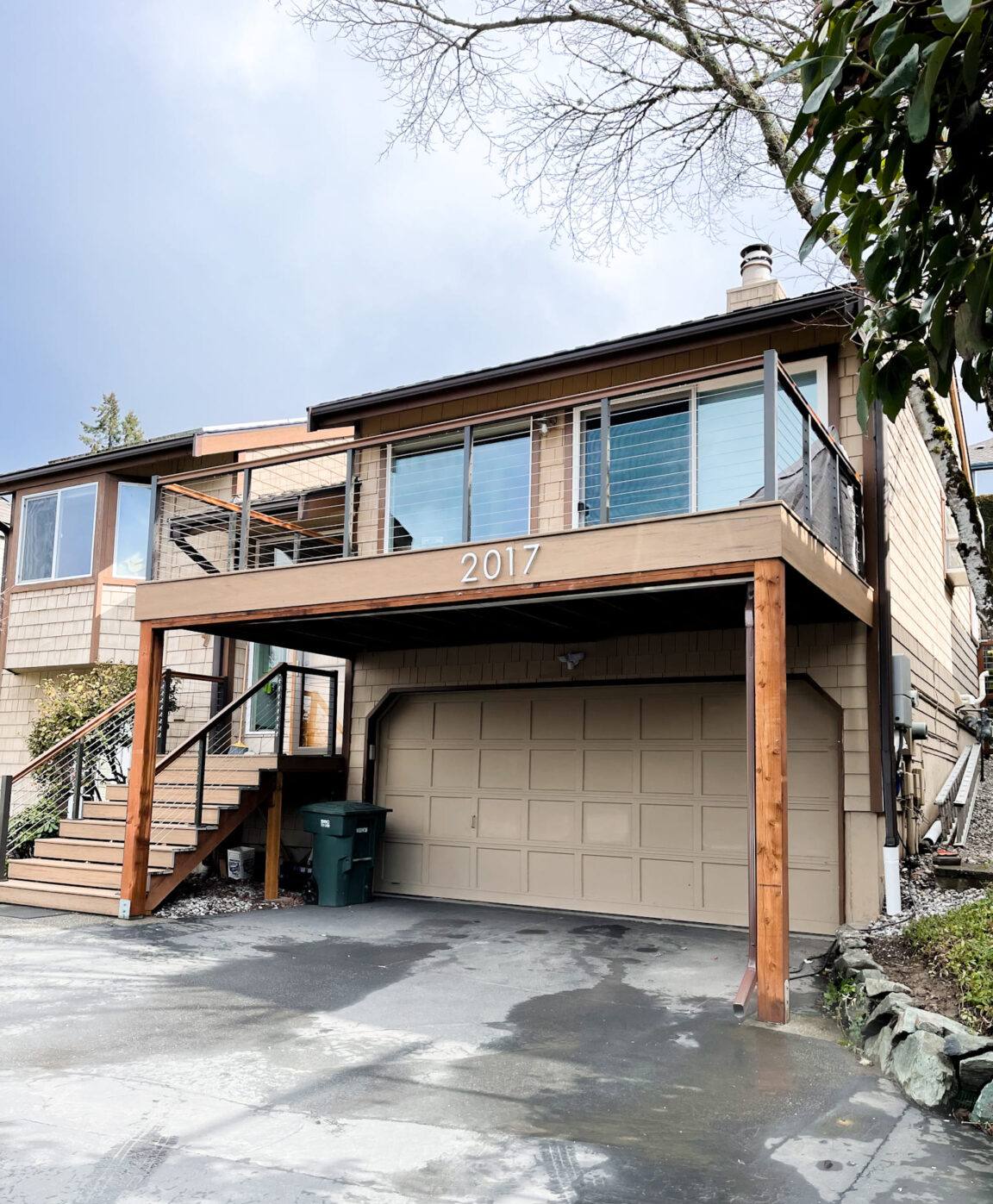
Signs Your Birch Point Deck Needs Repair
Coastal decks rarely fail all at once. They give warnings first — usually small ones that get written off as "just weathering" for a season or two longer than they should. Before you decide whether a repair is even worth scheduling, walk your deck and check for these:
- Soft or spongy spots underfoot, especially near the house or along board edges
- Rust streaks bleeding out from screw heads or nail holes
- Gaps opening up between deck boards and the ledger board where it meets the house
- Visible green or black growth that doesn't scrub off with a stiff brush
- Railings that flex or wobble more than they used to
- Stair stringers that feel loose or bounce under weight
- Fasteners backing out or spinning freely instead of biting
- A musty smell coming from underneath the deck on damp mornings
Any one of these on its own might be minor. Two or three together, especially combined with visible moss buildup, usually means moisture has been sitting somewhere it shouldn't for a while.
What's Actually Failing Underneath
A deck that looks rough on the surface can be structurally fine, and a deck that looks presentable can be hiding a real problem. The only way to tell the difference is to know where coastal moisture actually does its damage.
The Ledger Board Connection
This is the board that ties your deck to the house, and it's the single most important structural connection on the entire structure. Driving rain pushed sideways by wind off the water tends to find the seam between the ledger and the siding before anywhere else. Flashing that's cracked, missing, or was never installed correctly lets water track behind the ledger and rot it from the inside — often while the face of the board still looks fine.
Joists, Beams, and Posts
Underneath the visible decking, the framing takes a slower but steadier beating. End grain on joists soaks up moisture like a straw, and if the underside of the deck doesn't get airflow or sun, it can stay damp for days after a storm passes. Post bases sitting in standing water or buried in soil and debris are a common weak point we find on older Birch Point decks.
Fasteners and Hardware
Salt air accelerates corrosion on anything that isn't rated for coastal exposure. Standard interior-grade screws and joist hangers can start rusting within a few seasons out here, and once a fastener corrodes, it loses holding strength long before it looks obviously "broken." This is one of the most common repair triggers we see — the wood itself is fine, but the hardware holding it together isn't.
Decking Boards Themselves
Cupping, splitting, and checking on the board surface are usually weathering, not structural failure — but they're also where water pools and starts working its way into fastener holes and butt joints, which is where minor becomes major.
Repair or Replace? How We Make That Call
Not every deck problem needs a full rebuild, and we don't push one when a targeted repair will hold up. The honest answer depends on where the damage is and how far it's spread.
| Condition Found | Usually Means | Typical Approach |
|---|---|---|
| Isolated soft boards, rest of deck solid | Localized moisture exposure or board-level rot | Spot replacement of affected boards |
| Rusted or backed-out fasteners across the surface | Original hardware wasn't coastal-rated | Re-fastening with corrosion-resistant hardware |
| Soft framing at the ledger board | Flashing failure allowing water intrusion | Ledger repair/flashing correction, may require partial rebuild |
| Widespread soft or spongy framing throughout | Long-term moisture exposure, structural compromise | Full or partial deck rebuild recommended |
| Loose railings or wobbly posts only | Connection hardware failure, framing often sound | Railing and post reinforcement |
The middle ground — where a deck has real problems but doesn't need to be torn out entirely — is where most of our work actually happens. We'd rather tell a Birch Point homeowner "this needs three joists and new hardware" than sell a full replacement that isn't necessary yet.
How We Approach a Birch Point Repair
The process is the same whether the job is small or involved, because skipping steps is exactly how repairs fail early in a climate like this one.
- On-site inspection from underneath, not just the top. Surface problems and framing problems don't always match up, so we look at the structure, not just the walking surface.
- Probe suspect wood. A screwdriver or awl tells us more about actual rot depth than a visual look ever will. Soft wood gets marked and mapped before any repair plan is written.
- Check the ledger and flashing first. If water is still getting in behind the house connection, replacing boards elsewhere is a temporary fix at best.
- Replace only what's compromised. Sound framing stays. Compromised joists, posts, or boards get cut back to solid wood and replaced or sistered as appropriate.
- Upgrade hardware to coastal-rated fasteners and connectors during the repair, even in sections where the original hardware wasn't the reason for the call — it's the part most likely to cause the next problem if left alone.
- Re-check drainage and airflow underneath before closing anything back up, since trapped moisture is what caused the damage in the first place.
We walk the finished repair with the homeowner and explain what we found, what we fixed, and what to keep an eye on going forward. No surprises, no upsell tacked onto the invoice after the fact.
Materials and Hardware That Actually Hold Up Here
What goes into a coastal deck repair matters as much as the workmanship. We match materials to the exposure, not just to what's cheapest at the yard.
| Material | How It Handles Salt Air & Rain | Trade-Off |
|---|---|---|
| Pressure-treated lumber | Resists rot well when properly sealed and maintained | Needs periodic resealing; end cuts must be treated on-site |
| Composite decking | Doesn't absorb moisture into the board itself, low maintenance | Higher upfront cost; substructure still needs coastal-rated protection |
| Cedar | Naturally rot-resistant, weathers attractively | Softer wood, more prone to surface damage and requires regular sealing |
| Standard zinc-coated fasteners | Adequate inland, corrodes faster near saltwater | Not our standard for repair work this close to the water |
| Stainless or hot-dip galvanized fasteners | Built for marine and coastal exposure | Costs more per fastener; the right choice for this location |
For repair work specifically, we default to stainless or hot-dip galvanized hardware regardless of what the original build used, because re-opening the same repair in three years over a fastener choice isn't a good outcome for anyone. On decking material, the right call depends on your budget and how the deck gets used — we'll walk through the honest trade-offs rather than steering you toward whatever's easiest for us to install.
Moss, Algae, and Surface Buildup
Whatcom County's damp shoulder seasons give moss and algae months to establish themselves on any horizontal wood surface that doesn't get consistent sun. On Birch Point decks, that's usually the north-facing side or areas shaded by the house or nearby trees. Left alone, moss does more than look bad — it holds moisture directly against the board surface, which accelerates the exact rot and cupping that eventually turns into a repair call.
Removing moss isn't complicated, but doing it without damaging the wood or washing wood fibers into your yard and drainage takes the right approach — soft brushing and appropriate cleaners rather than aggressive pressure washing, which can blast away the softer grain and leave boards more porous than before. If your deck already has heavy moss buildup, it's worth having it looked at rather than just cleaned, since moss that thick has often been sitting there long enough to start affecting the wood underneath.
Between-Visit Maintenance Checklist
A deck repair holds up longer when it's paired with a little regular upkeep. This is the short list we'd give any Birch Point homeowner regardless of whether we did the repair:
- Sweep debris out of board gaps a few times a year so water has somewhere to drain
- Brush off moss and algae before it gets thick, especially on shaded sections
- Check railings and stair treads for movement each season
- Look underneath the deck once or twice a year for standing water or damp soil
- Reseal wood decking on the manufacturer's recommended schedule, not just when it looks dry
- Keep gutters and downspouts near the deck clear so runoff isn't dumping directly onto it
Why a Crew That Already Works Birch Point Matters
Deck repair advice that works for a dry inland climate doesn't always hold up on the water. A contractor who mostly builds decks a few hundred feet from saltwater learns which fastener grades actually last, which flashing details actually keep the ledger dry, and which "standard" material choices quietly underperform out here. That's not something you get from a general contractor working from a one-size-fits-all spec sheet.
There's also a practical side to hiring locally: a crew already working in Blaine and the surrounding waterfront communities can get to your property without a long drive tacked onto the estimate, and they have a reputation in the immediate area to stand behind. When we tell a Birch Point homeowner a repair will hold up, that's a claim we expect to be around to answer for.
If your deck is showing any of the signs above, or you just want an honest opinion on whether it's a repair or something bigger, we're glad to take a look. The estimate is free, there's no pressure attached to it, and you'll get a straight answer either way — use the form below to get started.