 Blaine Siding
 Building Decks for Birch Point's Waterfront Climate
Birch Point is one of the more exposed pockets of the Blaine area, close enough to the water that salt-laden air, wind-driven rain, and shade from mature trees all show up in how a deck ages here. A deck built to a generic spec sheet might look fine in the showroom, but out here it gets tested every winter by driving rain that finds every gap, and every summer by a slow build-up of moss and algae on any surface that doesn't dry out fast. We've worked on enough decks in this neighborhood to know which details matter and which ones are just extra cost.
None of this means a deck in Birch Point has to be high-maintenance or short-lived. It means the material choices, fastener choices, and framing details need to match the actual conditions on your lot, not the conditions of a dry inland yard three counties over.
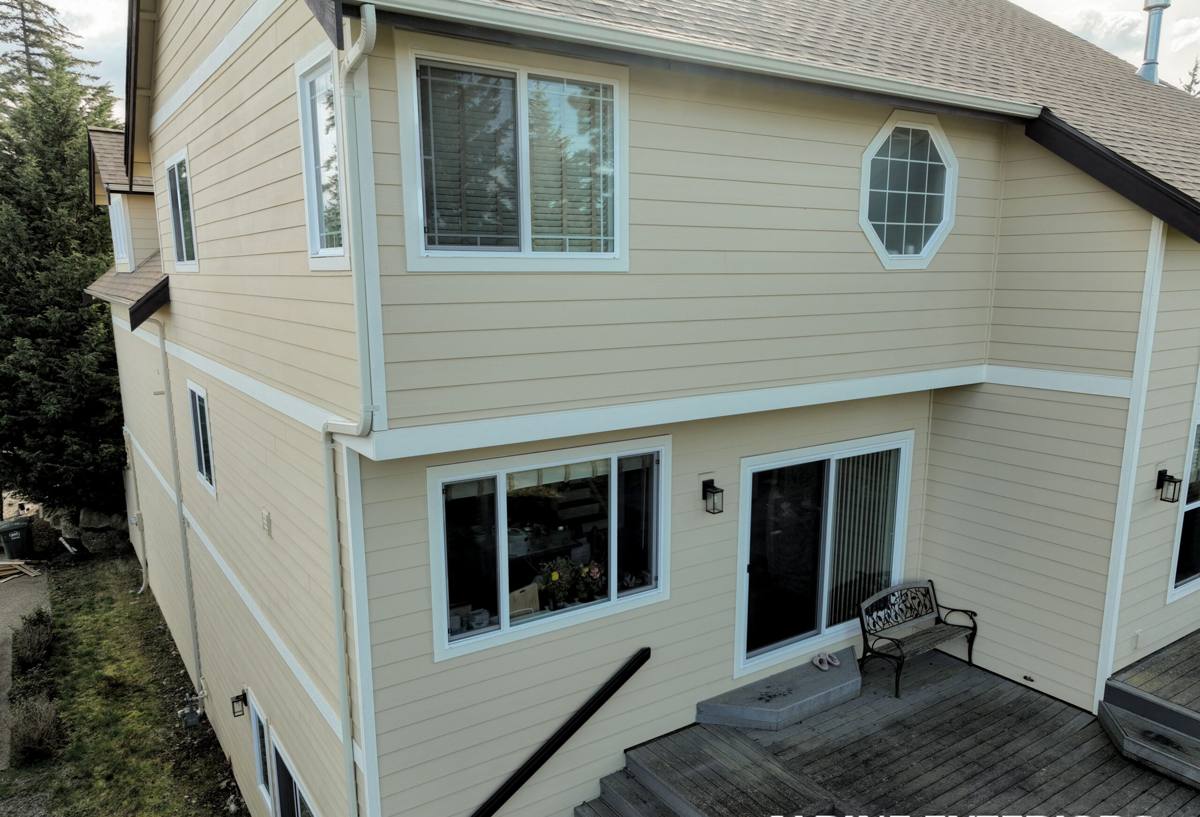
What Local Conditions Actually Do to a Deck
Salt Air and Metal Fasteners
Airborne salt accelerates corrosion on anything metal: nails, screws, joist hangers, structural bolts. On a deck close to the water, using the wrong fastener grade isn't a minor shortcut; it's the difference between hardware that lasts the life of the deck and hardware that starts staining, weeping rust, or weakening within a handful of years.
Driving Rain and Wind-Blown Moisture
Whatcom County storms don't just drop rain straight down; wind pushes it sideways, up under rail caps, and into ledger connections where the deck meets the house. Flashing details that would be optional in a calmer climate are not optional here.
Shade, Moss, and Slow-Drying Surfaces
Birch Point's tree cover and marine humidity mean surfaces stay damp longer after a storm. Anything that traps moisture — tight board spacing, poor airflow underneath, low spots with no drainage — becomes a moss and algae magnet, and a wet deck surface is also a slip hazard for the rest of the year.
Choosing Decking Material for This Climate
There's no single "best" decking material; every option is a trade-off between upfront cost, maintenance, and how it handles moisture and moss over time. Here's how the common choices actually compare for a shoreline lot like Birch Point:
| Material | Moisture/Moss Behavior | Maintenance | Typical Lifespan Here |
|---|---|---|---|
| Pressure-treated wood | Absorbs moisture; needs a real gap and airflow to dry between rains | Annual cleaning, periodic staining/sealing | 15-20 years with upkeep |
| Cedar | Naturally rot-resistant but still needs to dry out; moss still grows on shaded boards | Regular cleaning and refinishing to hold color | 15-25 years with upkeep |
| Composite decking | Doesn't absorb water like wood, but surface algae/moss can still grow if shaded and wet | Periodic washing, no staining or sealing | 25-30+ years, manufacturer warranty |
| PVC/capped polymer | Fully moisture-resistant surface, least hospitable to moss buildup | Occasional washing | 25-30+ years, manufacturer warranty |
For most Birch Point homes we lean toward composite or capped polymer boards on decks that sit in shade or close to grade, simply because they hold up to the moss-and-moisture cycle with the least ongoing work. That said, a well-built cedar or treated wood deck with the right gapping and airflow can absolutely earn its keep here too; it just asks more of the homeowner in upkeep. We'll walk through the honest trade-offs for your specific site rather than push one product line.
Framing, Fasteners, and Ledger Details That Matter Here
The decking surface is what you see, but the framing underneath determines whether the deck is still solid in ten or twenty years. In a salt-air, high-rain environment, we pay particular attention to a handful of details that get skipped more often than they should:
- Stainless steel or heavy hot-dip galvanized fasteners and hardware rated for coastal, high-moisture exposure, not standard-grade hardware
- Proper ledger board flashing where the deck ties into the house, so wind-driven rain can't work its way behind the siding
- Joist tape or flashing on top of framing members to keep water out of end grain and fastener holes
- Adequate joist spacing and blocking so the structure doesn't flex and open gaps over time
- Post bases that keep wood off concrete and standing water, rather than posts set directly into damp footings
These aren't upsells — they're the baseline for a deck meant to hold up on a lot exposed to Whatcom County's wet season year after year. Skipping any one of them doesn't show up as a problem on day one. It shows up as a soft ledger board or a rusted hanger five or eight years down the road, usually hidden under the decking where nobody's looking until something gives.
Drainage and Airflow: The Detail Most Decks Get Wrong
A large share of the moss, staining, and premature rot we see on local decks traces back to one thing: water that has nowhere to go. If the ground under a deck doesn't drain, or the space between the deck and the soil is too tight for air to move, that dampness sits there through the entire moss season and slowly works its way into the framing from underneath.
On every Birch Point project we look at grading and clearance under the deck, not just what's visible on top. That can mean adjusting post height, adding a gravel drainage path under a low deck, or spacing boards to let water shed rather than pool on the surface. It's a detail that costs little to get right during construction and a lot to fix after the fact, since correcting poor drainage after the deck is built usually means pulling up decking to get at the problem underneath.
Railings, Stairs, and Code Basics
Any deck more than a modest height off the ground needs a code-compliant guardrail, and in a wet, wind-exposed spot like Birch Point the railing system takes as much weather abuse as the decking itself. We build railing posts and connections to the same coastal-grade fastener standard as the rest of the frame, since a wobbly or corroding rail is both a safety problem and one of the first things people notice on an older deck. Stair stringers get the same drainage thinking as the deck frame itself: end grain sealed or protected, hardware upgraded, and enough clearance underneath that they aren't sitting in standing water after a storm. Whatcom County's permit and inspection process exists to catch exactly these structural basics, and we build to pass inspection the first time rather than treating code minimums as a target to negotiate down from.
Sizing and Layout Considerations for Birch Point Lots
Beyond material and framing, a few layout choices matter more here than they would on a calmer, drier site. Decks that sit low to the ground need extra attention to clearance and drainage, since they're the hardest to keep dry once moss season sets in. Decks with a lot of shade from surrounding trees benefit from wider board gapping and, where it fits the design, a surface material that doesn't hold moisture in its grain. Because wind off the water can carry rain sideways onto a deck that would otherwise be sheltered, railing and post placement sometimes needs to account for wind direction as much as for view or layout preference. None of this is exotic; it's just paying attention to how the specific lot behaves rather than defaulting to a standard plan.
Our Process for a Birch Point Deck Project
We keep the process straightforward, because the value is in getting the details right, not in a complicated sales pitch.
- Site visit and assessment — we look at sun and shade exposure, wind direction, existing drainage, and how close the site sits to the water, since all of that shapes the material and framing recommendation.
- Design and material selection — we go over the honest trade-offs between wood, composite, and PVC decking for your specific spot, along with layout, railing, and stair options.
- Permitting — most new decks and many replacement decks in Whatcom County require a permit, and we handle that process so it isn't left to you.
- Construction — framing first, with the fastener and flashing details covered above, then decking, railing, and finish work.
- Final walkthrough — we go over the finished deck together, including basic care so it starts its life properly maintained.
Maintaining a Deck in a Moss-Prone, Salt-Air Location
Whatever material you choose, a little seasonal attention goes a long way toward keeping a Birch Point deck safe and good-looking. A simple yearly routine covers most of it:
- Sweep off leaves, needles, and debris regularly, especially in fall, since trapped organic matter holds moisture and feeds moss
- Rinse or wash the surface at least once a year to remove salt residue, pollen, and early moss growth before it takes hold
- Check railing posts, stair connections, and the ledger area for soft spots, rust staining, or gaps once a year
- Keep gutters and downspouts near the deck clear so runoff isn't dumping extra water onto or under it
- Re-stain or reseal wood decking on the schedule the product calls for; don't wait until it's visibly gray and dry
- Trim back overhanging branches where practical to cut down on shade and falling debris that accelerate moss growth
Why Hiring a Crew That Already Works Birch Point Matters
A deck built to a generic set of specs can still fail early in a spot like this, not because the crew did sloppy work, but because they didn't build in the margin this climate demands. Crews who regularly work Birch Point and the surrounding Blaine shoreline already know which fastener grades actually hold up, which materials shrug off moss instead of feeding it, and which framing shortcuts come back to bite a homeowner in year five instead of year twenty-five.
That local experience also means we're familiar with Whatcom County permitting requirements and the kind of lot conditions common in this area — shaded yards, sloped sites near the water, existing drainage patterns — so there are fewer surprises once construction actually starts.
Get a Straightforward Estimate
If you're planning a new deck or need to replace one that's showing its age, we're happy to take a look and give you a straightforward, no-pressure estimate, including an honest read on which materials make sense for your specific spot in Birch Point. Fill out the form below and we'll get in touch to schedule a time.