 Blaine Siding
 Why Ferndale Windows Wear Out Differently Than Windows Inland
Ferndale sits close enough to the water that homes here take a different kind of weathering than a house forty miles inland. The combination of salt-laden air off the Strait of Georgia, long stretches of driving rain, and a moss season that can run most of the year puts steady pressure on window frames, seals, and hardware. None of it is dramatic on its own — it's the accumulation that gets homeowners. A window that would last two more decades in a drier part of the state can start failing early here if it wasn't installed with this climate in mind.
That's the whole point of a page like this one. Window replacement isn't a single product you drop into any hole in a wall. In Whatcom County, and specifically in Ferndale's mix of coastal air and near-constant winter moisture, the details of the install matter as much as the window itself.
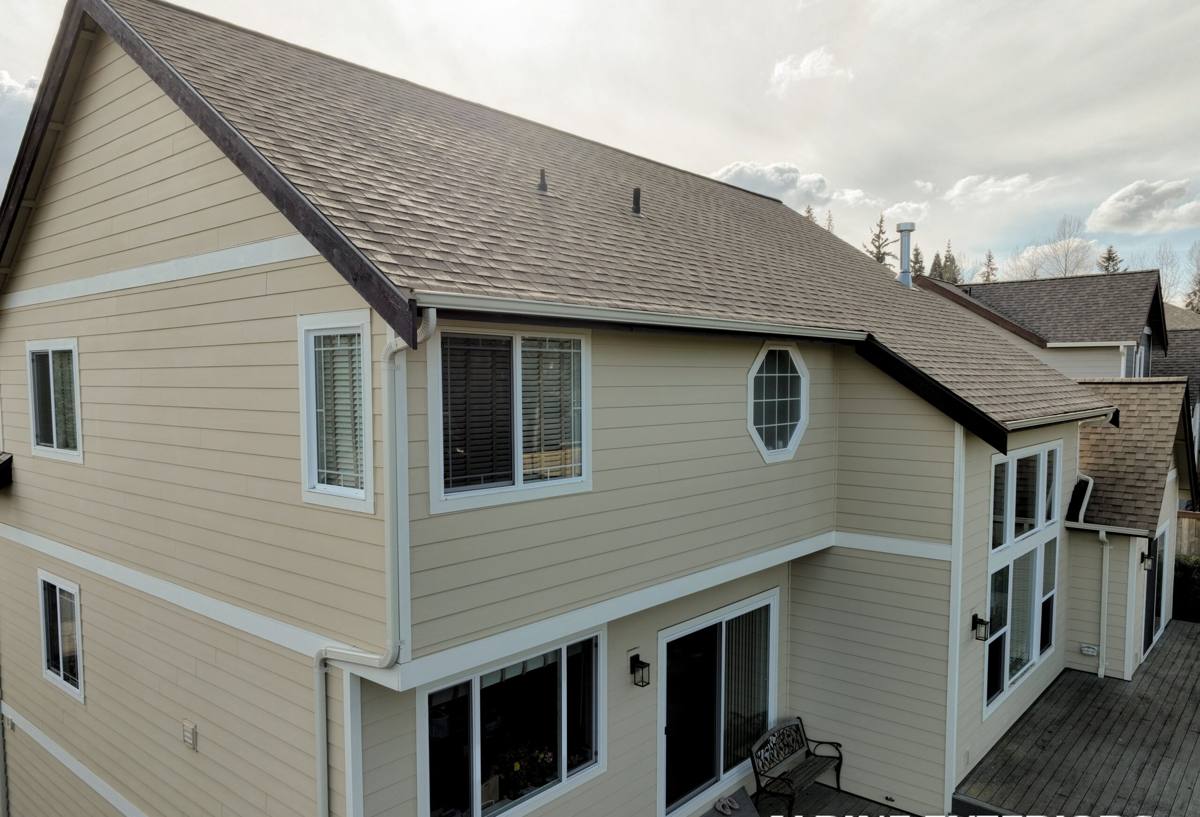
Signs a Ferndale Home Needs Window Replacement
Most homeowners don't wake up one day and decide they need new windows. It's usually a slow accumulation of small annoyances that finally add up. Here's what we typically see first in this area:
- Fogging between the panes — a sign the seal on a double-pane unit has failed and moisture has gotten between the glass. Once this happens, it doesn't reverse.
- Soft or discolored wood at the sill or corners — common on older wood-frame windows that have absorbed driving rain over years, especially on the sides of the house that catch the weather.
- Moss or dark streaking on the frame and sill — a sign moisture is sitting where it shouldn't, which speeds up rot and finish failure.
- Drafts or a noticeable chill near the glass — often means the seal or the frame itself has degraded enough that outside air is getting through.
- Hardware that's stiff, corroded, or won't latch cleanly — salt air is hard on metal locks, hinges, and cranks, even on newer windows if the hardware wasn't rated for it.
- Higher heating bills without an obvious cause — older single-pane or early double-pane windows lose a lot of heat, and it shows up on the utility bill before it shows up visually.
Any one of these on its own might just need a repair. Several of them together, especially on a home more than 20-25 years old, usually mean it's time to talk about replacement.
What a Correct Window Replacement Job Actually Involves
It's Not Just the Window — It's the Opening
The window unit itself is only part of the job. The bigger factor in how long a window lasts is what happens around it during installation — the flashing, the sealing, and how well the new window ties into the existing wall assembly. A high-end window installed carelessly will leak and fail faster than a mid-grade window installed correctly.
Sill Pan Flashing
In a climate that sees as much driving rain as this one, a sill pan under the window opening is not optional. It creates a sloped, waterproof pocket at the bottom of the rough opening so that any water that does get past the window — through condensation, a wind-driven storm, or a future seal failure — has somewhere to drain instead of soaking into the framing. Skipping this step is one of the most common reasons window replacements fail early in wet climates like ours.
Air Sealing and Insulation Around the Frame
The gap between the window frame and the rough opening needs to be filled with a proper low-expansion foam or insulation, not left open or overstuffed. Too little insulation leaves a cold gap and a draft path. Too much foam can bow the frame and cause the window to operate poorly or seal unevenly.
Tying Into the Weather-Resistive Barrier
The flashing around the new window needs to integrate correctly with the house wrap or building paper already on the wall, shingled so water is directed outward and down, never trapped behind the siding. This is one of the details that separates a window installer who understands building science from one who's just swapping glass.
Choosing the Right Window Material for This Climate
There's no single "best" window material — it depends on the home, the budget, and how much maintenance the homeowner wants to take on. In a coastal, wet climate like Ferndale's, moisture resistance and hardware durability matter more than they would somewhere drier.
| Material | Moisture Resistance | Maintenance | Typical Lifespan | Best Fit |
|---|---|---|---|---|
| Vinyl | Very good — won't rot or corrode | Low — occasional cleaning | 20-30 years | Budget-conscious replacements, rental properties |
| Fiberglass | Excellent — very stable in wet/dry cycles | Low | 30-40+ years | Homes prioritizing longevity and paintable finish |
| Wood (clad exterior) | Good on the exterior face, but interior wood needs care | Moderate to high | 20-30 years with upkeep | Homeowners who want a traditional wood interior look |
| Aluminum | Poor thermal performance, prone to condensation in this climate | Low | Varies widely | Generally not our recommendation for Whatcom County homes |
We steer most Ferndale homeowners away from aluminum-framed replacement windows, not because the material is inherently bad, but because bare aluminum conducts cold straight through the frame. In a humid marine climate that leads to condensation on the interior frame, which over time can damage sills and finishes. Vinyl and fiberglass both perform much better here for that reason.
Our Window Replacement Process
- On-site assessment. We look at each window opening individually — not every window on a house is in the same condition, and not every window needs the same fix.
- Measure and product selection. We measure exact openings and walk through material, glass, and grid options based on your budget and the home's exposure to weather.
- Careful removal. Old windows and trim are removed without unnecessary damage to the surrounding siding or interior finish.
- Inspect the opening. This is where we catch hidden rot or water damage from a prior leak, before it gets sealed behind a new window.
- Sill pan and flashing installation. Every opening gets flashed to shed water outward, not trap it.
- Set and shim the window. The unit is leveled, plumbed, and squared before it's fastened, so it opens and seals correctly for its full lifespan.
- Insulate and air seal. The gap around the frame is filled correctly — not too little, not too much.
- Exterior and interior trim. Trim is reinstalled or replaced and caulked to match the home.
- Final walkthrough. We test operation, locks, and seals with you before we call the job done.
What Drives the Cost of a Window Replacement
Every home is different, so we don't quote sight-unseen prices, but there are a handful of factors that consistently move the number up or down. Knowing them ahead of time makes the estimate conversation more useful.
| Factor | Why It Matters |
|---|---|
| Number of windows | Per-window cost usually drops slightly on larger jobs due to shared setup and labor efficiency |
| Material (vinyl vs. fiberglass vs. wood-clad) | Material cost varies significantly and affects long-term maintenance |
| Glass package | Low-E coatings, gas fills, and tempered glass (required in some locations by code) add cost but improve performance |
| Full-frame vs. insert replacement | Full-frame replaces down to the studs and costs more, but is often necessary when there's rot or the opening needs correction |
| Access and site conditions | Second-story windows, tight landscaping, or limited access can add labor time |
| Trim and siding repair | If old trim or siding around the opening is damaged, addressing it during the window job is more efficient than doing it later |
| Disposal | Hauling and disposing of old windows, especially glass, is part of a complete job |
As a general guideline, straightforward insert replacements tend to run less than full-frame replacements that involve fixing rotted framing or correcting an out-of-square opening. We'll always tell you honestly which situation you're in rather than quoting the cheaper option and finding problems mid-job.
Energy Efficiency in a Marine Climate
Whatcom County doesn't get the extreme cold that inland climates see, but it does get long, damp, overcast winters where a home's heating system runs steadily for months. Windows are one of the biggest sources of heat loss in most houses, so the glass package matters as much as the frame material.
Low-E Glass
Low-emissivity coatings reflect radiant heat while still letting visible light through. In our climate, this helps keep heat inside during winter without making the house feel dark, which matters given how many overcast days we get.
Gas-Filled Insulated Glass
Most quality replacement windows use argon or krypton gas between the panes instead of plain air, which slows heat transfer through the glass unit. It's a small detail that adds up over a full winter of heating.
Condensation Resistance
Humidity is a fact of life here, and interior condensation on window glass or frames is common with older or poorly performing windows. A properly rated, well-installed window resists this far better, protecting sills and interior finishes from the moisture damage that condensation causes over time.
A Checklist Before You Hire Anyone
Whether you go with us or another contractor, these are the things worth confirming before signing a contract for window work in this area:
- Licensed, bonded, and insured to do contracting work in Washington State
- Willing to put the flashing and installation method in writing, not just the window brand and price
- Offers a written warranty covering both the product and the labor, and explains the difference between the two
- Pulls permits where required rather than treating it as optional paperwork
- Can explain, specifically, how they'll handle water management at the sill — this is the detail that separates a good install from a future leak
- Gives you a firm, itemized estimate rather than a vague ballpark
- Has done work in Whatcom County recently enough to know local permitting and typical building conditions
Why a Crew That Already Works Ferndale Matters
A window contractor who mostly works somewhere drier can still do competent work, but they're less likely to instinctively over-build the water management details that matter most here. Crews who work Ferndale and the surrounding Whatcom County area regularly see, year-round, what driving rain and salt air actually do to a window installation over time — which sills fail first, which hardware corrodes fastest, and where moss tends to establish itself and hold moisture against a frame. That firsthand pattern recognition shapes how we flash an opening, which hardware finishes we recommend, and how we sequence a job around the weather instead of fighting it.
There's also the simple matter of follow-up. If a question comes up after the job — a seal that needs a look, a lock that's sticking — a local crew can get back out to the house quickly instead of you waiting weeks for a callback.
Ready to Talk About Your Windows?
If your Ferndale home has windows showing any of the signs above, or you're just ready to stop losing heat through old glass, we're happy to take a look and walk you through honest options — no pressure, no upsell. Fill out the form below for a free estimate and we'll get back to you to schedule a time that works.