 Blaine Siding
 Why Birch Bay Windows Wear Out Faster Than You'd Expect
Birch Bay sits right on the water, and that location cuts both ways. It's a big part of why people love living here, but it's also why windows in this area take more punishment than the same windows would a few miles inland. Salt-laden air corrodes metal hardware, screens, and cladding faster than a typical inland neighborhood in Whatcom County. Wind off the water drives rain sideways into gaps that would never get tested in a calmer spot, and that same wind loads windows with pressure that can work old seals loose over time.
Add to that the long stretch of overcast, wet months typical of this part of Washington, and you get near-constant moisture exposure on the exterior of the window and, on shaded or north-facing walls, the kind of damp conditions moss and mildew thrive in. None of this means Birch Bay homes need exotic products — it means the details of the installation and the quality of the materials matter more here than they would somewhere drier and calmer.
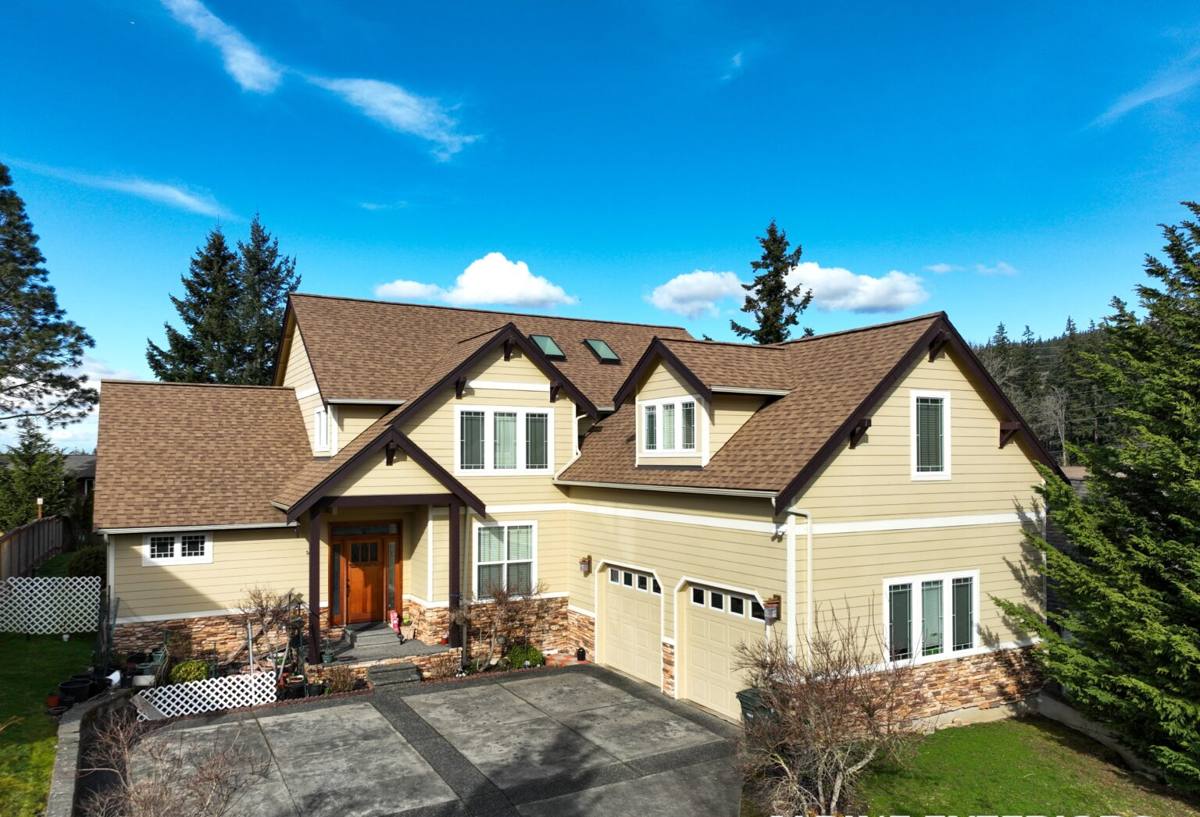
Signs Your Windows Are Losing the Fight
Window failure in a marine climate is usually gradual — a little fogging here, a stiff crank there — until suddenly it isn't gradual anymore. Here's what we look for, and what you should too:
- Fogging or a hazy film between the panes of a double-pane unit (the seal has failed and the gas fill is gone)
- Soft, spongy, or discolored wood at the sill, corners, or trim
- Windows that are hard to open, close, or lock — often swelling or hardware corrosion
- A draft you can feel with your hand near the frame on a windy day
- Visible gaps in caulk or sealant, especially on the sides facing the water or prevailing wind
- Moss or dark streaking building up on the exterior trim or sill
- Interior condensation or frost on the glass in cold weather
- Paint that's bubbling, peeling, or chalky right around the window opening
Any one of these on its own isn't an emergency. Several of them together, especially on the same window, usually means the frame or the seal around it has already let moisture in — and that's worth addressing before it spreads to the framing behind the wall.
Retrofit vs. Full-Frame Replacement — Getting This Call Right
This is the single biggest decision in a window replacement job, and it's also the one that's easiest to get wrong if a contractor is trying to save time. A retrofit (sometimes called an insert or pocket replacement) installs a new window inside the existing frame. A full-frame replacement removes the old window down to the rough opening, including the old frame, exterior trim, and often the flashing.
| Factor | Retrofit / Insert | Full-Frame Replacement |
|---|---|---|
| Best used when | Existing frame is solid, square, and dry | Frame shows rot, water damage, or is out of square |
| Access to check for hidden damage | Limited — old frame stays in place | Full — sheathing and framing are visible during the job |
| Ability to re-flash properly | Restricted to what's already there | Complete — new flashing and moisture barrier installed |
| Glass size / sightlines | Slightly smaller glass area (new frame nests inside old) | Full original glass size preserved |
| Labor and cost | Generally lower | Generally higher, but addresses the whole opening |
In a coastal, high-moisture area like this, we lean toward full-frame replacement more often than a contractor working inland might, simply because the odds of hidden water damage behind an older frame are higher. That said, a retrofit is a perfectly sound choice when the existing frame and sheathing check out dry and solid — we're not going to sell you a bigger job than the house needs. The point is that decision should be made after an actual inspection of the opening, not a guess from the curb.
What a Correct Installation Actually Involves
Flashing and Sill Pans
The single most common cause of window-related rot isn't the window itself — it's water getting behind the exterior wall through a gap in the flashing. A correct installation includes a sloped sill pan so any water that does get past the window sheds outward instead of pooling, along with properly lapped flashing tape that integrates with the home's existing water-resistive barrier. Skipping or rushing this step is invisible on install day and expensive five years later.
Sealants and Backer Rod
Exterior sealant needs backer rod behind it in wider gaps so it forms the right shape and doesn't just skin over on the surface. In a spot that sees this much wind-driven rain, we also pay attention to which sealant is rated for the temperature swings and UV exposure the window will actually see, rather than whatever tube happens to be in the truck.
Insulation Around the Rough Opening
The gap between the window frame and the rough opening needs to be filled with a low-expansion foam or backer material — not stuffed with fiberglass, which does little to stop air movement, and not over-filled with high-expansion foam, which can bow the frame and cause the window to bind or leak. This is a small detail that has an outsized effect on drafts and energy loss.
Choosing a Window Built for This Coastline
Frame material matters more here than in a dry inland climate, mainly because of how each material handles constant moisture and salt air over the long run.
| Frame Material | Coastal Performance | Maintenance |
|---|---|---|
| Vinyl | Good — won't rot or corrode, handles moisture well | Low; occasional cleaning |
| Fiberglass | Very good — dimensionally stable through temperature swings, resists moisture | Low |
| Wood-clad | Fair to good depending on cladding quality; wood core is vulnerable if the cladding is ever breached | Higher; watch seams and joints |
| Aluminum | Conducts cold and can corrode over time in salt air unless well-finished | Moderate; check finish and hardware |
Beyond the frame, hardware matters — hinges, locks, and cranks should be rated for coastal or marine exposure, since standard-grade hardware can start corroding noticeably sooner this close to the water. On the glass side, a Low-E coating with an appropriate gas fill helps with both energy performance and comfort near large window walls facing the water, where solar gain and cold radiant surfaces can both be an issue depending on orientation. We work with several established manufacturers rather than pushing one brand, because the right window depends on the specific opening, budget, and how exposed that side of the house is.
Our Process for a Birch Bay Window Job
- On-site assessment of each window opening, including a look at the framing and sheathing condition where accessible
- Honest recommendation on retrofit versus full-frame replacement, with the reasoning explained
- Precise measurement and window ordering, sized to the actual opening rather than a rough estimate
- Careful removal of the old unit, checking for hidden rot or moisture damage as we go
- Repair of any damaged framing or sheathing found before the new window goes in
- Installation with proper sill pan, flashing, insulation, and sealant
- Exterior trim and paint work matched to the home
- Final walkthrough — every window opened, closed, and locked in front of you before we call it done
Depending on scope, window replacement work in Whatcom County may require a permit — we handle that conversation up front rather than leaving you to sort it out.
Why It Matters to Hire a Crew That Already Works Birch Bay
A lot of what makes a window installation hold up here isn't exotic — it's judgment calls that come from having actually worked this stretch of the coast before. Knowing which sides of a house take the worst of the wind-driven rain. Recognizing an older cabin-style structure that was never built with today's insulation or moisture-barrier standards in mind, versus a newer build where the wall assembly is more forgiving. Understanding that a "good enough" seal somewhere inland isn't good enough a block from the water. A crew that only occasionally works this area is more likely to treat every job the same; a crew that works Birch Bay and the surrounding Blaine area regularly adjusts the details because they've already seen what fails and what doesn't.
What Affects the Cost
Every job is different, but the main variables that move the price on a window replacement are consistent enough to lay out honestly:
| Cost Factor | Why It Matters |
|---|---|
| Retrofit vs. full-frame | Full-frame involves more labor, more material, and more time |
| Frame material chosen | Vinyl, fiberglass, and clad-wood carry different price points |
| Window size and type | Large picture windows or custom shapes cost more than standard sliders or casements |
| Condition of the existing opening | Hidden rot or framing repair adds time and material |
| Number of windows done at once | Doing several windows in one visit is usually more efficient than one at a time |
| Exterior trim and paint work | Matching existing trim profiles and finish adds a step |
We'd rather walk a homeowner through these factors honestly than throw out a number that doesn't hold up once we're actually looking at the opening. Broad ranges exist, but the only accurate quote comes after we've seen the windows in question.
If your windows in Birch Bay are fogging, sticking, drafting, or just showing their age, we're happy to come take a look and give you a straightforward, no-pressure estimate — use the form below to get started.