 Blaine Siding
 Window Installation in Custer: Getting It Right the First Time
Custer sits inland from the water in the flat farmland north of Ferndale, but "inland" doesn't mean sheltered. This part of Whatcom County still catches marine air carried in off the Salish Sea, long stretches of wind-driven rain with no real terrain to slow it down, and a moss season that runs most of the year on shaded siding and window trim. Salt air, driving rain, and moss don't spare a property just because it's a few miles from the shoreline — they just show up a bit differently than they do on a waterfront lot. For a new window installation, that matters more than almost anything else about the job, because a window is only as good as the opening it goes into and the flashing work around it.
We install windows throughout this stretch of Whatcom County, and Custer is regular territory for us. This page is specifically about installing new windows correctly here — what the climate demands, what the job actually involves once the old window comes out, and how we run the process from first look to final walkthrough.
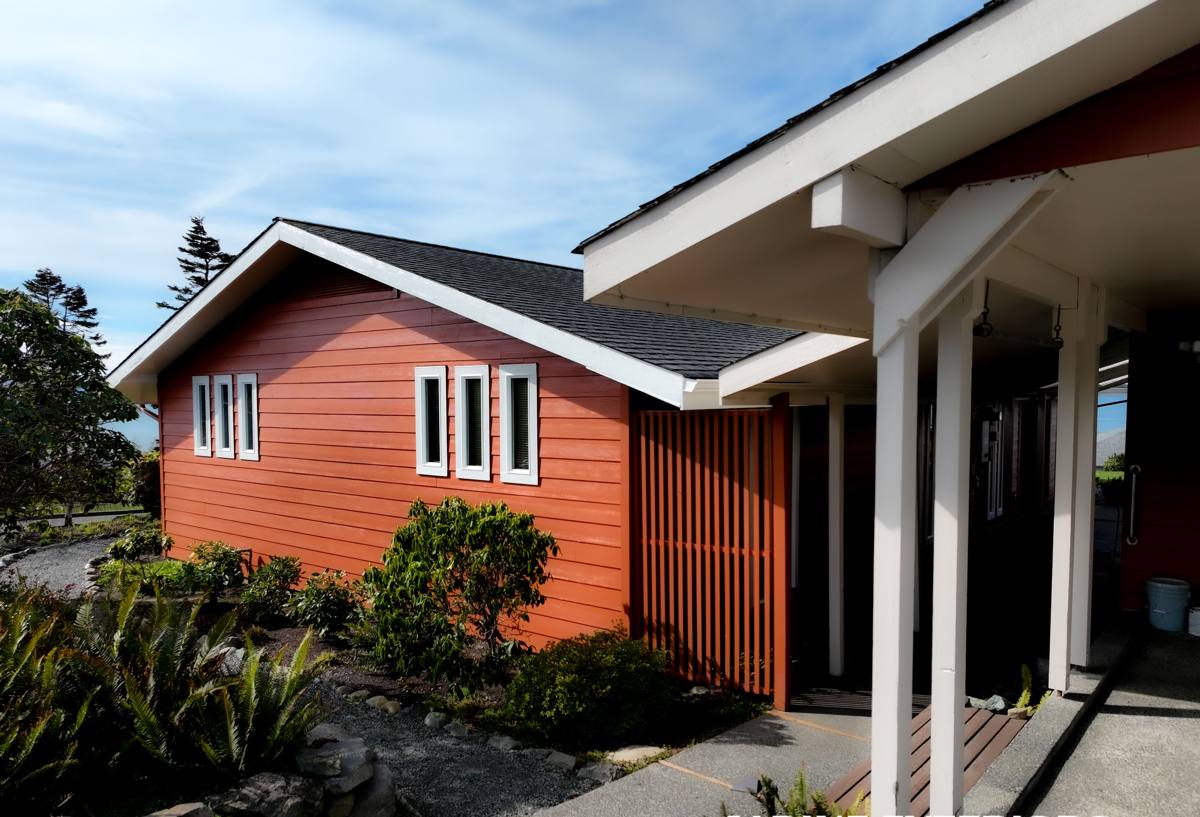
What a Custer Installation Has to Hold Up Against
Wind-Driven Rain on Open Ground
There isn't much to break the wind around Custer — it's flat, open, agricultural land, and storms coming off the water push rain sideways into wall openings instead of straight down. A rough opening that isn't flashed to shed that sideways rain will leak eventually, regardless of how good the window unit itself is. This is the single biggest factor in how we approach every install here.
Marine Air and Slow Corrosion
Custer doesn't take direct salt spray the way a true waterfront property does, but enough salt-laden air moves inland on winter storms to accelerate corrosion on cheap hardware, fasteners, and unprotected metal trim over years of exposure. It's a slower process than what a home right on Semiahmoo Bay or Drayton Harbor deals with, but it's real, and it's part of why hardware grade matters on every install, not just the ones closest to the water.
A Moss Season That Doesn't Really End
Mild temperatures and near-constant moisture give moss and mildew a long growing season across Whatcom County, and window sills, exterior trim, and the wood framing around older openings are prime real estate for it. Anywhere water sits instead of draining — a sill without proper slope, a trim board without back-priming — becomes a growth surface. Shaded, north-facing openings around Custer properties tend to show it first and worst.
What a Correct Window Installation Actually Involves
The window unit itself is usually the least of our worries. Performance and longevity come from what happens at the rough opening, and that's where we spend most of our attention on every job.
- Opening inspection before anything goes in: We check the rough opening framing, sheathing, and any existing flashing or house wrap for rot, soft spots, or prior water damage before setting a new window. A new window installed into a compromised opening just hides the problem for a while.
- Sill pan flashing: A properly formed sill pan at the base of the opening gives any water that does get past the window a way to drain back out instead of sitting against the framing.
- Correct flashing sequence: Flashing needs to lap in the right order — sill, then jambs, then head — so that water is always directed down and out, never trapped behind a layer above it. This is the detail that most often gets shortcut on rushed jobs, and it's the one that causes the most damage when it's wrong.
- Integration with house wrap and siding: The window flashing has to tie into the surrounding weather-resistive barrier, not just butt up against it. A window installed as an isolated component, disconnected from the wall assembly around it, is a common source of hidden leaks.
- Shimming, leveling, and squaring: A window that isn't set plumb, level, and square will operate poorly and stress the seals around the glass over time, shortening its service life regardless of how good the unit is.
- Low-expansion foam or backer rod insulation: The gap between the window frame and the rough opening needs to be insulated without over-filling it, since too much expanding foam can bow a frame out of square.
- Exterior sealant as the last line, not the only line: Caulk finishes the job and seals visible joints, but it's a supplement to correct flashing, not a substitute for it. Caulk alone breaks down and cracks; flashing is what actually keeps water out long-term.
Full-Frame Replacement vs. Insert Installation
Not every window job calls for the same installation method, and the right choice depends on the condition of the existing frame and opening, not just preference.
| Method | What It Involves | Best Suited For |
|---|---|---|
| Insert (pocket) replacement | New window fits inside the existing frame, which stays in place | Sound existing frames with no rot, water damage, or opening issues |
| Full-frame installation | Old frame is removed down to the rough opening, exposing framing and flashing | Openings with any history of leaking, rot, or where flashing needs to be redone |
| New construction install | Window goes into a fresh opening with no prior frame to work around | Additions, new openings, or full exterior remodels |
Insert replacements are faster and less invasive, and they're a legitimate option when the existing frame and flashing are actually sound. But they also mean whatever flashing problems already exist stay hidden behind the new window. On older Custer homes where we find any sign of past water intrusion — soft trim, discoloration, a musty smell near the sill — we'll recommend a full-frame installation instead, because it's the only way to actually inspect and correct the flashing rather than build a new window on top of an old problem.
Choosing Windows for This Climate
We install vinyl and fiberglass window systems built for the Pacific Northwest's wet, mild conditions, and we talk homeowners through the real trade-offs rather than steering everyone toward one product. For a Custer installation specifically, a few things matter more than brand name:
- Frame material: Vinyl and fiberglass both resist rot in a way uncladded wood frames don't, which matters given how much moisture moves through this area over a typical year.
- Glazing package: Double or triple-pane units with low-E coatings perform better against both heat loss in winter and condensation on cold glass, which is a common complaint in older single-pane windows around here.
- Hardware grade: Corrosion-resistant hardware holds up longer against the marine air reaching inland to Custer than standard-grade hardware does — this is a bigger factor here than most homeowners expect.
- Frame reinforcement: Larger openings or taller windows need proper internal reinforcement to stay square and operate smoothly over decades of temperature swings and wind load.
Our Installation Process
We run every window installation the same way, whether it's one window or a whole house:
- On-site assessment: We look at each opening individually — frame condition, existing flashing, signs of past moisture — before recommending insert or full-frame installation.
- Written scope and measurements: Windows get measured for the specific opening, and the scope spells out installation method, flashing approach, and what's included before any ordering happens.
- Ordering and lead time: Custom-sized windows typically take several weeks to arrive, so we set expectations on timing up front rather than leaving it vague.
- Removal and opening prep: Old windows come out carefully, and we inspect and repair the framing and sheathing underneath before anything new goes in.
- Flashing, setting, and sealing: Sill pan, flashing sequence, shimming, insulation, and exterior sealant all happen in the correct order, tied into the surrounding siding and house wrap.
- Final walkthrough: We check operation, look, and seal on every window with the homeowner before calling the job finished.
Signs an Existing Window Is Ready for Installation, Not Just Repair
- Frame or sill wood that's soft, discolored, or shows visible rot
- Persistent fogging or moisture trapped between panes on a double-pane window
- Drafts near the frame even with the window fully closed and locked
- A frame that's visibly out of square, or a sash that binds or won't stay open
- Water staining on interior trim or the wall below the window
- Single-pane glass with no upgrade path that's worth pursuing over full replacement
Any one of these can sometimes be addressed short of full installation, but when a few show up on the same window, that's usually a sign the frame and flashing have been compromised long enough that a proper new installation is the more honest answer than another round of patching.
Why It Matters to Hire a Crew That Already Works Custer
A contractor who installs windows in this part of Whatcom County regularly already knows how wind-driven rain behaves on open, unsheltered ground, how far marine air actually reaches inland, and how long moss takes to establish itself on a shaded sill. That knowledge shows up in small decisions on install day — how much lap a flashing detail gets, whether a sill pan gets formed correctly, which hardware grade gets specified — and those are exactly the decisions that determine whether a window installation holds up for one wet winter or several decades. It's not about local reputation for its own sake; it's about a crew that's seen what actually fails here and builds around it.
If you're planning new window installation for a Custer property, or you're not sure whether your current windows are candidates for repair or full replacement, we're glad to take a look and walk you through it honestly. Reach out below for a free, no-pressure estimate.