 Blaine Siding
 Storm Damage Roof Repair for Sumas Homes
Sumas sits inland, in the flat farm country at the eastern edge of Whatcom County, right up against the Canadian border. It's a different setting than the coastal stretch of the county where we're based, but the two ends of our service area share more storm exposure than people expect. We work roofs across this whole corner of the state, from salt-touched marine air near the coast to the open, low-lying valley floor out toward Sumas, and we've learned that a roof out here takes its own particular kind of beating — driving rain that doesn't fall straight down, wind that picks up real speed with nothing to break it across open farmland, and a moss season that runs longer than most homeowners realize until it's already done damage.
This page is about one thing specifically: storm damage roof repair for Sumas homes. Not a general roofing pitch, not a full re-roof sales page — what actually happens to a roof out here during and after a storm, what a correct repair looks like, and how we handle the job from the first call to the final inspection.
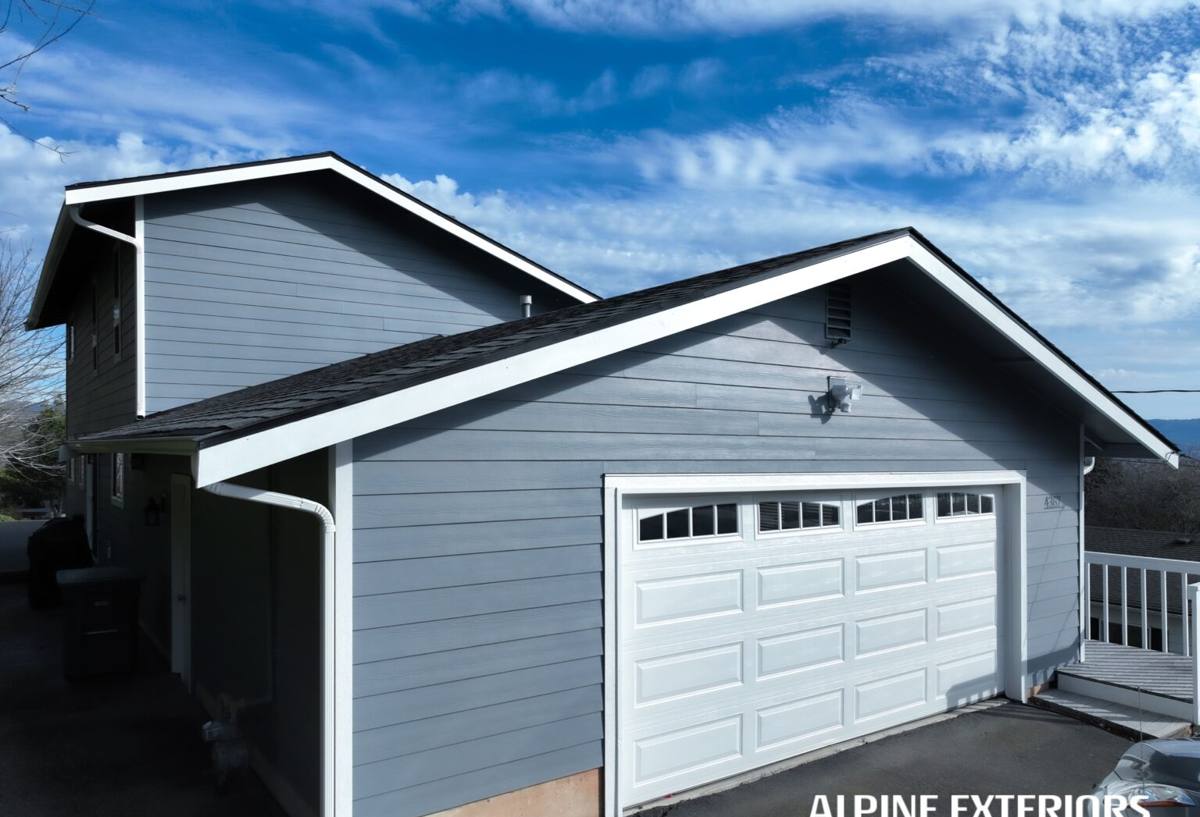
What Sumas Storms Actually Do to a Roof
Wind Across Open Ground
Sumas and the surrounding farm country are flat, open, and largely unshielded by hills or heavy tree cover compared to lots closer to town or up in the foothills. That means wind moving through during a storm hits a roof at full force, with nothing upstream to slow it down first. Loose or aging shingles, ridge caps, and ventilation covers take the brunt of it, and wind can lift or crack material that would have held up fine on a more sheltered site.
Driving, Wind-Driven Rain
Storms in this part of the county rarely bring rain that just falls straight down. It comes in sideways, pushed by the same wind that stresses the shingles, and it finds its way into anywhere a roof's defenses are already compromised — a lifted shingle tab, a gap in flashing around a vent or chimney, a valley that isn't sealed the way it should be. On a flat property, water that gets past the roofing layer doesn't always drain away quickly either, which gives it more time to work into the decking underneath.
A Long Moss and Organic Growth Season
The persistent dampness and mild temperatures that define this part of Washington add up to a moss season that stretches across much of the year, and Sumas roofs see it as much as anywhere else in the county. Moss holds moisture directly against shingles and roof decking long after a storm has passed, and it works its way under shingle tabs and lifts them slightly — which is exactly the kind of small gap that wind-driven rain during the next storm will find. A storm-damaged roof that already had moss buildup tends to fail faster than a clean one, because the moss has already done part of the work.
Freeze-Thaw Cycling
Because Sumas sits further inland and is more exposed to cold outflow wind events during winter than towns closer to the water, it sees harder frosts and more freeze-thaw cycling than milder parts of the county. Water that's worked its way into a crack, a nail hole, or a compromised shingle and then freezes expands, which turns small storm damage into a bigger repair if it sits through even one hard freeze without being addressed.
Signs of Storm Damage Worth Checking For
Most Sumas homeowners don't notice roof storm damage until it shows up as a stain on a ceiling, and by then water has usually been getting in for a while. After any significant wind or rain event, it's worth doing a quick check — from the ground, not by climbing up yourself — for:
- Shingles that look lifted, curled, cracked, or are missing outright
- Granules collecting in gutters or at the base of downspouts
- Bent, lifted, or separated flashing around chimneys, vents, and skylights
- Sagging or uneven spots across the roof plane
- Debris — branches, needles, moss clumps — built up in valleys or gutters
- New or growing water stains on ceilings or in the attic
- Gutters or downspouts pulled loose or dented from wind or falling debris
Any one of these on its own might be minor. Several together, especially right after a storm, usually mean it's time for someone to actually get up there and look.
What a Correct Storm Damage Repair Involves
A storm damage repair that's done right is more than swapping out the shingles that are obviously missing. It starts with figuring out how far the damage actually extends, then addressing every layer the water may have reached — not just the visible surface.
Inspection Before Anything Else
We walk the roof itself, not just the ground-level view, to check the decking, underlayment, flashing, and shingle condition around and beyond the visibly damaged area. Storm damage often extends further than it looks like from below, especially where wind has lifted shingles that then re-settled and look almost normal until you check them by hand.
Emergency Protection First, When Needed
If a roof has an active leak or exposed decking after a storm, the first priority is getting it weathertight — tarping, temporary flashing, or sealing an exposed section — before the rain that follows does more damage. We don't leave a Sumas roof open to the next system moving through while we schedule the full repair.
Matching the Repair to the Damage
Depending on what the inspection turns up, a correct repair might mean replacing a section of shingles, resealing and re-flashing a vent or chimney, repairing a soft or water-damaged section of decking underneath, or reworking a valley that's been letting water through. We don't default to the smallest possible fix if the underlying decking has already started to take on moisture — patching shingles over wet decking just buys a homeowner a shorter-lived repair.
Shingle and Material Matching
Where a repair calls for replacing shingles rather than the whole roof, matching color, profile, and material to the existing roof matters for both appearance and performance — mismatched shingles can create an uneven wear pattern down the line. We source materials that match as closely as the market allows, and we're upfront if an exact match isn't realistic on an older roof.
Our Process for a Sumas Storm Damage Call
- Call or request handling: You reach out, describe what you're seeing, and we get a sense of urgency — an active leak gets prioritized over a cosmetic issue.
- On-site inspection: We get up on the roof, not just a ground-level look, to check decking, underlayment, flashing, and shingle condition around the damaged area.
- Documentation: We photograph the damage in detail, which matters if you're filing an insurance claim and need clear evidence of what the storm did versus normal wear.
- Written estimate: You get a clear explanation of what needs to happen and why, with no pressure to sign before you've had time to think it over.
- Repair work: We complete the agreed repair, matching materials and following manufacturer installation specs rather than cutting corners to save time.
- Final check: We walk the completed repair with you and confirm the roof is sealed and watertight before we consider the job done.
Repair or Replace? What Actually Decides It
| Situation | Usually Points To | Why |
|---|---|---|
| Isolated wind damage on an otherwise sound, newer roof | Targeted repair | Decking and underlayment are still in good shape; only the damaged section needs attention |
| Storm damage on a roof already near the end of its expected lifespan | Full replacement | A repair only buys limited time before the next storm finds a new weak spot |
| Water has been tracking behind flashing or shingles for an unknown period | Depends on decking inspection | Rot found underneath changes the scope regardless of how the surface looks |
| Heavy moss coverage across most of the roof | Cleaning plus repair, or replacement if shingles are compromised underneath | Moss buildup on an older roof often means granule loss has already progressed |
| Single storm event, roof under 10 years old, no prior moss or moisture issues | Repair | Isolated damage on a well-maintained roof is usually a straightforward, contained fix |
We'll tell you honestly which category your roof falls into rather than steering you toward the bigger job by default.
Working With Insurance on a Storm Claim
Wind and storm damage is one of the more common categories homeowners insurance actually covers, but a claim goes smoother when the damage is documented clearly and promptly. We provide the photo documentation and a written scope of the damage and repair that most adjusters want to see, and we can walk a homeowner through what's reasonable to expect an adjuster to cover versus what falls outside a typical storm damage claim, such as damage from a roof that was already past its service life before the storm hit. We work for the homeowner, not the insurance company, and we'll say so plainly if we think an initial claim assessment is missing something the roof actually needs.
Cost Factors for Sumas Storm Damage Repair
| Factor | What It Affects | Why It Matters Here |
|---|---|---|
| Extent of decking damage | Whether repair stays surface-level or requires deeper rebuild | Water sitting on a flat property's roofline has more time to work into decking before it's noticed |
| Roof pitch and access | Labor time and safety equipment needed | Steeper or harder-to-access rooflines take longer to inspect and repair safely |
| Material matching | Whether standard stock shingles work or a closer match needs sourcing | Older roofs may need special-order material to blend with existing shingles |
| Moss and debris removal | Prep work before the actual repair can start | Heavy moss buildup common in this climate often needs clearing before damage can even be assessed accurately |
| Site access | Equipment staging and labor time | Rural and agricultural properties around Sumas can have longer driveways or different staging needs than in-town lots |
We give a real number after walking the roof in person, not a phone estimate — storm damage varies too much from one roof to the next for a generic quote to mean much.
Why a Crew That Already Works Sumas Matters
A roofer who works this stretch of Whatcom County regularly knows what a storm out here actually does to a roof over a full year of weather, not just how a shingle performs on a spec sheet. That shows up in practical ways: knowing which roof orientations catch the worst of the wind on an open, unshielded property, recognizing moss buildup that's further along than it looks from the ground, and understanding that a repair on a Sumas roof needs to account for freeze-thaw cycling that a milder, more sheltered site wouldn't see nearly as often. We're not driving out to Sumas for the first time when your roof needs help — it's part of the territory we work regularly, and that familiarity shapes the judgment calls made on your roof, not just the invoice.
A Few Storm Damage Repair Basics Worth Knowing
- Don't wait on a visible leak — even a small one can mean saturated decking that's spreading behind the surface
- Avoid climbing onto a storm-damaged roof yourself to inspect it; wet, damaged shingles are more dangerous to walk on than a dry roof
- Keep photos of visible damage from the ground if you can safely get them, dated close to the storm event, for your own records
- Clear gutters and downspouts of storm debris promptly so water has somewhere to go while repairs are scheduled
- Get an inspection even after a storm that didn't cause an obvious leak — lifted shingles can look fine until the next system rolls through
If a recent storm has left your Sumas roof leaking, missing shingles, or just something you'd like a second set of eyes on, we're glad to take a look. Reach out using the form below to schedule a free, no-pressure estimate.