 Blaine Siding
 Deck Repair Built for the Sumas Climate
Sumas sits inland from Blaine, near the Canadian border, and its decks don't experience the same coastal salt exposure as homes right on the water. But that doesn't mean Sumas decks have it easy. What the salt air gives up further inland, the region makes up for in persistent damp, long stretches of overcast weather, and a moss season that can run from fall through spring. Combine that with Whatcom County's driving rain — the kind that blows sideways under eaves and into ledger connections — and you get a climate that's genuinely hard on exterior wood and fasteners, even without direct ocean exposure.
A deck built or repaired without this climate in mind will show it within a few seasons: soft spots underfoot, blackened boards, rust streaks from failing hardware, and railings that wobble more than they should. Deck repair here isn't just cosmetic work. Done right, it's about managing moisture and organic growth in a place where both are constants for a good chunk of the year.
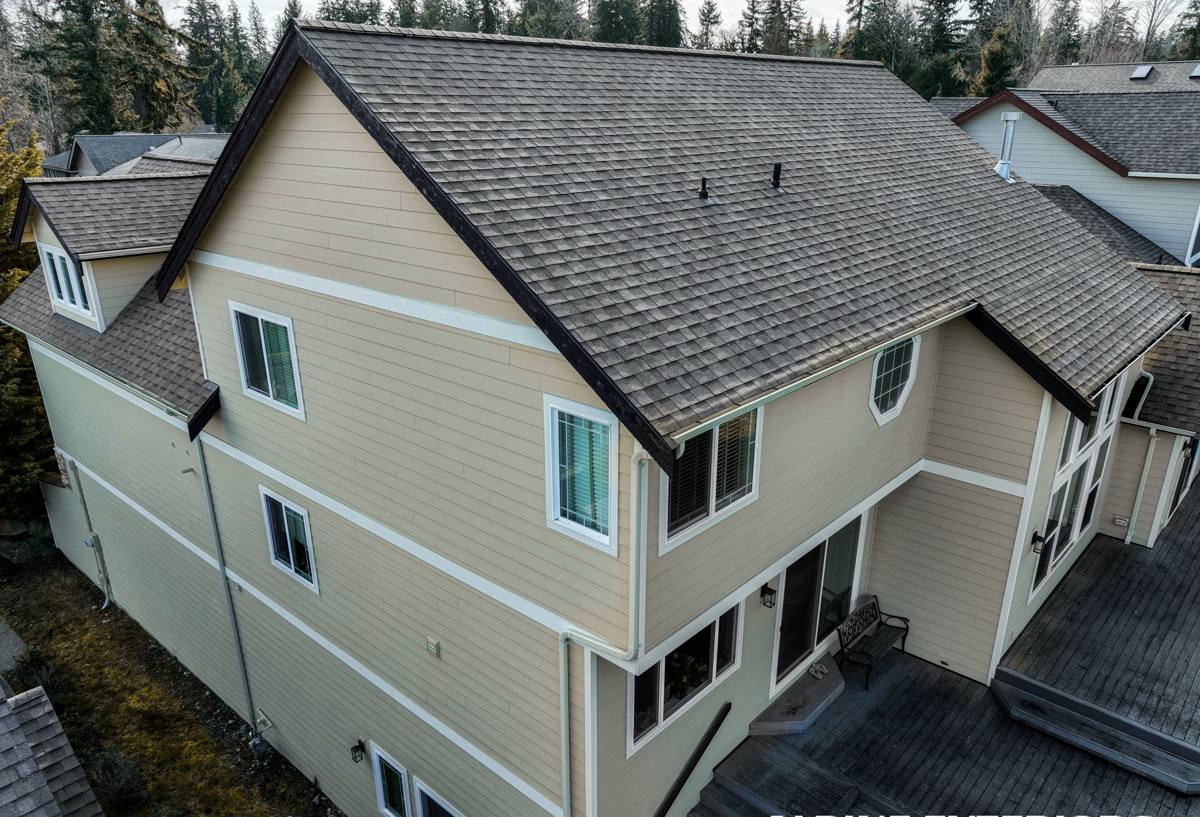
What Driving Rain and Moss Actually Do to a Deck
It helps to understand the failure pattern, because it's consistent across most of the repair calls we see in this area.
Ledger Board and Framing
The ledger board — where the deck attaches to the house — is the single most important structural connection on most decks, and it's also the spot most exposed to wind-driven rain running down the siding. If flashing was skipped, undersized, or installed before current best practices, water tracks behind the ledger and into the rim joist. That's where rot starts, often invisibly, until someone notices the deck has developed a slight bounce or separation from the house.
Decking Boards and Fasteners
Moss doesn't just look bad — it holds moisture against the board surface far longer than open air would allow, which accelerates wood decay and keeps fastener heads wet enough to corrode. Face-screwed boards in shaded, north-facing, or tree-covered yards are especially prone to this. Once moss gets a foothold in the grain, pressure washing alone won't solve it; the board surface has usually already started to break down underneath.
Stairs, Railings, and Structural Posts
Stair stringers and post bases sit closest to grade, where splashback and standing water are most common. These are frequently the worst-hit components on an otherwise decent deck, because they were built with ground-contact-rated lumber that's since aged past its service life, or because a post base was never elevated off a wet surface to begin with.
Signs Your Sumas Deck Needs Repair, Not Replacement
Most decks don't need to be torn out. They need the failing parts identified and corrected before the damage spreads to framing that's expensive to replace. Watch for:
- Soft, spongy, or springy spots when you walk across the deck
- Green or black staining that returns quickly after cleaning
- Screws or nails backing out, or rust streaks below fastener heads
- Railings or stair posts that flex or wiggle under hand pressure
- Gaps opening up where the deck meets the house
- Visible daylight or water staining under the deck at the ledger connection
- Stair stringers that feel uneven or have visible cracking
Any one of these on its own is usually a repair. Several at once, especially involving the ledger or main support beam, is worth a full structural look before deciding on repair versus replacement.
What a Correct Deck Repair Actually Involves
Assessment First
A repair that skips the assessment step is just cosmetic patching. Before any boards come off, we check the ledger flashing, probe framing members for soft wood, and look at post bases and stair stringers — the parts that don't get replaced just because the surface boards look tired.
Structural Repairs
Where framing has rotted, sistering a new joist alongside the damaged one, correcting undersized or missing ledger flashing, and re-securing loose connections all happen before anything cosmetic. This is the work that determines whether the deck is actually safe, not just presentable.
Surface and Component Repairs
Individual board replacement, re-fastening loose decking, rebuilding compromised stair treads, and repairing or replacing railings come next. We match materials and spacing to what's already there where the goal is a repair, and flag where a broader refresh makes more sense if enough of the surface has reached the end of its life.
Repair vs. Replacement: What Actually Drives the Decision
| Factor | Leans Toward Repair | Leans Toward Replacement |
|---|---|---|
| Ledger and framing condition | Solid, dry, properly flashed | Rot found in ledger, beam, or multiple joists |
| Age of decking material | Under 12-15 years, isolated damage | Original decking near or past typical service life |
| Extent of moss/water damage | Localized to a few boards or one area | Widespread across the deck surface |
| Railings and stairs | Sound, just need hardware or minor rebuild | Multiple structural components failing at once |
| Design and layout | Deck functions well for the home | Owner wants a different footprint or size |
In most Sumas repair calls, the framing is in better shape than homeowners expect, and the visible damage is isolated to boards, fasteners, or a stair component that took the brunt of years of moss and standing water. That's a repair. When the ledger or main beam has been compromised, or the damage is spread across most of the deck, replacement is usually the more honest answer, and we'll say so.
Our Deck Repair Process
- On-site walkthrough and hands-on inspection, including probing suspect boards and framing
- Written scope of what needs repair, what's optional, and what we'd flag for later
- Removal of damaged material only — we don't tear out sound decking to pad the job
- Structural corrections first: framing, flashing, post bases, connections
- Surface repairs: board replacement, refastening, stair and railing rebuilds
- Final walkthrough so you can see and understand exactly what was done and why
We don't upsell a full rebuild when a repair will hold. We also won't patch over a rotted ledger just to keep the price down — that's the one place on a deck where a shortcut becomes a safety issue, not just a maintenance headache.
Materials and Fasteners That Hold Up Locally
For repairs, matching existing materials usually makes the most sense both structurally and visually. But the fastener and flashing choices matter more than the decking species in a climate like this.
Stainless or coated deck screws resist the corrosion that plain fasteners develop fast in a persistently damp climate. Proper self-adhering flashing tape at the ledger board — not just building paper or nothing at all — is what actually keeps water out of the one connection that matters most structurally. Hidden fastener systems reduce the face-screw holes where moisture and moss like to collect on composite and some wood decking, though they're not always the right call on an older wood deck being repaired rather than rebuilt. We'll walk through what fits your specific deck rather than defaulting to one system for everyone.
Why a Crew That Already Works in Sumas Makes a Difference
Deck repair mistakes in this climate are rarely obvious right away. A ledger that's flashed wrong, or a post base set directly on wet soil, can look fine for a season or two before the real damage shows. A crew that repairs decks throughout Whatcom County regularly sees how driving rain and moss season actually play out on real decks over years, not just how a repair looks the day it's finished. That means catching the ledger issue before it's reframed over, recognizing which stair stringer damage is cosmetic versus structural, and knowing which fastener and flashing choices actually hold up here instead of just meeting a minimum code spec.
It also means an honest read on repair versus replacement. We're not driving in from out of the area to sell the biggest job possible — we're building a reputation with neighbors who'll compare notes.
Keeping a Repaired Deck in Good Shape
A good repair lasts a lot longer with basic upkeep. Sweep debris and leaves out of gaps between boards before they trap moisture. Keep an eye on the moss line each fall and treat it early rather than letting it establish through the wet months. Check railings and stair connections for movement once or twice a year. None of this requires much time, but skipping it is how a five-year repair turns into a two-year repair in this climate.
If your Sumas deck has soft spots, moss that keeps coming back, or a railing that's started to feel loose, we're happy to take a look and give you a straight answer on what it actually needs. Reach out for a free, no-pressure estimate using the form below.