 Blaine Siding
 Roofing Built for the Sumas Stretch of Whatcom County
Homes in the Sumas area sit under a roof that works harder than most people realize. The marine-influenced air that moves through Whatcom County carries salt and moisture well inland, driving rain comes in sideways during fall and winter storms, and the shaded, damp stretches of the year give moss more time to gain a foothold than it gets almost anywhere else in the state. An asphalt shingle roof that's installed correctly can shrug all of that off for decades. One that's installed with shortcuts starts showing problems in a fraction of that time — curling edges, granule loss, moss creeping under tabs, and eventually leaks at the spots where a roofer skipped a step.
Blaine Siding Company works this part of Whatcom County regularly, which means we're not learning the local climate on your roof. We know which details matter here and which ones are just extra steps somewhere drier.
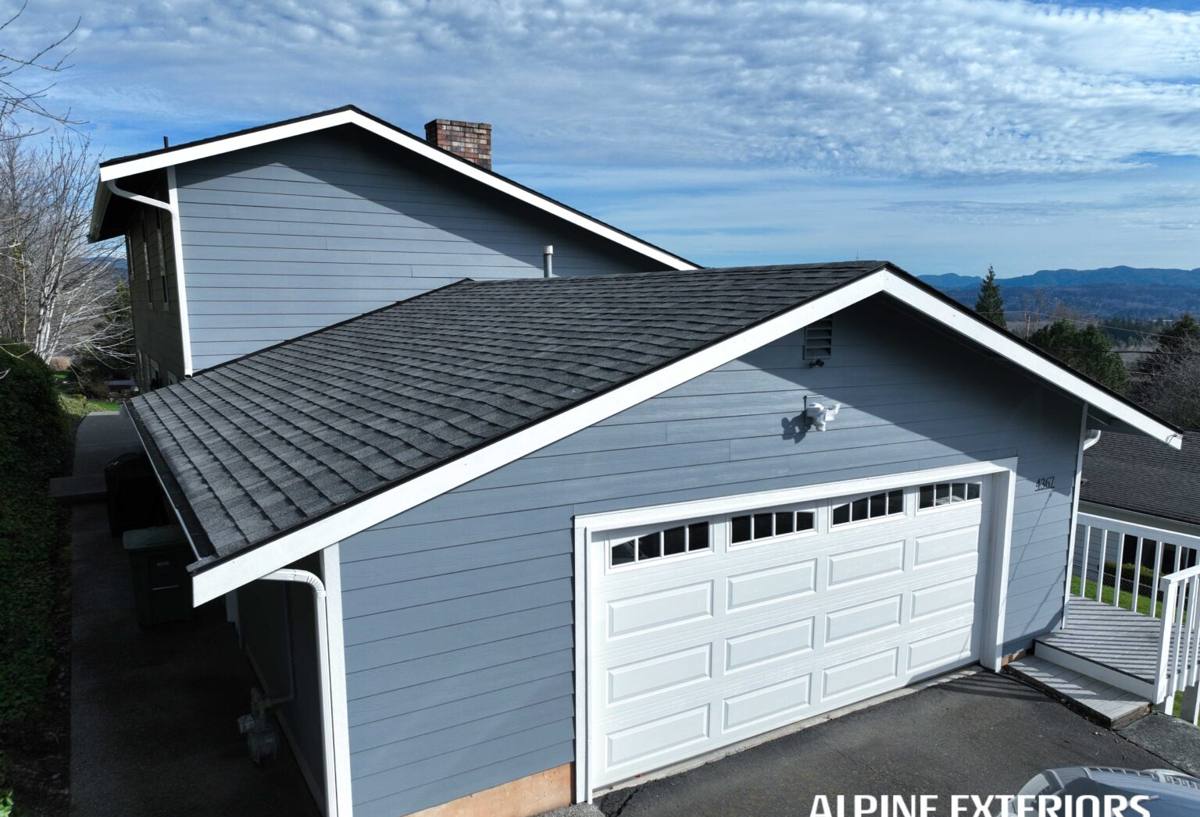
What the Regional Climate Actually Does to a Shingle Roof
Salt-Influenced Moisture
Even away from the immediate waterfront, air moving off the Salish Sea and up through the county carries fine salt and moisture that settles on exposed metal — nail heads, flashing, vent stacks, gutter hardware. Over the years that accelerates corrosion on lower-grade fasteners and flashing, which is why we don't cut corners on the metal components of a shingle roof even though shingles themselves are the most visible part of the job.
Driving Rain
Storms here rarely just fall straight down. Wind-driven rain pushes water sideways and upward under shingle tabs, into valleys, and around penetrations like plumbing vents and chimneys. A roof that only relies on the shingles themselves to shed water — without proper underlayment, ice-and-water membrane at vulnerable points, and correctly lapped flashing — will eventually let water in, even if every shingle looks fine from the ground.
A Long Moss Season
Shaded roof planes, north-facing slopes, and areas under overhanging trees stay damp for a large part of the year in this climate. That's exactly what moss needs. Left unchecked, moss holds moisture against the shingle surface, lifts tabs, and shortens the life of the roofing material significantly. Roof design, shingle choice, and a basic maintenance rhythm all affect how much of a fight moss becomes.
What a Correctly Installed Shingle Roof Includes
"Asphalt shingle roofing" sounds simple, and the shingles themselves are a small part of what actually keeps water out. A roof that's built to last in this climate includes several layers working together:
- Deck inspection and repair — soft, delaminated, or water-damaged sheathing gets replaced before anything new goes down, not covered up.
- Ice-and-water shield at eaves, valleys, and around penetrations — the spots most exposed to wind-driven rain and ice damming.
- Synthetic underlayment across the full deck as a secondary water barrier beneath the shingles.
- Properly lapped step flashing and counterflashing at walls, chimneys, and skylights — a common failure point when installed by anyone in a hurry.
- Correct nailing pattern per the manufacturer's specification, not just "enough nails" — under-nailing is one of the most common causes of premature wind damage and voided warranties.
- Balanced attic ventilation so moisture from inside the house isn't condensing against the underside of the deck.
Skip any one of these and the roof may still look fine on installation day. The problems show up later — often after the workmanship warranty has already expired.
Choosing the Right Shingle for a Sumas-Area Home
Not every asphalt shingle is built for the same conditions, and the right choice depends on your roof's exposure, slope, and how much shade and moss pressure it deals with. Here's how the common tiers compare for this climate:
| Shingle Type | Typical Lifespan | Wind Rating | Algae/Moss Resistance | Best For |
|---|---|---|---|---|
| Standard 3-tab | 15–20 years | Lower | Standard, wears off over time | Budget-conscious re-roofs on lower-pitch, less exposed sections |
| Architectural (laminated) | 25–30 years | Higher | Better base resistance | Most homes in this climate — the common mid-range choice |
| Algae-resistant architectural | 25–30+ years | Higher | Built-in copper/zinc granules resist streaking and moss growth | Shaded roof planes, north-facing slopes, tree-heavy lots |
| Impact-rated / premium | 30+ years, often lifetime-rated | Highest | Best available | Homeowners prioritizing longevity and storm resistance over upfront cost |
For most Sumas-area homes, we lean toward algae-resistant architectural shingles on shaded or north-facing slopes even when the rest of the roof gets a standard architectural product — it's a targeted upgrade rather than paying a premium across the entire roof.
Ventilation and Moisture: The Part Nobody Sees
A shingle roof doesn't fail in isolation — what's happening in the attic matters just as much. In a climate with this much ambient moisture, an attic that isn't ventilating properly traps warm, damp air against the underside of the roof deck. Over a few winters that can rot sheathing from the inside, feed mold growth, and shorten shingle life from below at the same time moss is working on it from above.
Before we quote a re-roof, we look at intake ventilation (soffit vents), exhaust ventilation (ridge or box vents), and whether insulation is blocking airflow at the eaves. On some homes, a modest ventilation correction does more for long-term roof health than upgrading to a pricier shingle.
Signs Your Roof Needs Attention
Most shingle roof failures don't happen suddenly — they give warning signs first. If you're seeing any of the following, it's worth having someone look before the next storm season:
- Granules collecting in gutters or at downspout outlets
- Shingle edges curling, cupping, or lifting at the corners
- Moss or dark algae streaking on shaded or north-facing slopes
- Cracked, missing, or blown-off shingles after a windstorm
- Daylight visible through the roof deck from inside the attic
- Soft or spongy spots when walking the roof
- Water stains on interior ceilings, especially near valleys or chimneys
- Visible rust or gaps at flashing around vents and chimneys
Catching these early is almost always cheaper than waiting for an interior leak to show up.
Our Process for a Sumas-Area Shingle Roof
- On-site inspection. We walk the roof and the attic, not just look from the ground — that's the only way to catch deck damage or ventilation problems.
- Honest scope and quote. You get a clear breakdown of what needs to be replaced versus what's optional, with straightforward pricing and no pressure to upgrade past what your roof actually needs.
- Deck prep. Old roofing comes off, the deck gets inspected and repaired, and any rot or soft sheathing is addressed before anything new goes down.
- Underlayment and flashing. Ice-and-water shield, synthetic underlayment, and new flashing go in at every vulnerable point — valleys, walls, chimneys, and penetrations.
- Shingle installation. Installed to manufacturer nailing specifications so the warranty is actually valid, not just installed to "look done."
- Ventilation check. We confirm intake and exhaust airflow is balanced before we call the job finished.
- Final walkthrough. We show you the completed work and answer questions before we consider the job done.
Why a Crew That Already Works Sumas Matters
Roofing crews unfamiliar with this part of Whatcom County tend to underestimate two things: how much wind-driven rain a roof here actually takes, and how aggressively moss establishes itself on shaded slopes. Both of those show up as callbacks a year or two later, after the crew that did the install has moved on to other regions.
Because Blaine Siding Company works this area consistently, we're not guessing at what holds up here — we're applying what we've already seen work and what we've already seen fail. That means fewer surprises during the job and a roof that's built for the actual conditions it has to handle, not a generic install.
Maintenance That Extends the Life of Your Roof
Even a well-installed shingle roof benefits from a basic maintenance rhythm in this climate:
| Task | Recommended Frequency | Why It Matters Here |
|---|---|---|
| Gutter cleaning | Twice a year (fall and spring) | Clogged gutters back up water under the lowest course of shingles |
| Moss treatment / removal | Annually, or as needed on shaded slopes | Prevents moss from lifting tabs and holding moisture against the surface |
| Visual roof inspection | After major windstorms | Catches lifted or missing shingles before rain gets underneath |
| Attic ventilation check | Every few years | Confirms insulation or debris hasn't blocked airflow over time |
If your roof is due for a look — whether it's a full replacement, a repair, or you just want an honest read on how much life it has left — we're happy to come out and take a look. The estimate is free, there's no pressure, and you'll get a straight answer either way. Use the form below to get started.