 Blaine Siding
 Everson's Storm Damage Isn't the Same as Blaine's
Everson sits inland along the Nooksack River valley, away from the direct salt air that batters roofs closer to the water. That doesn't mean Everson roofs get an easier ride. What this area deals with instead is wind-driven rain funneling through the valley, heavier tree cover shedding limbs and debris in storms, and a moss season that runs long because of shade, moisture, and slower drying time after a front comes through. If you're comparing notes with a neighbor near the coast, don't assume the damage or the fix looks the same — it usually doesn't.
We work storm damage calls across Whatcom County, and the pattern in Everson is fairly consistent: wind uplift at ridge and eave edges, water finding its way in through compromised flashing rather than through the field of the roof itself, and moss-clogged valleys backing water up under shingles during a heavy rain event. Knowing which pattern you're dealing with is the difference between a repair that holds and one that leaks again next winter.
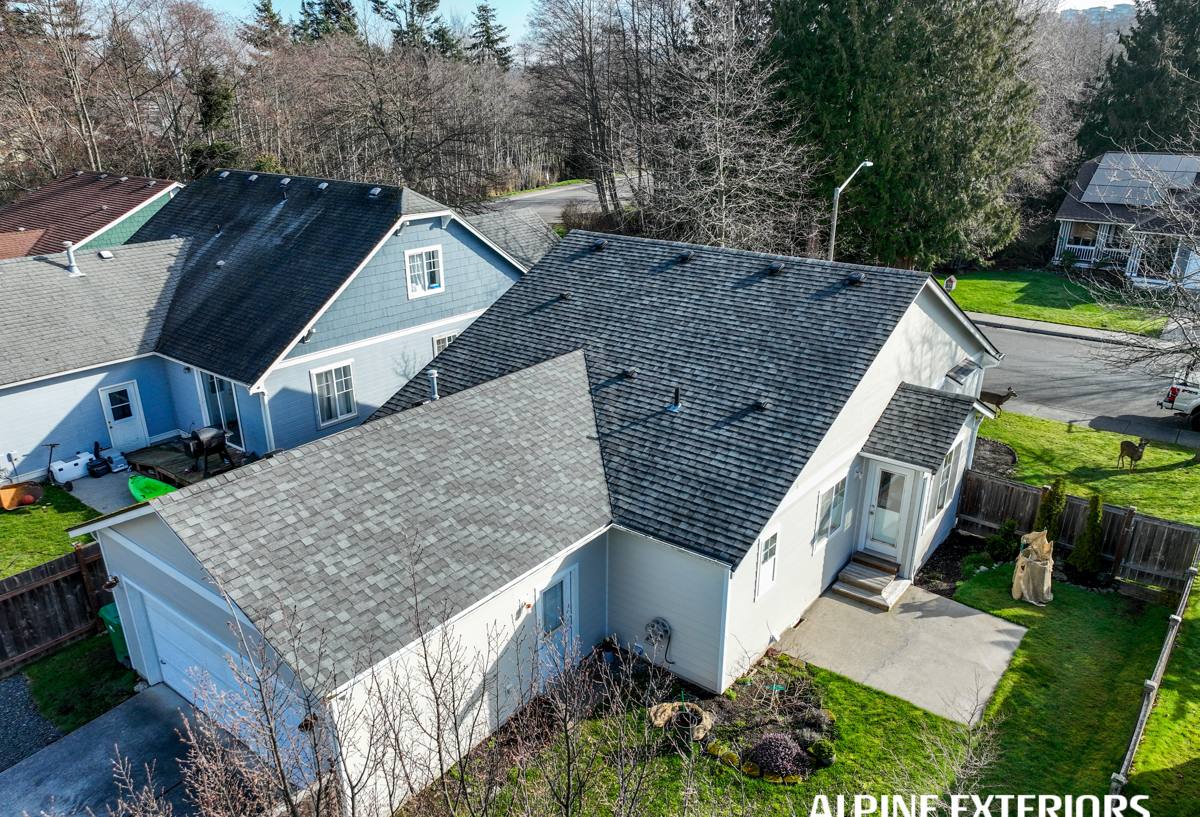
What Storms Actually Do to a Roof Out Here
Wind
Sustained wind and gusts don't need to be extreme to cause damage — they just need the right angle. Wind gets under a shingle tab that's already lost some adhesive seal (common on older roofs) and peels it back or off entirely. Once one shingle is compromised, the ones around it are exposed and go next in the following storm.
Wind-driven rain
Rain that's moving sideways behaves differently than rain falling straight down. It gets pushed up under shingle edges, around chimney and vent flashing, and into any gap that would never leak in a calm rain. This is why a roof can pass a dry-day visual check and still have an active leak during a windstorm.
Falling debris
Everson has more tree cover than the coastal parts of our service area, and that means limbs, branches, and cone/needle buildup are a real factor after a windstorm. Impact damage can crack or puncture shingles even without a leak showing up right away — the damage shows up as a leak weeks or months later.
Moss and standing moisture
Whatcom County's long wet season keeps roofs damp for extended stretches, and shaded or north-facing slopes in Everson can stay that way for days after a storm. Moss thrives in that environment, and once it's established in valleys or along shingle butt edges, it holds water against the roofing material and lifts shingles from underneath — turning a minor storm event into a real leak.
Signs Your Roof Took Storm Damage
Not all storm damage announces itself with an obvious hole or an indoor leak. Most of it is quieter than that, at least at first. After any significant wind or rain event, it's worth checking for:
- Shingles that are missing, torn, curled, or visibly lifted at the edges
- Granules collecting in gutters or at downspout outlets — a sign of shingle wear or impact
- Bent, lifted, or missing flashing around chimneys, vents, and skylights
- Soft or spongy spots underfoot near valleys or eaves (a sign of trapped moisture)
- New or worsening moss growth in valleys, along ridges, or on shaded slopes
- Water stains, discoloration, or a musty smell in the attic or top-floor ceilings
- Debris — branches, needles, moss mats — built up in valleys or behind chimneys
- Daylight visible through the roof deck when viewed from inside the attic
Any one of these on its own might be minor. Two or three together, especially after a named storm or a stretch of high wind, is worth a professional look before the next system rolls through.
What a Correct Storm Damage Repair Involves
Stop the bleeding first
If there's an active leak or exposed decking, the first job is temporary protection — tarping the area and making sure water isn't getting into the structure while the real repair is planned. This isn't the fix, it's triage, and it matters because a few more days of exposure can turn a shingle repair into a decking repair.
Inspect past the obvious damage
A storm rarely damages just the spot you can see from the ground. A proper inspection checks the full roof plane, not just the area near the reported leak, because wind and impact damage often show up in more than one location. This includes checking flashing, valleys, and any penetrations (vents, chimneys, skylights) that are common failure points regardless of what caused the original damage.
Match materials, don't just patch
Repairing storm damage with mismatched shingles or a quick sealant patch might stop a leak for a season, but it rarely holds up and it looks like exactly what it is. A correct repair matches shingle profile and, where possible, color and age-weathering, replaces damaged underlayment (not just the shingle layer), and re-flashes any penetration that was compromised rather than just re-sealing it.
Clear and treat, don't just cover
If moss or debris contributed to the damage, a repair that doesn't address the moss will fail again on the same timeline. That means clearing valleys and gutters as part of the job, not as an afterthought, and discussing longer-term moss control if the slope and shading make it a recurring issue.
Repair or Replace: How We Help You Decide
Not every storm-damaged roof needs to come off. But some do, and the honest answer depends on a few factors more than on how bad any single spot looks.
| Factor | Points Toward Repair | Points Toward Replacement |
|---|---|---|
| Extent of damage | Isolated to one slope or area | Spread across multiple slopes or the whole roof |
| Roof age | Under roughly half its expected service life | Near or past the manufacturer's expected lifespan |
| Shingle condition elsewhere | Rest of roof is sound and sealing well | Widespread granule loss, curling, or brittleness |
| Underlying deck | Deck is dry and solid | Deck shows rot, soft spots, or repeated water intrusion |
| Material availability | Matching shingles are still available | Discontinued line — patch repair will visibly mismatch |
| Insurance scope | Adjuster scopes a targeted repair | Adjuster scopes full slope or full roof replacement |
We'll walk you through where your roof lands on that list and give you a straight recommendation — including telling you when a repair is the right call even if a replacement would be the bigger job for us. That's not always the answer homeowners expect to hear, but it's the honest one.
Our Process for Storm Damage Calls
- Initial assessment. We look at the roof, the attic if accessible, and document the damage with photos.
- Temporary protection. If there's active water intrusion, we tarp or otherwise secure the area first.
- Written scope and estimate. You get a clear breakdown of what's damaged, what needs to happen, and what it costs — no guessing after the fact.
- Insurance coordination, if applicable. If you're filing a claim, we can meet your adjuster on site and make sure the scope reflects the actual damage.
- The repair itself. Matched materials, proper flashing and underlayment work, not just a surface patch.
- Cleanup and final check. Debris cleared, valleys and gutters checked, and a walkthrough so you know exactly what was done.
Working With Your Insurance Claim
Storm damage is one of the more common reasons Whatcom County homeowners file a roofing claim, and the process goes smoother when the documentation is thorough from the start. We take photos of the damage before any repair work begins, provide a written scope that describes the cause and extent of the damage in plain terms, and are available to walk an adjuster through what we found on the roof. We don't inflate a scope to chase a bigger payout, and we don't downplay real damage to make a repair look simpler than it is — the goal is an accurate picture so your claim is decided on the actual condition of your roof.
Everson's Moss Season and Why It Matters After a Storm
Whatcom County's wet season runs long, and Everson's tree cover and valley setting mean roofs here often stay damp longer than roofs in more open, coastal spots. That's exactly the environment moss needs. After storm damage, moss is a double problem: it can have contributed to the original damage by holding moisture against shingles, and if it's not addressed during the repair, it will keep doing the same thing to the newly repaired area. Part of doing this repair right is checking whether moss growth is a symptom of shading and drainage issues on your specific roof, not just cleaning off what's visible and moving on.
Why Hiring a Crew That Knows Everson Matters
A roof repair contractor who mostly works flat coastal roofs may not think to check for the tree-debris and shaded-valley issues that show up on an inland, tree-lined Everson property. We work storm damage across Whatcom County's varied terrain — coastal, valley, and everything in between — which means we're not guessing at what caused your specific damage or applying a one-size-fits-all fix. We look at your roof's exposure, slope, shading, and material, and repair it to hold up against the conditions it actually faces, not generic assumptions about what "storm damage" looks like.
If you've had storm damage to your roof, or you just want a second set of eyes after a rough windstorm, we're happy to take a look. Reach out for a free, no-pressure estimate using the form below — we'll tell you honestly what we find and what it would take to fix it right.