 Blaine Siding
 Siding Replacement for Sumas Homes
Sumas sits inland from the water but still lives inside the same weather system that shapes every home in Whatcom County: long stretches of driving rain, a wet season that can run from fall through spring, and enough shade and moisture on tree-lined lots to keep moss and algae established on siding, trim, and roofing most of the year. Homes here don't get hammered by direct salt spray the way waterfront properties do, but wind-driven moisture off the Fraser Valley and the general damp of a Pacific Northwest border town does the same slow damage over time: swelling seams, softening trim, and feeding the kind of surface growth that traps moisture against a wall longer than it should sit.
We're a Blaine-based crew, and we treat Sumas as part of our regular service area rather than a special trip. That matters more than it sounds like it should. A crew that only shows up once in a while doesn't build the local muscle memory — which house styles are common, how the moisture behaves on a shaded lot versus an open one, what a proper job looks like once winter sets back in. We install siding replacement here often enough that it's routine, not a novelty.
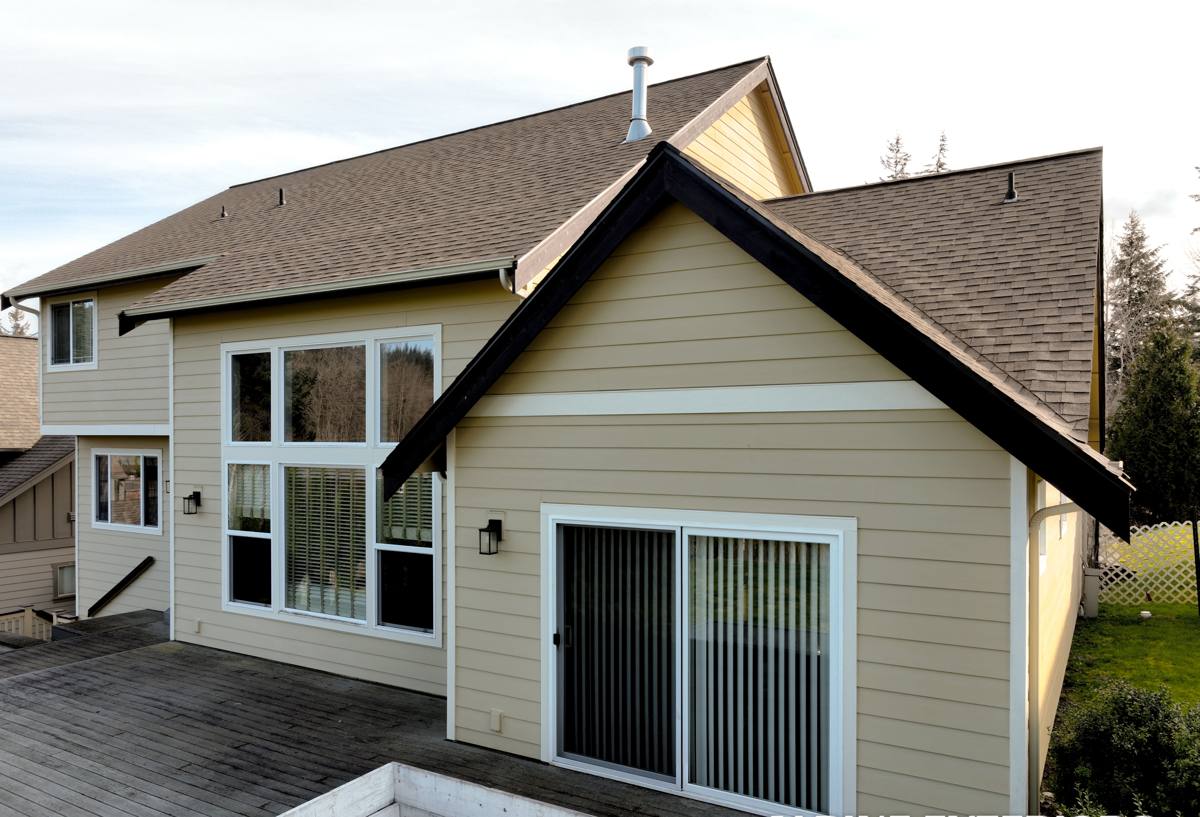
What This Climate Actually Does to Siding
It helps to understand the specific ways Whatcom County weather attacks siding, because it explains almost every decision in a correct replacement job.
Moisture Cycling
The region doesn't get one big soaking event and dry out — it gets repeated wet-to-dry cycles over months. Siding materials that absorb water swell, then shrink as they dry, and that repeated movement is what opens up seams, cracks paint films, and eventually lets bulk water behind the cladding.
Extended Moss and Algae Season
Shaded, tree-covered lots — common around Sumas — stay damp longer after rain than open, sun-exposed sites. Moss and algae get a longer growing window here than in drier parts of the state, and once they establish on a wall, they hold moisture against the surface instead of letting it shed.
Freeze-Thaw at the Margins
Whatcom County isn't a severe freeze zone, but it does get cold snaps, and any siding material that has already absorbed moisture is more vulnerable when temperatures drop. Water trapped in a swollen seam or a soft spot doesn't need a hard freeze to cause damage — a handful of freeze cycles a year is enough to widen existing problems.
What a Correct Siding Replacement Involves
Replacing siding isn't just swapping old panels for new ones. Done right, it's a system, and skipping steps is how a ten-year problem becomes a two-year problem.
- Full tear-off and inspection: Old siding comes off so the sheathing underneath can actually be checked, not guessed at from the outside.
- Sheathing repair: Any rotted or delaminated sheathing gets replaced before anything new goes up. Covering damaged sheathing just hides the problem.
- Weather-resistive barrier: A correctly lapped and sealed house wrap or building paper, with all penetrations properly flashed.
- Flashing at every transition: Windows, doors, roof lines, and deck ledgers are the places water gets in — flashing detail here matters more than the siding material itself.
- Proper fastening and clearances: Correct nailing pattern, and siding held above grade, decks, and roof lines per manufacturer spec so it isn't sitting in standing water or splashback.
- Factory-finished cladding installed to spec: Field-cut edges primed, joints caulked per the manufacturer's instructions, not just "close enough."
Every one of those steps is invisible once the job is done — which is exactly why it matters who does the work, not just what material ends up on the wall.
Why We Install Only James Hardie Fiber Cement
We don't install vinyl, LP SmartSide, primed spruce, cedar, or other fiber cement brands like Cemplank or Allura. That's not a marketing line — it's a standard we hold because of what we've seen matter over years of siding work in wet climates.
Vinyl is inexpensive and low-maintenance in a general sense, but it's a thin plastic product that can warp in heat, crack in cold, and it doesn't hold paint if a homeowner ever wants to change the color — you're locked into the factory color for the life of the product. Wood-based products like primed spruce and cedar look great initially but are organic materials in a region built for moss and rot; they need real maintenance discipline to hold up, and that discipline is easy to fall behind on. Engineered wood products like LP SmartSide have improved a great deal over the years, but they're still wood-fiber based, and any wood-based product depends heavily on caulking and paint maintenance being kept up over time to manage moisture at the edges.
James Hardie fiber cement is non-combustible, engineered specifically for climate zones like ours (their HZ5 product line is formulated for the Pacific Northwest's moisture and freeze-thaw pattern), and comes with a factory-applied ColorPlus finish that's baked on under controlled conditions rather than field-painted. That finish carries its own warranty against fading and peeling, separate from the substrate warranty on the siding itself. It's a heavier, denser material than the alternatives, and it simply behaves better over a fifteen- or twenty-year timeline in a climate that never really dries out.
Comparing Common Siding Options for This Climate
| Material | Moisture Behavior Here | Maintenance Burden | Our Position |
|---|---|---|---|
| James Hardie Fiber Cement | Dimensionally stable, doesn't absorb and swell like wood | Low — factory finish, periodic wash | What we install |
| Vinyl | Doesn't absorb water, but can warp/crack in temperature swings | Low, but color is fixed for life | Not installed |
| Primed Spruce / Cedar | Absorbs moisture, prone to rot without upkeep | High — repaint and recaulk on a schedule | Not installed |
| LP SmartSide / other engineered wood | Better than raw wood, still wood-fiber based | Moderate — edge sealing and paint maintenance matter | Not installed |
| Other Fiber Cement Brands | Similar base material, formulation and finish vary | Varies by manufacturer's finish system | Not installed — we standardized on Hardie's finish and warranty |
Signs a Sumas Home Needs Siding Replacement
Some damage is obvious; a lot of it isn't until you know what to check for.
- Soft or spongy spots when you press on the siding, especially near the bottom courses and around windows
- Persistent moss or algae staining that comes back quickly after cleaning
- Paint that's peeling, bubbling, or failing faster than it should for its age
- Visible gaps, warping, or cupping in panels or boards
- Cracks at seams or corners that let daylight or moisture through
- Rising utility bills that suggest insulation is compromised behind failing siding
- Interior signs — musty smell, staining on interior walls near exterior corners — that point to bulk water intrusion
Our Process for a Sumas Siding Replacement Project
1. On-Site Assessment
We walk the exterior, check for soft spots and moisture damage, and look at how the specific lot — sun exposure, tree cover, drainage — has affected the current siding. That tells us what we're likely to find once the old material comes off.
2. Scope and Estimate
We put together a written scope covering tear-off, any sheathing repair we anticipate (with a clear process for handling surprises found mid-job), the Hardie product line and profile, and flashing details at every window, door, and roofline.
3. Tear-Off and Sheathing Inspection
Old siding comes off, sheathing gets inspected and repaired as needed, and the weather-resistive barrier and flashing go in before a single new board goes up.
4. Installation
Hardie siding installed to manufacturer spec — correct clearances, fastening, and joint treatment — by a crew that installs this same product regularly, not occasionally.
5. Final Walkthrough
We walk the finished job with the homeowner, check details up close, and answer questions about care and warranty registration.
What Sumas Homeowners Should Ask Any Siding Contractor
| Question | Why It Matters |
|---|---|
| Will you remove all old siding, or install over it? | Covering old siding hides existing damage and voids most manufacturer warranties |
| Who inspects and repairs sheathing if it's found damaged? | Rotted sheathing under new siding just relocates the problem |
| What's your flashing detail at windows and rooflines? | Flashing failures are the single most common cause of siding-related water damage |
| Is the siding warranty transferable? | Matters for resale value if you sell the home later |
| Do you work in this area regularly? | A crew familiar with local moisture and moss patterns catches issues a first-timer might miss |
Why a Local, Full-Time Blaine Crew
Whatcom County's weather isn't dramatic — it's persistent. The damage it does to a home shows up slowly, over years of wet-dry cycles and shaded moss growth, and it takes a crew that works in this specific climate to know what's actually normal wear versus an early sign of trouble. We're based in Blaine and work Sumas and the surrounding communities as part of our regular route, which means when we're on your property, we're applying the same standards and the same James Hardie installation practices we use across every job in this region — not adapting on the fly for an area we don't know well.
If your siding is showing its age or you're just planning ahead, we're happy to take a look and give you a straightforward, no-pressure estimate — no invented urgency, just an honest read on where your home stands. The form below gets you started.