 Blaine Siding
 Siding Replacement Built for Grandview's Climate, Not a Generic Forecast
Grandview homes sit in a part of Whatcom County that takes real weather abuse year-round. Salt-laden air moves in off the water, driving rain arrives sideways more often than straight down, and the wet season stretches long enough that moss and algae get a genuine foothold on anything that stays damp too long. Siding here isn't decorative — it's the single largest surface standing between your framing and a climate that doesn't let up. When it's time to replace it, the job needs to be planned around what actually happens to a wall assembly in this corner of the county, not around a national average.
We work on homes throughout Blaine, and Grandview comes with its own pattern of wear: siding that looks fine from the street but is quietly failing at the seams, corners, and low trim where moisture lingers longest. A siding replacement done right here isn't just a materials swap — it's a chance to correct whatever let water in the first time.
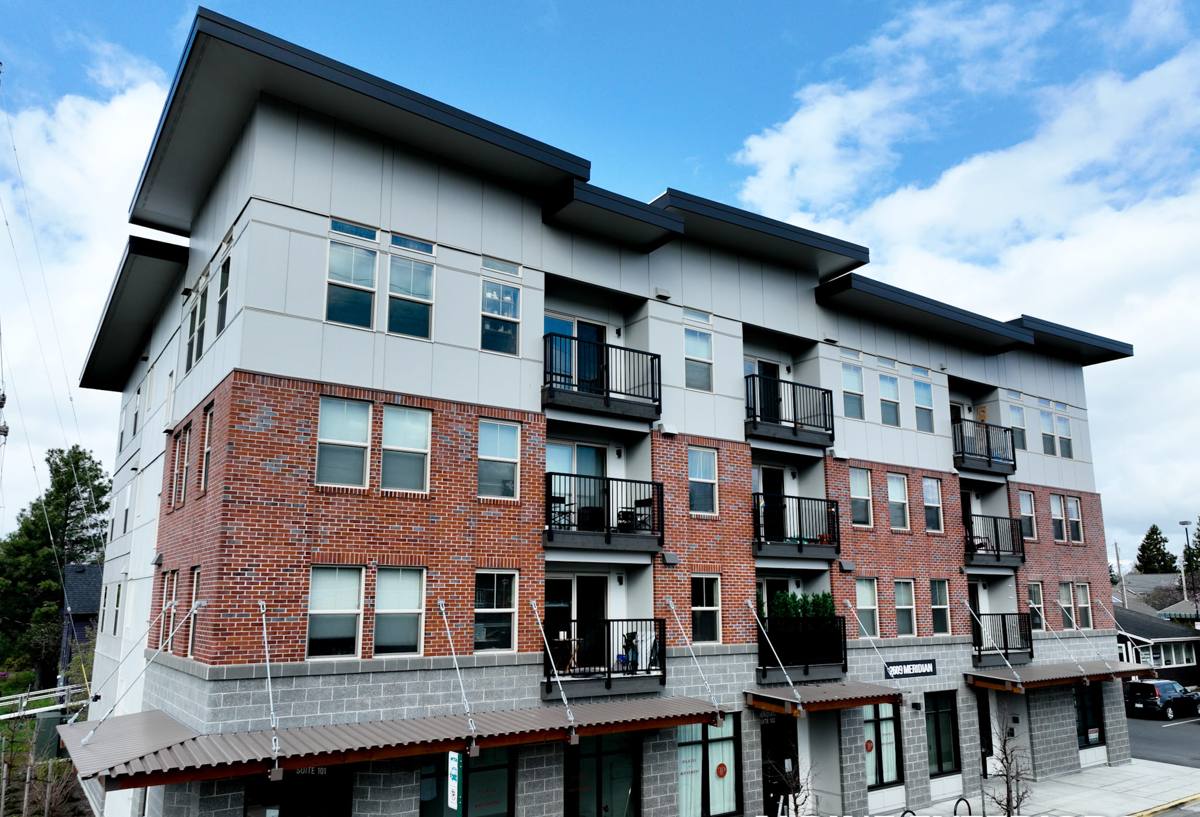
What Salt Air, Driving Rain, and Moss Season Actually Do to a Wall
Each of these factors attacks siding differently, and understanding the mechanism matters when you're deciding what to install next.
Salt Air
Airborne salt is corrosive to exposed metal fasteners, flashing, and trim, and it accelerates the breakdown of paint films and lower-grade composite materials. Over years, homes closer to open water see faster fading, chalking, and fastener corrosion than homes just a few miles inland — even within the same city.
Driving Rain
Wind-driven rain doesn't just wet a surface, it forces water sideways and upward into laps, joints, and penetrations that were only designed to shed water falling straight down. This is where most real siding failures start: not on the open field of a wall, but at the transitions — window trim, corner boards, and the bottom starter course.
Moss and Algae
Whatcom County's long, mild, wet stretch of the year keeps siding surfaces damp for extended periods, especially on north-facing walls and anything shaded by trees or a neighboring structure. Moss and algae growth isn't just cosmetic — it holds moisture against the siding surface, which shortens the life of paints, coatings, and any material that isn't dimensionally stable when wet.
Signs a Grandview Home Actually Needs Siding Replacement
Not every siding problem calls for a full tear-off. But certain signs mean the assembly behind the siding is likely already compromised, and patching won't solve it.
- Soft or spongy spots when you press on the siding, especially near the bottom courses or below windows
- Persistent black or green staining that returns quickly after cleaning
- Paint that's bubbling, peeling, or failing in patches rather than evenly across the wall
- Visible warping, buckling, or panels that no longer sit flat against the wall
- Rust streaks running down from fasteners or metal trim
- Gaps opening up at seams, corners, or where siding meets window and door trim
- A musty smell or visible staining on interior walls that share an exterior with worn siding
- Siding that's more than 20-25 years old and was never a fiber cement product to begin with
If you're seeing two or more of these, it's worth having someone look at what's underneath before deciding whether repair or full replacement makes sense.
What a Correct Siding Replacement Actually Involves
A siding replacement is only as good as what happens before the new material goes up. Rushing the tear-off and prep stage is the single most common reason siding fails early in a climate like this one.
Full Tear-Off and Inspection
We remove the existing siding down to the sheathing so we can actually see the condition of the wall — not guess at it. This is where hidden rot, failed old flashing, or moisture-damaged sheathing gets found and dealt with, rather than sealed back up behind new material.
Weather Barrier and Flashing
Given how much driving rain this area sees, the water-resistive barrier and flashing details around windows, doors, and penetrations matter as much as the siding itself. Properly lapped house wrap, correctly flashed openings, and flashing at every horizontal trim transition are what actually keep wind-driven rain out — the siding is the second line of defense, not the first.
Installation to Manufacturer Spec
Fiber cement siding has specific fastening patterns, clearances, and caulking requirements. Nailing too tight, skipping the gap at butt joints, or leaving trim uncaulked where it should be sealed are the kinds of shortcuts that don't show up as a problem for a year or two — and then show up as exactly the failures listed above.
Why We Install Only James Hardie Fiber Cement
We standardized on James Hardie for every siding replacement we do, including in Grandview, because it's engineered for the conditions this region actually produces. Hardie fiber cement is non-combustible, dimensionally stable when wet, and doesn't rely on paint alone to keep moisture out the way some composite and wood-based products do. Its ColorPlus factory-applied finish is baked on under controlled conditions, which holds up better against sun and salt exposure than field-applied paint, and it comes with a strong, transferable warranty when installed to spec.
We don't install vinyl, LP SmartSide, primed spruce, cedar, or other fiber cement brands like Cemplank or Allura. That's not about any one of those products being worthless — some have real strengths. It's that after years of doing this work in Whatcom County's climate, Hardie is the one system we're comfortable standing behind long-term on homes that face salt air, driving rain, and a moss season that doesn't quit.
How the Main Options Compare for a Home Like Yours
| Material | Moisture Behavior | Maintenance | Finish Durability |
|---|---|---|---|
| James Hardie Fiber Cement | Dimensionally stable; won't swell or rot | Low — occasional wash | Factory ColorPlus finish, long-lasting |
| Vinyl Siding | Can warp/buckle with heat and impact | Low, but color fades and can't be repainted easily | Fixed color, fades over time |
| LP SmartSide (engineered wood) | Vulnerable to moisture intrusion at cut edges/seams | Moderate — seams need ongoing attention | Field or factory finish, needs upkeep |
| Primed Spruce / Cedar | Absorbs moisture; prone to rot without upkeep | High — repainting and sealing on a cycle | Field-applied, shortest lifespan in wet climates |
Cost Factors for a Grandview Siding Replacement
Every home is different, but the same handful of factors drive most of the cost variation we see on jobs in this area.
| Factor | Why It Matters |
|---|---|
| Extent of hidden damage found at tear-off | Rotted sheathing or framing found underneath old siding needs repair before new siding can go on correctly |
| Home size and wall complexity | More corners, dormers, and trim details mean more labor and material cuts |
| Siding profile and finish selection | Lap width, texture, and ColorPlus color all affect material cost |
| Trim and accessory scope | Replacing corner boards, fascia, and window trim alongside siding affects total project size |
| Site access | Multi-story sections, tight lot lines, or landscaping obstacles affect labor time |
We won't know your real number until we've actually looked at the house — anyone quoting a firm price sight unseen is guessing.
Our Process, Start to Finish
- On-site assessment: we look at your current siding, trim, and any signs of moisture issues before recommending anything.
- Written estimate: a clear scope of work and price, with no pressure to sign on the spot.
- Tear-off and inspection: old siding comes off, sheathing and framing get checked, and any repairs are addressed before moving forward.
- Weather barrier and flashing: installed or corrected to current standards before any new siding goes up.
- James Hardie installation: installed to manufacturer spec, including fastening, clearances, and sealant details.
- Final walkthrough: we go over the finished work with you before calling the job done.
Why a Crew That Already Works in Grandview Matters
Siding failures in this part of Whatcom County follow patterns — which walls take the worst of the driving rain, which orientations grow moss fastest, where salt air does the most damage to trim and fasteners. A crew that's already replaced siding on homes in and around Grandview has seen those patterns firsthand and builds the fix around them, instead of applying a generic approach and hoping it holds up to a Pacific Northwest coastal climate. That local experience shows up in the small decisions — flashing details, fastener choice, where extra sealant actually earns its keep — that determine whether a siding job lasts fifteen years or forty.
If your siding is showing wear, or you're just planning ahead, we're happy to take a look and give you a straightforward, no-pressure estimate — use the form below to get started.