 Blaine Siding
 Siding Repair Built for Grandview's Coastal Exposure
Grandview homes sit close enough to the water and the open weather patterns that roll through Whatcom County that siding takes a different kind of beating than it would twenty miles inland. Salt-laden air off the coast, wind-driven rain that gets pushed sideways into wall assemblies, and a long stretch of the year where moisture just doesn't fully dry out — that combination is hard on every siding material, and it's especially hard on the ones that weren't built to handle it. If you're noticing soft spots, peeling paint, staining, or panels that look tired well before you expected them to, you're not imagining it. It's the environment doing what it does here.
Siding repair in this area isn't just a patch job. Done right, it's an inspection of what's happening behind the siding as much as what you can see on the surface. We work on homes in and around Grandview regularly, and the patterns repeat: repair needs cluster in the same exposures, the same details, and the same product types, year after year.
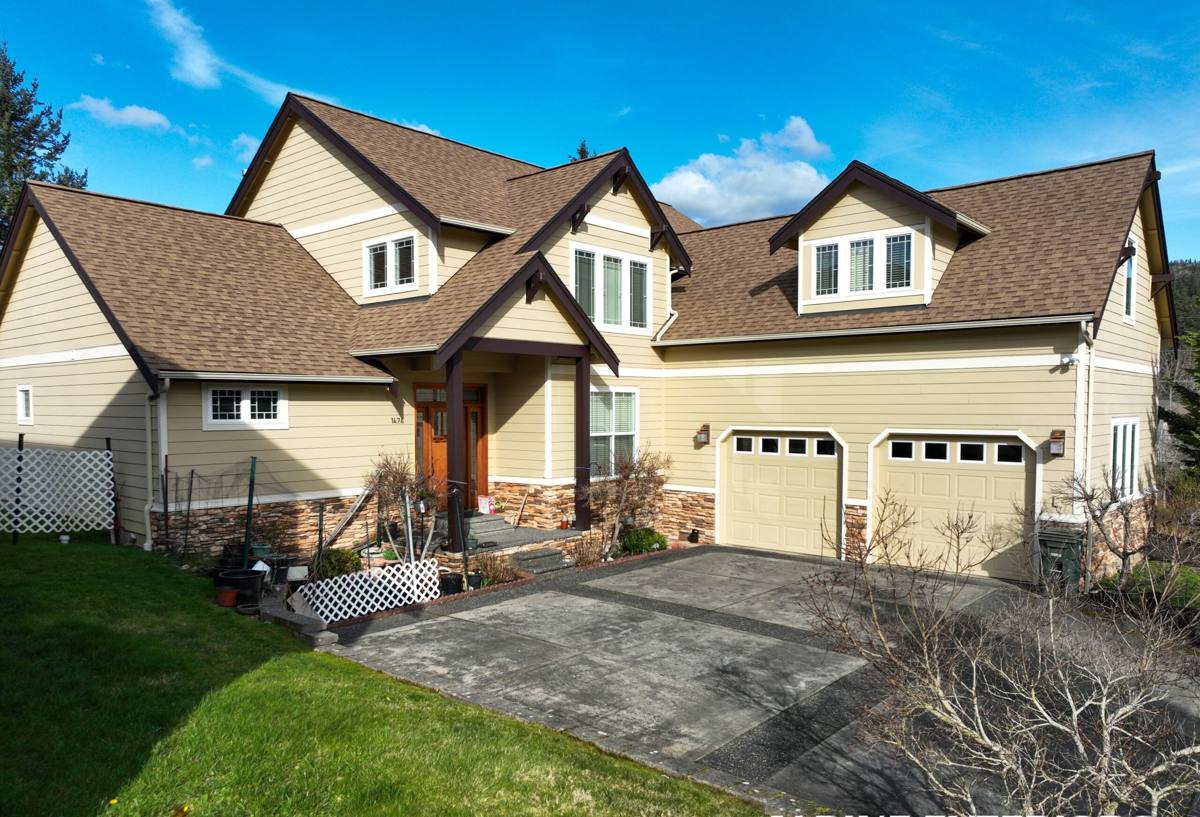
Why Grandview Siding Fails Faster Than You'd Expect
Salt Air and Metal Fasteners
Proximity to salt air accelerates corrosion on fasteners, flashing, and trim hardware. When nails or staples corrode, they lose grip strength and can streak rust down the face of the siding — a telltale sign that repair work is overdue, not just cosmetic.
Driving Rain and Wall Penetration
Wind-driven rain doesn't fall straight down — it gets forced sideways and upward into laps, seams, and butt joints. Siding installed with tight or inconsistent gaps, or without proper flashing at joints and openings, gives that water a path inward. Once moisture gets behind the cladding, the sheathing and framing underneath are what actually suffers, even if the siding face still looks passable from the curb.
Extended Moss and Mildew Season
Blaine's long damp season means north- and west-facing walls, and anything shaded by trees or fencing, stay wet longer between dry spells. That extended dampness is exactly what moss, algae, and mildew need to take hold. On porous or wood-based siding, that biological growth holds moisture against the surface and speeds up rot from the outside in.
Signs a Grandview Home Needs Siding Repair, Not Just Cleaning
- Soft, spongy, or crumbling siding when you press on it near the bottom edges or around window trim
- Paint that's peeling or bubbling in patches rather than fading evenly across the whole wall
- Visible gaps or separation at butt joints and corners
- Rust streaking below nail heads or fasteners
- Persistent moss or dark staining that comes back quickly after cleaning
- Warping, buckling, or panels that no longer sit flat against the wall
- Musty smell or discoloration on interior walls that back up to exterior siding
Any one of these on its own might be minor. Several together, especially clustered on one side of the house, usually means water has been getting behind the siding for a while.
What a Correct Repair Actually Involves
A lot of siding "repair" in this region is really just cosmetic — caulk over a gap, a patch panel screwed over rotten wood, paint over a stain. That approach hides the problem for a season or two and then it comes back worse, because the underlying moisture path was never addressed.
A repair that actually holds up here starts with finding out why the damage happened, not just where it is. That means:
- Pulling back enough siding to inspect the sheathing, house wrap, and flashing underneath — not just replacing the visible piece
- Confirming whether the water intrusion point is a failed seam, missing flashing, a caulk joint that was never sealed correctly, or a material that's simply reached the end of what it can handle
- Replacing any wet or compromised sheathing before new siding ever goes back on
- Re-flashing windows, doors, and penetrations correctly rather than just re-caulking over old flashing
- Matching the replacement material and finish so the repair doesn't stand out as an obvious patch
- Verifying fastener type and spacing meet manufacturer specs, since corrosion-resistant fasteners matter more here than in drier climates
Skipping the "why" step is how homeowners end up paying for the same repair twice.
Why We Repair with James Hardie — Not Whatever Is Already on the Wall
We install and repair with James Hardie fiber cement exclusively. We don't install vinyl, LP SmartSide, Cemplank, Allura, primed spruce, or cedar, and when we're doing repair work on a home that already has one of those materials, we're honest with homeowners about the trade-offs involved in patching versus replacing that section with something built for this climate.
Fiber cement doesn't absorb moisture the way wood-based products can, and it isn't affected by the freeze-thaw and swell cycles that stress vinyl and engineered wood siding over time. James Hardie's ColorPlus factory finish also resists the fading and chalking that repeated salt-air exposure causes on field-painted surfaces, which matters a lot for repair sections that need to blend in rather than stand out. For a full section replacement or a repair on a wall that's already showing widespread wear, matching into Hardie is usually the more durable long-term call than repairing with the original material again.
That said, not every repair needs a full material swap. If the surrounding siding is sound and the damage is isolated, a targeted, correctly executed repair — with proper flashing and matched material — can be the right, cost-effective answer. We'll tell you honestly which situation you're in.
Repair Material Comparison
| Material | Moisture Behavior | Typical Repair Longevity Here | Finish Durability in Salt Air |
|---|---|---|---|
| James Hardie fiber cement | Does not absorb/swell; engineered for wet climates | Long — repairs hold up well | Factory ColorPlus finish resists fade/chalk |
| Cedar / primed spruce | Absorbs moisture; prone to rot at exposed edges | Shorter without diligent maintenance | Field paint needs more frequent recoating |
| Vinyl | Doesn't rot, but can warp/crack with temp swings | Moderate; seams are the weak point | Can fade and become brittle over time |
| LP SmartSide / engineered wood | Better than raw wood, but edge/seam sealing is critical | Moderate; failure often starts at cut edges | Depends heavily on maintaining factory seal |
How We Approach a Grandview Repair Job
1. On-Site Inspection
We look at the whole exterior, not just the spot you called about. Damage in one area is often a signal to check similar exposures — same wall orientation, same detail — elsewhere on the house.
2. Diagnose the Cause
We identify whether the issue is a flashing failure, a seam gap, fastener corrosion, or material fatigue. This determines whether it's a spot repair or a section that should come off entirely.
3. Written Scope Before Any Work Starts
You get a clear explanation of what we found, what we recommend, and why — including if we think a smaller repair is genuinely sufficient rather than upselling a bigger job.
4. Repair the Cause, Then the Cosmetic
Sheathing, house wrap, and flashing get addressed first. Siding goes back on last, matched and fastened to spec.
5. Walkthrough
We show you what was found and what was done, in plain terms, before we consider the job finished.
Cost Factors for Siding Repair
| Factor | Why It Matters |
|---|---|
| Extent of hidden moisture damage | Rotten sheathing or framing adds scope beyond the visible siding |
| Material being matched | Matching existing cedar, vinyl, or engineered wood vs. transitioning to Hardie |
| Wall exposure | North/west-facing and shaded walls often need more thorough flashing work |
| Access and height | Second-story or tight-clearance areas take more labor time |
| Number of isolated repair points vs. one continuous section | Scattered small repairs can cost more per square foot than one larger section |
We give honest, itemized estimates rather than a flat number pulled out of thin air — you should know what you're paying for and why.
Why a Crew That Already Works Grandview Matters
Siding repair isn't generic work. A crew that's spent time on homes in this specific pocket of Whatcom County already knows which wall orientations tend to take the worst of the driving rain, how far moss and staining typically travel before it's structural, and what fastener and flashing choices actually hold up against sustained salt air rather than just looking fine at handoff. That local pattern recognition is the difference between a repair that's still solid in five years and one that's back on the schedule next season.
It also means faster, more accurate estimates. We're not guessing at how this climate behaves — we're seeing it on Grandview roofs and walls on a regular basis.
Homeowner Checklist: Is It Time to Call?
- Press-test any siding near the ground and around windows — does it give or feel soft?
- Look for peeling or bubbling paint in patches, not an even overall fade
- Check corners and butt joints for visible gaps or separation
- Look below nail heads for rust streaking
- Note whether moss or dark staining returns quickly after cleaning
- Check interior walls that back up to suspect exterior areas for discoloration or musty odor
- If you see two or more of these, get an inspection before it becomes a bigger repair
If you're seeing any of these signs on a Grandview home, we're happy to take a look and give you a straightforward, no-pressure estimate — no obligation, just an honest read on what's going on and what it would take to fix it right. The form below gets you started.