 Blaine Siding
 Sandy Point Roofs Work Harder Than Most
Sandy Point sits close enough to the water that every roof in the community deals with conditions a typical inland Whatcom County home never sees. Salt-laden air off the Strait of Georgia, wind-driven rain that finds its way under poorly lapped shingles, and a wet season long enough to grow a thick coat of moss on anything north-facing or shaded — all of it adds up faster than most homeowners expect. A roof that would last 25 years in a drier, calmer part of the county can start showing real wear a decade earlier out here if it wasn't built for this exposure in the first place.
New roof installation in Sandy Point isn't just a matter of picking a shingle color and nailing it down. It's a set of decisions — material, ventilation, flashing detail, fastener choice — that either account for this environment or don't. We install roofs on this stretch of coastline regularly, and this page walks through what actually matters when you're replacing a roof here.
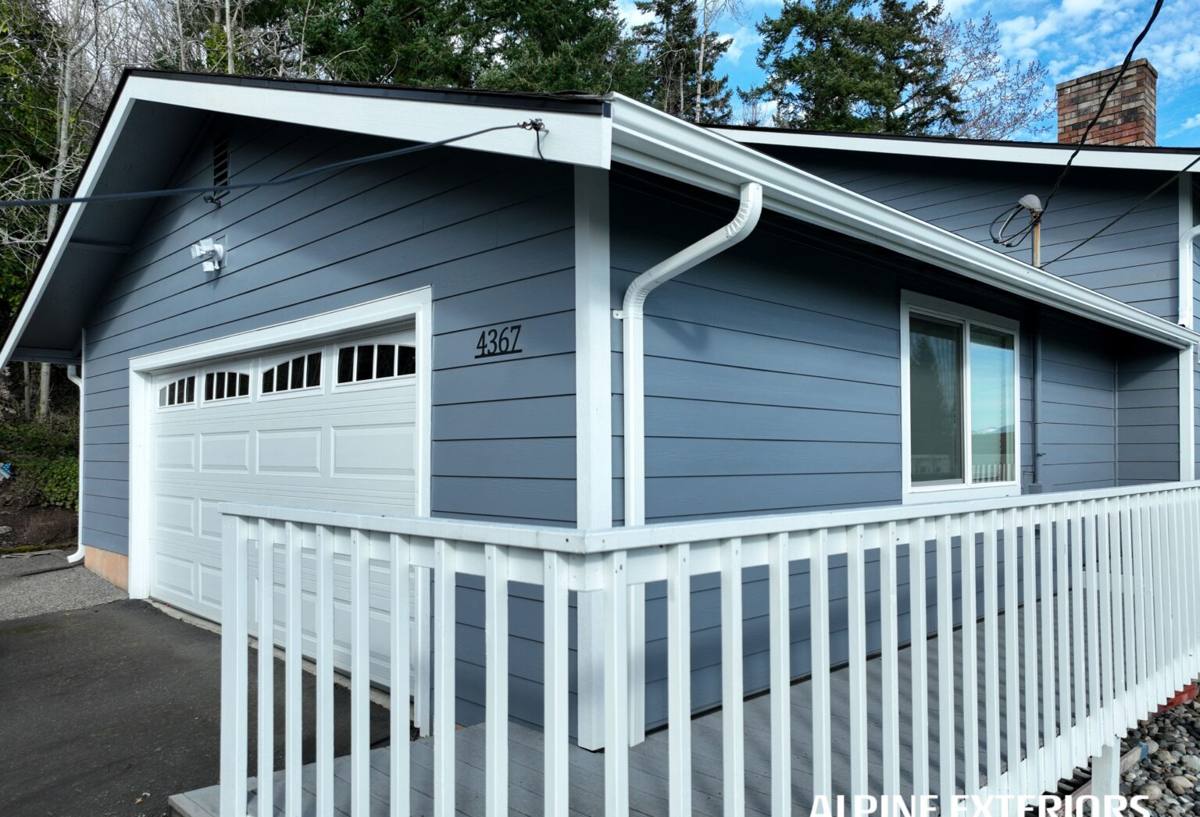
What Salt Air, Rain, and Moss Actually Do to a Roof
Salt air and corrosion
Airborne salt doesn't just sit on the surface — it works into metal fasteners, flashing, and vents over time. Standard galvanized nails and low-grade flashing can start corroding years before they would inland. Once a fastener corrodes and loses its grip, or flashing pits and thins, water finds a path in long before there's a visible leak inside the house.
Driving rain and wind uplift
Blaine gets weather systems moving straight off the water, and Sandy Point's more exposed lots catch wind that can drive rain sideways rather than straight down. That matters because a roof built for calm, vertical rainfall relies on gravity to shed water. A roof built for wind-driven rain needs tighter shingle nailing patterns, properly sealed laps, and underlayment that won't let water track sideways under a course before it drains.
Moss and moisture retention
Shade, humidity, and mild temperatures are a perfect combination for moss, and Sandy Point has plenty of tree cover and damp air to support it. Moss isn't just cosmetic — it holds moisture against the roofing surface, lifts shingle edges as it grows, and traps organic debris that breaks down granule coatings faster. A roof surface constantly damp from moss growth ages differently than one that dries out between rain events.
Signs You Need a New Roof, Not Another Repair
Not every roofing problem calls for full replacement, but there are a few signals — especially in a coastal microclimate like this one — that mean patching is no longer the honest answer:
- Granule loss heavy enough that you're finding grit in gutters every season, not just after a storm
- Shingles that are cupping, curling at the edges, or cracking when walked on
- Soft spots in the decking you can feel underfoot, which usually means water has already reached the sheathing
- Repeated moss removal that keeps coming back within a year or two, a sign the roof is staying damp longer than it should
- Flashing around chimneys, skylights, or valleys that's visibly rusted, lifted, or was never properly sealed to begin with
- A roof original to the house and past 20 years old, especially on the shaded or north-facing slopes
If you're seeing two or more of these, a straight assessment usually saves money over cycles of repair that don't address the underlying cause.
Choosing a Roofing Material for a Marine Environment
There's no single "best" roofing material for every home — it depends on your roof's exposure, slope, budget, and how much maintenance you're willing to do. Here's how the common options actually perform under Sandy Point conditions:
| Material | Salt Air Resistance | Moss Resistance | Maintenance |
|---|---|---|---|
| Architectural asphalt shingle (standard) | Good with corrosion-resistant fasteners | Moderate — benefits from algae-resistant granules | Periodic moss treatment on shaded slopes |
| Architectural asphalt shingle (algae-resistant, copper-infused granules) | Good | Better — granules slow moss and algae growth | Lower, but not maintenance-free |
| Standing seam metal | Excellent with marine-grade coatings and stainless fasteners | Excellent — smooth surface sheds moss and moisture | Low, mainly fastener and sealant checks |
| Cedar shake | Fair — needs regular treatment near salt air | Poor without diligent upkeep, moss finds grain readily | High — regular cleaning and treatment required |
We don't push cedar shake in this specific setting, not because it's a bad product, but because its maintenance demands in a moss-heavy marine climate are steep, and a lapse in upkeep shows up fast as rot and moss intrusion. For most Sandy Point homes, a quality architectural shingle with algae-resistant granules or a standing seam metal roof strikes the right balance of cost, durability, and realistic upkeep.
What a Correct Installation Actually Includes
The material on top is only part of the story. In a coastal, high-moisture environment, the details underneath the shingle or panel matter as much as the finish layer:
Underlayment and moisture barriers
We use synthetic underlayment rated for the added moisture exposure common here, with self-adhering membrane at eaves, valleys, and any low-slope transitions — the spots most likely to see water sit or drive sideways under wind.
Ventilation
A roof that can't breathe traps moisture in the attic, which speeds up rot from the inside and accelerates moss growth from the outside by keeping the deck cooler and damper longer. Balanced intake and exhaust ventilation is not optional in this climate — it's part of making the roof last.
Flashing and fasteners
Every penetration — chimney, vent stack, skylight — gets new corrosion-resistant flashing, not a re-caulk of the old piece. Fasteners are selected to resist the corrosive effects of salt air rather than standard galvanized options that pit and weaken faster this close to the water.
Nailing pattern and edge detail
Given the wind exposure on more open Sandy Point lots, we follow tighter nailing patterns than the manufacturer's bare minimum, and we pay particular attention to starter courses and rake edges, which are the first places wind-driven rain tries to get under a shingle.
How the Installation Process Works
- On-site assessment. We walk the roof, check the decking condition, note ventilation, valleys, and problem areas specific to your home's exposure.
- Written estimate. You get a clear scope — materials, underlayment, ventilation work, flashing, and any decking repair — with no vague allowances.
- Tear-off and deck inspection. Old roofing comes off down to the deck so we can actually see the sheathing, not guess at its condition from the attic.
- Repair as needed. Any soft or rotted decking gets replaced before anything new goes down — covering bad decking with new shingles just hides the problem.
- Install underlayment, flashing, and roofing material. Done to the standard described above, not the minimum code requirement.
- Final walkthrough. We go over the finished roof with you, including gutters, ventilation, and any maintenance notes specific to your property.
What Affects the Cost
Every roof is priced on its own specifics, but the main variables for a Sandy Point job are consistent:
| Factor | Why It Matters |
|---|---|
| Roof size and complexity | More valleys, dormers, and penetrations mean more flashing detail and labor |
| Decking condition | Rot found during tear-off adds material and labor to replace it properly |
| Material choice | Standing seam metal costs more upfront than shingle but requires less upkeep long-term |
| Ventilation upgrades | Adding proper intake/exhaust venting where it's missing is a worthwhile add, not a corner to cut |
| Access and slope | Steeper or harder-to-access roofs take more time and safety setup |
We'll never give a number without seeing the roof — anyone quoting a full replacement over the phone is guessing, and guesses on a coastal roof tend to be wrong in the homeowner's favor right up until the invoice.
Questions Worth Asking Before You Sign With Anyone
- Do you tear off down to the deck, or install over the existing layer?
- What underlayment and fastener grade do you use, and is it rated for coastal exposure?
- How do you handle ventilation if the current attic isn't balanced?
- Is decking repair priced separately, or is it included if problems turn up?
- What's covered under workmanship warranty versus manufacturer material warranty?
- Are you licensed and insured to work in Whatcom County, and can you show it?
Why Local Experience in Sandy Point Matters
A roofing crew that already works this stretch of Blaine knows which slopes hold moss longest, which lots take the worst of the wind off the water, and which fastener and flashing upgrades are worth the extra cost versus which are overkill for a given home. That's not something you get from a general contractor pricing a job off a satellite photo. It comes from installing and later checking in on roofs in this exact climate, season after season.
Blaine Siding Company works throughout Whatcom County, including Sandy Point, and we build every roof here with the salt air, driving rain, and moss season in mind — not as an afterthought, but as the starting point for the whole job.
If your roof is showing its age or you just want an honest opinion on where it stands, we're happy to take a look. Reach out for a free, no-pressure estimate using the form below.