 Blaine Siding
 Decks at Sandy Point Take a Different Kind of Beating
Sandy Point sits right up against the water, and that changes what a deck has to survive. Homes here deal with salt-laden air blowing in off the Strait, driving rain that comes in sideways during winter storms, and a moss season that can stretch from fall through spring in this corner of Whatcom County. A deck built the same way you'd build one twenty miles inland simply won't hold up the same way out here. The wood, the fasteners, the framing details, and even the gap spacing between boards all need to account for a wetter, saltier environment than most of Blaine sees.
We've replaced enough decks in this neighborhood to know where the shortcuts show up first — usually within a few years, not decades. This page walks through what actually causes early deck failure near the water, what a correctly built replacement involves, and how we approach the job when we're out at Sandy Point.
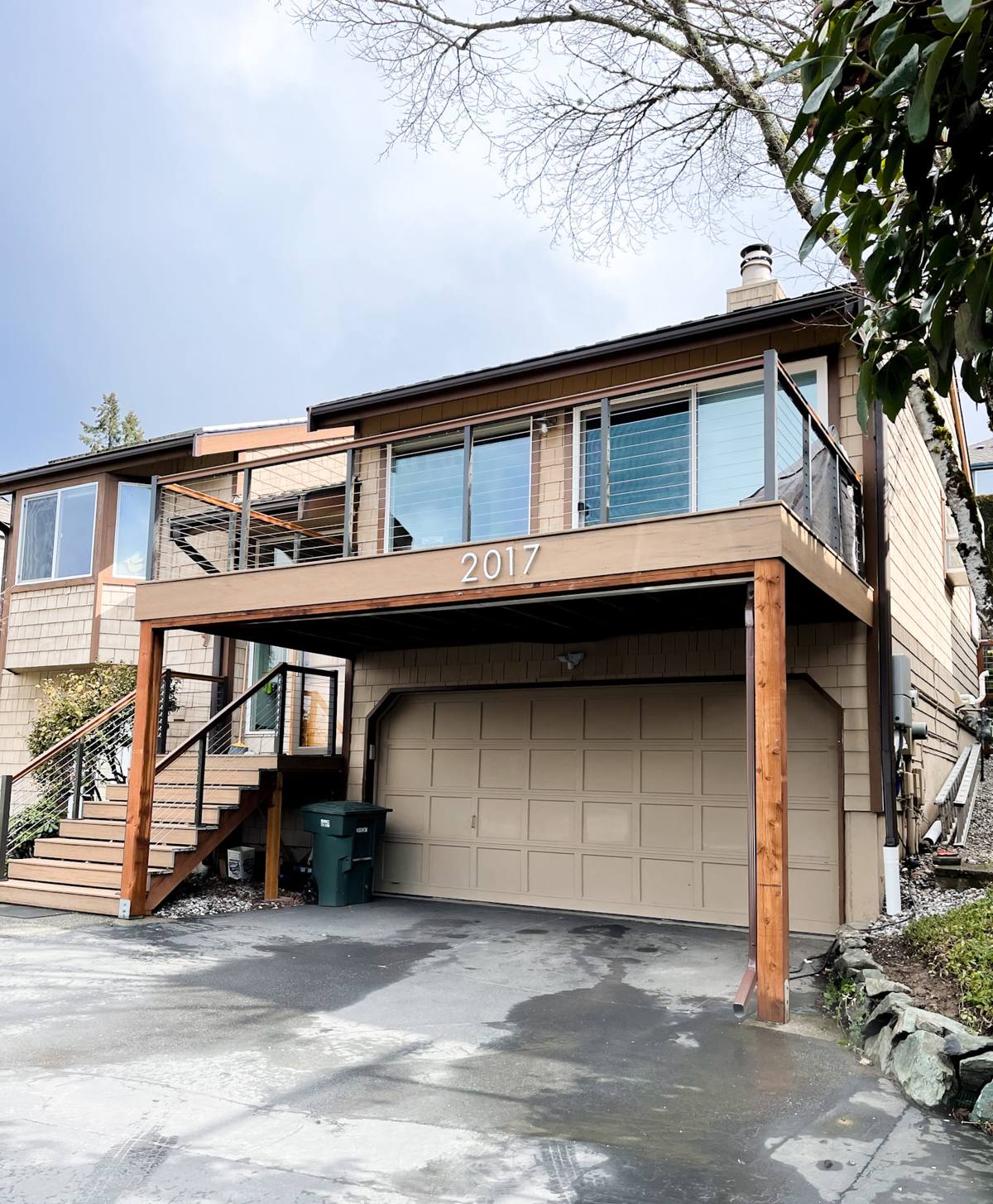
Why Decks Fail Faster in This Environment
Salt Air and Corrosion
Airborne salt doesn't just sit on the surface of a deck — it works into fastener heads, hinges, and any exposed metal hardware. Standard coated screws and joist hangers that would last for years in a drier, inland yard can start rusting and staining within a couple of seasons this close to the water. Once a fastener corrodes, it loses grip strength long before it looks obviously bad, which is part of why decks that seem fine can have a weak substructure underneath.
Standing Water and Trapped Moisture
Whatcom County's rain doesn't come in short bursts and clear out — it settles in for days at a time. On a deck, the problem isn't the rain itself, it's where that water goes afterward. Boards installed too tight, ledger boards without proper flashing, and framing without adequate airflow underneath all trap moisture against wood longer than they should. That's when rot sets in, usually starting at joist ends, ledger connections, and post bases — the spots you can't see without pulling boards or getting underneath the structure.
Moss, Algae, and Organic Buildup
The same damp, shaded, salt-humid conditions that make this area beautiful also make it ideal for moss and algae growth on horizontal wood surfaces. Beyond the slip hazard, moss holds moisture against the decking surface constantly, which accelerates rot in wood decking and can stain or degrade the surface layer of composite products if it's never cleaned off. A deck with poor drainage or heavy tree cover nearby will grow moss faster than one with more sun and airflow, regardless of material.
What a Correct Deck Replacement Actually Involves
Inspecting and Repairing the Substructure
The decking boards are the part everyone sees, but the framing underneath is what determines whether the deck lasts. A proper replacement means checking every ledger connection, joist, beam, and post for rot or corrosion damage — not just replacing the top boards and calling it done. If the substructure has soft spots or compromised fasteners, that gets addressed before a single new board goes down.
Choosing Decking Material for Coastal Exposure
Material choice matters more here than in a lot of other parts of Whatcom County. Some wood species and composite products handle salt spray and constant damp far better than others, and appearance alone doesn't tell you how a board will behave after a few winters near the water. We talk through the trade-offs honestly rather than just selling whatever has the best markup.
Fasteners and Hardware
This is one of the most overlooked details on coastal decks. Stainless steel or marine-grade coated fasteners and hardware cost more up front than standard hot-dip galvanized options, but in a salt air environment the difference in corrosion resistance is significant. Using the wrong hardware is a common reason decks near the water develop rust streaking, loosening boards, or structural weak points years before they should.
Drainage and Flashing Details
Proper ledger board flashing, correct board spacing for water runoff, and grading that moves water away from posts and footings all matter more in a climate that sees this much sustained rain. These details rarely get noticed by a homeowner walking across a finished deck, but they're the difference between a deck that sheds water and one that slowly rots from the inside.
Decking Material Comparison for Sandy Point Conditions
| Material | Salt Air / Moisture Behavior | Moss Resistance | Maintenance Needed |
|---|---|---|---|
| Pressure-treated pine | Resists rot chemically, but exposed cuts and fastener holes need re-treatment | Moderate — needs regular cleaning | Annual cleaning, periodic sealing |
| Cedar | Naturally rot-resistant but softer; benefits from a protective finish near salt air | Moderate to low without upkeep | Regular sealing/staining to hold up long-term |
| Capped composite | Handles moisture and salt exposure well; won't rot | Surface can still host moss/algae without cleaning | Periodic washing, no sealing required |
| Uncapped composite | More moisture-sensitive at cut edges than capped versions | Moderate — same cleaning need as capped | Cleaning plus attention to exposed edges |
There's no single "best" material for every Sandy Point home — it depends on your budget, how much upkeep you want to do, and how exposed the deck is to wind-driven salt spray. We'll walk you through what we've seen hold up in this specific environment when we're out for your estimate.
Our Deck Replacement Process
- On-site assessment — We check the existing deck, the framing underneath where accessible, ledger attachment, and site drainage before recommending anything.
- Tear-out — Old decking, and any framing that doesn't pass inspection, comes out completely. We don't build new surfaces over questionable structure.
- Framing and ledger work — Joists, beams, posts, and ledger flashing are repaired or replaced to current standards, with corrosion-resistant hardware appropriate for this climate.
- Decking installation — Boards are installed with proper spacing for drainage and airflow, using fasteners matched to the material and environment.
- Railings and finishing details — Railings, stairs, and any trim or fascia are installed and checked for code compliance.
- Final walkthrough — We go over the finished deck with you, including what maintenance it will actually need given where you live.
What Drives the Cost of a Deck Replacement Here
| Factor | Why It Matters |
|---|---|
| Deck size and shape | More square footage and complex layouts (multiple levels, angles) mean more material and labor |
| Decking material | Composite typically costs more up front than pressure-treated wood but needs less ongoing upkeep |
| Condition of existing framing | Rot or corrosion found during tear-out can add repair scope beyond the surface replacement |
| Railing style | Cable, glass, and custom railing systems cost more than standard wood or composite balusters |
| Site access | Decks with difficult access for materials and equipment take longer to build |
| Permitting | Whatcom County permit requirements can apply depending on deck height, size, and location |
We give you an honest, itemized estimate before any work starts, so you know what you're paying for and why — not a vague lump sum.
Keeping a Sandy Point Deck Healthy Year-Round
Even a well-built deck needs some seasonal attention in this climate. A little regular upkeep goes a long way toward avoiding early replacement:
- Rinse salt residue off decking and hardware periodically, especially after storms with onshore wind
- Sweep leaves and debris out of board gaps so water can keep draining properly
- Check for moss or algae buildup on shaded sections and clean it off before it spreads
- Inspect visible fasteners and hardware for rust or loosening at least once a year
- Reseal or restain wood decking on the schedule the product actually needs, not just when it looks bad
- Make sure gutters and downspouts near the deck aren't dumping extra water onto or under it
- Trim back overhanging vegetation to let more sun and airflow reach the deck surface
Why a Crew That Already Works Sandy Point Matters
A deck replacement done by someone unfamiliar with this specific stretch of coastline can look fine on installation day and still fail early because the material and hardware choices weren't matched to the environment. We work regularly in Blaine and the surrounding Whatcom County waterfront communities, so we're not guessing at how salt air, moss, and constant rain affect a deck over time — we've seen it directly and built accordingly. That also means we're familiar with local permitting expectations and can spot the early warning signs of rot or corrosion that an out-of-area crew might miss on a quick walkthrough.
Being local also means accountability. If something needs attention after the job is done, we're not a crew that packed up and left the area — we're still here, working in the same neighborhoods.
Ready to Talk About Your Deck?
If your deck is showing rot, loose boards, rusted hardware, or heavy moss buildup, it's worth a straight assessment before deciding whether repair or full replacement makes sense. Fill out the form below for a free, no-pressure estimate, and we'll walk the deck with you and explain exactly what we find.