 Blaine Siding
 Roofing in Cherry Point: What the Climate Actually Demands
Cherry Point sits right up against the Strait of Georgia, and that shoreline exposure changes what a roof has to deal with compared to homes even a few miles inland. Salt-laden air corrodes exposed metal faster, wind-driven rain finds its way under marginal flashing and underlayment, and the shaded, damp conditions that persist through much of the year keep moss and algae growing on roof surfaces for a good chunk of the calendar. None of this means a roof in Cherry Point is doomed to fail early — it means the roof has to be built correctly for the environment it's actually in, not for a generic Pacific Northwest spec.
We work roofs throughout Blaine and Whatcom County, and Cherry Point properties consistently show a particular pattern of wear: fastener and flashing corrosion ahead of schedule, granule loss on the north and west-facing slopes where moss holds moisture longest, and soffit or fascia rot where salt-humid air has been sitting against wood trim for years. A replacement done right here accounts for all of that from the start.
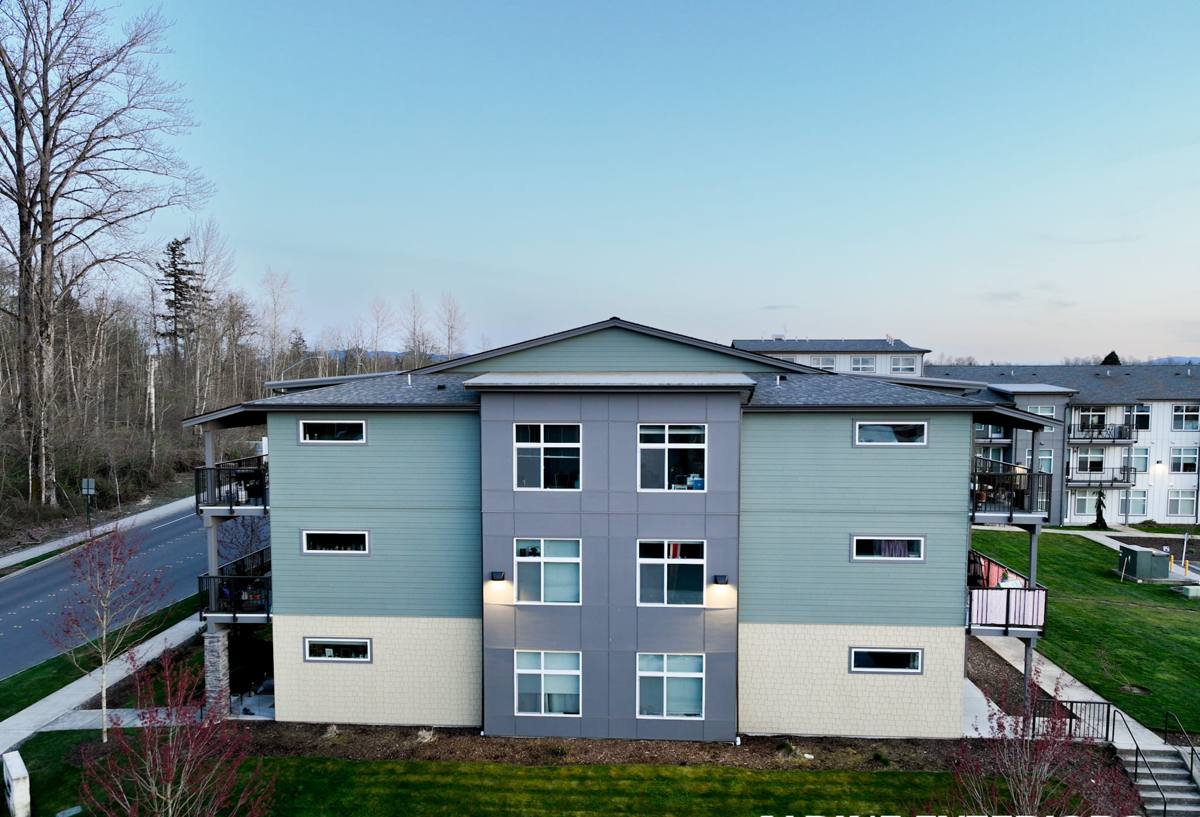
Signs a Cherry Point Roof Needs Replacement, Not Another Repair
Not every roofing problem calls for a full tear-off. But there's a point where patching becomes a waste of money, and homes in this area tend to hit that point in a few recognizable ways:
- Moss and algae keep coming back within a season or two of cleaning, even after treatment — a sign the roof surface has lost its protective coating
- Granules are collecting in gutters and downspouts in noticeable amounts
- Flashing around chimneys, vents, or skylights is rusted, lifted, or was never properly step-flashed to begin with
- Shingles are cupping, curling, or cracking, especially on the sides of the roof that stay shaded and damp longest
- There's evidence of moisture in the attic — dark staining on sheathing, soft spots, or a musty smell
- The roof is nearing or past its expected service life and repairs are becoming frequent
If you're seeing two or more of these at once, a replacement is usually the more honest recommendation, both financially and for the long-term health of the structure underneath.
Material Options for a Salt-Air, High-Moss Climate
There's no single "best" roofing material for every Cherry Point home — it depends on the roof's pitch, the home's style, budget, and how much long-term maintenance the owner wants to take on. Here's how the common options compare for this specific environment:
| Material | Salt-Air Performance | Moss Resistance | Typical Lifespan Here |
|---|---|---|---|
| Architectural asphalt shingle | Good, with proper metal flashing and fasteners | Moderate — benefits from algae-resistant granules | 20–30 years |
| Standing seam metal | Excellent when properly coated/finished; watch fastener and cut-edge corrosion | Excellent — steep pitch and slick surface shed moss well | 40–50+ years |
| Composite/synthetic shake | Good — doesn't absorb moisture like wood | Good | 30–50 years |
| Cedar shake | Requires diligent upkeep near salt air | Poor without regular treatment | 15–25 years with upkeep |
For most Cherry Point homes we recommend architectural asphalt with algae-resistant granules as the practical middle ground, or standing seam metal for owners who want to minimize moss and maintenance long-term and are comfortable with the higher upfront cost. We'll walk you through the honest trade-offs for your specific roof rather than pushing one product across the board — what makes sense for a low-slope ranch roof under tree cover is different from what makes sense for a steep gable roof in open coastal wind.
What a Correct Roof Replacement Actually Involves
Tear-Off and Deck Inspection
A proper replacement starts with a full tear-off down to the decking, not a layover on top of old material. This is the only way to actually see what's happening underneath — soft, delaminated, or rotted sheathing is common on older Cherry Point roofs where moisture has been working its way in slowly for years, and it needs to be replaced before anything new goes down.
Underlayment Built for Wind-Driven Rain
Given how often rain here comes in sideways off the water, underlayment choice matters more than it does in drier inland areas. We use synthetic underlayment with ice-and-water shield in the vulnerable zones — eaves, valleys, and around every penetration — to give the roof a second line of defense if wind ever pushes water up under the primary roofing material.
Flashing That's Actually Sealed and Step-Flashed
Flashing failure is the single most common cause of leaks we find on older roofs in this area. Chimneys, skylights, vent pipes, and wall-to-roof transitions all need properly layered, corrosion-resistant flashing — not a bead of caulk covering up a shortcut. In salt air, we favor flashing materials and fasteners chosen specifically to resist corrosion rather than the cheapest galvanized option.
Ventilation That Keeps Moisture Moving
A roof that traps humid air underneath it will rot from the inside regardless of how good the shingles are. Balanced intake and exhaust ventilation is part of every replacement we do — it protects the decking, extends the life of the roofing material, and reduces the damp conditions that feed moss growth from below as well as above.
Our Process, Start to Finish
- On-site inspection and honest assessment of whether you need a repair or a full replacement
- Written estimate covering material options, scope of work, and a realistic cost range — no surprise add-ons buried in fine print
- Scheduling that accounts for Whatcom County's rain patterns, so we're not tearing off a roof into an open forecast
- Tear-off, deck repair as needed, underlayment, and flashing installed to spec, not shortcut
- New roofing material installed per manufacturer requirements to keep your warranty valid
- Full site cleanup, including magnetic sweep for stray nails and debris haul-away
- Final walkthrough so you know exactly what was done and what to watch for going forward
What Drives the Cost of a Cherry Point Roof Replacement
Every roof is different, but the same handful of factors tend to move the price up or down on jobs in this area:
| Factor | Why It Matters Here |
|---|---|
| Roof size and pitch | Steeper roofs take longer and require more safety setup |
| Deck condition | Moisture damage found during tear-off adds sheathing replacement |
| Material choice | Asphalt vs. metal vs. composite carries a wide cost range |
| Number of penetrations | Chimneys, skylights, and vents each need individual flashing work |
| Access and site conditions | Tree cover, tight lots, and driveway access affect setup time |
| Corrosion-resistant fasteners/flashing | Salt-air exposure calls for upgraded hardware, a modest added cost that pays off in fewer failures |
We'll break these out clearly in your estimate so you know what you're paying for and where there's room to adjust scope if budget is a concern.
Why Local Experience in This Area Actually Matters
A roofing crew that mostly works drier, inland jobs can still do competent work, but they won't necessarily know to spec upgraded fasteners for salt exposure, or which slopes on a Cherry Point roof will stay damp long enough to grow moss again within a year if the ventilation isn't right. We work this stretch of Whatcom County regularly, which means we've seen how roofs here actually age — not just how they're supposed to perform on paper. That shows up in the small decisions: which flashing detail to use at a given roof-to-wall transition, where ice-and-water shield is worth the extra cost, and which materials are simply a poor match for a shaded, salt-air, high-moss site regardless of what they cost.
Keeping a New Roof Performing Long-Term
A correctly installed roof still benefits from a little ongoing attention in this climate:
- Keep gutters and downspouts clear so water isn't backing up under the eaves
- Trim back overhanging branches to cut down on shade and debris buildup that feeds moss
- Have moss treated before it gets thick enough to hold moisture against the surface — don't wait for visible damage
- Schedule a periodic look at flashing and fasteners, since these are the first things salt air affects
- Address any attic moisture or ventilation issues promptly rather than letting them linger
None of this is high-maintenance, but skipping it is how a well-installed roof in Cherry Point ends up wearing faster than it should.
If your roof is showing its age or you just want an honest read on where it stands, we're happy to take a look. Fill out the form below for a free, no-pressure estimate — we'll tell you straight whether you need a full replacement, a repair, or nothing at all right now.