 Blaine Siding
 Roof Replacement Built for California Creek's Conditions
Homes along California Creek, tucked into the wooded corridor on the edge of Blaine, deal with a combination of stresses that most roofing crews never think to plan for at the same time. The creek corridor carries heavier tree cover than the open, bay-facing parts of town, which means more shade, more standing damp, and more organic debris working its way into valleys and gutters year-round. At the same time, these properties are close enough to Blaine and the water that they still take a real share of the salt-laden air and wind-driven rain that define roofing conditions across this part of Whatcom County. It's a specific combination — coastal exposure layered on top of heavy shade — and a roof that only accounts for one of those two things tends to fail from whichever direction it ignored.
This page is about what a correct roof replacement actually looks like for a home in the California Creek area specifically, not a generic rundown of shingles and nails. That includes the material and installation choices that matter here, the drainage details that matter more on a shaded, creek-adjacent lot than they would elsewhere in town, and how we run the job from first inspection to final cleanup.
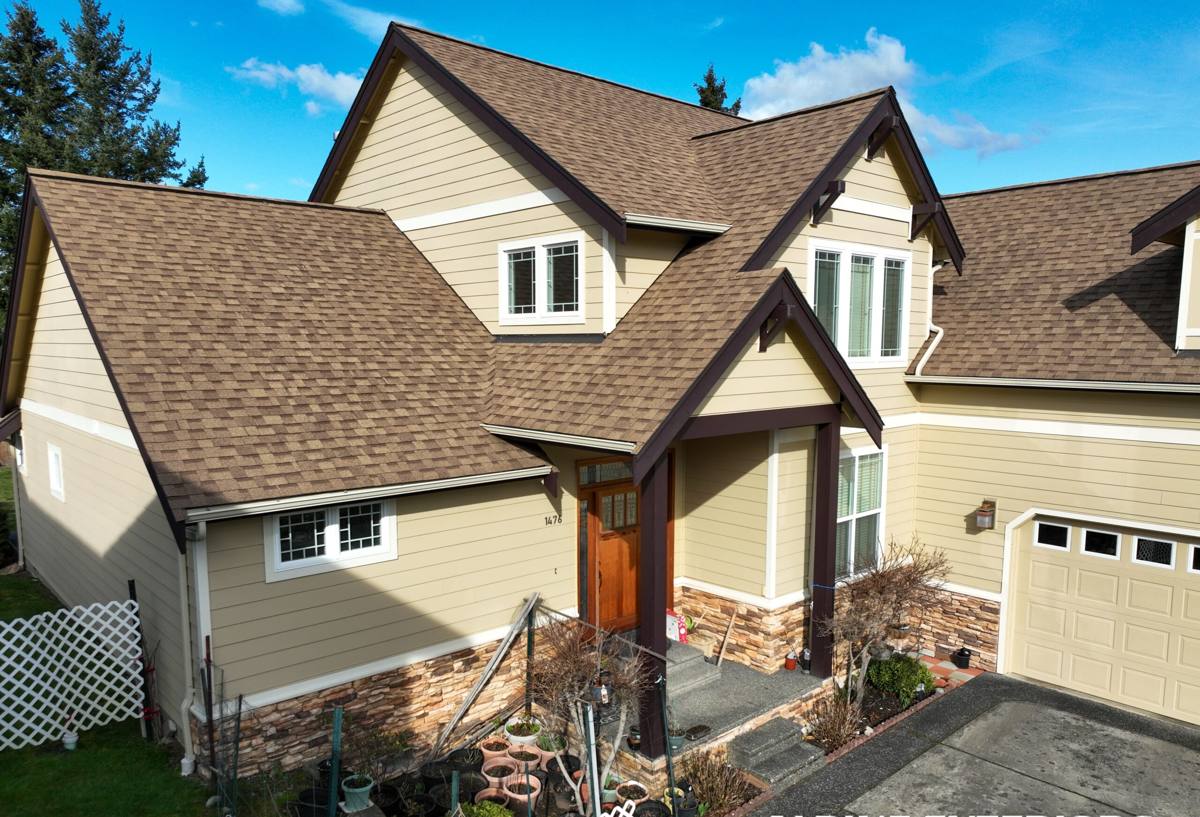
What Makes a California Creek Roof Different
Living Under the Creek Corridor's Canopy
Mature trees along the creek keep these lots cooler and more sheltered than open lots closer to the water, but that shade comes with a cost to a roof. Needles, leaves, and cone debris collect in valleys and behind chimneys far more than they do on an open, sun-exposed roof, and that debris holds moisture against the roofing material long after a rain has passed. Roof planes that stay shaded through most of the day rarely get the chance to dry out between wet spells, which is exactly the condition moss and algae need to establish and spread.
Still Close Enough to Feel Blaine's Coastal Weather
Tree cover doesn't cancel out the fact that these homes sit near Blaine and, by extension, near Semiahmoo Bay and Drayton Harbor. Salt-tinged air still reaches fasteners and flashing metal here, just as it does closer to the water, and it still speeds up corrosion on anything undersized or lower-grade. Wind off the water gets broken up somewhat by the trees, but it's often redirected downward and sideways through the canopy in ways that push rain into roof valleys and wall-roof intersections from angles a more open roof wouldn't see.
Where the Water Has to Go
Roofs draining toward a creek corridor deserve a bit more thought than roofs draining into a standard municipal system. Gutters and downspouts need to be sized for the volume of water and debris this kind of tree cover actually produces, not a generic residential estimate, and they need to route water away from the foundation and off the property in a way that doesn't concentrate runoff or erode soil near the creek bank. It's also worth avoiding harsh chemical treatments or pressure washing runoff that could end up draining toward the creek — routine moss control here should lean on gentler methods for that reason as much as for the roof's own sake.
What a Correct Roof Replacement Involves
A roof replacement done right is a system built in layers, each one doing a specific job. Skipping or shortcutting any one of them shows up eventually as a leak, even if the shingles on top still look fine.
Full Tear-Off and Deck Inspection
Stripping the roof down to bare decking is the only way to find rot or hidden moisture damage that's been developing quietly, especially under a shaded roof plane where trapped moisture has had years to work on the plywood or OSB underneath. A layover — installing new shingles directly over the old layer — buries that problem instead of finding it.
Underlayment Rated for Wind-Driven Rain
Synthetic or self-adhered underlayment gives the deck a real second line of defense, which matters directly here given how wind funneling through the trees can drive rain into places a straight-down rainfall never would. Ice-and-water shield membrane belongs at eaves, valleys, and any transition where debris and standing moisture are likely to collect.
Flashing at Valleys, Chimneys, and Wall Intersections
Most leaks on a shaded, debris-prone roof start at flashing, not in the open field of shingles. Valleys catch both water and needle debris at once, so the flashing there needs to be properly lapped and integrated with the underlayment rather than sealed with caulk as an afterthought once the shingles are already down.
Ventilation That Matches the Shade
Balanced intake and exhaust ventilation keeps the underside of the deck dry, which matters more on a lot that doesn't get much direct sun to help evaporate moisture that does get in. Poor attic airflow on a shaded property can quietly shorten a roof's life well before anything looks wrong from the outside.
Choosing a Roofing Material for a Shaded, Wooded Lot
Every roofing material sold today can technically handle rain. The real question for a California Creek property is how a material handles sustained shade, organic debris, and salt-tinged air together, over decades rather than years.
| Material | Typical Lifespan | Fit for California Creek Conditions |
|---|---|---|
| Standard Architectural Asphalt Shingle | 25-30 years | Solid baseline choice, but plain granules will streak and hold moss faster under heavy canopy shade |
| Algae-Resistant Architectural Shingle | 25-30 years | Copper or zinc-infused granules slow streaking and moss growth — usually the right call under consistent tree shade |
| Standing Seam Metal | 40-50+ years | Sheds needles and debris more readily than a textured shingle surface; corrosion resistance depends heavily on coating quality near salt air |
For most homes in this area, an algae-resistant architectural shingle is the practical middle ground between upfront cost and how the roof will actually look and perform a decade in. Metal is worth a serious look on steeper roofs or properties with especially heavy tree cover, since its slicker surface sheds debris that would otherwise sit and collect on a textured shingle.
Cost Factors Worth Understanding
Two estimates for the same California Creek roof can land far apart, and the gap is almost always real differences in scope rather than one contractor padding a number. Knowing what drives cost makes it easier to compare bids that look nothing alike on paper.
| Factor | What It Affects |
|---|---|
| Tear-off vs. layover | Whether hidden deck rot under a shaded roof gets found and repaired before new material goes down |
| Underlayment grade | How well the roof resists rain driven sideways through tree cover and canopy wind |
| Shingle or metal grade | Expected lifespan and resistance to moss under sustained shade |
| Flashing and valley scope | How thoroughly the highest-risk debris and water collection points are addressed |
| Gutter and downspout sizing | Whether the drainage system can actually handle this lot's tree debris and runoff volume |
| Tree clearance and access | Labor time, staging, and any limb clearance needed to safely work the roof |
A written estimate that itemizes these components separately tells you far more than a single lump-sum number. It's reasonable to ask any contractor to walk through exactly what's included, line by line, before comparing two prices side by side.
How Our Process Works
A roof replacement is a significant job on your home, and we run it with a straightforward process so there are no surprises partway through.
- In-person inspection: We walk the roof and attic ourselves, and take note of tree overhang, debris buildup, and drainage patterns specific to the property, not just the shingles.
- Written estimate: A clear, itemized bid covering tear-off, underlayment, flashing, ventilation, material selection, and gutter work — not one vague line item for "new roof."
- Scheduling around weather and trees: We build reasonable flexibility into the timeline for wet-season delays, and coordinate limb clearance ahead of time if overhanging branches need to be addressed for safe access.
- Tear-off and deck repair: Old roofing comes off completely, and any deck damage we find gets repaired before anything new goes down.
- Underlayment, flashing, and roofing installation: Each layer goes on to manufacturer specification, with extra attention at valleys and any spot where debris is likely to collect.
- Final walkthrough and cleanup: We review the finished roof with you in person and do a full site and magnetic nail sweep before considering the job done.
Why Hiring a Crew That Already Works California Creek Matters
A crew that regularly works this stretch near Blaine has already seen how tree canopy and salt air compound each other on a roof, which properties along the creek need extra gutter capacity, and how quickly moss re-establishes on a shaded slope that isn't kept clear. That's the kind of practical knowledge that shows up in dozens of small decisions on a job, not something a crew unfamiliar with this specific corner of Whatcom County would think to account for.
It also matters after the job is done. A workmanship warranty only means something if the company behind it is still around and reachable years later, which is more likely with a contractor that has an established, ongoing presence in the area rather than one that moved on after a single job.
A Practical Checklist Before You Choose a Roofer
- Do they perform a full tear-off with deck inspection, not just a layover?
- Does the estimate specify underlayment type and material, not just "new roof"?
- Is flashing work at valleys and penetrations explicitly written into the bid?
- Have they sized gutters and downspouts for this property's actual tree debris and runoff, not a generic estimate?
- Do they carry current WA contractor licensing, liability insurance, and workers' compensation?
- Does the bid clearly separate the manufacturer's material warranty from the contractor's own workmanship warranty?
Signs Your California Creek Roof May Need Attention
Roofs under heavy tree cover tend to show warning signs earlier than open, sun-exposed roofs, simply because shade and debris accelerate the same problems that show up more slowly elsewhere.
- Moss or dark streaking spreading across more than just the shaded corners of the roof
- Needle and debris buildup in valleys that keeps returning within weeks of being cleared
- Granules collecting in gutters, signaling shingles wearing thinner than they should at this stage
- Curling, cracking, or lifted shingle edges, particularly where tree limbs overhang the roofline
- Water staining on interior ceilings or in the attic, especially near valleys or chimney penetrations
- Gutters overflowing or backing up during moderate rain, which points to undersized or clogged drainage
If several of these sound familiar, it's worth having the roof looked at before the next stretch of wet weather rather than waiting for a leak to make the decision for you.
If you'd like an honest, no-pressure look at your California Creek roof and a written estimate you can compare against anything else you've received, we're glad to come take a look. Use the form below to request a free estimate.