 Blaine Siding
 Dakota Creek's Roofs Work Harder Than Most
Dakota Creek sits close enough to the water and to open farmland that its roofs take a beating most inland Whatcom County homes never see. Salt-laden air off the Strait of Georgia and Semiahmoo Bay corrodes exposed metal faster than manufacturers' warranties assume. Driving rain off the water finds every gap in flashing and underlayment that a calmer climate would never expose. And the long, damp shoulder seasons here — wet springs, wet falls, and a winter that rarely gives a roof a real chance to dry out — feed a moss and moisture problem that can go from cosmetic to structural if it's ignored for a couple of seasons.
None of that means a Dakota Creek roof is doomed. It means the repair work has to account for what the roof actually deals with, not just what the shingle or metal panel is rated for on paper. That's the difference between a patch that lasts a year and a repair that holds for the life of the roofing material.
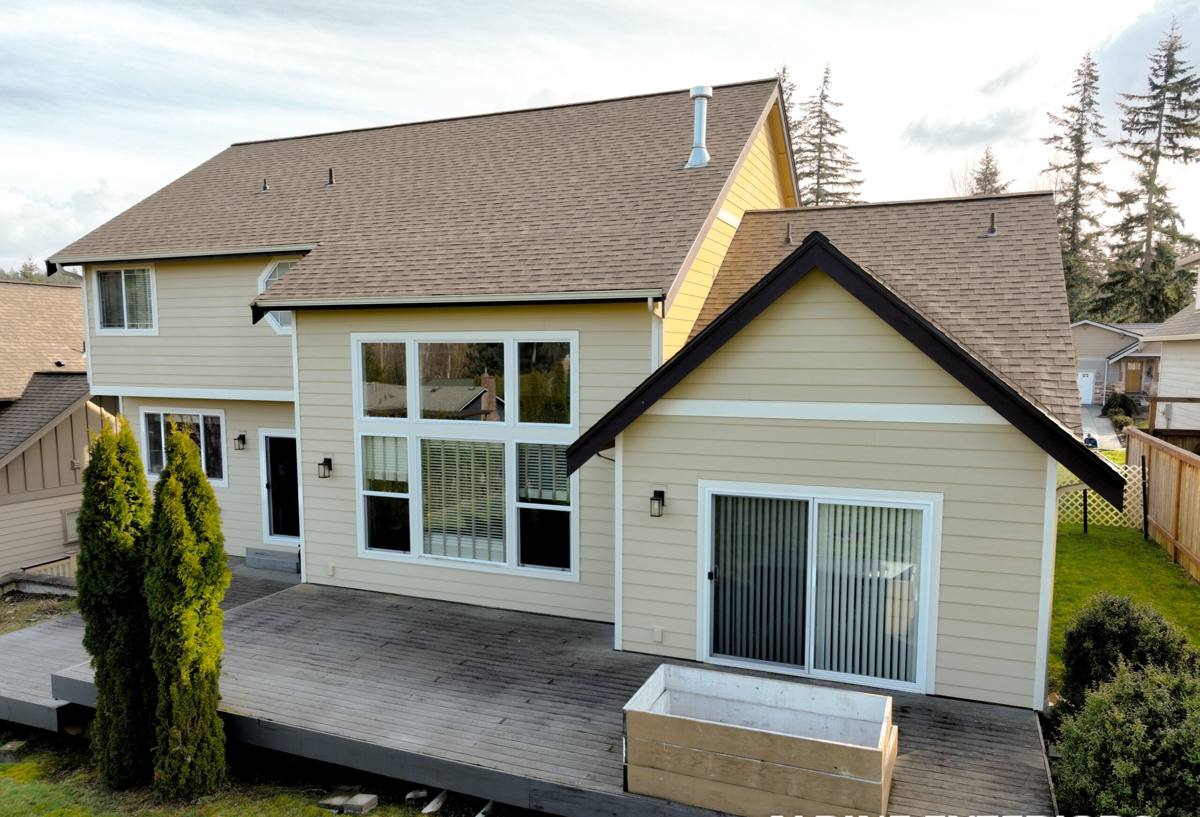
What "Roof Repair" Actually Covers
Roof repair is targeted work — fixing, replacing, or reinforcing specific areas of a roof that are failing, without tearing off and replacing the whole system. It's the right call when the roof deck and the majority of the field material are sound and the problem is localized: a section of damaged shingles, a flashing failure, a soft spot from a slow leak, or moss damage that's eaten into the surface but hasn't compromised the deck underneath.
It's the wrong call — and an honest contractor will tell you so — when the underlying deck is rotted over a wide area, when the roof is past its expected service life and failing in multiple unrelated places, or when the repair would cost most of what a proper replacement would cost anyway. Part of our job on every repair call in Dakota Creek is telling you which situation you're actually in before we start any work.
Signs a Repair Is the Right Call
- A single leak with a traceable source — a cracked pipe boot, lifted shingle tab, or damaged flashing
- Isolated storm or wind damage to one slope or section
- Moss or algae staining that hasn't yet caused soft decking underneath
- A roof under roughly 15 years old (for asphalt) or well within its service life for metal or cedar
- Granule loss or wear limited to specific areas, like valleys or a low-slope section that holds water longer
Common Problems We See on Dakota Creek Roofs
The specific combination of salt exposure, wind-driven rain, and a long moss season shows up in patterns we see repeatedly on repair calls out here.
Moss and Organic Growth
Moss doesn't just look bad. It holds moisture against the roof surface long after the rest of the roof has dried, and as it grows it physically lifts shingle edges, giving wind-driven rain a place to get underneath. On north-facing slopes and anywhere tree cover keeps a section shaded, moss can establish itself within a couple of seasons if it's never treated or cleared.
Flashing and Fastener Corrosion
Salt air accelerates corrosion on exposed metal — nail heads, step flashing, valley metal, and vent flashing all age faster near the water than they would ten or fifteen miles inland. A flashing detail that's rusted through is one of the most common leak sources we find, and it's often not visible from the ground.
Wind-Driven Rain Intrusion
Storms off the Strait don't just bring rain straight down — the wind pushes it sideways and up under laps, ridge caps, and around penetrations that would stay dry in a calmer storm. Repairs in this area need to assume rain will hit the roof at an angle, not just from above.
Granule Loss and UV/Moisture Cycling
The constant wet-dry cycling here, combined with salt exposure, wears down asphalt shingle granules faster in some spots than others — usually valleys, eaves, and any section that stays damp longer after a storm.
How We Handle a Repair, Start to Finish
A roof repair that actually holds starts with an honest inspection, not a quick patch from the ground.
1. Inspection and Diagnosis
We get on the roof — not just look at it from the driveway — and trace the actual source of the problem. A leak stain inside the house is often several feet away from where water is actually getting in, especially where it's traveled along a rafter or sheathing seam before showing up on a ceiling.
2. Assess the Deck
Before any surface repair, we check what's underneath. If the decking is soft, delaminated, or rotted, that gets addressed first — patching over compromised decking just hides the problem and guarantees a callback.
3. Match Repair to Existing Material
Where possible we match shingle type, color, and exposure to the surrounding roof so the repair doesn't stand out as an obvious patch, and so the repaired section performs the same as the rest of the roof under weather stress.
4. Rebuild Flashing and Underlayment Where Needed
Given how much of our repair work traces back to flashing failure, we replace compromised flashing rather than caulking over it. Caulk is a short-term fix; correctly lapped flashing under new underlayment is the actual repair.
5. Clean and Treat for Moss
If moss or algae growth contributed to the problem, we clear it properly — not just knock it off the surface, which leaves the root structure and moisture behind — and talk through options for slowing regrowth.
6. Verify the Fix
We check the repair against the surrounding roof and confirm water is actually being shed correctly before we call the job done, not just that the visible symptom is gone.
Materials and Methods: What We Use and Why
Every material has trade-offs. Our standard is picking what performs correctly for this climate, not what's cheapest to install.
| Material / Method | Where It Fits | Trade-Offs in This Climate |
|---|---|---|
| Asphalt shingle patch, matched to existing | Isolated damage on a shingle roof under ~15 years old | Fast, cost-effective; color matching gets harder as the existing roof ages and fades |
| Step and valley flashing replacement (metal) | Any leak traced to a flashing failure | More labor than caulking a gap, but it's the actual fix — caulk alone fails again within a season or two near salt air |
| Ice-and-water or synthetic underlayment upgrade | Valleys, eaves, and low-slope sections prone to wind-driven rain | Adds material cost to a repair but meaningfully reduces repeat leaks in exposed areas |
| Moss treatment and manual removal | Shaded slopes, north-facing sections, roofs near tree cover | Needs periodic follow-up; a one-time treatment isn't permanent in a climate this damp |
| Full section tear-off and re-decking | Localized rot found under otherwise sound roofing | More invasive than a surface patch, but skipping it just delays a bigger repair |
Why It Matters That We Already Work in Dakota Creek
A roof repair crew that mostly works drier, inland jobs will still know how to nail a shingle — but they won't necessarily know to expect wind-driven rain from a specific direction, or that a north-facing slope near the water needs a different moss strategy than the rest of the house, or which flashing details fail first out here. That knowledge comes from doing the work in this specific area repeatedly, not from a general roofing background.
Working locally in Blaine and the surrounding Whatcom County coastline also means we're not guessing at what your roof has already been through. We've seen how a given shingle line or metal roofing product actually holds up after a few winters of salt air and driving rain in this exact area — not just how it's rated in a manufacturer's spec sheet.
A Homeowner's Roof Repair Checklist
Before you call anyone for a roof repair — us or otherwise — it helps to know what you're looking at and what to ask.
- Note where the leak or damage shows up inside the house, and when it happens (during heavy wind-driven storms vs. steady rain)
- Look for moss or dark streaking on the roof, especially on shaded or north-facing sections
- Check the age of the roof — repair generally makes sense well within the material's expected service life, replacement usually makes more sense near or past it
- Ask any contractor to show you, not just tell you, what's actually failing before they quote a fix
- Get a written scope of work, not just a price — you want to know exactly what's being replaced versus patched
- Ask how the flashing will be handled, specifically — this is where most repeat leaks in this area originate
What Affects the Cost of a Roof Repair
Repair costs vary a lot based on scope, and we don't think broad national price averages are useful to a homeowner trying to plan — the honest answer depends on what we find once we're actually on the roof. That said, these are the factors that move the number most.
| Factor | Why It Affects Cost |
|---|---|
| Extent of deck damage | Sound decking under a surface patch costs far less than sections needing rebuild |
| Roof pitch and access | Steeper slopes and harder-to-reach sections take longer and require more safety setup |
| Material match | Matching an older or discontinued shingle color/profile can take more sourcing time than a common current product |
| Flashing scope | Full flashing replacement in a valley or around multiple penetrations adds labor beyond a simple shingle swap |
| Moss/organic growth removal | Heavier growth takes more time to clear correctly without damaging the roof surface underneath |
Keeping a Repaired Roof Ahead of the Next Problem
A repair fixes what's failing today, but a roof out here benefits from a bit of ongoing attention given how much moisture and salt air it's exposed to. A once- or twice-a-year visual check — from the ground or via photos, not necessarily climbing up yourself — for new moss growth, lifted shingle edges, or staining around chimneys and vents catches small problems before they turn into deck damage. Keeping gutters clear matters more here than in drier climates too, since standing water at the eaves is exactly where wind-driven rain does the most damage over time.
If you're already noticing a stain on a ceiling, moss creeping across a slope, or you just want a second opinion on whether a section needs a repair or the whole roof is closer to the end of its life, we're happy to take a look. We offer free, no-pressure estimates for Dakota Creek homeowners — use the form below to get started.