 Blaine Siding
 Roofing in Peace Arch Has Its Own Set of Problems
Peace Arch sits close enough to the water and the border that its roofs deal with a combination most inland Whatcom County homes never see: salt-laden air rolling in off the bay, wind-driven rain that gets pushed sideways under flashing and shingle edges, and a moss season that runs longer here than almost anywhere else in the state. None of these things individually destroy a roof overnight. What they do is wear down the small details — fasteners, flashing seams, underlayment laps, vent boots — faster than a standard repair job accounts for. A patch that would hold for a decade in a drier climate can fail in three or four years here if it wasn't done with this exposure in mind.
That's the core difference between a generic roof repair and one done right for this specific area of Blaine. It's not about using fancier materials — it's about knowing which failure points actually cause problems in a Peace Arch microclimate and addressing those first.
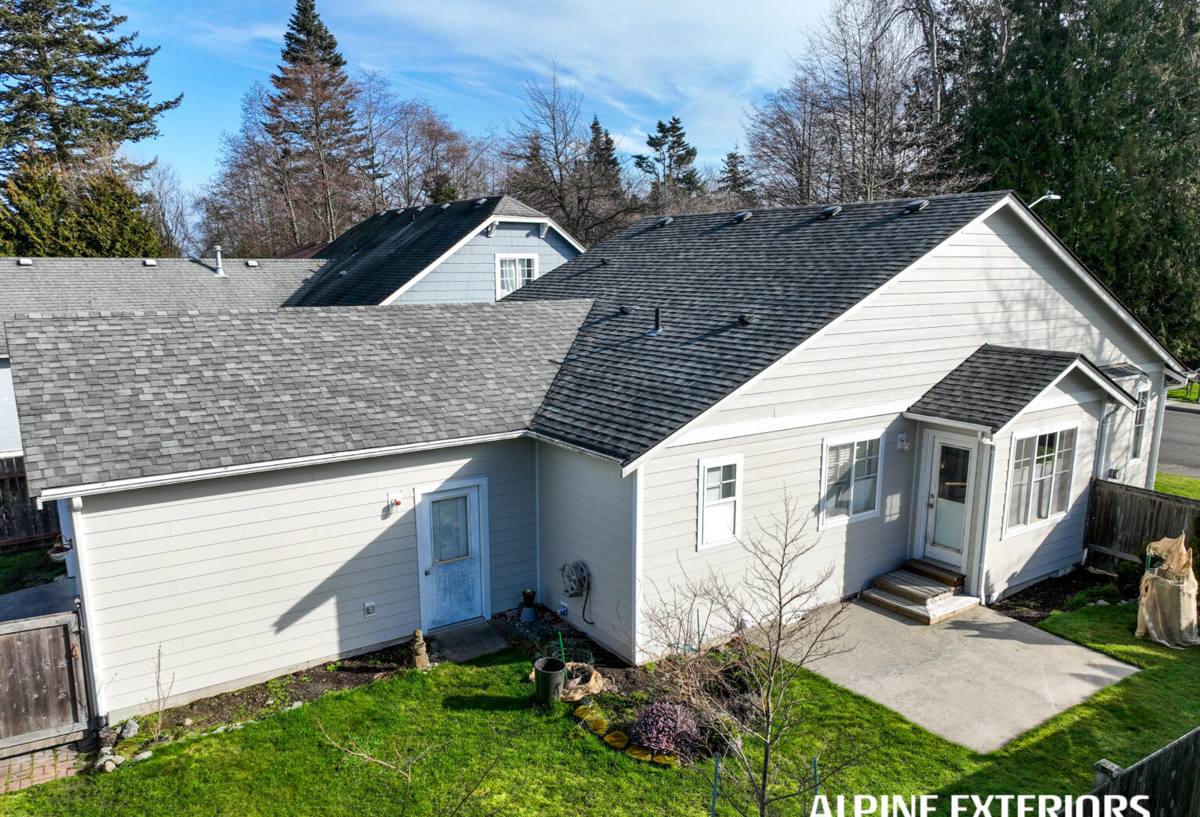
How Salt Air Actually Damages a Roof
Salt air doesn't rot shingles the way people sometimes assume. What it does is accelerate corrosion on every metal component of the roof system — nail heads, flashing, drip edge, vent caps, and any exposed fasteners. Once corrosion starts on a nail head under a shingle tab, that shingle loses its grip point and becomes vulnerable to wind lift. Once flashing starts to pit or thin, the seal at a roof-to-wall or roof-to-chimney junction stops shedding water the way it was designed to.
Where We Look First
- Fastener condition along ridge caps and hip lines, where wind exposure is highest
- Flashing at chimneys, skylights, and wall intersections for pitting or lifted edges
- Metal drip edge along eaves and rakes for early rust bleed-through
- Vent boots and pipe collars, since rubber and metal components corrode at different rates and separate over time
A repair that ignores metal condition and only replaces shingles will look fine for a season, then fail again at the same spot because the underlying hardware was never addressed.
Driving Rain Finds Every Weak Seam
Wind-driven rain off the water doesn't just fall straight down — it gets pushed under shingle laps, around vent penetrations, and into any gap in a step-flashing run. Roofs that would stay dry in a calm rain event start leaking during a storm because water is moving horizontally, not vertically, at the moment it hits the weak point.
This is why so many "mystery leaks" in this area trace back to flashing and transition details rather than the field of the roof itself. A homeowner sees a stain on the ceiling near an exterior wall and assumes the whole roof needs replacing, when the actual cause is a few inches of compromised step flashing or a chimney cricket that was never properly integrated. Diagnosing that correctly — instead of guessing — is most of the job.
Common Entry Points for Wind-Driven Rain
| Location | Why It's Vulnerable | Typical Repair |
|---|---|---|
| Chimney and wall flashing | Rigid metal meeting a moving roof plane; seals crack over time | Re-flash with proper step and counter-flashing, reseal with compatible sealant |
| Vent boots and pipe collars | Rubber collars UV-crack and pull away from pipe | Replace boot, check surrounding shingles for granule loss |
| Valleys | High water volume concentrates here during storms | Clear debris, inspect underlayment, re-lay metal or woven valley as needed |
| Eaves and rakes | Wind lift and ice/water membrane gaps | Reset drip edge, extend or repair underlayment membrane |
| Shingle nail lines | Corroded or under-driven fasteners lose grip | Re-nail correctly, replace compromised shingles |
Moss Isn't Cosmetic — It's a Moisture Problem
Whatcom County's marine climate keeps roofs damp for long stretches of the year, and shaded, north-facing, or tree-covered sections of a Peace Arch roof can stay wet almost continuously through fall, winter, and spring. Moss thrives in that environment, and once it establishes itself on a shingle roof, it does real damage: the root structure lifts shingle edges, holds water against the surface, and speeds up granule loss. A roof that's been fighting moss for a few seasons often has soft spots and premature wear well before its expected lifespan.
What a Proper Moss-Related Repair Involves
- Gentle removal — no pressure washing that can strip granules or drive water under shingles
- Inspection of the deck underneath heavy moss growth for soft spots or rot
- Replacing shingles that have already lifted or cracked from root intrusion
- Checking gutters and downspouts for moss debris that's backing up water at the eaves
- Recommending zinc or copper control strips where it makes sense for the roof's exposure
Treating moss as a one-time cosmetic clean rather than a maintenance cycle is one of the most common mistakes we see on repair calls in this area. Given how long the wet season runs here, it needs to be part of an ongoing plan, not a single visit.
Repair or Replace? How We Make That Call
Not every leak or worn section means a full roof replacement, and we don't default to recommending one. The decision usually comes down to how much of the roof's usable life is left and whether the damage is isolated or systemic.
| Factor | Favors Repair | Favors Replacement |
|---|---|---|
| Roof age | Under 15 years, materials still in reasonable shape | Approaching or past manufacturer lifespan |
| Damage extent | Isolated to one section, flashing, or penetration | Widespread granule loss, multiple leak points |
| Decking condition | Solid, no soft spots found during inspection | Rot or sagging found in multiple areas |
| Moss/algae history | Recent growth, minimal root damage | Years of untreated growth with shingle lifting throughout |
| Storm damage | Localized wind or debris impact | Widespread wind lift or impact damage |
We'll tell you honestly which category your roof falls into, including when a repair is the right call even if a replacement would be more profitable for us. A roof with good bones and an isolated problem doesn't need to come off.
Our Repair Process
Every repair starts the same way, regardless of how small the job looks from the ground.
1. Inspection
We get on the roof, not just look at it from the driveway. That means checking flashing, fasteners, vents, valleys, and the field of the roof — plus attic access where possible to check for moisture staining or ventilation issues that might be contributing to the problem.
2. Honest Diagnosis
We explain what we found, what's causing it, and what the actual fix requires — not just where the stain showed up inside the house. Leaks often travel before they show, so the visible damage and the source aren't always in the same spot.
3. Written Scope and Estimate
You get a clear description of the work and a price before anything happens. No surprise add-ons once we're already on the roof.
4. The Repair Itself
We match materials as closely as possible to your existing roof, use corrosion-resistant fasteners and flashing appropriate for this area's salt exposure, and follow manufacturer installation specs rather than shortcuts.
5. Follow-Up
We check our own work after the next significant rain where possible, and we're straightforward about warranty coverage on the repair.
Why It Matters to Hire a Crew That Already Works This Area
A roofer who mostly works drier, inland parts of Whatcom County can still do competent general repair work — but they may not automatically account for salt-air corrosion timelines, the length of the local moss season, or how wind-driven rain behaves near the water. Those aren't exotic problems, but they're specific enough that experience in this exact area shows up in the quality and durability of the repair.
Working in Peace Arch and the surrounding Blaine area regularly means we're not guessing at how a repair will hold up — we're seeing the same roofs, the same exposure conditions, and the same failure patterns often enough to know what actually lasts here versus what looks fine for a year and then fails again.
Simple Maintenance That Extends Repair Life
A good repair lasts longer with a little seasonal attention. This isn't a sales pitch for ongoing service contracts — it's just what keeps a roof in this climate from needing repeat work.
- Clear gutters and downspouts before the fall rains start, and again mid-winter if trees are nearby
- Keep overhanging branches trimmed back to reduce shade, debris buildup, and moss growth
- Have moss and algae growth addressed early rather than left to establish through another wet season
- After any significant windstorm, do a visual check from the ground for lifted or missing shingles
- Check attic ventilation periodically — poor airflow speeds up moisture damage from the inside
- Don't ignore small ceiling stains; they're almost always cheaper to fix as a repair than as a replacement
Get an Honest Look at Your Roof
If you're dealing with a leak, missing shingles, moss buildup, or just want a second opinion on whether a section of your roof needs repair, we're happy to take a look. We'll give you a straightforward assessment and a free, no-pressure estimate — fill out the form below and we'll get in touch.