 Blaine Siding
 Roofing Built for the Sumas Area's Weather
A roof in the Sumas area earns its keep. Homes here sit under a marine-influenced weather pattern that brings long stretches of driving rain, wind that funnels through the low ground near the Canadian border, and salt-tinged air drifting in off the water. On top of that, the shade and dampness that come with our Whatcom County winters set up a moss season that runs far longer than most homeowners expect — sometimes nine or ten months out of the year.
None of that is a problem for a roof that's built and installed correctly. It becomes a problem fast on a roof that's aging, poorly ventilated, or was installed with shortcuts. Moss lifts shingle edges and holds moisture against the deck. Wind-driven rain finds any weak flashing point and works it wider every season. Salt air speeds up the breakdown of exposed metal fasteners and trim. A new roof installation in this climate isn't just about covering the house — it's about choosing materials and details that hold up to this specific set of conditions, year after year.
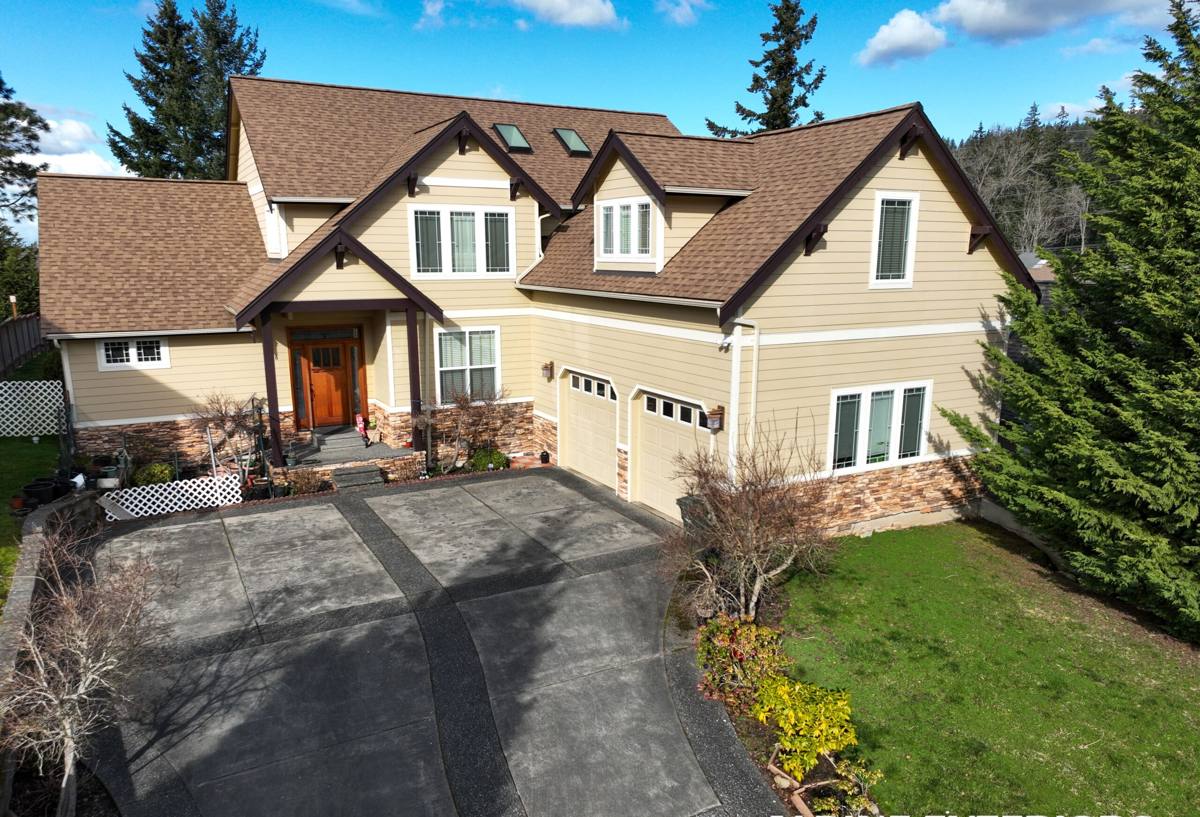
Signs a Sumas Home Needs Replacement, Not Another Repair
Roof repairs make sense when the damage is isolated and the rest of the roof still has useful life left. Replacement makes sense when the roof as a whole is past the point where patching is a good use of money. Some signs point clearly toward a full new roof:
- Granules collecting in the gutters or at the base of downspouts
- Moss returning within a season or two of cleaning, even after treatment
- Shingles that are cupping, curling, or cracking across large sections of the roof
- Soft or spongy spots when walking the roof, or sagging visible from the ground
- Daylight, water stains, or a musty smell in the attic
- Three or more repair calls in the last few years for different leaks
- An asphalt shingle roof that's 20-25+ years old, regardless of how it looks from the street
If a roof is showing two or more of these at once, a contractor who's honest with you will usually recommend planning for replacement rather than spending more on repairs that only buy a season or two.
What a Correct New Roof Installation Actually Involves
Tear-Off and Deck Inspection
A proper reroof starts with removing the old roofing down to the deck — not layering new shingles over old ones. That's the only way to actually see the plywood or plank sheathing underneath and catch soft, rotted, or delaminated sections before they're covered up again. Any bad decking gets cut out and replaced before anything new goes down.
Underlayment and Water Protection
The underlayment is the roof's backup layer — the thing standing between the house and water intrusion if wind ever drives rain up under a shingle tab. In a climate with as much sustained rain as ours, synthetic underlayment paired with self-adhering ice-and-water membrane at eaves, valleys, and roof penetrations isn't an upgrade, it's the baseline for doing the job right.
Flashing Details
Flashing around chimneys, skylights, vent pipes, and roof-to-wall transitions is where most leaks actually start on an otherwise sound roof. New flashing, properly step-flashed and sealed rather than reused or caulked over, is one of the details that separates a roof that lasts from one that doesn't.
Ventilation
A roof deck needs balanced intake and exhaust airflow to manage heat and moisture. Skip this step and you trap warm, moist air in the attic, which speeds up moss growth on the roof surface and can rot the deck from underneath — a failure mode that's completely invisible until it isn't.
Choosing the Right Roofing Material for a Sumas Home
There's no single "best" roofing material — there's the right material for a given roof pitch, budget, and how long the homeowner wants to go before thinking about it again. Here's how the common options stack up for this climate:
| Material | Typical Lifespan | How It Handles Our Climate |
|---|---|---|
| Architectural (dimensional) asphalt shingle | 25-30+ years | Good wind and rain resistance; wide color range; the most common choice locally |
| 3-tab asphalt shingle | 15-20 years | Lower upfront cost but lighter-duty in sustained wind and rain than architectural shingles |
| Standing seam metal | 40-60 years | Sheds rain and moss well due to smooth, steep surface; higher upfront cost |
| Cedar shake | 20-30 years with upkeep | Traditional look, but needs regular treatment and ventilation to resist rot and moss in a wet climate |
We don't push a single brand or product on every roof. Some materials that work fine in drier regions of the country carry a higher maintenance burden or more installation sensitivity here — not because they're bad products, but because our sustained rain and moss season punish any gaps in ventilation or moisture management much faster than a dry climate would. We'll walk through what fits your roof's pitch, your budget, and how much upkeep you actually want to sign up for.
Our New Roof Installation Process, Start to Finish
- On-site inspection and estimate. We look at the current roof, the attic, and the deck condition before quoting anything — no phone-guess pricing.
- Material selection. We go over the options in the table above based on your roof's pitch, sun/shade exposure, and budget.
- Permit and scheduling. We handle the permit paperwork through the appropriate local jurisdiction and give you a realistic install window.
- Property protection. Landscaping, siding, and windows get covered before tear-off begins.
- Tear-off and deck repair. Old roofing comes off completely; any soft or rotted decking is replaced and documented for you.
- Underlayment, flashing, and roofing installation. Installed in the order and to the specs described above.
- Cleanup. Magnetic sweep for nails, full debris haul-away.
- Final walkthrough. We go over the finished roof with you before calling the job done.
Moss, Moisture, and Long-Term Roof Health
Given how long the moss season runs here, we don't treat moss control as an afterthought. Proper balanced ventilation is the biggest factor — a roof deck that can breathe stays drier and inhospitable to moss growth in the first place. Zinc or copper strips near the ridge are a common, low-maintenance way to discourage regrowth on shaded roof sections without relying on chemical treatments that need to be reapplied every year. We also make sure gutters and downspouts tie in cleanly with the new roof's drip edge, since standing water at the eaves is one of the most common places moss and rot get started on an otherwise good roof.
What Affects the Cost of a New Roof in Sumas
We don't quote roof replacements over the phone, because the honest number depends on what we actually find on your roof and in your attic. The main factors that move the price up or down are:
| Factor | Why It Matters |
|---|---|
| Roof size and pitch | More surface area and steeper pitches take more material and labor time |
| Material chosen | Architectural shingle, metal, and cedar carry different material and install costs |
| Number of existing layers | Roofs with two layers of old shingles take longer to tear off and haul away |
| Deck condition | Rotted or soft sheathing needs replacement before new roofing goes on |
| Roof complexity | Valleys, dormers, skylights, and multiple penetrations add flashing work |
| Access | Steep sites or limited driveway/staging space can affect labor time |
A straightforward replacement on a simple, accessible roof will always cost less than one with a steep pitch, hidden deck damage, and a lot of flashing detail. The only way to get an accurate number is a real inspection, which is exactly what we start with.
Why a Crew That Already Works in Sumas Matters
Roofing crews that work regularly in Whatcom County know how our weather actually behaves on a roof over time — which details are worth the extra time and which shortcuts show up as callbacks two winters later. That local experience shows up in practical ways: familiarity with the permitting process for this area, established relationships with material suppliers so your job isn't waiting on a special order, and a crew that can respond quickly if storm damage needs an urgent look rather than a multi-week wait. A roof installed by a crew that understands this specific climate is a roof that's less likely to need attention again soon.
Permits, Warranty, and Timeline
Most new roof installations require a building permit, which we pull and manage as part of the job so you're not chasing paperwork. Materials carry manufacturer warranties that vary by product line, and we back our own installation work separately — we'll walk you through exactly what's covered and for how long before you sign anything. As for timeline, a typical single-family home reroof takes one to a few days of active work once the crew is on-site, weather permitting; we build in realistic scheduling rather than promising a date we can't hit in a rainy stretch.
If your roof is showing its age or you just want an honest read on where it stands, we're happy to take a look. Reach out for a free, no-pressure estimate using the form below — we'll tell you what we actually see, not just what sells a job.