 Blaine Siding
 Why Sandy Point's Waterfront Location Is Tough on Roofing
Sandy Point sits right up against the water, and that location cuts both ways. The views and the breeze are part of why people live there, but that same air carries salt off the water, the rain comes in sideways more often than it falls straight down, and the tree cover around many homes keeps roofs shaded and damp for long stretches of the year. A roof in this pocket of Whatcom County works harder than one a few miles inland in Blaine or Ferndale, and it shows up first in the roofing material, the flashing, and the fasteners — the parts that either hold up to that environment or start failing years ahead of schedule.
Metal roofing is a strong fit for this kind of exposure when it's specified and installed correctly. It's also a system where the details matter more than the marketing. The wrong panel, the wrong coating, or the wrong fastener in a salt-air environment can undo a lot of the durability people are paying for. This page covers what a metal roof needs to hold up in Sandy Point specifically, what a correct installation looks like, and how we approach these projects.
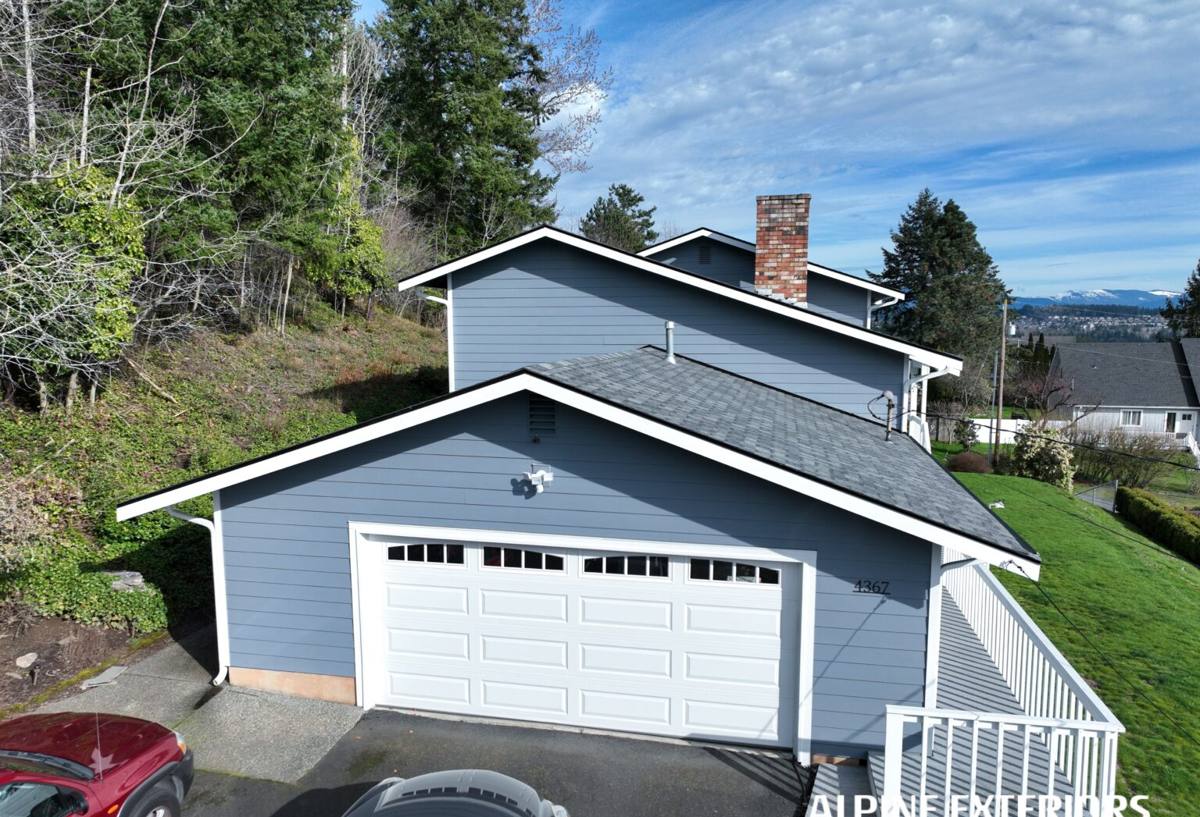
What a Roof Near This Shoreline Actually Has to Withstand
Salt Air and Corrosion
Airborne salt is corrosive to unprotected or poorly coated metal, and it doesn't take a direct ocean view for it to matter — wind carries it inland across yards and rooftops throughout the year. Fasteners, flashing, and panel edges are usually where corrosion shows up first, especially at cut edges where a factory coating has been exposed. This is the single biggest reason material selection matters more here than it would on a roof further from the water.
Driving Rain and Wind-Driven Water
Storms off the water tend to push rain sideways instead of letting it fall straight down, which means water finds its way into gaps that would stay dry in a calmer rain. Valleys, roof-to-wall transitions, chimney flashing, and any roof penetration are the places that take the brunt of it. A roof that's fine in a light rain can still leak in a wind-driven storm if the flashing details weren't built for that kind of water pressure.
Moss, Shade, and Organic Growth
Whatcom County's long wet season, combined with tree cover common around Sandy Point properties, gives moss and algae plenty of time to establish on north-facing slopes and shaded valleys. Moss holds moisture against a roof surface and, on organic roofing materials, can work into the surface itself. It's a slower threat than a leak, but it's a steady one, and it's part of why the roofing material and slope matter as much as the workmanship.
Why Metal Roofing Fits This Environment
Metal roofing isn't the only durable option, but it addresses the three issues above better than most alternatives when it's specified correctly:
- A smooth, non-porous metal surface gives moss and algae far less to hold onto than a textured or organic material, which cuts down on the buildup that keeps a roof damp.
- Steeper-pitch metal panels shed wind-driven rain quickly instead of absorbing it, which matters directly during Sandy Point's harder storms.
- A correctly coated and fastened metal system is built to resist salt-air corrosion for decades rather than years, when the coating and fastener choices match the exposure.
- Metal roofing carries a long service life with comparatively low maintenance, which matters on a shoreline property where re-roofing access and cost add up.
None of that is automatic, though. It depends on choosing the right panel system and coating for a marine environment, and installing it with flashing and ventilation details built for heavy, wind-driven rain — not just a standard installation dropped onto a coastal home.
Choosing the Right Metal Roofing System
Not every metal roofing product performs the same way this close to the water. The table below outlines how the common options compare for a Sandy Point property specifically.
| System | Salt-Air Performance | Maintenance | Best Fit |
|---|---|---|---|
| Standing seam (concealed fastener) | Strong — no exposed fastener heads for salt to attack | Low | Full waterfront exposure, long-term ownership |
| Exposed-fastener panel | Moderate — depends on fastener quality and washer condition over time | Moderate — fasteners may need attention over the roof's life | Secondary structures, budget-conscious projects |
| Stone-coated steel shingle | Good, with a correctly rated coating | Low to moderate | Homes wanting a traditional shingle look with metal's durability |
Coatings and Fasteners That Matter in a Marine Environment
For a property this close to the water, we lean toward panel finishes and substrates rated for coastal or marine exposure rather than a standard inland-grade coating. Aluminum is naturally corrosion-resistant and is often our recommendation directly on the waterfront, since it doesn't rely on a coating to keep rust from starting. Coated steel systems can also perform well, but the coating quality and edge treatment matter — a premium PVDF (often sold as Kynar) finish holds up to salt air noticeably longer than a basic paint system. Fasteners matter just as much as the panel: we use stainless steel or coastal-rated fasteners and avoid pairing metals that corrode each other galvanically, which is a detail that's easy to skip and expensive to fix later. This isn't about steering people away from a particular manufacturer — it's about matching the coating and hardware to what this specific location will put the roof through.
What a Correct Metal Roof Installation Involves
The panel is only part of the system. On a Sandy Point roof, the underlayment, flashing, and ventilation are doing as much work as the metal itself:
- Underlayment: A synthetic or self-adhered underlayment rated for high-wind, high-moisture climates, not a minimal felt layer, gives the roof a real second line of defense if wind-driven rain gets past the panel seams.
- Flashing: Valleys, wall transitions, chimneys, and any roof penetration need flashing sized and lapped for sideways rain, not just vertical runoff. This is where most metal roof leaks actually originate, and it's the detail that separates a correct installation from a fast one.
- Ventilation: Balanced intake and exhaust ventilation keeps moisture from condensing under the roof deck, which matters in a climate where the roof stays damp and shaded for long stretches.
- Fastening and expansion: Metal panels expand and contract with temperature swings, and fastening patterns need to allow for that movement so panels don't buckle or work fasteners loose over time.
Our Process for Sandy Point Metal Roofing Projects
- On-site assessment. We look at the existing roof deck, current flashing conditions, slope, shading, and how exposed the property is to wind and salt off the water, so the system we recommend actually matches the site.
- Material and system selection. Based on that assessment, we walk through panel type, coating, and color options with realistic trade-offs — not just the option with the best up-front price.
- Deck and flashing prep. We check the roof deck condition and repair or replace anything compromised before a new roof goes over it, since a metal roof over a bad deck just hides the problem.
- Installation. Underlayment, panels, flashing, and ventilation are installed to match the exposure this property actually sees, with attention to the seams, transitions, and penetrations that tend to fail first in coastal wind and rain.
- Final walkthrough. We go over the finished roof with the homeowner, including what maintenance — if any — the system will need going forward.
Maintaining a Metal Roof in a Salt-Air, Moss-Prone Climate
One of metal roofing's real advantages is how little ongoing maintenance it needs compared to asphalt or wood in this climate. That said, a shoreline property still benefits from occasional attention:
- Clear debris from valleys and gutters a couple of times a year, especially after fall leaf drop, so water has a clear path off the roof.
- Check shaded, north-facing areas periodically for early moss or algae growth and address it before it builds up.
- Have flashing around chimneys, skylights, and wall transitions checked periodically, since these are the points most likely to need attention over the life of the roof.
- Rinse accumulated salt residue off the roof surface occasionally if the property sees heavy direct spray, which helps protect the coating over the long run.
- After major windstorms, a quick visual check for lifted panel edges or loosened fasteners catches small issues before they become leaks.
Cost Factors for Metal Roofing in Sandy Point
Metal roofing costs more up front than asphalt shingles, and the total depends on several factors specific to the property and the system chosen. We give firm numbers only after seeing the roof in person, but the table below outlines what typically moves the price.
| Factor | Why It Matters |
|---|---|
| Panel system | Standing seam runs higher than exposed-fastener panels due to labor and material differences |
| Coating and substrate | Marine-grade coatings and aluminum cost more than standard inland-grade finishes, but last longer in this exposure |
| Roof complexity | Valleys, dormers, and multiple roof planes add labor and flashing work |
| Tear-off vs. overlay | Removing an existing roof and repairing the deck adds cost but is often necessary for a correct installation |
| Access and site conditions | Waterfront lot layout, steep pitch, or limited equipment access can affect labor time |
Why Local Experience in Sandy Point Matters
A roofing system that's correct for a subdivision a few miles inland isn't automatically correct for a property sitting right on the water. Coating selection, fastener choice, flashing details, and even panel orientation can shift once salt air and wind-driven rain are part of the equation. Crews who work this stretch of Whatcom County regularly get to see how different systems actually hold up here over years, not just how they're rated on a spec sheet — and that experience shapes which recommendations we stand behind for a Sandy Point home versus a roof further from the shoreline.
If you're weighing a metal roof for a Sandy Point property, we're happy to walk the roof with you, talk through what this specific site needs, and put together a straightforward, no-pressure estimate using the form below.