 Blaine Siding
 Windows Built for Lynden's Weather, Not Just the Showroom
Lynden sits in a part of Whatcom County that gets more rain-on-glass days than most homeowners realize until they're staring at a fogged-up double pane or a windowsill gone soft. We work on homes throughout this area regularly, and the pattern is consistent: windows here don't usually fail because of one dramatic event. They fail slowly, from repeated exposure to driving rain, damp shoulder seasons, and long stretches of moss-friendly humidity that never quite dries out between storms. A window replacement done right in this region has to account for that pattern from the first measurement to the last bead of caulk.
This page is specifically about window replacement for homes in and around Lynden — what the local climate does to windows over time, what a correct installation actually involves, and why the details matter more here than they would in a drier climate.
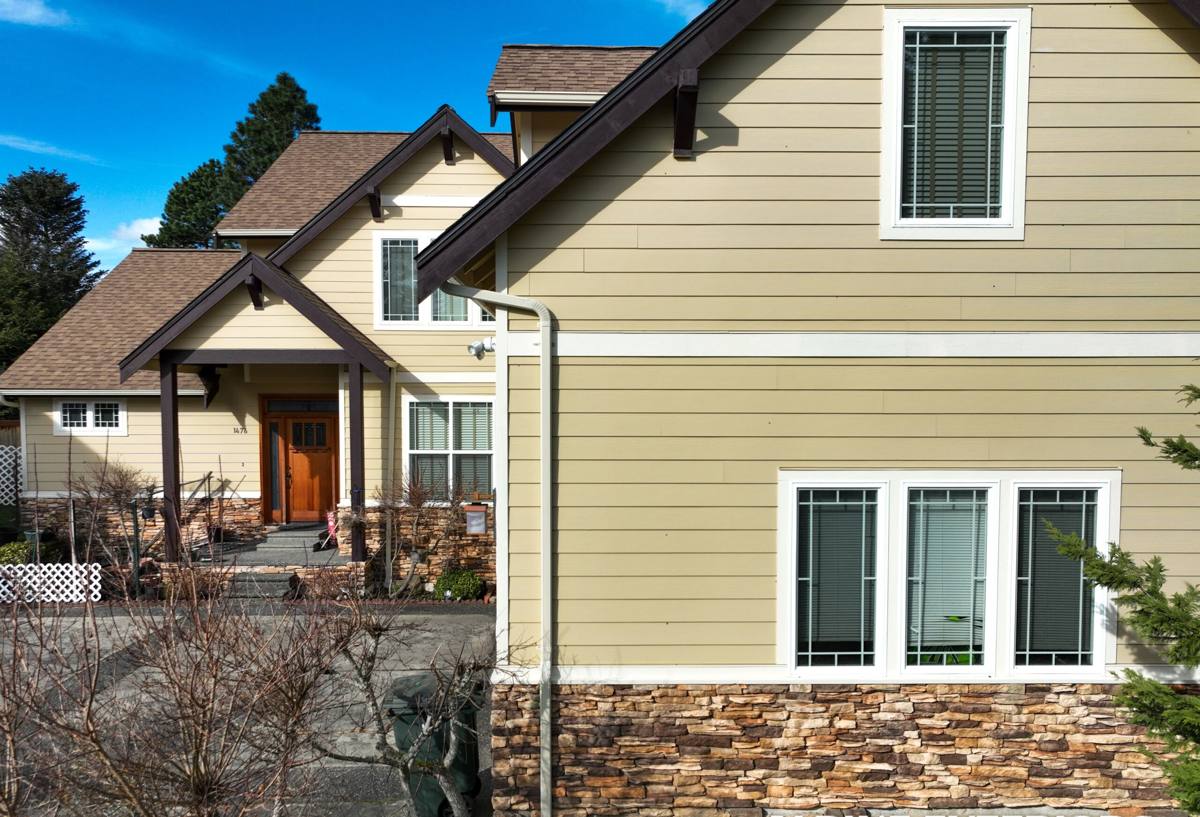
What Whatcom County's Climate Does to Windows Over Time
Driving Rain and Wind-Driven Moisture
Rain that falls straight down is easy on a building. Rain that gets pushed sideways by wind is a different problem — it finds gaps, works its way behind trim, and tests every seal a window has. Homes in this part of Whatcom County see enough wind-driven rain over a typical winter that any weak point in flashing or sealant eventually gets found. Once water gets behind a window frame, it doesn't evaporate quickly in our climate; it sits, and that's when rot starts.
A Long Moss and Mildew Season
The same conditions that keep roofs and siding green with moss for months at a time also keep window sills, sashes, and exterior trim damp longer than they should be. Wood components that stay wet for extended periods break down faster, and older vinyl or aluminum windows with degraded seals can trap moisture between panes, leading to the cloudy or fogged look that no amount of cleaning will fix.
Marine-Influenced Air
Whatcom County's proximity to Puget Sound and the Strait of Georgia means the regional air carries more salt and moisture than an inland climate would. Metal hardware, screen frames, and lower-quality fasteners corrode faster under this kind of exposure. It's a slower, quieter form of wear than wind damage, but it adds up over the years and is worth factoring into material choices.
Signs a Lynden Home Needs Window Replacement (Not Just Repair)
Not every window problem calls for full replacement. But when several of these show up together, repair is usually just delaying the inevitable and spending money that could have gone toward a permanent fix:
- Fogging or a gray haze between panes of a double- or triple-pane window (a sign the seal has failed and the gas fill is gone)
- Wood trim or sill that's soft, spongy, or visibly darkened near the window frame
- Drafts you can feel with your hand near the frame even when the window is fully latched
- Windows that are difficult to open, close, or lock — often a sign the frame has warped or shifted
- Visible daylight around the frame edges from outside
- A noticeable jump in heating costs without other explanation
- Condensation forming on the inside of the glass regularly, even in moderate weather
- Paint that keeps peeling or bubbling near the window regardless of how often it's redone
What a Correct Window Replacement Job Actually Involves
Window replacement looks simple from the outside — old window out, new window in — but the steps that actually determine whether it lasts are mostly invisible once the job is done.
Removal and Structural Inspection
Before anything new goes in, we remove the old unit and check the rough opening for hidden damage. This is often where problems get found that the homeowner didn't know about — soft framing, old water staining, or insulation that's been wet and compressed for years. In a climate like ours, skipping this step means there's a real chance of installing a brand-new window into a compromised opening, which defeats the purpose.
Flashing and Water Management
This is the single most important part of the job for a wet climate, and it's the part that's easiest to shortcut if you're not paying attention. Proper flashing directs any water that gets past the exterior surface back out and away from the framing, rather than letting it pool at the sill. We integrate flashing with the existing weather-resistive barrier so water has a continuous path out, not a dead end behind the wall.
Insulation and Air Sealing
The gap between the new window frame and the rough opening gets filled with an appropriate low-expansion foam or backer rod and sealant — never just stuffed with fiberglass and hoped for the best. Poor sealing here is a common cause of both drafts and long-term moisture problems, since gaps let humid air condense inside the wall cavity.
Trim, Caulk, and Finish Work
Exterior trim gets resealed with a caulk rated for exterior use and movement, and interior trim gets reinstalled or replaced cleanly. This step affects both the finished look and the window's actual weather performance — a gap in the caulk line is a gap water will eventually find.
Choosing the Right Window for a Lynden Home
There's no single "best" window for every house — it depends on your home's age, exposure, and budget. Here's how the common frame materials compare for this specific climate:
| Frame Material | How It Handles Our Climate | Maintenance | Typical Trade-Off |
|---|---|---|---|
| Vinyl | Good moisture resistance, won't rot; performance depends heavily on installation quality | Low — occasional cleaning | Less rigid than fiberglass in very large openings |
| Fiberglass | Excellent stability in temperature and moisture swings, holds paint well | Low | Higher upfront cost than vinyl |
| Aluminum | Durable but conducts cold and can condense more in our damp winters | Moderate — watch for corrosion near marine air | Best reserved for specific architectural styles, not general use |
| Wood / Wood-clad | Attractive, but bare wood is the most vulnerable to our rain and moss season | High — regular repainting or resealing needed | Best suited to homes where the maintenance is part of the plan |
For most Lynden homes, we lean toward vinyl or fiberglass for the combination of moisture resistance and lower long-term upkeep. That said, if a home's architecture calls for a wood-clad look, we'll say so honestly and talk through what the maintenance commitment actually looks like rather than talk anyone out of a style they want.
Our Process, Start to Finish
- Free on-site estimate — we walk the home, look at each window in question, and check for signs of hidden moisture or framing issues before quoting anything.
- Honest recommendation — repair versus replacement, and which frame material actually fits the home and budget, not just what's easiest to sell.
- Scheduling around the weather — we plan installation days with Whatcom County's forecast in mind, since an open rough opening during a rainstorm is exactly the kind of exposure we're trying to prevent.
- Removal and inspection — old windows come out, and the opening gets checked before anything new goes in.
- Installation with proper flashing and sealing — the steps described above, done in order, not skipped for speed.
- Final walkthrough — we test operation, check seals, and confirm everything closes, locks, and seals the way it should before we consider the job done.
Cost Factors for Window Replacement
Every home is different, but these are the variables that most often move the price up or down. We'll go through all of these specifically for your home during the estimate — this table is meant to help you understand what you're paying for, not to replace an actual quote.
| Factor | Why It Matters |
|---|---|
| Frame material chosen | Vinyl, fiberglass, aluminum, and wood-clad all carry different material costs |
| Number and size of windows | Larger openings and specialty shapes cost more to fabricate and install |
| Condition of the rough opening | Hidden rot or framing repair adds labor beyond the window itself |
| Glass package | Double-pane versus triple-pane, and low-E coatings, affect both cost and energy performance |
| Full-frame versus insert replacement | Insert replacement (into an existing, sound frame) is generally less involved than full-frame tear-out |
| Trim and finish work required | Matching existing interior or exterior trim can add time and material |
Why It Matters to Hire a Crew That Already Works This Area
A window that's technically installed correctly on paper can still underperform if it wasn't installed with this region's specific weather patterns in mind. A crew that regularly works homes in and around Lynden already knows which directions catch the worst of the wind-driven rain, how long moss season typically runs, and where marine air tends to accelerate wear on hardware and fasteners. That's not something you can fully account for by following a generic installation manual — it comes from having done the work here, repeatedly, and seen what holds up and what doesn't over several winters.
We also know that Whatcom County homes span a wide range of ages and construction styles, from older farmhouses to newer builds, and each brings different rough-opening quirks. Treating every job the same way is how corners get cut without anyone noticing until the next storm.
Permits, Timing, and Local Considerations
Window replacement projects can be subject to local permitting depending on the scope of work, particularly if the rough opening size is changing or if the home is in a jurisdiction with specific energy code requirements. We handle this conversation upfront during the estimate so there are no surprises. We also try to avoid scheduling installations during the wettest stretches of the year when it's practical to do so, since minimizing the time a home has an open exterior wall is one of the simplest ways to protect it during the work itself.
If you're planning window replacement for a home in Lynden or anywhere nearby in Whatcom County, we're happy to come take a look and give you a straightforward, no-pressure estimate — just fill out the form below.