 Blaine Siding
 Storm Damage in Lynden: What Our Climate Actually Does to Roofs
Lynden sits far enough inland from the Strait of Georgia that people sometimes assume it's sheltered from the weather that batters the coast. It isn't, not really. Whatcom County storms move through the whole region, and Lynden gets the same driving rain, the same windstorms rolling off the water, and enough salt-laden air carried inland on winter systems to matter for roofing materials over time. Add a moss season that runs longer here than in drier parts of the state, and you have a combination that wears on roofs in ways that aren't always obvious from the ground.
Storm damage isn't always a dramatic event. Sometimes it's a single hard blow that lifts a run of shingles or cracks a ridge cap. More often, it's cumulative — wind-driven rain finding a weak seam, moss holding moisture against a roof deck for months, freeze-thaw cycles working a small crack into a real leak. By the time water shows up on a ceiling, the damage that caused it may have started a season or two earlier.
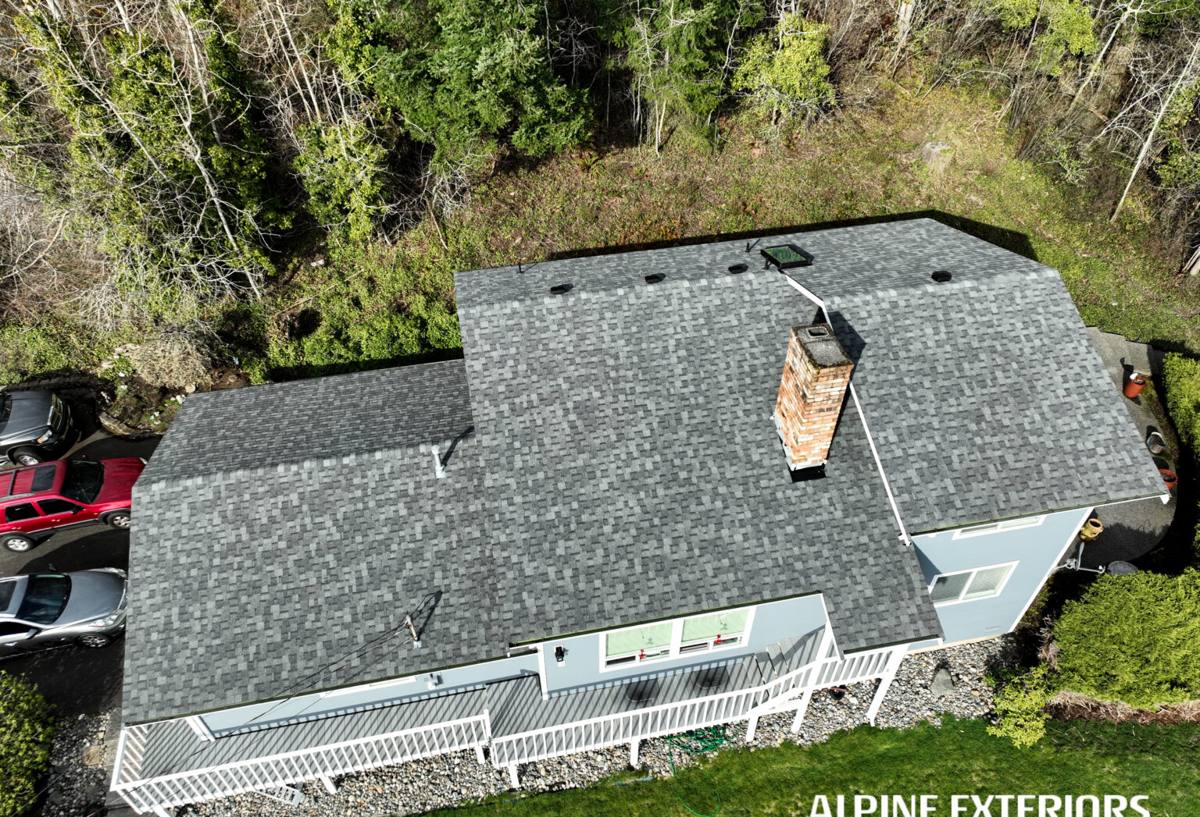
Signs Your Lynden Roof Has Storm Damage
Some damage is easy to spot after a windstorm. Other damage hides until it's a bigger problem. Homeowners in Lynden should know both categories.
Obvious, right-after-the-storm signs
- Shingles or shakes on the ground, in gutters, or lying on the lawn
- Visibly lifted, curled, or torn shingle tabs
- A branch or debris strike with a dented, cracked, or punctured spot
- Loose or missing ridge cap pieces along the roof peak
- Gutters pulled away from the fascia or full of granules
Slower, easy-to-miss signs
- A damp smell in the attic that wasn't there before
- Discoloration or a soft spot on an interior ceiling
- Moss buildup thickening at roof valleys and north-facing slopes
- Granule loss showing up in downspout runoff
- Daylight visible through the attic roof deck
If any of the second list applies, it's worth a look even without a recent storm — moss and slow leaks don't wait for wind to do their work.
What a Correct Storm Damage Repair Actually Involves
A repair that just covers the visible hole is not a finished repair. Wind and rain damage rarely stays contained to the spot you can see from the driveway. A correct repair starts with figuring out how far the damage actually spreads, then addresses the roofing system, not just the surface.
What we check before we touch anything
- The underlayment beneath the affected shingles or shakes, which is often compromised even when the top layer looks intact
- Flashing around vents, chimneys, and valleys, since wind can work flashing loose without dislodging any shingles
- The roof deck itself, checking for soft or delaminated sheathing where water has been sitting
- Fastener condition on surrounding shingles, since a storm that damaged one area often loosened neighboring material too
- Gutter and downspout attachment, which affects how water leaves the roof going forward
Skipping any of these steps is how a homeowner ends up paying for the same repair twice — once now, and again in a year or two when the underlying issue resurfaces.
Our Repair Process, Start to Finish
1. Assessment
We inspect the roof in person, from the ground and, where it's safe to do so, up close. We're honest about what we find — including when a repair is genuinely all that's needed and a full replacement isn't.
2. Documentation
We photograph damage clearly enough to support an insurance claim if you're filing one. Good documentation at this stage saves back-and-forth with an adjuster later.
3. A written scope and estimate
You get a plain-English explanation of what's damaged, what needs to happen, and a real cost range before any work starts. No surprise add-ons mid-job.
4. The repair itself
Matching materials as closely as possible to your existing roof, replacing damaged underlayment and decking where needed, resealing flashing correctly, and re-fastening to manufacturer spec — not just nailing a patch over the gap.
5. Final walkthrough
We show you what was done and why, and flag anything else on the roof worth keeping an eye on, even if it's not part of this repair.
Repair vs. Replacement: How We Make the Call
Not every storm-damaged roof needs to be replaced, and not every damaged roof can be safely patched. The honest answer depends on the roof's age, how widespread the damage is, and what's underneath the surface layer.
| Factor | Leans toward repair | Leans toward replacement |
|---|---|---|
| Roof age | Under 12–15 years, otherwise sound | Nearing or past expected service life |
| Damage extent | Isolated to one section or slope | Spread across multiple slopes or the whole roof |
| Deck condition | Solid, dry sheathing under the damage | Soft, delaminated, or rotted sheathing |
| Material match | Matching shingles/shakes still available | Discontinued product, visible mismatch |
| Prior repair history | First real repair on this roof | Multiple past patches in different spots |
We'll tell you plainly which side of that table your roof falls on, and why. If a repair genuinely solves the problem, that's what we'll recommend — a roof doesn't need to be new to be sound.
Materials and Why They Matter Here
What we use to repair a Lynden roof depends on what's already on it, but the region's moisture and moss exposure shape some of our defaults.
- Asphalt composition shingles — the most common material we repair; we match weight and profile as closely as possible so a repaired section doesn't stand out or age differently than the rest of the roof.
- Cedar shakes — common on older Lynden homes; these need extra attention to ventilation and moisture behavior since shakes hold dampness differently than composition shingles, and moss takes hold on them faster without proper airflow underneath.
- Metal roofing sections — less common as a full roof here but occasionally used on additions or outbuildings; repairs focus on fastener integrity and sealant at penetrations, since that's where wind-driven rain finds a way in.
- Underlayment and ice-and-water shield — we upgrade this during any repair that opens up the deck, since it's cheap insurance against the next storm and often wasn't installed to current standards on older roofs.
We don't push a product swap during a repair just because it's available. If your roof is asphalt shingle, we repair it with asphalt shingle unless there's a real, explainable reason to do otherwise — matching what's there is usually the right call for both appearance and cost.
Insurance Claims and Storm Damage
Many storm repairs in this area involve homeowners insurance. A few things are worth knowing going in:
- Most policies distinguish between sudden storm damage and gradual wear — a claim goes smoother when the damage is clearly tied to a specific weather event.
- Adjusters look for consistent documentation. Photos taken promptly, before any cleanup, strengthen a claim.
- We can provide a written estimate and damage assessment for your insurer, but the claim itself is between you and your insurance company — we're not a public adjuster and won't represent ourselves as one.
- Not every repair needs to go through insurance. For smaller, isolated damage, it's sometimes simpler and faster to handle it directly, especially factoring in your deductible.
Preventing the Next Storm From Doing the Same Damage
A repair is a good moment to address the conditions that made the damage worse than it needed to be. A few things go a long way in this climate:
- Clear moss from valleys and north-facing slopes before it thickens into a moisture-holding mat
- Keep gutters and downspouts flowing freely so wind-driven rain has somewhere to go
- Trim back branches that overhang the roofline, since falling limbs are a common cause of storm damage here
- Check attic ventilation — poor airflow traps moisture and accelerates deck rot from the inside
- Have loose flashing or lifted shingle tabs resealed before the next windstorm finds them
None of this prevents every storm from causing any damage. It does reduce how much a given storm costs you, and it's the difference between a five-year-old roof that's held up well and one that's already needed three separate repairs.
Why a Crew That Already Works Lynden Matters
Storm damage repair isn't just about ladder skills and shingle knowledge — it's about knowing how a specific area's weather behaves. A crew that regularly works Lynden and the surrounding parts of Whatcom County has already seen how moss builds up on local roof pitches, which valleys hold water longest, and how salt-tinged winter storms off the water tend to hit roofs here compared to drier inland regions. That local pattern recognition means fewer guesses and a repair that accounts for what's actually likely to happen to your roof next winter, not a generic checklist.
It also means faster response after a storm. When a windstorm moves through the county, roofs across the area get hit at once, and a local crew already scheduling in Lynden can get to you sooner than one dispatching from farther away. Quick response matters most in the first days after damage occurs, when an exposed roof deck is most vulnerable to the next round of rain.
Get an Honest Assessment
If your Lynden roof has visible storm damage, or you're just not sure after a windy week, we're glad to take a look. We'll give you a straight answer about what's actually wrong, what it takes to fix it correctly, and whether a repair or something more is the right call — with no pressure either way. Reach out for a free estimate using the form below.