 Blaine Siding
 Lynden Homes Face a Specific Kind of Weather
Lynden sits a little inland from Blaine, but it doesn't escape the marine air that defines this corner of Whatcom County. Moist Pacific air moves across the county steadily, and Lynden gets its own share of driving rain, long damp stretches, and the kind of shaded, slow-to-dry conditions that let moss and algae take hold on anything left wet too long. Add the swing between summer heat and winter frost, and siding here is being asked to do more than look good — it has to shed water reliably, resist rot at the joints and bottom edges, and hold its color and finish through a lot of gray months every year.
We're a Blaine-based crew, and Lynden is part of the territory we work in regularly. That means we've watched how houses in this specific area actually age — which walls collect moss first, which corners take the worst wind-driven rain, and which siding materials hold up versus which ones start showing problems within just a few years of installation.
Why We Only Install James Hardie Fiber Cement
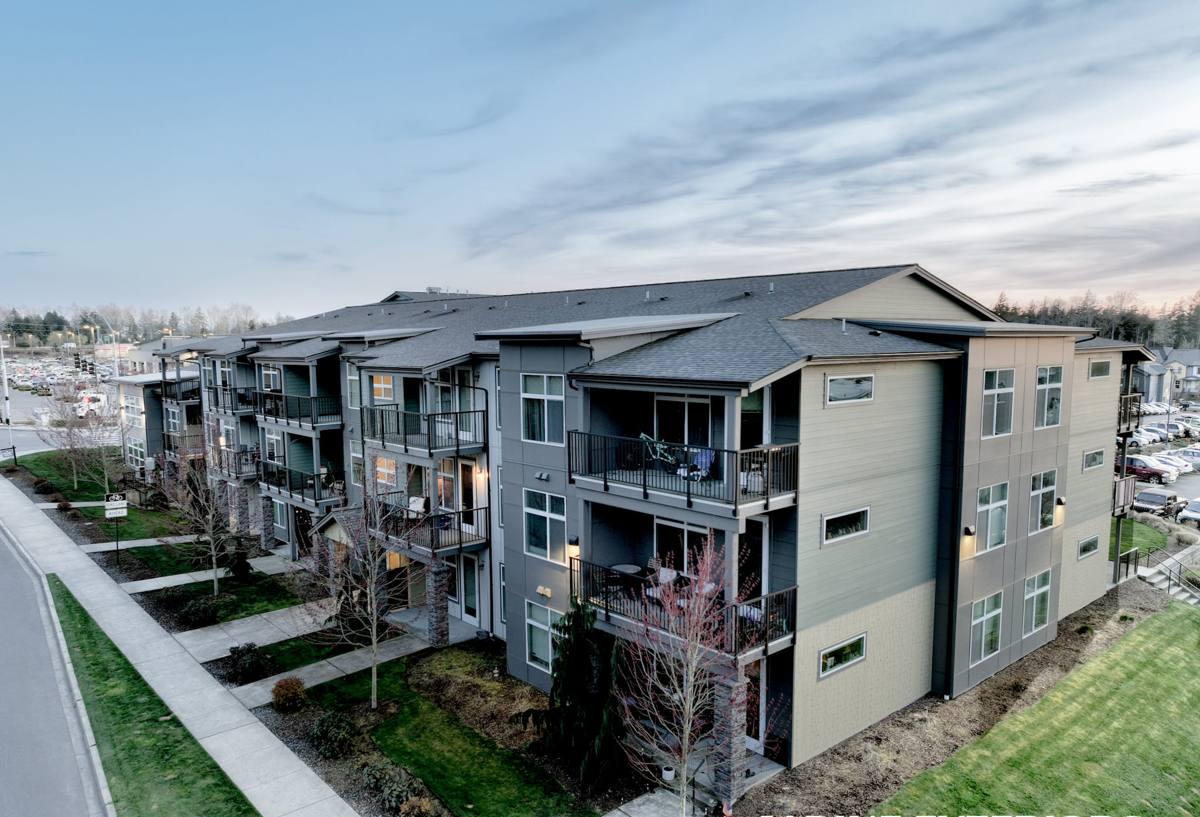
We don't install vinyl, engineered wood siding, cedar, or the other fiber cement brands on the market. That's a deliberate standard, not a lack of options. James Hardie's fiber cement is non-combustible, dimensionally stable in the kind of moisture swings Whatcom County sees, and it comes with a factory-applied ColorPlus finish that's baked on under controlled conditions rather than field-painted on site. Hardie also engineers specific product lines (their HZ5 designation, for example) for regions with heavy rain and moisture exposure like ours, which matters more here than in a dry climate.
None of this means other materials are junk — vinyl is inexpensive and low-maintenance in the sense that it doesn't need painting, wood siding has a look some homeowners genuinely prefer, and engineered wood products have improved over the years. But each of those comes with a real trade-off in a climate like this one: vinyl can warp and fade and doesn't stop moss the way a harder, denser material does; wood needs consistent maintenance to keep moisture out of end grain and joints; engineered wood siding is sensitive to installation details and edge sealing in ways that show up as swelling or delamination if any step gets skipped. We standardized on Hardie because it holds up to this specific weather with the least amount of homeowner maintenance and the fewest ways for a small installation mistake to turn into a bigger problem five years later.
What a Correct Siding Installation Actually Involves
Tear-off and what's underneath
A siding job is only as good as what's behind it. Before any new siding goes up, we pull the old material off and inspect the sheathing underneath for soft spots, existing rot, or water staining — especially around windows, at wall penetrations, and near the ground line where splashback does the most damage over time. Any damaged sheathing gets replaced before we move forward; installing new siding over a compromised wall just hides the problem.
Weather-resistive barrier and flashing
A weather-resistive barrier goes over the sheathing, and flashing gets installed at every window, door, and horizontal transition. This is the layer that actually keeps bulk water out of the wall assembly — the siding itself sheds most of the rain, but flashing and the barrier behind it are what handle the water that gets past the surface, which happens more often than people assume in a climate with this much driving rain.
Fastening, gapping, and clearances to spec
James Hardie publishes specific installation requirements — fastener type and spacing, minimum gaps at butt joints, ground clearance, and clearance from roof lines and decks. These specs exist because fiber cement expands and contracts with moisture and temperature, and because ground-level moisture is the single biggest cause of premature siding failure. Skipping or guessing on these details is the most common way a fiber cement installation underperforms, and it's usually invisible until years later.
Protecting the factory finish
Because the ColorPlus finish is applied at the factory, our job on-site is to protect it, not touch it up. That means proper cutting technique to avoid chipping edges, touch-up product used correctly and sparingly where a cut edge is exposed, and careful handling so the finish that's supposed to last for years isn't compromised during installation.
Our Process for a Lynden Siding Installation
- On-site assessment: we look at your current siding, the condition of the sheathing where visible, drainage around the foundation, and any trouble spots specific to your home's exposure.
- Written estimate: a clear scope of work and price, with the product line and color specified — no vague allowances.
- Prep and tear-off: removal of existing siding, sheathing inspection and repair, and correction of any moisture damage found.
- Barrier, flashing, and trim: the weather-resistive barrier, all flashing at penetrations, and trim installed to manufacturer spec.
- Siding installation: Hardie panels or lap siding installed with correct fastening, gapping, and clearances throughout.
- Final walkthrough: we go over the finished job with you before we consider it done.
Comparing Siding Materials for This Climate
| Material | Moisture & Moss Resistance | Maintenance | Typical Lifespan |
|---|---|---|---|
| James Hardie Fiber Cement | Strong — dense, moisture-stable material engineered for wet climates | Occasional cleaning; no repainting needed with ColorPlus finish | Multiple decades when installed to spec |
| Vinyl | Moderate — can trap moisture behind panels; moss and mildew show on the surface | Low, but panels can warp, fade, or crack over time | Variable, often shorter in harsh coastal exposure |
| Cedar / Wood | Weak without diligent upkeep — vulnerable at end grain and joints | High — regular painting or staining and sealing required | Depends heavily on maintenance consistency |
| Engineered Wood (e.g. LP SmartSide) | Moderate — sensitive to edge sealing and installation detail | Moderate; touch-up and caulking upkeep at joints | Shorter if any moisture gets behind the panel |
Signs Lynden Homeowners Should Watch For
A lot of siding problems in this area develop slowly and get dismissed as cosmetic until they aren't. Watch for persistent moss or dark streaking that keeps coming back after cleaning, soft or spongy spots when you press on siding near the ground or under windows, visible warping or gaps at panel joints, and paint or finish that's peeling or bubbling rather than just fading. Any of these can mean moisture has already gotten behind the siding, and the fix is rarely just cosmetic once that's happened.
What Drives the Cost of a Siding Installation
Every home is different, so we don't publish flat pricing, but a few factors consistently move the number: the total square footage and how many stories the home is, how much of the existing siding and any damaged sheathing needs to come off first, the complexity of the trim, corners, and window and door openings, and which Hardie product line and profile you choose. A home with straightforward walls and sound sheathing underneath will cost less than one with extensive tear-off and repair needed first — which is exactly why the on-site assessment matters before we quote anything.
Why Hiring a Crew That Already Works in Lynden Matters
Siding installation isn't just a product — it's a set of judgment calls about flashing, clearances, and sequencing that get made on-site, house by house. A crew that regularly works Lynden and the surrounding Blaine area already knows what this climate does to a wall over time, has already seen where the common trouble spots are on homes built the way they're built out here, and isn't learning the region's weather behavior on your project. That local repetition is what turns a manufacturer's spec sheet into a siding job that actually performs for decades instead of just looking right on installation day.
A Homeowner's Checklist Before You Hire
- Ask what siding brand and product line will be installed, and why — not just "fiber cement" in general.
- Ask whether sheathing will be inspected and how damage found underneath is handled and priced.
- Confirm flashing details at windows, doors, and horizontal joints are part of the written scope.
- Ask about fastener type, gapping, and ground clearance — and whether they follow the manufacturer's published install spec.
- Get the estimate in writing with product, color, and scope clearly listed, not a vague allowance.
- Ask how the crew protects the factory finish during cutting and installation.
If your Lynden home needs new siding, or you're just trying to figure out what shape your current siding is really in, we're happy to take a look and give you a straightforward, no-pressure estimate. Use the form below to get started.