 Blaine Siding
 James Hardie Siding, Installed Right, for Everson Homes
Everson sits inland from the Salish Sea along the Nooksack River, in the farmland and foothill stretch of Whatcom County east of Lynden and Ferndale. It doesn't take the direct salt spray a Birch Bay or Drayton Harbor waterfront home does, but this county's marine-influenced weather doesn't stop at the water's edge — salt-tinged air still moves inland on winter storms, driving rain off the Salish Sea and Cascade foothills soaks the same siding day after day for months at a stretch, and the mix of river-bottom humidity and shaded lots keeps a lot of exterior walls damp long after a storm has passed. Add a moss and mildew season that can run most of the year on north-facing walls and tree-covered lots, and you have a climate that is genuinely hard on exterior building materials.
We install James Hardie fiber cement siding exclusively — no vinyl, no LP SmartSide, no Cemplank or Allura, no primed spruce or cedar. That's not a marketing line; it's a standard we set after years of siding and repair work in this region, seeing which products actually hold up here and which ones create recurring maintenance headaches for homeowners. This page covers what Everson homes specifically need from a siding job, what a correct James Hardie install involves, and how our process works from first estimate to finished exterior.
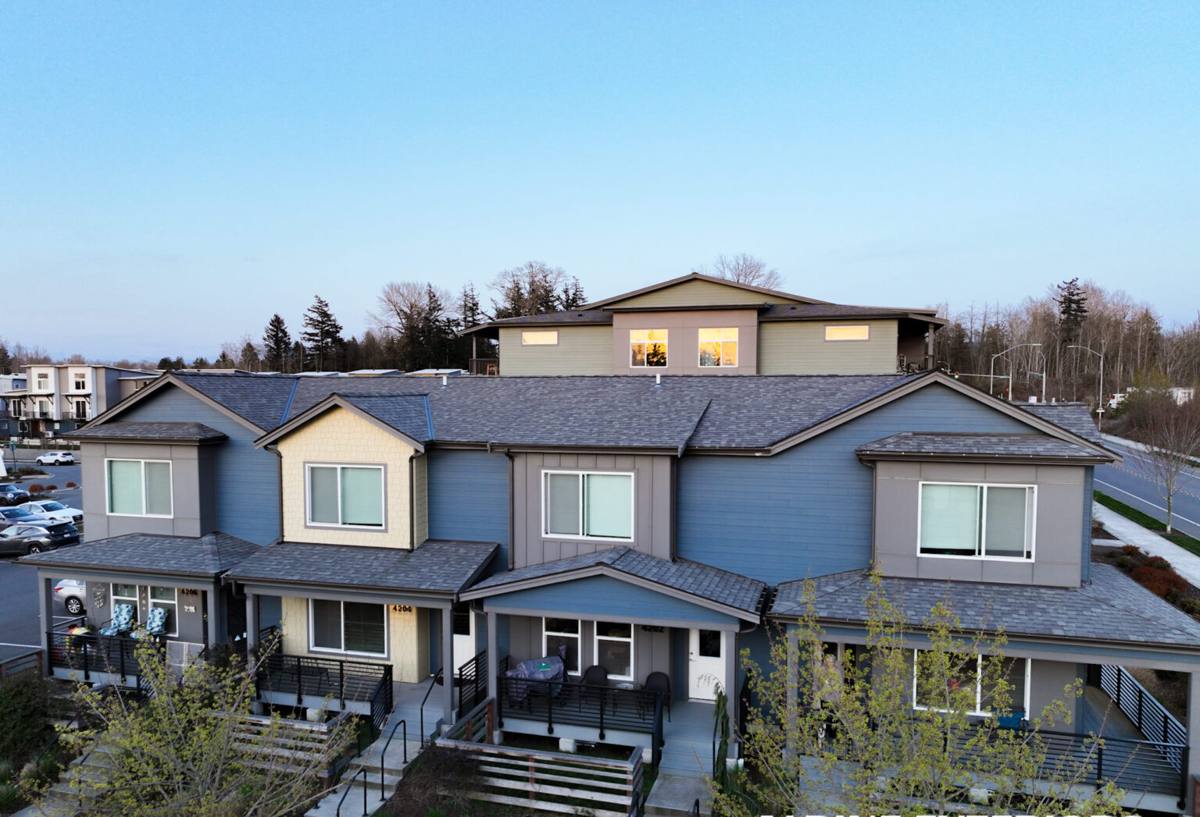
What Everson's Climate Actually Does to Siding
Whatcom County's weather pattern isn't dramatic — no hurricanes, no extreme heat — but it's relentless in a way that punishes anything less than a well-built, well-installed siding system.
Driving Rain and Sustained Wet Seasons
Fall through spring, Everson sees long stretches of steady, wind-driven rain rather than short heavy downpours. That pattern matters because it's less about how much water hits a wall and more about how long that wall stays wet. Siding that absorbs moisture, or that's installed without proper drainage behind it, stays saturated for days at a time during the wettest months, which is exactly the condition that breeds rot, delamination, and paint failure.
Moss, Algae, and Shaded Walls
North-facing walls, and any wall shaded by mature trees or a neighboring structure, dry out slowly here. That's the setup moss and algae need to take hold, and it's a near-constant condition rather than a seasonal one on the shadier lots common around Everson's tree-lined and farm-adjacent properties. Siding that's porous or that traps moisture at the surface shows this discoloration faster and more visibly than a dense, factory-finished material.
Freeze-Thaw and Humidity Cycling
Everson's inland, slightly higher-elevation position means it can see colder overnight temperatures and more frost than the immediate coast. Siding material that absorbs water and then goes through a hard freeze is under real stress — water expands as it freezes, and repeated cycles of that can crack or degrade materials that aren't engineered for it.
Inland Salt Exposure
Even well away from open water, salt-laden air carried in on winter weather systems settles on exterior surfaces across this part of the county. It's a smaller factor here than on a waterfront lot, but it still contributes to finish breakdown on lower-quality coatings over time.
Why We Standardized on James Hardie
James Hardie fiber cement is non-combustible, dimensionally stable, and available in the HZ5 formulation engineered for colder, wetter climate zones like ours. The ColorPlus factory-applied finish is cured under controlled conditions before it ever reaches a jobsite, which matters enormously in a region where field-applied paint has to fight rain, humidity, and temperature swings during application and for years afterward. It carries a strong, transferable manufacturer warranty when installed to spec, which protects the homeowner's investment even if the home changes hands.
We've handled repair and replacement work on plenty of other siding products in this county — vinyl that's cracked and faded, LP SmartSide with edge swelling at cut ends, primed wood that needed repainting far sooner than promised, cedar that demanded more upkeep than most owners realistically wanted to keep up with. None of those products are junk, and each has situations where it makes sense. But we made a business decision to install one system, install it correctly every time, and stand behind it — rather than spreading our crews' expertise across five different products with five different failure modes.
What a Correct James Hardie Installation Involves
A lot of what makes fiber cement siding perform well over decades has nothing to do with the board itself and everything to do with the details behind it. This is where a large share of siding failures we get called out to repair actually originate.
Water Management Behind the Siding
- A drainable weather-resistive barrier installed over the sheathing, not just a wrap stapled on flat
- Rainscreen or furring strips creating a gap between the barrier and the siding so any moisture that does get behind the boards can drain and dry out
- Properly flashed and sealed window and door openings, integrated with the barrier rather than caulked over top of it as an afterthought
- Correct starter strip placement at the base of the wall to keep the first course level and properly gapped off the foundation
Fastening and Clearances
Hardie's installation manual specifies fastener type, spacing, and placement, and it specifies clearances — from the ground, from roof lines, from decks and patios. Skipping these isn't a shortcut that saves a little labor; it's the difference between siding that sheds water correctly for decades and siding that traps moisture at the exact points where problems start. Manufacturer specs exist because they were tested against real climate conditions, and Whatcom County's wet season is not forgiving of shortcuts here.
Caulking and Joint Treatment
Butt joints, corners, and penetrations (hose bibs, vents, light fixtures) need the right sealant, applied correctly, at the right points — and just as importantly, not over-caulked at points that are designed to allow drainage or movement. This is a detail that separates a crew that's done hundreds of Hardie installs from one working through it for the first time.
The HZ5 Line and Product Choice
For Everson and the rest of Whatcom County, we specify Hardie's HZ5 product line, formulated for colder, wetter climate zones rather than a generic or southern-climate board. Beyond that baseline decision, most Everson homes land on one of a few configurations:
| Product | Typical Use | Notes for This Climate |
|---|---|---|
| HardiePlank lap siding | Full-wall primary siding | Most common choice; horizontal reveal sheds water cleanly when installed with correct overlap |
| HardiePanel vertical siding | Gables, modern-style accents, farm-style builds | Common on the barn-influenced architecture seen around Everson's agricultural properties |
| HardieShingle | Accent sections, dormers, gable ends | Shadow-line profile; check clearances carefully on shaded, slower-drying walls |
| HardieTrim | Corners, fascia, window/door surrounds | Matched material avoids the mismatched aging you get pairing fiber cement with wood trim |
Comparing the Options Everson Homeowners Actually Consider
Most homeowners researching a re-side end up comparing James Hardie against vinyl, LP SmartSide, or wood. Here's an honest look at how they stack up for a climate like this one.
| Factor | James Hardie | Vinyl | LP SmartSide / Wood |
|---|---|---|---|
| Moisture behavior | Dimensionally stable, engineered HZ5 formulation for wet climates | Doesn't absorb water, but can warp or crack in temperature swings | Wood-based; more vulnerable to swelling and rot at cut edges and joints |
| Fire rating | Non-combustible | Combustible, can melt/deform under heat | Combustible |
| Finish longevity | Factory-cured ColorPlus finish, long fade resistance | Molded-in color, can chalk and fade with UV and salt exposure | Field-applied paint, shorter repaint cycle in this climate |
| Upfront cost | Higher material and install cost | Lowest upfront cost | Mid-range upfront cost |
| Long-term maintenance | Low — periodic washing, minimal repainting | Low, but replacement rather than repair when damaged | Higher — repainting, sealing, and edge monitoring |
| Warranty structure | Strong, transferable manufacturer warranty when installed to spec | Varies widely by manufacturer and grade | Varies; often shorter and more conditional |
None of these comparisons are about declaring other products worthless — vinyl and engineered wood siding both have their place. It's about why, once we saw the pattern of repair calls across this region, we chose to build our whole operation around one system engineered for exactly this kind of weather.
Our Process, From Estimate to Finished Exterior
- On-site assessment: We walk the exterior, check current siding and sheathing condition, note problem areas (shaded walls, low clearance points, existing moisture damage) specific to your property.
- Free estimate: A written scope covering product line, color, trim details, and cost — no pressure, no hard sell.
- Tear-off and sheathing check: Removing old siding lets us actually inspect the sheathing and framing underneath before anything new goes up, rather than covering up a problem that will surface later.
- Weather barrier and rainscreen installation: Proper drainage plane installed before a single piece of Hardie goes up.
- Hardie installation to manufacturer spec: Correct fastening, clearances, and joint treatment throughout.
- Final walkthrough: We go over the finished job with you before calling it done.
A Checklist Before You Hire Anyone for a Siding Job
- Ask whether the crew installs a drainable weather-resistive barrier and rainscreen gap, not just siding over old wrap
- Confirm they're a certified James Hardie installer, not a general contractor installing it occasionally
- Ask how they handle flashing at windows, doors, and penetrations specifically
- Get the scope and product line in writing, including which HZ5-rated boards are specified
- Confirm licensing and bonding in Washington, and that they'll pull the required Whatcom County permit
- Ask about clearances from grade, roofline, and decks — and why those numbers matter
- Get a real timeline, including what happens if weather delays the schedule
Why a Crew That Already Works Everson Matters
A siding installer who works this stretch of Whatcom County regularly already knows how Everson's mix of open farmland, tree-lined lots, and river-bottom humidity behaves differently from a tighter, more urban lot closer to Bellingham or the coast. That local pattern recognition shows up in small decisions — how much clearance to leave on a shaded north wall, where drainage tends to concentrate on a property near the river, how the local permitting process works — that a crew unfamiliar with the area has to learn on your house instead of bringing with them. It also means we're not disappearing after the job is done; we're a phone call away if a question comes up two years down the road, because we're still working properties in this same area.
If you're weighing a re-side or new siding install on an Everson home, we're happy to walk the property, look at your specific exposure and existing condition, and put together a free, no-pressure estimate.