 Blaine Siding
 Siding Work Right at the Water's Edge
Blaine Harbor is about as close to open water as a Whatcom County property gets without floating. The homes here sit around the marina and the working harbor on Drayton Harbor, in a mix of long-time residences and newer construction that all share the same basic exposure: water on one side, prevailing wind off the water, and very little in the way of trees or terrain to slow either one down before it reaches an exterior wall. That's a different exposure profile than a home a mile or two inland in Blaine proper, and it changes what "correct" siding work actually means here.
We install James Hardie fiber cement siding, and only James Hardie fiber cement siding, across Whatcom County, and Blaine Harbor is one of the areas where that standard gets tested hardest. This page is about what a Hardie siding project for a Blaine Harbor home actually involves: the climate factors that matter most this close to the water, what correct installation looks like, what drives cost, and why familiarity with this specific stretch of waterfront changes the outcome for a homeowner.
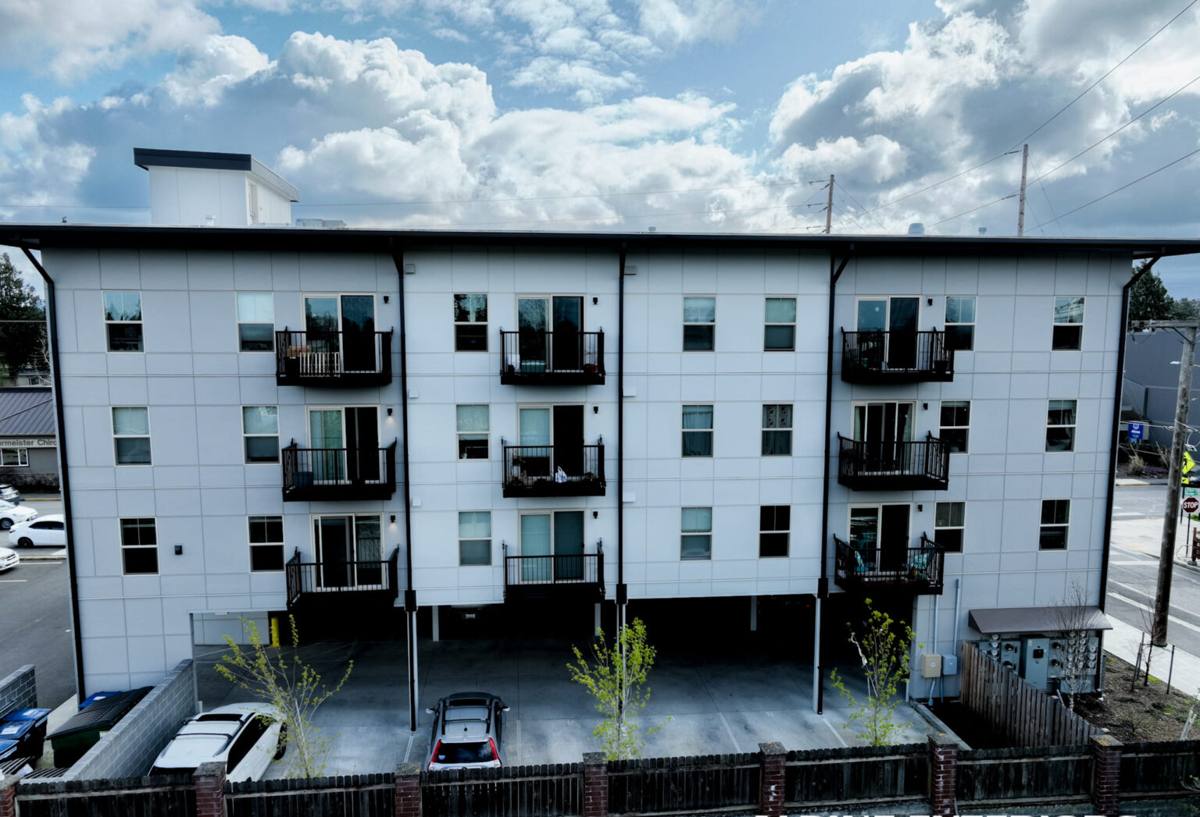
What Makes Blaine Harbor Different From the Rest of Blaine
Direct, Near-Constant Salt Exposure
Properties set back a few blocks from the water get salt air as a recurring condition. Homes right around the harbor get it as a constant one, since there's rarely a day when the air off the water isn't carrying some amount of salt onto siding, trim, and fasteners. That exposure works on a house continuously rather than seasonally, which means finish coatings, hardware, and caulking all get tested harder and faster here than in most of the rest of the county.
Open Wind With Nothing to Break It
The harbor sits open to wind coming off the water, and low-profile marina buildings and boat masts don't offer much of a windbreak for the homes nearby. Wind-driven rain reaches walls, soffits, and window trim at an angle instead of falling straight down, which pushes water into joints and seams that a calmer inland site would rarely stress in the same way.
Humidity That Doesn't Let Up
Being this close to the harbor keeps ambient humidity high across most of the year, and that keeps moss and mildew active on shaded or north-facing walls for a longer stretch than most of Whatcom County sees. A wall that can't dry out between wet spells is doing most of the work of failing early, regardless of what siding is on it.
Why James Hardie Fiber Cement Is What We Put on These Homes
Fiber cement is a blend of Portland cement, sand, and cellulose fiber, cured into rigid boards, an inorganic material that doesn't have a wood or vinyl core to swell, rot, or soften under constant moisture and sun. That matters specifically at Blaine Harbor, where the exposure is heavier and more continuous than almost anywhere else we work. We install James Hardie's HZ5 product line, engineered for regions with sustained moisture and freeze-thaw cycles, which fits this stretch of coastline better than a siding line engineered primarily for a drier or milder climate.
Hardie's ColorPlus finish is baked on in a factory setting rather than applied on site, and it's formulated to resist fading from constant UV and salt exposure, a real factor at the harbor, where sun reflecting off open water adds to the UV load a south- or west-facing wall takes on. That finish carries its own warranty separate from the substrate warranty, and it's one of the specific reasons we standardize on this manufacturer rather than fiber cement as a generic category.
Warranty terms matter more here too. A transferable limited warranty is worth more on a harbor-front property than on an inland one, since these homes tend to change hands to buyers who ask pointed questions about how the exterior has held up against constant water exposure. A prorated or non-transferable warranty on a lesser product doesn't give a seller much of an honest answer to that question.
We don't install vinyl, engineered wood, or cedar on any home we work on, and that standard applies at Blaine Harbor as much as anywhere. Vinyl's lapped, non-sealed seams aren't built to shed wind-driven rain the way this exposure regularly delivers it. Engineered wood depends on an intact factory coating and fully sealed field cuts to keep its wood-fiber core dry, which is a lot to ask in a spot where the air is salt-laden and damp nearly year-round. Cedar is a real, traditional material, but it's organic and combustible, and it depends on a paint or stain schedule that has to be kept up consistently against exactly the conditions this location delivers hardest.
What a Correct Installation Involves This Close to the Water
Fastener and Flashing Hardware
Standard-grade fasteners corrode faster under harbor-level salt exposure, and that shows up as rust streaking and loosened trim years before it should. We use fastener and flashing hardware rated for the exposure, not whatever's cheapest or most convenient to source, because that choice is one of the first things to fail if it's wrong.
Clearance and Drainage Detail
Manufacturer-specified clearance at grade, rooflines, and decks matters everywhere, but it matters more on a harbor lot where splash-back, runoff, and occasional storm-driven water put more moisture near the base of a wall than a typical inland property sees. Getting that clearance right, along with correct rainscreen or drainage-plane detailing, gives the wall a real chance to dry out between wet stretches instead of staying damp continuously.
Joint Sealing and Cut-Edge Treatment
Every field cut on a Hardie board needs to be sealed per manufacturer spec before it goes up, and every joint needs to be detailed to shed wind-driven rain rather than just look finished from the ground. Skipping or rushing this step is invisible on install day and shows up two or three winters later as staining or soft spots, exactly the kind of shortcut that costs more to fix than it saved to skip.
Our Process for a Blaine Harbor Siding Project
The steps aren't unusual, but the sequencing and pacing shift when a project sits this close to open water:
- Site walk and exposure assessment — we look at which walls face open water and prevailing wind directly, since those often need different detailing than a more sheltered elevation on the same house.
- Tear-off and sheathing inspection — removing the old siding lets us check for moisture damage that may already be behind the wall, which turns up more often on harbor-facing homes than elsewhere in Blaine.
- Repair before re-cover — any soft or damaged sheathing gets replaced before new siding goes up, since installing over a compromised substrate defeats the purpose of upgrading the exterior at all.
- Install to manufacturer spec — fastening, clearance, flashing, and joint sealing all follow James Hardie's published requirements for the HZ5 line, not a shortened version of them.
- Final walk-through — we review the finished work with the homeowner and confirm every detail that affects long-term performance, not just the parts that are visible from the street or the water.
What Drives Cost on a Harbor-Front Siding Project
| Cost Factor | Why It Matters at Blaine Harbor |
|---|---|
| Home size and wall complexity | More corners, dormers, and trim details mean more joints that need correct sealing against wind-driven rain |
| Condition of existing sheathing | Harbor-facing homes more often need sheathing repair discovered during tear-off, which affects the final price |
| Site access and staging space | Tight harbor-area lots can limit where materials and equipment stage, which affects labor time |
| Fastener and flashing grade | Higher-grade, corrosion-resistant hardware costs more than standard grade but holds up far better in this exposure |
| Scheduling around weather windows | Wind and rain days near open water can push installation timelines, which affects project duration more directly than price |
Why a Crew That Already Works This Stretch of Waterfront Matters
A contractor who mostly works inland can install Hardie siding correctly on paper and still get the details wrong for a harbor site, because the failure points here are different from what shows up on a sheltered lot. Knowing which walls take the worst of the wind on a given property, how tight the access is on a harbor-adjacent lot, and how local weather patterns affect scheduling isn't something a crew picks up on a first job in the area. It's something learned by working here repeatedly, across more than one season and more than one property.
That familiarity shows up in smaller, practical ways too: recognizing which weeks tend to bring stretches of workable weather, understanding how close parking and staging can realistically get to a harbor-front property, and spotting early warning signs of moisture damage specific to this exposure rather than treating every home the same regardless of where it sits. It also means fewer surprises mid-project, since a crew that's worked this area before has usually already seen the version of a problem your house might be hiding.
What to Ask Before Hiring for a Blaine Harbor Siding Job
- Has the crew worked on harbor-front or open-water-exposed properties before, specifically, not just siding in general?
- What fastener and flashing hardware grade do they use, and is it rated for constant salt exposure?
- Do they inspect and repair sheathing before re-covering, or install directly over what's already there?
- What James Hardie product line are they proposing, and is it the one engineered for this region's moisture and freeze-thaw conditions?
- How do they handle scheduling around wind and rain, and what happens to the project timeline when weather doesn't cooperate?
- Is the warranty they're offering tied to manufacturer-certified installation, and does it transfer if the home is sold?
If you own a home in or around Blaine Harbor and you're thinking about a re-side, we're glad to walk the property, look at what the current siding is actually doing, and give you a straight answer about what it needs. Reach out using the form below for a free, no-pressure estimate.