 Blaine Siding
 James Hardie Siding for Grandview Homes in Blaine
Grandview sits within Blaine, Washington, close enough to the water that salt air and wind-driven rain are part of ordinary weather rather than the occasional storm event. Whatcom County's northwest corner takes a steady beating from Pacific systems moving in off the Strait of Georgia, and homes here deal with a moisture load that inland neighborhoods in the county simply don't see as often. That's the backdrop for every siding decision a Grandview homeowner makes, and it's why we install James Hardie fiber cement siding exclusively rather than offering a menu of cheaper alternatives.
This page is specifically about Hardie siding installation for the Grandview area — what the local climate does to a wall assembly over time, what a correct install actually involves, and how we run the job from first look to final walk-through. If you're weighing whether to re-side a Grandview home, this is the detail that usually gets skipped by contractors who are more focused on closing the sale than explaining the work.
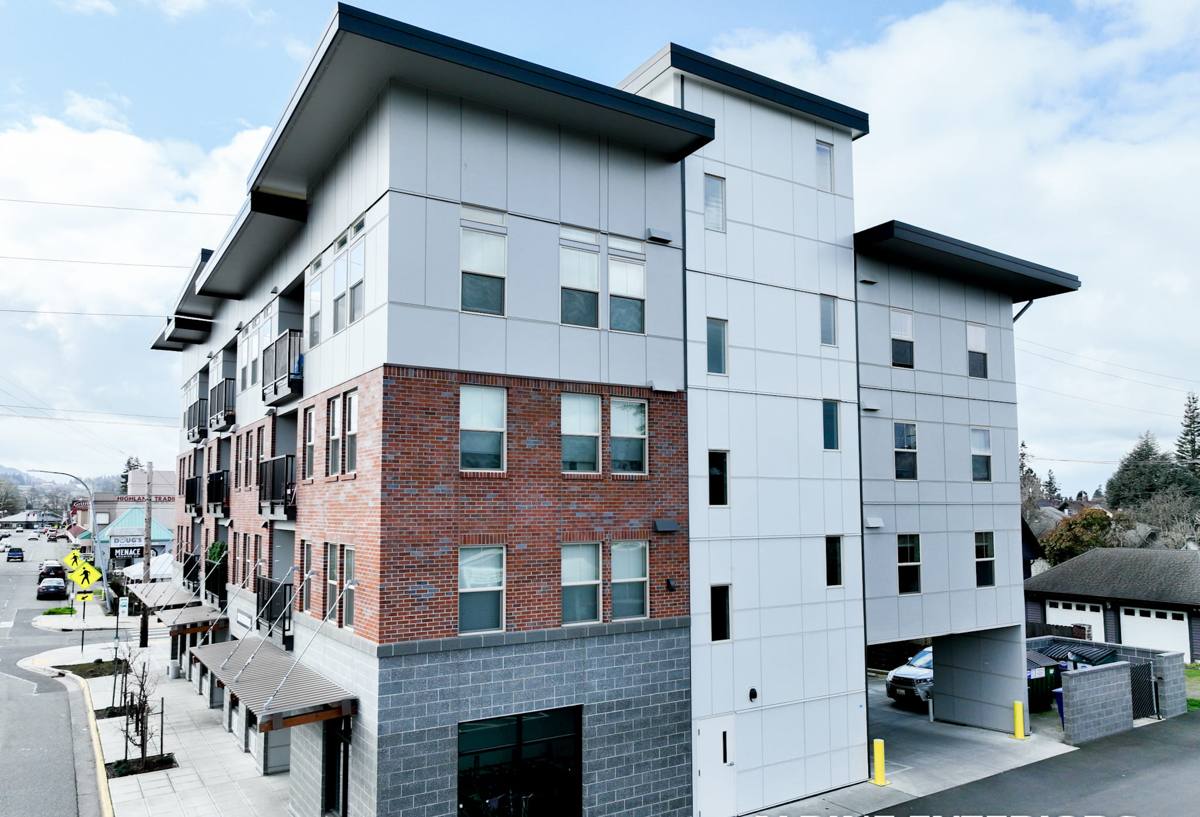
What Salt Air, Driving Rain, and Moss Do to Grandview Siding
Salt Air
Proximity to Semiahmoo Bay and Drayton Harbor means Grandview homes take a more consistent dose of salt-laden air than towns set further from the water. Salt speeds up corrosion on fasteners, flashing, and any exposed metal trim, and it breaks down lower-grade paint and coatings faster than they'd wear in a dry inland climate. That's a material and hardware question as much as a siding-product question — a house near the water needs corrosion-resistant fasteners and a finish that's built to take salt exposure, not just a coat of house paint over standard trim.
Driving Rain
Storms coming off the water rarely fall straight down. Wind pushes rain sideways into wall assemblies, window and door flashing, and every seam where two building materials meet. That sideways load stresses a house differently than a calm, vertical rain would, and it's exactly the kind of moisture that finds the gaps a rushed installation leaves behind. Grandview's exposure to that pattern means flashing details and water-management planning matter more here than they would in a sheltered, inland part of the county.
A Long Moss Season
Mild temperatures combined with near-constant moisture give moss and mildew a growing season that runs most of the year on shaded or north-facing walls. Any siding surface that stays damp longest is the first to show it, and materials with even minor surface porosity become a growth surface over time. In Grandview, tree-shaded lots and walls that don't get much winter sun are usually the first places it shows up.
Why We Install Only James Hardie Siding
We used to offer a broader range of siding products. We stopped after seeing, repeatedly, what held up in coastal, high-moisture conditions like Grandview's and what didn't. This is a professional standard we set for ourselves, not a manufacturer partnership we're paid to promote.
- Non-combustible core: Fiber cement doesn't feed a fire the way wood-based siding products can, which matters for both safety and insurance underwriting.
- Factory-applied ColorPlus finish: The color is baked on under controlled factory conditions instead of brushed on in the field, so it resists fading, chalking, and moisture intrusion longer than a site-applied finish.
- Climate-engineered HZ product lines: Hardie's HZ5 formulation is built for regions with sustained moisture and freeze-thaw cycling, which is a fair description of coastal Whatcom County.
- Dimensional stability: Fiber cement doesn't swell, cup, or warp the way engineered wood products can after repeated exposure to wet coastal weather.
- Strong transferable warranty: Hardie backs the product with a solid warranty structure, provided the installation follows their published specification.
We don't install LP SmartSide, vinyl siding, Cemplank, Allura, primed spruce, or cedar. Each of those products has a place in the market, and plenty of homeowners are satisfied with them. But for a location this exposed to salt air and driving rain, we've made the call to install and stand behind one system rather than offer a cheaper option that quietly shifts long-term maintenance risk onto the homeowner.
What a Correct Hardie Installation Involves in Grandview
Hardie siding only performs the way it's engineered to when it's installed to spec, and in a coastal setting like Grandview, the details matter more than they would in a milder climate. A few things we won't shortcut:
- Proper weather-resistive barrier and rain-screen gap so any moisture that gets behind the siding can drain and dry rather than sit against the sheathing
- Correctly lapped and sealed flashing at every window, door, and roofline intersection — the spots where wind-driven rain finds its way in
- Manufacturer-specified fastener spacing and penetration depth, using corrosion-resistant fasteners appropriate for a salt-air environment
- Proper clearance between the bottom of the siding and grade, decks, or roof lines to avoid wicking moisture up into the boards
- Factory-cut and factory-primed edges wherever possible, with any field-cut edges sealed per Hardie's instructions
- Correct caulking and sealant use at butt joints and penetrations — enough to seal, not so much that it traps moisture
Skip any one of these and the siding itself can still be sound while the wall assembly behind it fails. That's the gap between a product being good and an installation being correct, and it's where most siding problems we get called out to inspect actually start.
How the Job Runs: Our Process
1. On-Site Assessment
We walk the property, look at current siding condition, check for existing moisture damage around windows, doors, and low walls, and note anything specific to the lot — tree cover, shade patterns, proximity to grade — that will affect the install.
2. Scope and Estimate
We put together a straightforward estimate based on what we actually find, not a generic per-square-foot number pulled before we've seen the house. If we find damaged sheathing or framing once old siding comes off, we'll show it to you and explain the options before proceeding.
3. Tear-Off and Substrate Check
Removing the old siding is also when hidden problems surface — soft sheathing, old moisture damage, missing or failed flashing. We address what we find rather than sealing a known problem behind new siding.
4. Weather Barrier and Rain-Screen Installation
This is the layer that does the real work of keeping a Grandview home dry over the next several decades. We install the weather-resistive barrier and rain-screen system to spec before a single piece of Hardie board goes up.
5. Hardie Siding Installation
Boards, fasteners, and flashing go in per Hardie's published installation guidelines, with attention to the details that matter most in a coastal environment — fastener corrosion resistance, proper lap and clearance, and sealed penetrations.
6. Final Walk-Through
We walk the finished job with you, point out what was done and why, and answer questions before calling it complete.
Cost Factors for a Grandview Hardie Siding Project
| Factor | Why It Matters |
|---|---|
| Home size and wall complexity | More corners, dormers, and trim details mean more cutting, flashing, and labor time |
| Current siding removal | Tear-off scope depends on what's underneath and whether the substrate needs repair |
| Hardie product line selected | Lap siding, shingle-style panels, and board-and-batten each carry different material and labor costs |
| Substrate and framing repair | Moisture damage found during tear-off adds scope that can't be fully known until the old siding is off |
| Trim and accessory work | Corner boards, window trim, and fascia detailing add material and installation time |
These are general drivers, not a quote. Every Grandview lot sits at a slightly different distance from the water and under different tree cover, and two houses on the same street can need very different scopes once the old siding actually comes off. That's why we walk the property before putting a real number on the work rather than estimating over the phone.
Signs a Grandview Home Needs Siding Attention
- Moss or dark staining that returns quickly after cleaning
- Soft or spongy siding, especially low on the wall or around window trim
- Rust staining or corroded fasteners and trim, more common this close to the water
- Peeling paint or visible warping on shaded, north-facing walls
- Cracked, buckled, or separated siding panels or joints
- Visible gaps at window and door flashing
Why a Crew That Already Works Grandview Matters
A crew that installs siding across Blaine regularly sees how salt air, driving rain, and moss actually behave on real Grandview houses over a full year, not just how a product performs on a spec sheet. That experience shapes decisions on install day — which walls stay wet longest, where extra flashing attention is worth the time, and which fastener choices hold up instead of failing early in a salt-air environment. It also means less guesswork and fewer surprises during the estimate, since we've already seen how homes in this specific area age and where problems tend to start.
If your Grandview home is due for new siding, we're glad to come take a look and give you a straightforward, honest assessment of what the job actually involves. Reach out using the form below to schedule a free, no-pressure estimate.