 Blaine Siding
 Grandview Homes Take a Different Kind of Weather Beating
Grandview sits close enough to Semiahmoo Bay and Drayton Harbor that salt-laden air is a daily fact of life, not an occasional nuisance. Add in the driving rain that comes off the Strait of Georgia through the fall and winter, and a moss season in Whatcom County that can run eight months or longer under tree cover, and you have a combination that punishes siding faster than most homeowners expect. Materials that hold up fine in a drier inland climate often start failing here within a decade — not because they're poorly made, but because they were never engineered for this particular mix of salt, moisture, and shade.
This page is about one thing: fiber cement siding done right, on Grandview homes, by a crew that already knows what this stretch of coastline does to a house.
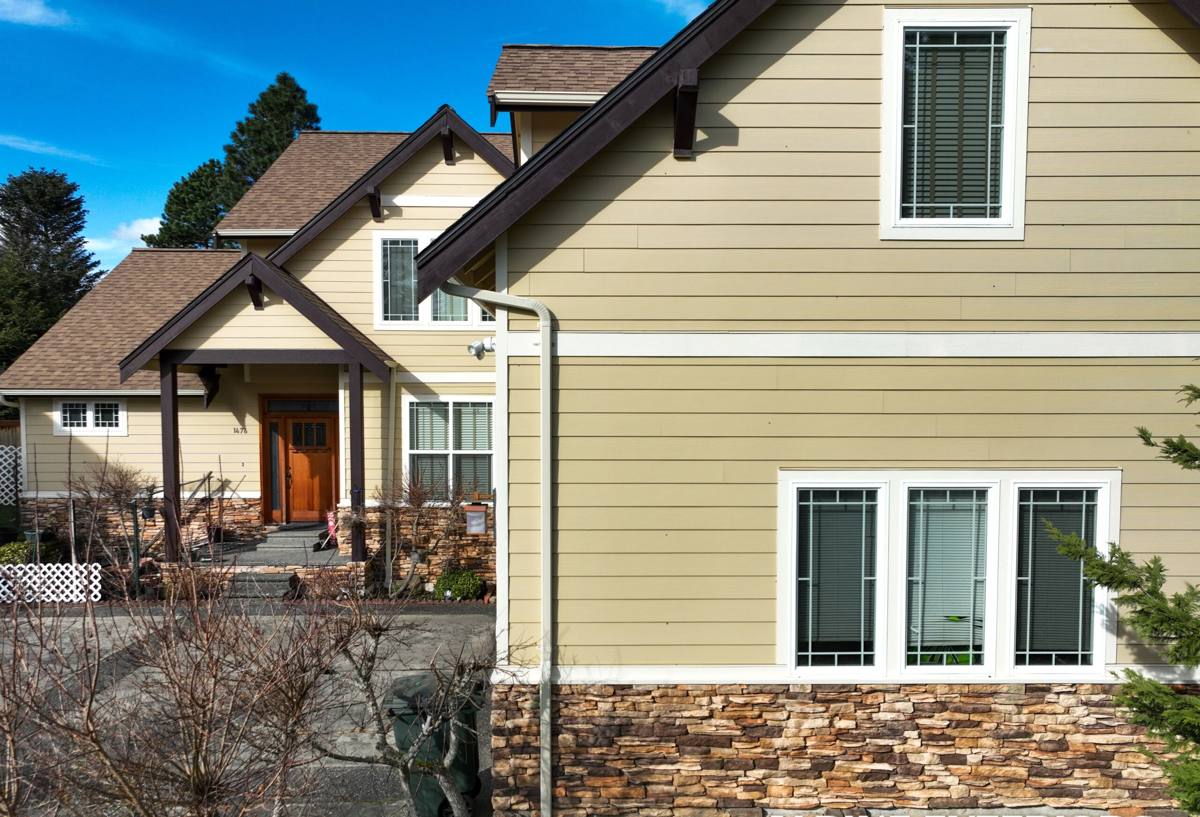
What Salt Air, Rain, and Moss Actually Do to Siding
Each of these three stressors attacks siding differently, and a correct siding job has to account for all three at once.
Salt Air
Airborne salt is corrosive to exposed metal fasteners, trim flashing, and hardware, and it accelerates the breakdown of finishes that weren't formulated to resist it. On wood and composite products, salt-laden moisture works its way into seams and end cuts and speeds up rot from the inside out, often well before the surface shows visible damage.
Driving Rain
Wind-driven rain doesn't just fall on siding — it gets pushed sideways and upward, finding any gap in flashing, caulking, or panel overlap. In Grandview's exposure, that means water intrusion risk is higher at every joint, corner, and penetration than it would be on a more sheltered inland lot. Siding that depends on paint film alone to keep water out, rather than a sound water-management system behind it, is working against the odds here.
Moss and Prolonged Dampness
Shaded lots and the long wet season common to this part of Whatcom County keep siding surfaces damp for extended stretches. Moss and algae take hold readily on materials that hold moisture or have a porous surface, and once established they trap even more water against the siding, feeding rot and finish failure in a self-reinforcing cycle.
Why We Standardized on James Hardie Fiber Cement
We install James Hardie fiber cement siding exclusively — not LP SmartSide, not vinyl, not Cemplank or Allura, not primed spruce or cedar. That's a deliberate standard, not a sales preference, and it comes down to how each of those materials behaves under exactly the conditions Grandview homes face.
Fiber cement is a mix of cement, sand, and cellulose fibers, which makes it non-combustible and dimensionally stable — it doesn't expand and contract with moisture the way wood-based products do, and it isn't prone to the heat-warping that can affect vinyl on south- and west-facing walls. James Hardie's ColorPlus finish is baked on at the factory under controlled conditions, which gives it stronger fade and moisture resistance than field-applied paint, and its HZ5 product line is engineered specifically for cold, wet, freeze-prone climates like the Pacific Northwest coast — not a generic all-climate product stretched to cover every region.
We've made the call not to install other fiber cement brands or wood-alternative products because, in our experience specifying and installing siding in this exact climate, Hardie's combination of factory finish quality, climate-specific engineering, and manufacturer-backed warranty performs more consistently over the long run than the alternatives. That's our professional standard, and it's the product we stand behind.
What a Correct Fiber Cement Installation Actually Involves
Fiber cement siding is only as good as its installation. The material itself resists moisture and salt well, but a sloppy install can undermine all of that. On every Grandview job, correct installation means:
- Proper clearance between the siding's bottom edge and grade, decks, and roof lines, so water has somewhere to go instead of wicking up into the board
- A continuous water-resistive barrier behind the siding, with all penetrations (vents, lights, hose bibs) properly flashed and sealed before a single board goes up
- Corrosion-resistant fasteners driven to Hardie's specified depth and pattern — critical in a salt-air environment where the wrong fastener corrodes and stains long before the siding itself shows wear
- Correct panel and lap overlap, with joints staggered and caulked per manufacturer spec, not just butted and painted over
- Factory-cut edges kept intact wherever possible, since field-cut edges need to be primed and sealed to maintain the same moisture resistance as the rest of the board
- Ventilation gaps maintained where required so moisture that does get behind the cladding has a path to dry out instead of sitting against the wall assembly
Skip any one of these steps and you can end up with a house wearing premium siding that still fails at the seams — which is exactly where salt air and driving rain go looking for weakness first.
How Grandview's Site Conditions Shape the Job
No two lots in this area present quite the same combination of exposure, shade, and wind. Before we quote a job, we look at:
| Site Factor | Why It Matters |
|---|---|
| Wind exposure (open vs. sheltered lot) | Determines fastening schedule and how aggressively we detail joints and flashing against wind-driven rain |
| Tree cover and shade | Higher shade means longer damp periods and faster moss/algae growth — affects finish choice and maintenance planning |
| Proximity to the water | Higher salt exposure calls for closer attention to fastener corrosion resistance and trim material |
| Existing wall assembly condition | Rot or moisture damage found under old siding has to be addressed before new siding goes on top of it |
| Roof and gutter performance | Poor drainage dumps extra water onto walls right where siding is most vulnerable — sometimes the fix starts above the siding line |
Fiber Cement vs. Other Options for a Climate Like This
Homeowners comparing materials often ask what actually separates fiber cement from the alternatives once you factor in this specific climate. Here's the honest comparison:
| Material | Behavior in Salt Air / Driving Rain / Moss Season |
|---|---|
| James Hardie Fiber Cement | Dimensionally stable, non-combustible, factory-baked finish resists fading and moisture; performs well when installed to spec |
| Vinyl Siding | Can warp or distort with heat and temperature swings; seams and panel edges give wind-driven rain more entry points over time |
| Primed Wood / Cedar | Naturally attractive but requires ongoing refinishing to resist moisture and moss; end grain and joints are vulnerable in sustained damp conditions |
| LP SmartSide (engineered wood) | Treated to resist moisture but still wood-based, meaning long-term performance depends heavily on maintaining an intact finish at every cut and joint |
Our Process for Grandview Fiber Cement Jobs
We keep the process straightforward and don't skip the parts that matter most in this climate:
- On-site assessment — we look at exposure, existing siding condition, and any moisture or rot already present behind the current cladding
- Written scope and product selection — Hardie product line, profile, and ColorPlus color chosen based on your home and the site conditions we found
- Tear-off and substrate check — old siding comes off, sheathing and framing get inspected, and any damage gets repaired before new material goes up
- Water-resistive barrier and flashing — installed and detailed around every window, door, and penetration before siding starts
- Siding installation to manufacturer spec — correct fasteners, clearances, overlaps, and caulking throughout
- Final walkthrough — we go over the finished job with you before calling it done
Why It Matters That We Already Work This Area
A siding job specified for a dry inland climate doesn't automatically translate to Whatcom County's coastal conditions. A crew that already works Grandview and the surrounding Blaine area has already seen where moisture problems tend to start on homes here, which fastener and flashing details actually hold up against this level of salt exposure, and how much shade and moss pressure a given lot is likely to see through the wet season. That local pattern recognition is what separates a siding job that looks good at handoff from one that's still performing correctly ten winters from now.
Signs Your Current Siding Is Losing the Fight
- Visible moss or algae buildup that returns shortly after cleaning
- Soft spots, bubbling, or discoloration near the bottom edge of siding boards
- Cracked or warped panels, especially on walls facing prevailing wind and rain
- Paint or finish that's peeling or chalking faster than expected for its age
- Staining around fasteners or trim, a sign of corrosion or water tracking
- Rising energy bills that may point to moisture-compromised insulation behind the siding
If more than one of these sounds familiar, it's worth having the siding and the wall assembly behind it looked at before small problems turn into structural repairs.
If you're weighing a siding project for a Grandview home, we're happy to take a look and give you a straightforward, no-pressure estimate — no obligation, just an honest read on what your home needs. Use the form below to get started.