 Blaine Siding
 Windows Built for Grandview's Marine Climate
Grandview sits close enough to the water that the air itself works against your windows every day of the year. Salt-laden wind off the water corrodes hardware and dulls finishes faster than it would inland. Driving rain, pushed sideways by wind more often than it falls straight down, tests every seal and sightline on a window unit. And the long stretch of grey, wet months that Whatcom County is known for keeps north- and shade-facing walls damp for weeks at a time, which is exactly the kind of environment where moss, mildew, and slow rot take hold around poorly sealed frames.
None of that means Grandview homes need anything exotic. It means the basics — flashing, sealing, drainage, and frame material — have to be done right every time, because this climate does not forgive shortcuts the way a drier region might. A window that's merely "good enough" somewhere in eastern Washington can fail years early here.
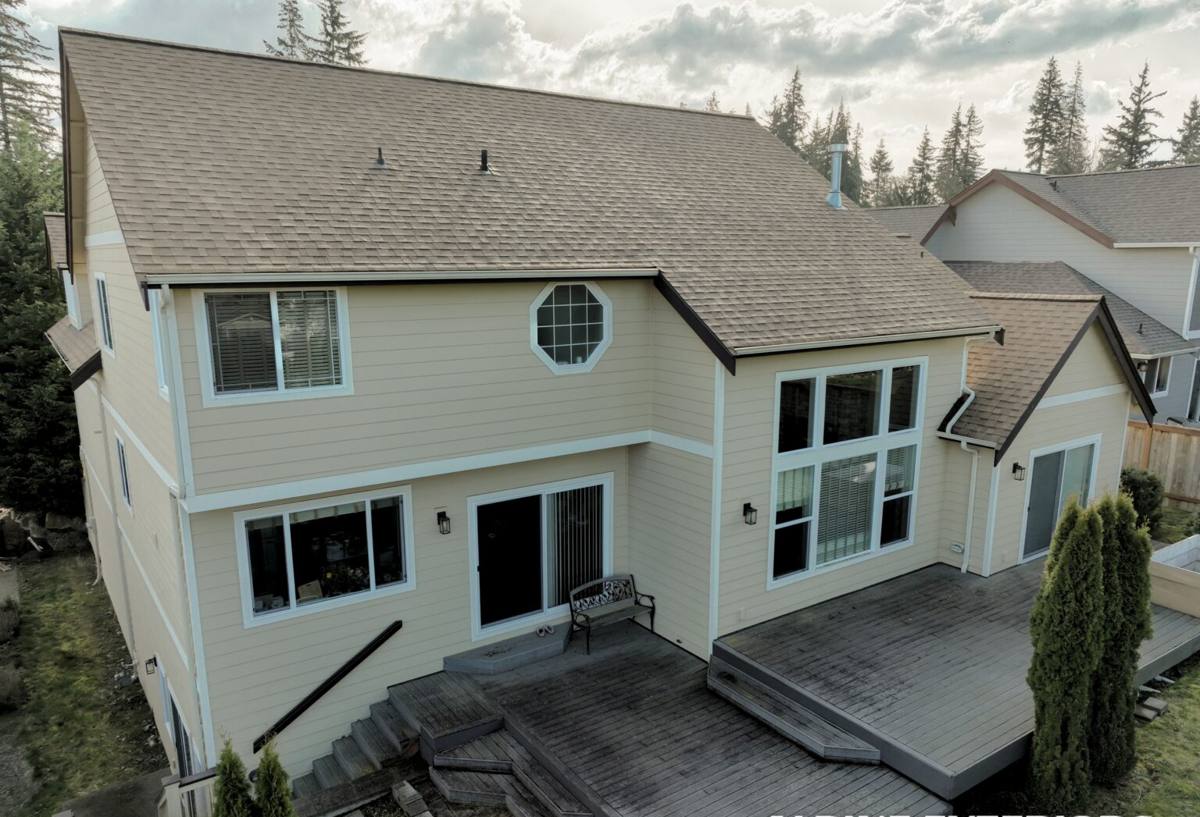
What "Energy-Efficient" Actually Means Locally
Energy efficiency in a window comes down to a handful of measurable properties, and in a marine climate like ours, some matter more than others.
U-Factor: Keeping Heat In
U-factor measures how much heat escapes through the window assembly — frame, glass, and spacer together. Lower is better. In Whatcom County's climate, where heating season runs long but summer cooling loads are mild, U-factor is usually the single biggest efficiency number to pay attention to.
Solar Heat Gain Coefficient (SHGC)
SHGC measures how much solar heat passes through the glass. On this side of the state, with our overcast winters, a moderate SHGC is often a better fit than the very low numbers pushed in sunnier climates — you want to keep some free solar warmth on the clear days you do get, without overheating south-facing rooms in summer.
Air Leakage and Condensation Resistance
This is where local conditions matter most. A window with a great U-factor but a mediocre seal will still leak air during wind-driven rain events, and it will fog or sweat on the inside during cold, damp stretches if its condensation resistance is weak. For Grandview homes, we weigh air leakage and condensation performance just as heavily as the headline efficiency numbers.
Signs Your Current Windows Are Working Against You
Most homeowners don't replace windows because of a single dramatic failure — it's usually a slow accumulation of small problems. Watch for these:
- Condensation or fog forming between the panes (a sign the seal has failed and the gas fill is gone)
- Visible moss, algae, or black staining building up on the sill or lower frame
- Soft or discolored wood trim around the window, especially at the bottom corners
- Drafts you can feel with a hand near the frame on a windy day
- Hardware — locks, cranks, hinges — that's stiff, corroded, or no longer closing tight
- Noticeably higher heating bills compared to similar-sized homes nearby
- Difficulty opening or closing the sash, often from swollen or warped frame material
Any one of these on its own might just need a repair. Several at once, especially on an older single-pane or early dual-pane window, usually means replacement is the more honest recommendation.
Choosing the Right Frame Material for This Climate
Frame material has a bigger effect on long-term performance here than most homeowners expect, because it's the frame — not the glass — that takes the brunt of salt air and moisture cycling.
| Frame Material | Moisture & Salt Air Behavior | Typical Maintenance | Our Take |
|---|---|---|---|
| Vinyl | Won't rot or corrode; seams are the main weak point | Occasional cleaning; no painting | Solid value option for most Grandview homes when installed with proper drainage |
| Fiberglass | Very stable in temperature and moisture swings; resists salt corrosion well | Low; occasional repainting if factory-finished | Strong long-term pick for exposed, wind-facing walls |
| Wood (unclad) | Beautiful but vulnerable to sustained damp and salt exposure | Regular painting/sealing required | We're honest about the upkeep before recommending it here |
| Aluminum-clad wood | Good exterior protection, but conducts cold and can condense at the frame | Low exterior, moderate interior | Works best on protected elevations, not full wind exposure |
We're not against wood-framed windows on principle — some homeowners want that look and are willing to keep up with it. Our job is to be upfront about which materials hold up with minimal fuss in this specific environment, and let you decide what trade-off fits your home and your maintenance appetite.
What a Correct Installation Actually Involves
The window unit itself is only part of the story. Most window failures we get called out to inspect in this area trace back to installation details, not product defects.
Flashing and Drainage
Every window opening needs a drainage path so that any water that gets past the exterior seal — and in driving rain, some always will — has somewhere to go besides into your wall framing. Proper sill pan flashing and correctly lapped house wrap around the opening are non-negotiable, not upgrades.
Sealant and Backer Rod, Not Just Caulk
A bead of caulk over a gap is not a seal. Correct practice uses backer rod to control sealant depth and joint movement, paired with a sealant rated for the exposure. This is especially important on wind-facing walls where wind-driven rain pushes water into any gap under pressure, not just gravity.
Shimming and Squaring
A window that's out of square will bind, won't lock tight, and will develop uneven gaps that let in both air and water. Careful shimming at the right points around the frame keeps the unit true for its whole service life.
Interior Air Sealing
Sealing the interior side of the rough opening — not just the exterior — cuts down on air leakage and reduces the chance of condensation forming inside the wall cavity during our cold, damp months.
How Our Process Works for Grandview Homeowners
- Walkthrough and assessment — we look at your current windows, their orientation, and how much wind and rain exposure each wall actually gets.
- Straightforward recommendation — frame material, glazing package, and options laid out with honest trade-offs, not upsold as one-size-fits-all.
- Written estimate — clear pricing with no vague allowances, so you know what you're agreeing to before work starts.
- Careful removal — protecting existing siding, trim, and interior finishes during the swap.
- Correct installation — flashing, drainage, sealant, and squaring done to the standard described above, every time.
- Final check and walkthrough — operation, locks, and seals tested with you before we call the job done.
Because we already work regularly in and around Grandview, we're familiar with how the local wind patterns and rain exposure tend to affect different sides of a house here — which means fewer surprises once the old windows come out and the wall cavity is exposed.
What Affects the Cost of a Window Project
There's no single "price per window" that means much without context. The main factors we walk through with homeowners are:
| Factor | Why It Matters |
|---|---|
| Frame material | Vinyl, fiberglass, and clad-wood carry different material costs and labor requirements |
| Glazing package | Double vs. triple pane, low-E coatings, and gas fill all add cost along with performance |
| Opening condition | Rot repair or reframing behind an old window adds labor beyond a straightforward swap |
| Window size and type | Large picture windows, bays, and custom shapes cost more than standard operable units |
| Exposure and access | Second-story or heavily wind-exposed openings may need extra care and time |
| Number of units | Whole-house replacements typically bring a better per-window rate than one-off swaps |
We'd rather walk your specific windows and give you real numbers than throw out a broad range that doesn't reflect your home.
Why a Crew That Already Works This Neighborhood Matters
Window installation is one of those jobs where local experience shows up in details a homeowner might never notice until years later — how deep to set flashing given our typical rain angles, which wall orientations in a Whatcom County property tend to take the worst of the weather, and how much drainage capacity actually makes sense for a marine climate rather than a drier one. A crew that installs windows across many different climates has to relearn those details every time they cross a region. A crew that works Grandview and the surrounding Blaine area regularly already knows them.
That familiarity also means we're not guessing about maintenance realities — like how quickly moss and algae build up on north-facing sills, or how salt air tends to affect certain hardware finishes faster than manufacturers' general warranty language accounts for. We factor that into what we recommend, not just what looks good on a spec sheet.
Living With Your New Windows: Moss Season and Salt Air
Even the best window benefits from a little seasonal attention in this climate.
- Rinse sills and tracks periodically to keep salt residue and organic buildup from accumulating
- Clear moss or algae from sills and surrounding trim before it spreads onto the frame finish
- Check weep holes (the small drainage openings in the bottom of the frame) to make sure they stay clear of debris
- Exercise locks and cranks a few times a year so hardware doesn't stiffen up from disuse
- Look over exterior sealant lines once a year, especially after a hard winter, and flag any cracking early
None of this is heavy maintenance — it's the kind of light upkeep that, done consistently, adds years to the life of a correctly installed window in a climate like ours.
If you're weighing whether your current windows are due for replacement, or just want a straight answer on what a project would actually cost for your Grandview home, we're happy to take a look. Use the form below to request a free, no-pressure estimate.