 Blaine Siding
 Cherry Point's Climate Is Harder on Siding Than People Expect
Cherry Point sits right up against the Strait of Georgia, and that shoreline exposure changes what a house needs from its exterior. Homes here deal with a combination that inland Whatcom County properties don't see nearly as much: salt-laden air blowing in off the water, wind-driven rain that hits siding sideways instead of straight down, and long stretches of gray, damp weather that keep moisture sitting on exterior walls for days at a time. Add in the tree cover and shaded lots common on many Cherry Point properties, and you get a near-perfect environment for moss and algae to take hold on siding, trim, and roof edges.
None of this is unusual for a house on this stretch of Whatcom County coastline. But it does mean that whatever goes on the outside of a Cherry Point home has to be chosen and installed with those conditions in mind, not just picked because it looks good in a showroom.
Salt Air and Material Corrosion
Airborne salt accelerates corrosion on fasteners, flashing, and any exposed metal trim. It also breaks down certain paint films and caulks faster than they'd wear in a drier, inland setting. Siding materials and finishes that aren't built for coastal exposure tend to show chalking, fading, and edge deterioration years ahead of schedule out here.
Driving Rain and Wind Exposure
Open exposure to the water means wind-driven rain is a regular event, not an occasional storm. That kind of rain gets pushed up under laps and around trim in ways that vertical rainfall doesn't, which puts real weight on how well a siding system sheds water at the joints, seams, and penetrations — not just on the face of the wall.
Moss, Algae, and Shade
Wherever a Cherry Point property has tree cover or a north-facing wall that doesn't get much sun, moss and algae growth is close to guaranteed over time. That growth holds moisture against the siding surface, which is exactly the kind of long-term dampness that causes problems for moisture-sensitive materials.
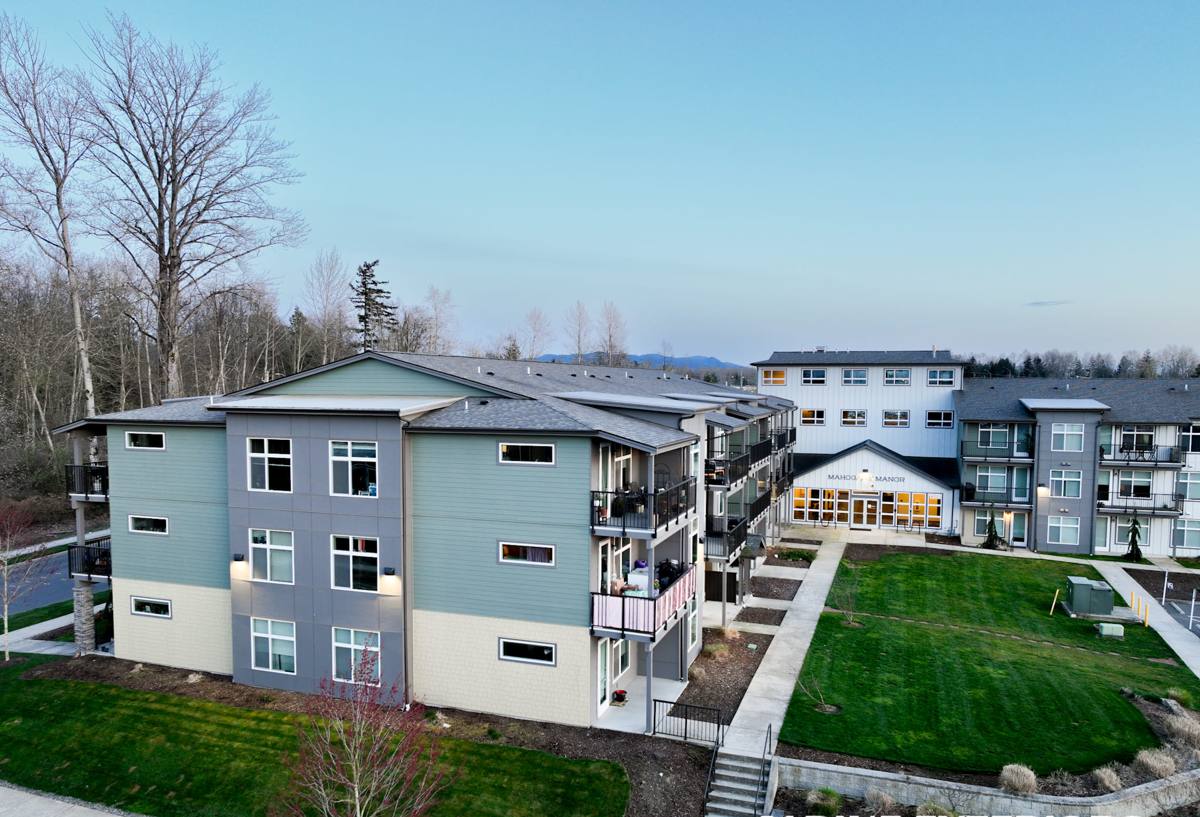
Why We Only Install James Hardie Fiber Cement Here
We install James Hardie fiber cement siding exclusively — not vinyl, not LP SmartSide, not primed wood, not other fiber cement brands. That's a deliberate standard, and it matters more in a place like Cherry Point than it does somewhere sheltered and inland.
Fiber cement is non-combustible, dimensionally stable, and doesn't absorb and release moisture the way wood-based products do. James Hardie in particular engineers its plank lines for specific climate zones (HZ5 and HZ10), and the Pacific Northwest's wet, temperate coastal conditions fall squarely into that engineering. The ColorPlus factory finish — baked on in a controlled environment rather than field-applied — holds up better against the fading and chalking that salt air and UV exposure cause over time, and it comes with its own finish warranty separate from the substrate warranty.
We're not going to tell you every other siding product is unusable — plenty of them work fine in the right setting. But for a coastal Whatcom County property, we've made the call that Hardie's combination of moisture performance, factory finish, and manufacturer support is what we're willing to put our name behind.
What a Correct Installation Looks Like Out Here
Fiber cement siding is only as good as the installation behind it. In a high-moisture, wind-exposed location like Cherry Point, a few details matter more than they would in a mild inland climate.
A Drainage Plane, Not Just a Weather-Resistant Barrier
Correct installation starts with a water-resistive barrier and, ideally, a rainscreen gap that lets any moisture that gets behind the siding drain and dry out instead of sitting against the wall sheathing. On a property this exposed to driving rain, skipping or shortcutting the drainage plane is one of the fastest ways to end up with hidden rot behind siding that looks fine from the curb.
Fastening and Clearances Done to Spec
James Hardie publishes specific fastener types, spacing, and clearance requirements — including a minimum gap between the bottom of the siding and grade, decks, or roof lines. Those clearances exist to keep splash-back and standing moisture away from the plank edges, which is exactly the vulnerability that salt-air, high-rain settings expose fastest when installers get lazy about it.
Flashing at Every Horizontal Joint and Penetration
Every horizontal seam, window, door, and utility penetration needs proper flashing and correct lap sequencing so water is always directed outward and down, never trapped behind the cladding. In wind-driven rain, a joint that's "close enough" on a calm day will leak on a stormy one.
What We See Going Wrong on Existing Cherry Point Homes
When we're called out to look at siding problems on Cherry Point properties, the issues tend to cluster around a handful of causes rather than random bad luck.
| What we find | Usual cause | What it leads to if ignored |
|---|---|---|
| Soft or crumbling siding near the bottom edge | Missing ground clearance or splash-back from grade/hardscape | Moisture intrusion into wall sheathing |
| Heavy moss or black streaking on shaded walls | Tree cover, north exposure, infrequent cleaning | Trapped moisture, finish breakdown, premature repainting needs |
| Cracked or failing caulk joints | Standard caulk used instead of a flexible, coastal-rated sealant | Water intrusion at trim and window edges |
| Rusting fasteners or streaking on trim | Non-coated fasteners not rated for salt exposure | Staining and eventual fastener failure |
| Warped or delaminating panels | Moisture-sensitive material not suited to this climate | Ongoing repair cycles, early replacement |
Most of these aren't defects in fiber cement itself — they're the result of shortcuts taken during installation, or a material choice that wasn't right for this location in the first place.
How We Approach a Cherry Point Siding Job
Every property is different, but the process we follow stays consistent:
- On-site assessment of the home's exposure — wind direction, shade, proximity to the water, and existing moisture or rot issues before any material is ordered
- Product line selection between HardiePlank HZ5 and HZ10 based on the specific exposure of the site, not a one-size-fits-all default
- Removal of existing siding and inspection of the sheathing underneath for hidden damage before anything new goes up
- Installation of a proper water-resistive barrier and rainscreen drainage gap
- Fastening, clearances, and flashing installed to James Hardie's published specifications, not shortcuts
- Final walkthrough and cleanup, with a clear explanation of what was done and why
If we find rot or moisture damage during removal, we stop and talk it through with you before covering anything up — patching over a hidden problem just moves the cost down the road.
Maintaining Fiber Cement Siding in a Salt-Air, High-Rain Climate
Fiber cement is low-maintenance compared to wood, but "low-maintenance" doesn't mean "no maintenance," especially this close to the water. A short seasonal routine keeps siding performing the way it's supposed to for decades:
- Rinse siding down at least once a year to clear salt residue, pollen, and general grime — a garden hose is usually enough
- Check shaded and north-facing walls for early moss or algae growth and treat it before it spreads
- Inspect caulking around windows, doors, and trim annually and re-caulk any joints that have cracked or pulled away
- Keep gutters clear so overflow isn't running directly down the siding face
- Trim back vegetation and tree limbs that keep a wall shaded and damp
- Watch the bottom courses near grade, decks, and walkways for splash-back staining or softness
Why Local Installation Experience Matters Here
Fiber cement installed correctly in a dry, sheltered climate can get away with details that simply don't hold up on a property exposed to the Strait of Georgia. A crew that installs siding across a range of settings but doesn't spend regular time on Whatcom County's coastal properties can miss the clearance, flashing, and drainage details that this specific environment demands. A crew that works Cherry Point and the surrounding Blaine area regularly already knows where wind-driven rain tends to find weak points, which walls need extra attention for moss and shade, and how the salt air changes fastener and sealant choices — because they've seen it hold up, and seen it fail, on homes just like yours.
What Affects the Cost of a Cherry Point Siding Project
| Factor | Why it matters |
|---|---|
| Home size and wall complexity | More corners, gables, and trim detail mean more cutting, flashing, and labor time |
| Existing siding removal and sheathing condition | Hidden rot or damage found during tear-off adds repair scope before new siding goes up |
| HZ5 vs. HZ10 product selection | Exposure level at your specific site determines which engineered line makes sense |
| Trim, fascia, and accessory work | Coordinated trim and accent work adds material and labor beyond the field siding |
| Color and finish selection | ColorPlus factory finishes vs. field-applied primed panels affect both cost and long-term maintenance |
| Site access | Tree-covered, sloped, or tight-access lots common in this area can affect setup and labor time |
We walk through all of this in person before giving you a number — no generic square-footage guess that ignores what your specific property actually needs.
If you're planning a siding project on a Cherry Point property, we're happy to come take a look and walk you through what your home's exposure actually calls for. The estimate is free, there's no pressure, and you'll get a straight answer about what's involved — just fill out the form below to get started.