 Blaine Siding
 Ferndale's Siding Problem Isn't Like Inland Washington's
Ferndale sits close enough to the Strait of Georgia and Puget Sound that salt-laden air is a daily fact of life for exterior building materials, not an occasional coastal storm event. Add Whatcom County's long, wet winters and the north-facing shade that keeps siding damp for days after a storm, and you get a climate that's genuinely tougher on a home's exterior than most manufacturers' warranty language assumes. Salt air accelerates corrosion on fasteners and trim, driving rain off the water finds every gap in a weak installation, and moss doesn't just grow on roofs here — it colonizes north and west walls that stay shaded and damp from October through April.
None of this means siding is doomed in Ferndale. It means the product and the installation both have to be matched to the conditions, not just picked off a shelf because it's affordable or fast to install.
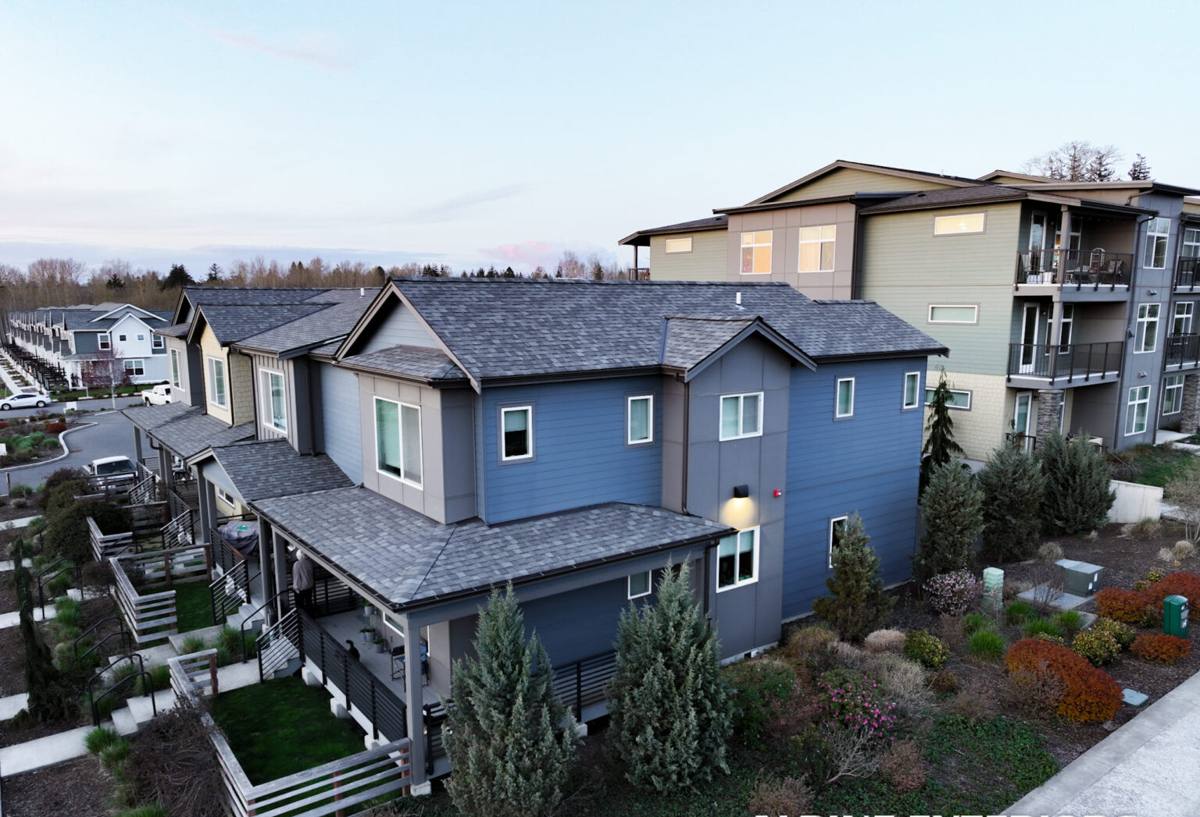
Why We Only Install James Hardie Here
We don't install vinyl, LP SmartSide, cedar, or other fiber cement brands, and Ferndale's climate is a big part of why. Vinyl expands and contracts with temperature swings and can warp or crack under sustained moisture exposure at seams. Cedar looks great going up but requires a maintenance schedule most homeowners don't keep up with once the shine wears off, and it's a slower path to rot in a climate that rarely gives wood a chance to fully dry out. Engineered wood products carry moisture-related risks at cut edges and panel joints if the installation isn't precise.
James Hardie fiber cement is non-combustible, dimensionally stable across our temperature range, and engineered specifically for high-moisture, high-humidity regions through its HZ5 product line, which is formulated for the Pacific Northwest's rain and humidity exposure rather than a generic national spec. It doesn't feed mold or moss the way wood-based products can, and its factory-applied ColorPlus finish is baked on under controlled conditions — a meaningful advantage in a place where field-applied paint has a short window of dry weather to cure properly.
What HZ5 Actually Changes
HZ5 isn't a marketing label — it's a formulation adjustment. Hardie engineers its siding differently depending on the climate zone it's shipped to, and the HZ5 formula used in our region is built to resist the specific moisture and freeze-thaw cycling we get here. That matters more in Ferndale than in a drier inland town, because the siding spends more days per year at or near saturation humidity.
What a Correct Installation Involves
Most siding failures we get called out to inspect aren't material failures — they're installation shortcuts that let water in behind a perfectly good product. In a salt-air, high-rainfall area like Ferndale, the details below aren't optional extras; they're the difference between siding that lasts decades and siding that needs attention in five years.
- A properly installed weather-resistant barrier (house wrap) with correctly lapped and taped seams, installed before any siding goes up
- Rainscreen or drainage gap furring where conditions call for it, so bulk water and trapped moisture can drain and the wall can dry out between storms
- Correct fastener type and placement — stainless or coated fasteners set at manufacturer-specified depth, not overdriven, which matters even more near salt air where standard fasteners corrode faster
- Proper flashing at every window, door, and roofline transition, since these are the intersections where the vast majority of water intrusion actually starts
- Minimum clearance from grade, decks, and roof lines per Hardie's published installation instructions, so siding isn't wicking moisture from standing water or snow-load contact
- Factory-cut and factory-primed edges used wherever possible, with any field cuts sealed per Hardie's specification rather than left exposed
Skip any one of these and you can still end up with moisture problems behind James Hardie siding — the product doesn't fail, the installation does. That's why Hardie's transferable warranty terms depend on installation to their published specifications, not just on using their boards.
Our Process for a Ferndale Job
We walk every job the same way regardless of size, because the failure points are consistent even when the house isn't.
1. Assessment
We look at existing siding, sheathing, and trim for signs of past moisture intrusion — soft spots, staining, or moss growth patterns that tell us where water has been finding its way in. North and west-facing walls get particular attention here, since those are the sides that stay shaded and damp longest through a Whatcom County winter.
2. Tear-off and sheathing check
Once old siding comes off, we inspect the sheathing underneath. Any rot or soft sheathing gets replaced before anything new goes up — covering a compromised wall with new siding just delays a bigger repair.
3. Weather barrier and drainage
House wrap goes on with correctly lapped seams, and we install drainage gap material where the wall assembly and exposure call for it, so the wall can shed and dry moisture rather than trap it.
4. Flashing and trim
Every penetration — windows, doors, hose bibs, light fixtures — gets flashed before siding closes in around it. This step gets rushed on a lot of jobs; it's the one we won't rush.
5. Hardie installation to spec
Panels and lap siding go up per Hardie's fastening, clearance, and gapping requirements, with ColorPlus-matched caulk and trim so the factory finish isn't compromised at the joints.
6. Final walk-through
We review the completed exterior with the homeowner, including a simple explanation of what maintenance (if any) the ColorPlus finish actually needs going forward.
ColorPlus Finish vs. Field-Applied Paint in This Climate
The finish matters as much as the substrate in a climate where paint has limited dry-weather windows to cure. Here's how the two approaches compare for a Ferndale exterior:
| Factor | ColorPlus Factory Finish | Field-Applied Paint |
|---|---|---|
| Cure conditions | Controlled factory environment, consistent every time | Dependent on dry weather window, harder to guarantee in fall/winter |
| Coverage consistency | Uniform baked-on finish, including edges | Can vary by applicator, weather, and number of coats |
| Fade resistance | Formulated and warrantied specifically for UV and moisture exposure | Typically shorter repaint cycle in wet, low-sun climates |
| Maintenance cycle | Long-interval touch-up only | Repaint cycle usually needed sooner in coastal exposure |
| Salt air resistance | Engineered into the finish chemistry | Depends entirely on paint product and prep quality |
Moss, Algae, and What Homeowners Can Actually Do
Ferndale's shaded, damp walls are prone to moss and surface algae the same way roofs are, especially where trees or neighboring structures block afternoon sun. James Hardie's fiber cement composition doesn't feed organic growth the way wood siding does, but surface growth can still occur on any exterior surface exposed to enough shade and moisture. A soft wash with a garden hose and mild detergent once or twice a year — never a pressure washer aimed directly at seams or up under laps — keeps most growth from taking hold. Keeping shrubs and trees trimmed back from walls to improve airflow and sun exposure helps as much as any cleaning routine.
What to Ask Before Hiring Anyone for This Job
Whether you call us or someone else, these are the questions that separate a crew that understands Ferndale's conditions from one that's just installing siding the same way everywhere:
- Do you install a drainage gap or rainscreen, and under what conditions do you recommend it for this specific wall?
- What fastener type and spacing do you use, and is it rated for coastal/salt-air exposure?
- Can you walk me through your flashing detail at windows and rooflines before we sign anything?
- Will the installation meet James Hardie's published specifications closely enough to preserve the transferable warranty?
- Have you worked on homes in Ferndale or similarly exposed parts of Whatcom County before?
Why Local Experience Actually Matters Here
A siding crew that's only worked drier, inland jobs will still know how to nail up a board — but they won't necessarily know to prioritize drainage gap detailing on a shaded north wall, or to spec corrosion-resistant fasteners as standard rather than an upsell, or to recognize the early signs of moss-driven moisture retention before they become a bigger repair. We work this stretch of Whatcom County regularly, which means we're not learning the local failure points on your house — we already know them going in.
If you're weighing a siding replacement or repair in Ferndale and want a straight answer about what your home actually needs, we're happy to take a look and give you a free, no-pressure estimate — no obligation, just an honest assessment.