 Blaine Siding
 Dakota Creek Siding: One Product, Installed for the Conditions Here
Dakota Creek sits close to Blaine, in the northwest corner of Whatcom County where the marine air off Semiahmoo Bay and Drayton Harbor reaches almost every property, waterfront or not. It's low-lying, creek-adjacent, and tree-covered in a lot of places, which is a specific combination: steady humidity from the water and the drainage, shade that slows drying on north and east-facing walls, and storm systems that come ashore with real force this close to the coast. Siding in Dakota Creek isn't decorative trim work. It's the layer standing between that combination of moisture sources and the wall framing underneath, and it has to be right.
We install James Hardie fiber cement siding exclusively, and this page is specifically about what that looks like for a Dakota Creek home — not a general overview of siding, and not a general overview of Hardie. If you're weighing a siding project in this neighborhood, the two things that matter most are what the local climate actually does to a wall assembly over time, and whether the crew doing the install has handled that combination of conditions before.
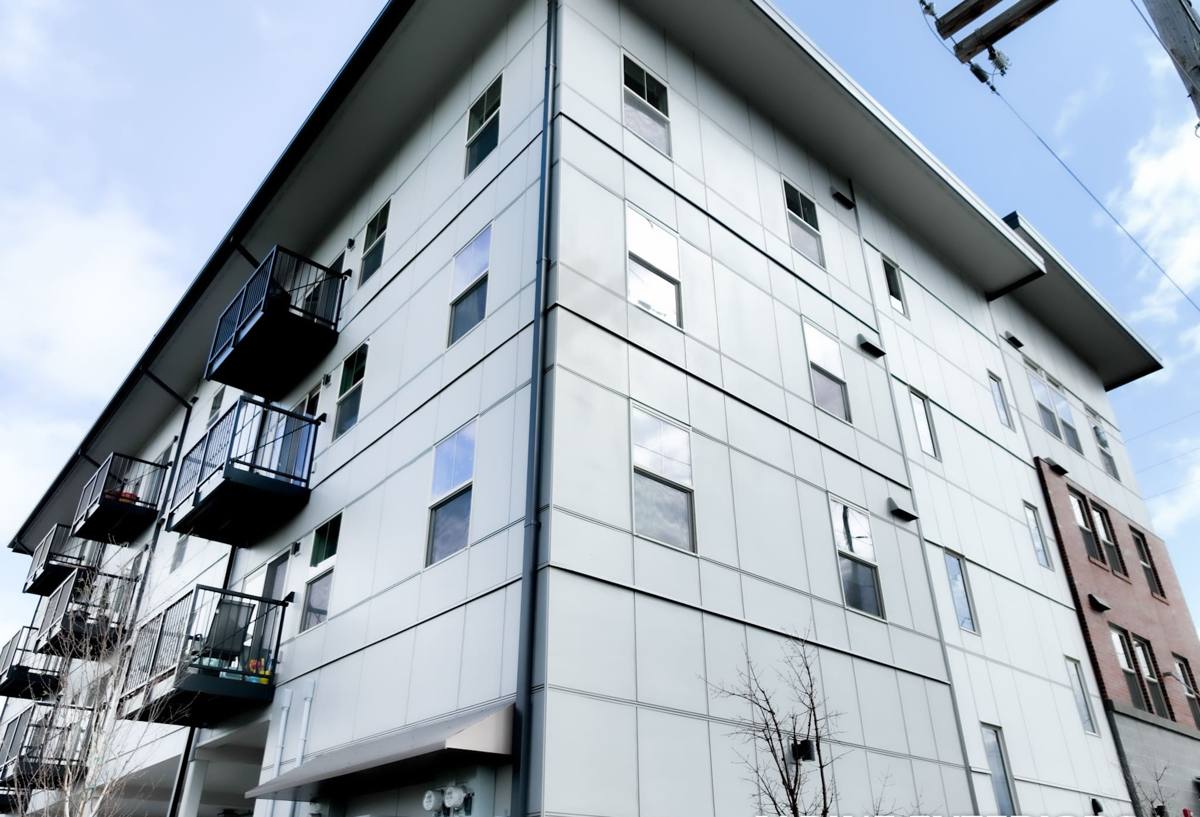
What Dakota Creek's Climate Asks of a Siding System
Salt Air Off the Bay and Harbor
Dakota Creek doesn't have to be waterfront to feel the effect of the salt air moving in off Semiahmoo Bay and Drayton Harbor — it's carried well inland on the prevailing wind. Salt accelerates corrosion on fasteners, flashing, and exposed metal trim, and it breaks down lower-grade paints and coatings faster than a dry-climate finish ever sees. Any siding decision here has to account for that steady, low-level exposure, not just the occasional storm.
Driving Rain
Storms coming off the water don't fall straight down. Wind pushes rain sideways into wall assemblies, window flashing, and the joints where trim meets siding, and that lateral load is harder on a house than the same rainfall total would be somewhere calmer and more inland. Dakota Creek's open, low-lying position means it catches that driving rain directly, with less tree or terrain break than some more sheltered pockets of the county.
A Long Moss Season
Between the creek drainage, mild temperatures, and near-constant humidity, moss and mildew have a long growing window here — often close to year-round on shaded or north-facing walls. Tree cover in and around Dakota Creek keeps a lot of siding surfaces damp longer than a fully open lot would, and any material with even minor surface porosity becomes a growth surface over time. Once moss takes hold on a wall, it holds moisture against the surface and speeds up whatever damage was already starting underneath.
Why James Hardie Is the Right Call for This Neighborhood
We used to install a wider range of siding products before standardizing on James Hardie fiber cement, and the decision came out of what we kept seeing on tear-offs and service calls in coastal, high-moisture areas like Dakota Creek — not a supplier arrangement or a marketing angle.
- Non-combustible fiber cement core: It doesn't feed a fire the way wood-based siding products can, which matters for safety and often for insurance considerations too.
- Factory-applied ColorPlus finish: The color is baked on under controlled factory conditions rather than field-applied, so it holds up longer against fading, chalking, and the kind of humidity Dakota Creek sees most of the year.
- Climate-engineered HZ product lines: Hardie's HZ5 formulation is built for regions with sustained moisture and freeze-thaw cycling, which fits coastal Whatcom County closely.
- Dimensional stability: Fiber cement doesn't swell, cup, or warp the way engineered wood products can after repeated wet-weather exposure.
- Strong transferable warranty: Backed by Hardie, provided the installation follows their published spec — which is a big "if," and one we'll come back to below.
We don't install LP SmartSide, vinyl siding, Cemplank, Allura, primed spruce, or cedar. Every one of those products has a place in the market and homeowners who are satisfied with them elsewhere. But in a neighborhood where salt air, driving rain, and a long moss season are the baseline rather than the exception, we've made a professional call to install one system we fully stand behind rather than offer something cheaper that quietly shifts maintenance risk onto the homeowner a few years down the line.
What a Correct James Hardie Install Involves in Dakota Creek
Hardie siding performs the way the manufacturer's warranty and engineering assume only when it's installed correctly, and in a wet, tree-shaded neighborhood like Dakota Creek, the installation details carry more weight than they would in a drier, more open location. A few of the basics we won't shortcut:
- Rain screen gap: A small drainage cavity behind the siding lets moisture that gets past the exterior surface drain and evaporate instead of sitting against the wall sheathing — important on shaded walls that already dry slowly.
- Correct fastener type and spacing: Hardie specifies fastener placement and corrosion-resistant fastener types for a reason. Loose spacing or the wrong fastener is one of the more common causes of early siding failure we find on tear-offs, and salt air makes fastener corrosion a bigger risk here than in an inland town.
- Properly lapped house wrap and flashing: Every seam and penetration needs to shed water downward and outward, especially on walls that catch wind-driven rain directly.
- Sealed butt joints and trim transitions: Open or poorly sealed joints are exactly where salt-laden moisture finds its way behind the siding first.
- Clearance from grade and landscaping: Dakota Creek's low-lying, creek-adjacent lots mean some homes sit closer to standing moisture and dense plantings than average — siding needs proper clearance so it isn't sitting in a damp microclimate against the foundation.
None of this is exotic. It's the manufacturer's own installation spec, applied consistently rather than shortcut on the parts that are hardest to see once the job wraps up and the crew is gone.
Substrate Condition Matters as Much as the New Siding
On a lot of Dakota Creek homes with older siding, the condition of the wall sheathing underneath is the real question, not just what goes on top of it. If moisture has been getting behind an aging siding product for years, there can be soft or compromised sheathing that needs to be addressed before new Hardie panels go on — otherwise you're installing a good product over a bad foundation. We check for this during tear-off rather than assuming the substrate is fine, and we'll tell you honestly if we find something that needs attention before we can move forward.
James Hardie Product Lines and What Fits a Dakota Creek Home
| Product Line | What It Is | Where It Fits |
|---|---|---|
| HardiePlank lap siding | Horizontal lap boards, the most common Hardie profile | Standard choice for most Dakota Creek homes; wide range of textures and exposures |
| HardiePanel vertical siding | Large-format vertical panels, often paired with board-and-batten trim | Accent walls, gables, or a more modern look on newer builds |
| HardieShingle siding | Staggered or straight-edge panels that mimic a shingle look | Homes wanting a traditional Pacific Northwest coastal aesthetic |
| HardieTrim boards | Fiber cement trim for corners, window and door surrounds, fascia | Pairs with any of the above for a consistent, low-maintenance trim package |
All of these are available in Hardie's HZ5 formulation, which is the one engineered for climates like ours. The right choice for a given home usually comes down to the existing architecture and personal preference more than performance, since all four hold up the same way once installed to spec.
Signs a Dakota Creek Home's Siding Needs Attention
- Moss or dark staining that comes back quickly after cleaning, especially on shaded or north-facing walls
- Soft or spongy siding, particularly low on the wall or around window and door trim
- Rust staining or corroded fasteners and metal trim
- Peeling paint, warping, or visible cupping on older wood or engineered wood siding
- Gaps opening up at butt joints, corners, or trim transitions
- A musty smell near exterior walls, which can point to moisture already behind the siding
Cost Factors for a Dakota Creek Siding Project
| Factor | Why It Matters |
|---|---|
| Home size and wall complexity | More square footage, corners, and trim detail add material and labor time |
| Tear-off vs. overlay | Full tear-off is usually the right call when moisture has already reached the substrate — common on older Dakota Creek homes near the creek or under heavy tree cover |
| Substrate repair | Any soft or rotted sheathing found during tear-off needs to be replaced before new siding goes on |
| Product line and profile | Lap, panel, and shingle profiles vary somewhat in material cost and install time |
| Trim and detail work | Homes with more windows, gables, and architectural detail take longer to flash and finish correctly |
These are general drivers, not a quote. Every Dakota Creek property sits at a slightly different distance from the water and under different tree cover, and the only way to price a project accurately is to walk the home and, on a tear-off, actually see the condition of what's underneath the existing siding.
Our Process for a Dakota Creek Siding Project
- On-site walkthrough: We look at the whole exterior, not just the siding — trim, window flashing, roofline transitions, and any visible moisture damage.
- Honest scope and estimate: You get a straightforward assessment of what the project actually needs, including whether a full tear-off makes sense given the home's age and condition.
- Tear-off and substrate check: Old siding comes off, and we inspect the sheathing before anything new goes on. Any issues found get flagged before we proceed.
- House wrap, flashing, and rain screen installation: The moisture management layer goes in first and gets the same attention as the visible siding, since it's the part doing the real work over the following decades.
- Hardie installation to manufacturer spec: Correct fastener type and spacing, properly lapped seams, and sealed joints and transitions throughout.
- Final walkthrough: We go over the finished work with you before calling the project done.
Why Hiring a Crew That Already Works Dakota Creek Matters
A crew that regularly works this stretch of Whatcom County has already seen how salt air, driving rain, and a long moss season behave on real Dakota Creek homes over a full year — not how a product performs on a spec sheet in a showroom somewhere drier. That experience shapes decisions on install day that don't show up in a written estimate: which walls stay wet longest under the tree cover, where extra flashing attention pays off given the home's orientation to the prevailing wind, and which fastener and clearance choices are worth the extra time so you're not dealing with a callback after the next storm off the bay. Dakota Creek's low-lying, creek-adjacent conditions aren't identical to a more open, inland lot, and a crew that knows the difference builds accordingly instead of applying a one-size-fits-all approach learned somewhere else.
If your Dakota Creek home needs new siding or you're not sure whether what's on the walls now is holding up the way it should, we're glad to take a look and give you a straightforward, honest assessment. Reach out using the form below to schedule a free, no-pressure estimate.