 Blaine Siding
 Windows Built for the Dakota Creek Climate
Homes in the Dakota Creek area of Blaine sit close enough to the water that the weather here plays by different rules than it does further inland. Salt-laden air moves through year-round, driving rain comes in sideways off Drayton Harbor and the Strait of Georgia during winter storms, and the region's long, damp shoulder seasons keep moss and algae growing on anything that stays wet too long. Windows take the brunt of all three. Frames corrode faster near salt air, poorly flashed units let wind-driven rain in around the edges, and shaded, north-facing walls stay damp long enough for moss and mildew to take hold on sills and trim.
Energy-efficient windows done right in this environment aren't just about a lower heating bill, though that matters in Whatcom County's cool, wet winters. They're about keeping water out of the wall cavity, keeping frames from degrading in salt air, and keeping condensation from turning into a moisture problem behind the trim. A window that's efficient on paper but poorly installed will still fail here — usually at the flashing, not the glass.
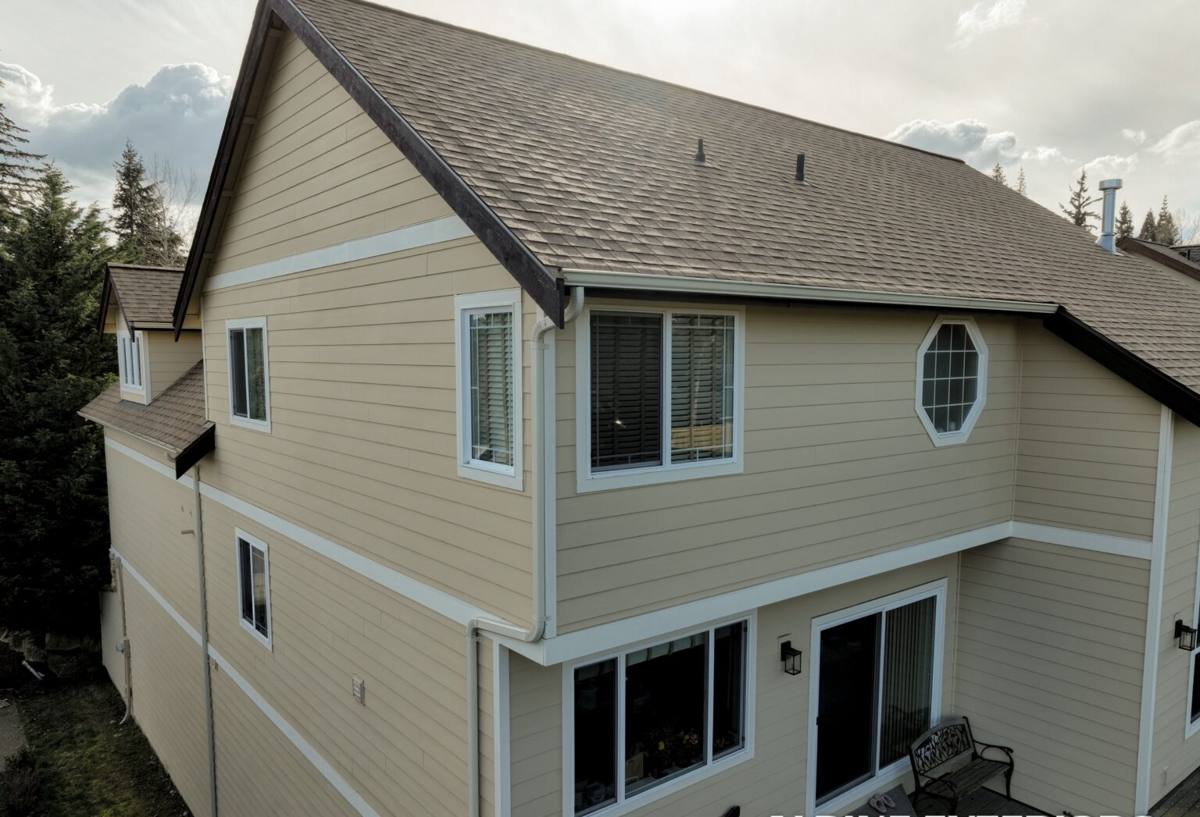
What "Energy-Efficient" Should Mean for a Coastal Whatcom County Home
Manufacturers rate windows using a few standard numbers, but which ones matter most changes depending on climate. For Dakota Creek, we weight moisture performance and air infiltration control just as heavily as raw insulation value, because a window that's a little less efficient but seals perfectly against wind-driven rain will outperform a "greener" window that leaks.
The Numbers Worth Understanding
- U-Factor — measures heat loss through the window. Lower is better for our winters; look for U-Factor around 0.30 or lower for most Blaine homes.
- SHGC (Solar Heat Gain Coefficient) — measures how much solar heat passes through. Less critical here than in sunnier climates, but still worth balancing on south- and west-facing walls.
- Air Infiltration Rating — how much air leaks around the sash. This matters more in driving-rain conditions than it does in calmer climates, since wind pressure pushes water through the same gaps air leaks through.
- Condensation Resistance — a rating that predicts how well a window resists interior fogging in cold, humid conditions. Homes near the water tend to run more humid indoor air than homes further inland, so this number deserves real attention.
Problems We Commonly See on Dakota Creek Homes
Every coastal Whatcom County neighborhood has its own wear pattern, and Dakota Creek's is fairly consistent from house to house. When we're called out to look at older or struggling windows in this area, a handful of issues show up again and again.
Frame and Hardware Corrosion
Older aluminum-framed windows and lower-grade hardware corrode noticeably faster this close to salt air. Latches stick, sashes bind, and finishes chalk and pit years before they would inland.
Wood Rot at Sills and Corners
Wood-framed and wood-clad windows that were installed without adequate flashing take on water at the bottom corners first. Driving rain finds the weak point in a sealant joint and works its way behind the trim, where it can sit for months before anyone notices.
Moss and Algae on Sills and Muntins
North- and east-facing windows shaded by trees or neighboring structures stay damp long into the dry months. Moss and green algae film build up on sills, exterior trim, and between-glass grilles, which isn't just cosmetic — it holds moisture against wood and paint and accelerates decay.
Fogged or Failed Seals
Insulated glass units have a sealed gas-filled gap between panes. Once that seal fails, moisture gets in and the glass fogs permanently. Constant humidity and temperature swings near the water tend to shorten the useful life of lower-quality seals compared to drier climates.
What a Correct Installation Actually Involves
Most window failures we're called to fix aren't a defective product — they're an installation that skipped a step that matters more here than it would somewhere drier. A correct install in this climate isn't fundamentally different in concept from anywhere else, but it leaves zero room for shortcuts on water management.
Flashing and Water Management First
Before a new window ever goes in, the rough opening gets properly prepped: a sloped sill pan to direct any intruded water back out, flashing tape integrated with the house wrap in the correct shingle-lap order (bottom, sides, then top), and a drainage path so water that does get past the exterior seal has somewhere to go besides your wall framing. Skipping the sill pan is the single most common shortcut we find in failed installs — it's invisible once the trim goes back on, which is exactly why it gets skipped by crews in a hurry.
Sealant and Fastening
Exterior sealant needs to be a product rated for the temperature swings and UV exposure of this region, applied in a continuous bead with no gaps at corners. Fasteners go through the frame into solid framing, shimmed correctly so the sash doesn't bind or sag over time — a bound sash gets forced, and a forced sash wears out its weatherstripping early.
Interior Air Sealing
The gap between the window frame and the rough opening gets sealed with a low-expansion foam or backer rod and sealant, not just insulation stuffed in by hand. This is where a lot of the energy-efficiency gain actually happens, and it's just as important to condensation control — gaps here let warm, moist interior air reach the cold frame, which is how interior fogging and frame sweating start.
Frame Material Comparison for This Climate
| Frame Material | Salt Air Performance | Maintenance | Typical Trade-offs |
|---|---|---|---|
| Vinyl | Good — won't corrode or rot | Low; occasional cleaning | Limited color/finish options; can expand/contract with temperature swings |
| Fiberglass | Very good — stable and corrosion-resistant | Low | Higher upfront cost than vinyl |
| Wood (unclad) | Poor without diligent upkeep | High — repainting/sealing needed regularly | Best natural appearance; most vulnerable to driving rain and moss |
| Wood-clad (aluminum or vinyl exterior) | Good on exterior face; interior wood still needs care | Moderate | Good look, but cladding seams need careful flashing at install |
| Aluminum (uninsulated) | Poor — prone to corrosion and pitting near salt air | Moderate | Poor thermal performance; we generally steer homeowners away from this option in coastal settings |
Our Process for a Dakota Creek Window Project
We keep the process straightforward because window replacement shouldn't feel complicated for the homeowner, even though there's real technical work happening at every step.
- On-site assessment. We look at each window's current condition, check for hidden water damage around openings, and note which walls take the most weather exposure.
- Measurement and product selection. We measure precisely for either a full-frame replacement or an insert replacement, and walk through frame material, glass package, and grille options based on your home's exposure and budget.
- Removal and opening prep. Old windows come out carefully, and we inspect the rough opening for rot or moisture damage before anything new goes in — this is where problems from a prior bad install usually surface.
- Installation. Sill pan, flashing, window, shimming, fastening, exterior sealant, interior air sealing — in that order, every time.
- Final check. We test operation, check for square and level, and confirm the exterior seal and trim are weathertight before we call the job done.
What Should Be Included, No Exceptions
- Sloped sill pan flashing at every opening
- Proper shingle-lap flashing sequence tied into house wrap
- Continuous exterior sealant bead, gap-free at corners
- Low-expansion foam or backer rod air sealing on the interior
- Manufacturer-specified fastening and shim placement
- A final operational and weatherproofing check before cleanup
Choosing Glass and Frame Options for Salt Air and Moss Season
Beyond the base U-Factor and SHGC numbers, a few upgrades tend to make the most practical difference for Dakota Creek homes specifically.
| Factor | Why It Matters Here | Typical Cost Impact |
|---|---|---|
| Triple-pane glass | Better insulation and condensation resistance for cooler, humid interior conditions | Moderate increase over double-pane |
| Low-E coating | Reduces heat loss without blocking natural light on our frequently overcast days | Small increase; often standard on quality windows |
| Upgraded corrosion-resistant hardware | Latches and rollers last longer in salt air | Small increase |
| Fiberglass or vinyl over bare aluminum/wood | Cuts long-term maintenance and rot/corrosion risk | Varies by material chosen |
| Between-glass grilles vs. surface-mounted grilles | Between-glass options don't collect moss or grime the way exterior grilles do | Small increase |
As a broad starting point, most homeowners in this area see installed pricing somewhere in the range of a few hundred to a little over a thousand dollars per window, depending on size, frame material, and glass package — full-frame replacements and larger openings run higher than simple insert replacements. We'll always give you real numbers for your specific home rather than a generic estimate off a chart.
Why Local Experience in Dakota Creek Actually Matters
Window installation isn't identical everywhere, and a crew that mostly works drier, inland jobs doesn't always carry the same habits that matter this close to the water. A contractor who regularly works the Dakota Creek area and the rest of Blaine already knows which walls take the worst of the driving rain, which older homes tend to have rot hiding behind the trim, and how much flashing detail is enough versus overkill. That familiarity shows up in fewer surprises during the job and fewer callbacks after it.
It also matters for permitting and code knowledge specific to Whatcom County jurisdictions, and for simply being available if a question comes up after the install — during the next big wind-driven rain event, for instance. A crew based and working locally isn't a stranger showing up once.
What to Ask Before You Hire
- Do you flash and seal openings the same way regardless of weather forecast pressure to finish faster?
- Can you show me examples of window work you've done on homes near the water in this area?
- What's your plan if you find rot or water damage once the old window comes out?
- What warranty covers the installation itself, separate from the manufacturer's product warranty?
Protecting Your Investment Through Moss Season
New windows installed correctly will hold up well here, but a little seasonal attention keeps them performing for the long haul. Rinse sills and frames periodically during the wetter months to keep moss and algae from gaining a foothold, especially on shaded, north-facing windows. Keep weep holes at the base of the frame clear of debris so water can drain out rather than pooling. Check exterior sealant joints once a year for cracking or separation, since sealant is a wear item that eventually needs a touch-up long before the window itself needs replacing. None of this is difficult, but skipping it is how small issues turn into bigger ones over a few wet Whatcom County winters.
Get a Straightforward Estimate for Your Dakota Creek Home
If your current windows are fogging, sticking, drafty, or showing rot or corrosion, it's worth having them looked at before another wet season sets in. We're happy to walk your home, point out what we actually see — good or bad — and put together a clear, no-pressure estimate for energy-efficient replacement windows built for this specific stretch of coastline. Use the form below to request your free estimate.