 Blaine Siding
 Building a Deck That Holds Up in Nooksack's Climate
A deck near Nooksack has to earn its keep. Whatcom County sits close enough to the Salish Sea that salt-tinged air reaches even the inland river valleys, and that air, combined with driving winter rain and a moss season that can stretch from October well into May, is hard on any structure that sits low to the ground and stays wet. A deck built the way a warmer, drier climate would build it — standard fasteners, no ledger flashing, boards butted tight — will show problems within a few seasons: streaking, soft spots, moss carpeting the boards, and hardware that rusts before the wood even needs replacing.
We build decks for homes in and around Nooksack the way this climate actually demands: with drainage, ventilation, and corrosion resistance treated as core structural decisions, not upgrades. That approach costs a little more attention up front and pays for itself in a deck that still looks and functions right a decade later.
What Nooksack-Area Homes Need From a Deck
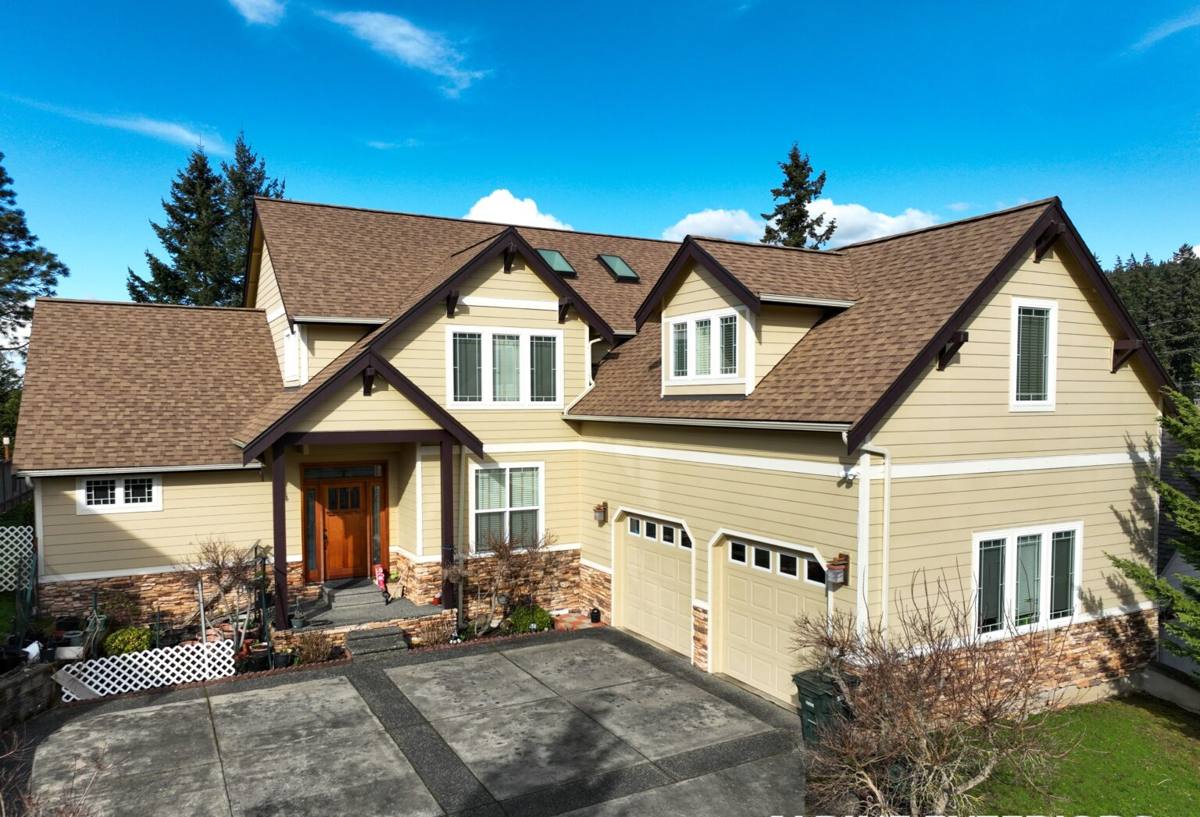
Much of the Nooksack area sits along the river valley, with a mix of rural, wooded, and semi-shaded lots that are common throughout this part of Whatcom County. That setting shapes what a deck has to deal with day to day.
Sun, Shade, and Moss Pressure
Decks tucked under tree cover or on the shaded side of a house dry out slowly after rain, which is exactly the condition moss and algae need to take hold. Once moss establishes on decking or framing, it holds moisture against the wood constantly, accelerating rot even when the surface still looks intact. We factor sun exposure and airflow into the design — board spacing, joist height above grade, and even railing style all affect how quickly a deck sheds water and dries.
Soil and Footings
River valley soils in this part of the county can hold more moisture and shift more than well-drained upland sites. Footings need to be sized and set to the correct depth for the soil conditions on your specific lot, not just poured to a generic minimum. We check bearing conditions before we finalize footing design rather than assuming one spec fits every yard.
Choosing the Right Decking Material
There's no single "best" decking material — there's the right material for your budget, your sun exposure, and how much upkeep you want to do. Here's how the common options compare for a Whatcom County setting.
| Material | Moss & Moisture Resistance | Maintenance | Typical Lifespan | Relative Cost |
|---|---|---|---|---|
| Capped composite | Very good — doesn't absorb water or rot | Occasional wash; no staining or sealing | 25–30+ years | Higher upfront |
| Western red cedar | Naturally rot-resistant but needs upkeep to stay that way | Annual cleaning and periodic sealing | 15–20 years with maintenance | Mid-range |
| Thermally modified wood | Good — modification reduces moisture uptake | Lower than raw cedar, still benefits from sealing | 20–25 years | Mid to higher |
| Pressure-treated pine | Fair — treatment resists rot but surface still absorbs water | Regular sealing recommended, especially in shade | 10–15 years | Lowest upfront |
For lots with heavy shade or tree cover, we usually steer homeowners toward capped composite or thermally modified wood, since both hold up better against the constant damp-dry cycle that drives moss growth. For open, sunnier sites, cedar remains a solid choice if you're willing to keep up with cleaning and sealing on a schedule. We'll walk your specific site with you and give you an honest read on which material actually fits your yard, not just what's easiest to sell.
The Structural Details That Actually Matter
The decking surface is what you see, but the details underneath and around it are what determine whether the deck survives a Whatcom County winter without hidden damage.
- Ledger flashing: Where the deck attaches to the house, proper flashing keeps rain from working its way behind the siding and into the wall framing — one of the most common sources of hidden rot on older decks in wet climates.
- Joist tape: A self-adhering membrane over the top of each joist keeps standing water out of the wood's end grain and fastener holes, which is where most joist rot starts.
- Corrosion-rated hardware: Modern treated lumber chemicals are more corrosive to metal than older treatments, and combined with our humid, salt-influenced air, standard fasteners can fail early. We use hot-dip galvanized or stainless connectors and fasteners rated for that exposure.
- Board spacing: Gaps sized for proper drainage and seasonal wood movement keep water from pooling on the surface and prevent boards from buckling as they expand and contract through wet and dry cycles.
- Grading and airflow underneath: The ground beneath a deck needs a slight grade away from the house and enough clearance for air to move, so the underside can dry out between storms instead of staying damp for weeks.
None of these details are visible once the deck is finished, which is exactly why they're the details that get skipped by crews trying to save time. They're also the difference between a deck that needs framing repairs in eight years and one that doesn't.
Railings, Stairs, and Code Compliance
Any deck built to code in Washington needs to meet specific structural and safety requirements, and getting these right matters both for safety and for resale down the road.
| Element | Requirement |
|---|---|
| Guardrail height | Minimum 36 inches when the deck surface is more than 30 inches above grade |
| Baluster spacing | No gap greater than 4 inches, to prevent a small child from passing through |
| Stair stringers | Sized and spaced to code, with proper support and rise/run consistency |
| Footings | Set to the depth and bearing required for local soil conditions |
Deck permits and inspections are handled through Whatcom County, and requirements can vary depending on the deck's height, size, and attachment to the house. We handle the permit process as part of the job so you're not left figuring out county requirements on your own, and so the finished deck is inspected and documented correctly.
Our Process From Estimate to Final Walkthrough
Every deck starts with a site visit, not a phone quote. We look at your lot's sun exposure, drainage, existing structure (if we're replacing a deck), and soil conditions before we talk materials or price.
- On-site assessment and design conversation, including material options suited to your specific exposure and budget
- Written estimate with a clear scope, so you know exactly what's included before any work begins
- Permit submission and approval through Whatcom County
- Footings, framing, ledger flashing, and joist protection installed to the standards described above
- Decking, railing, and stair installation
- Final walkthrough with you, and county inspection where required
We schedule around the wet season when we can, but a well-run crew can still frame and build through a typical Whatcom County winter — it just requires planning around the weather rather than ignoring it.
Maintaining a Deck Through Whatcom County's Wet Season
Even a well-built deck needs some seasonal attention in this climate, especially where shade and moisture create moss pressure. A little maintenance each year goes a long way toward protecting the investment.
- Sweep leaves and debris off the deck surface and out of gaps between boards before fall rains set in
- Rinse off moss and algae buildup early, before it has a chance to establish and hold moisture against the wood
- Check and clear gutters and downspouts near the deck so water isn't draining directly onto or under it
- Inspect fasteners and connectors yearly for rust or loosening, particularly on ledger and stair connections
- Reseal wood decking on the schedule appropriate to that material — don't wait until it's visibly gray and dry
- Confirm the area underneath the deck still drains away from the house and hasn't become a low, standing-water spot
Why a Crew That Already Works Nooksack Matters
Building decks in this specific climate and county isn't the same as building them somewhere dry. A crew that regularly works the Nooksack area already knows how local soils behave, what Whatcom County's permitting process requires, and how to sequence a build around this region's rain patterns instead of losing weeks to weather surprises. That familiarity shows up in fewer change orders, fewer permit delays, and a deck that's built for the conditions it will actually sit in rather than a generic spec.
It also matters after the job is done. A local crew is easy to reach if you have a question about maintenance or notice something worth a second look a few years down the road — not a distant company that disappears once the final payment clears.
If you're thinking about a new deck or replacing one that hasn't held up to Whatcom County weather, we're happy to walk your property and give you an honest, no-pressure estimate — just fill out the form below to get started.